Map of Netherlands showing where the Boot arms are recorded
The Boot arms were recorded in Amsterdam, c. 1815.
This is where the arms were entered in the register. Families often moved to other parts of the country, so the same name can turn up in more than one region.
Region
Amsterdam
Town
Amsterdam
First recorded
1815
Granting Authority for the Boot Arms
Hoge Raad van Adel
Photograph made by me · CC BY-SA 3.0
The body that granted and recorded arms in Netherlands in this period.
William I of the Netherlands
Sovereign of the period
William I of the Netherlands
1815–1840
Reigning in Netherlands when the Boot arms are first recorded.
How Arms Worked in Netherlands
In the Netherlands, coats of arms were often used by noble families and those who held specific public offices. These arms were passed down through the generations to legitimate descendants. Younger branches of a family usually kept the original design without needing to add special marks. This system ensured that the family identity remained clear and consistent over many years.
Granting authority
The Hoge Raad van Adel is the official body that regulates and manages noble titles and coats of arms in the Netherlands.
How they got arms
Families typically obtained their coats of arms through official royal grants or by proving their long-standing historical use of the symbols.
Where arms were recorded
Coats of arms are officially recorded in the registers held by the Hoge Raad van Adel, which began its work in 1814.
The family's standing
Recorded among the armigerous families of Netherlands.
Origin & History of the Boot Family in Netherlands
The surname Boot has deep roots in the Netherlands, where it functioned as a descriptive name long before it became a formal family identifier. In the Dutch language, the word "boot" translates to boat, suggesting that the earliest ancestors to carry this name were likely involved in the maritime trades that defined the Dutch economy. By the time the family was firmly established in Amsterdam in 1815, the city had already spent centuries as a global hub for shipping and commerce. During this period, the Boot family would have lived in a society shaped by the bustling canals and the constant movement of goods from across the world. Because the name is linked to the water, it is highly probable that the original bearers of the name were either boatmen, shipbuilders, or merchants who relied on the intricate network of Dutch waterways to sustain their livelihoods. This connection to the sea reflects the broader history of the Netherlands, where the identity of many families was forged through their relationship with the North Sea and the inland river systems.
Coat of Arms & Family Crest Details
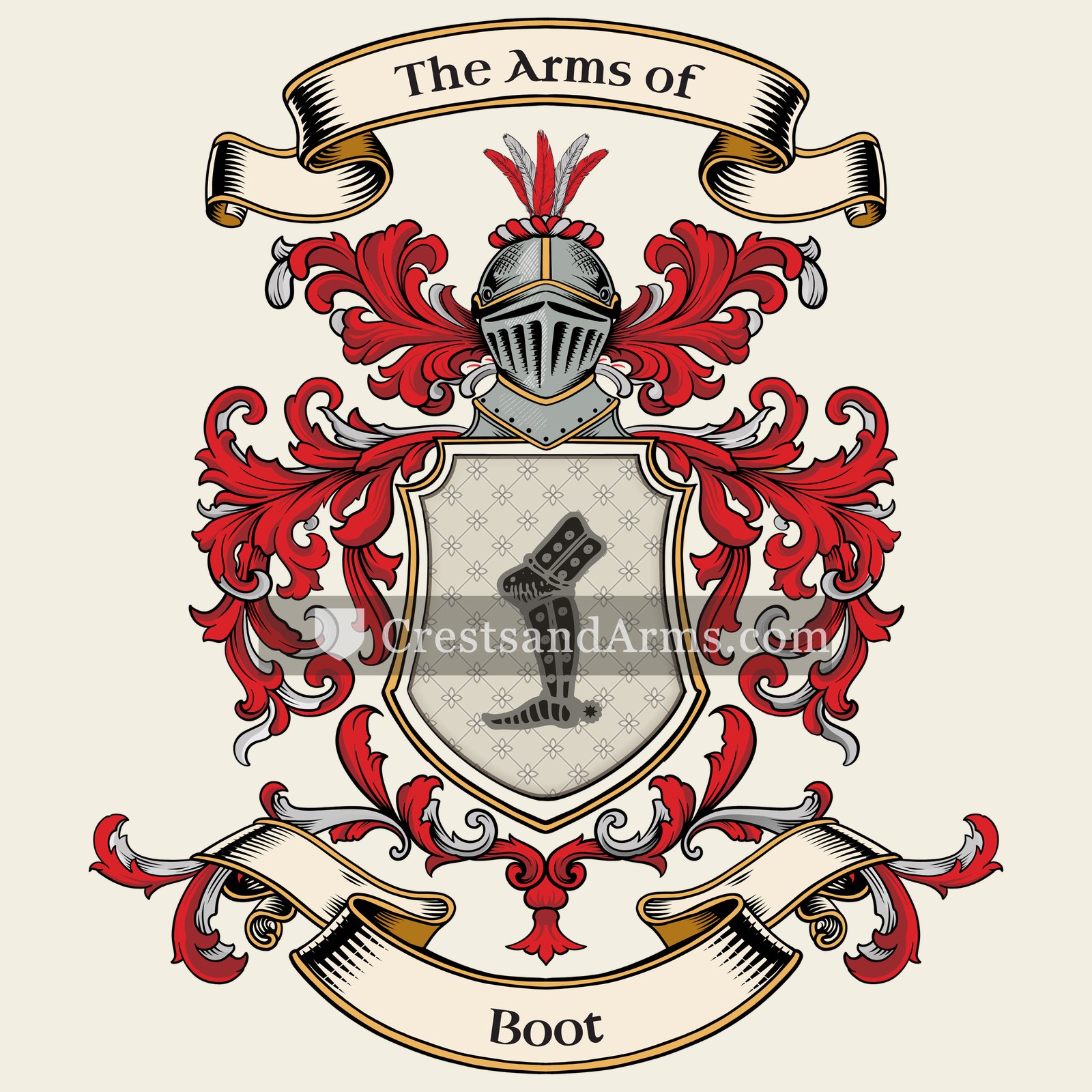
Symbols on this shield
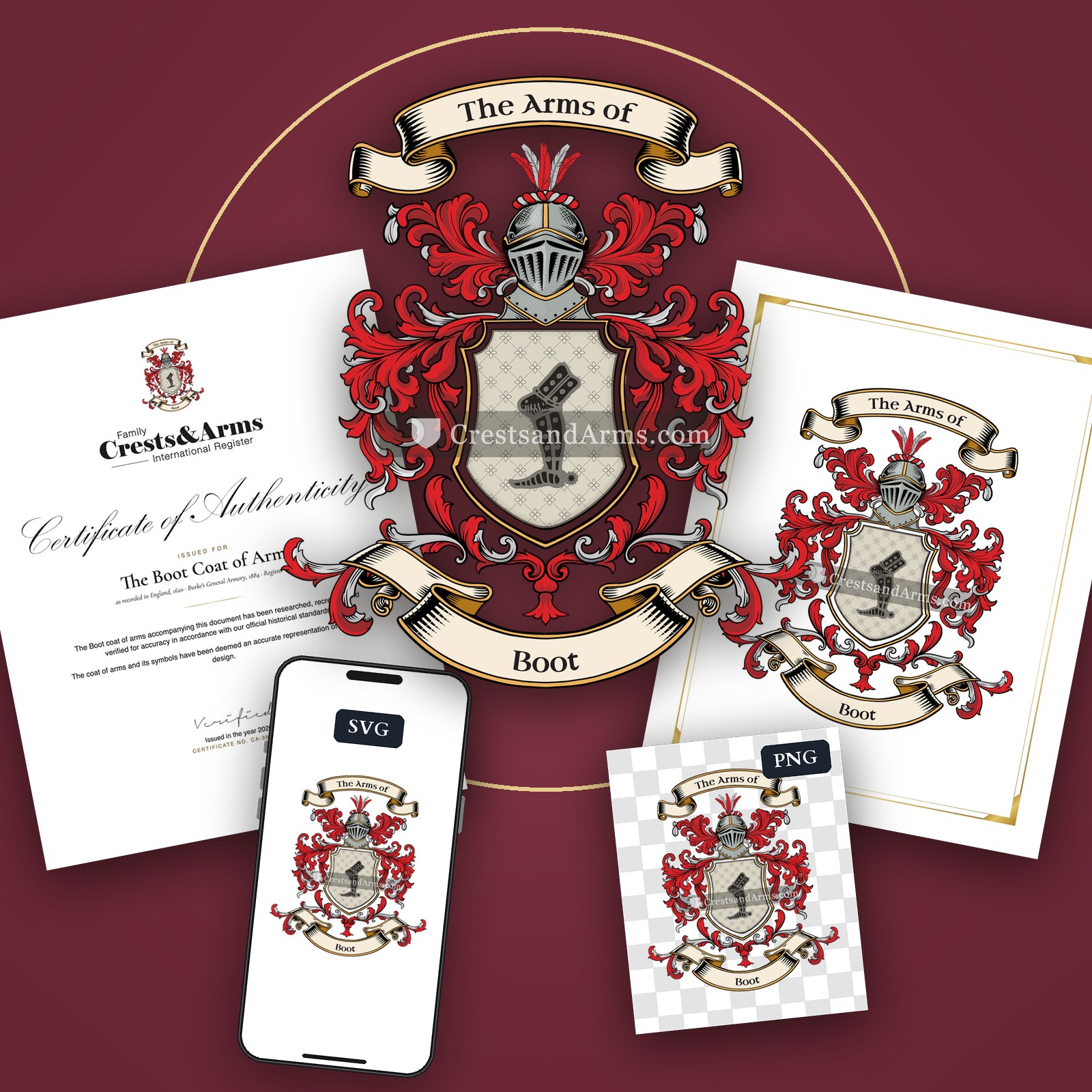
legStrength and swiftness
Colours
Silver (Argent)Means: Peace and sincerity
Black (Sable)Means: Constancy
Historical info
Source
Sir Bernard Burke, The General Armory of England, Scotland, Ireland and Wales, London: Harrison & Sons, 1884
Blazon (the actual original written record)
“Ar. a boot sa. top turned down or, soled gu”
Englandc. 1620
Digital archive packCoat of arms PNG, gold border print PDF, vector SVG and the certificate of authenticity. Sent to your email in minutes.
Map of England showing where the Boot arms are recorded
The Boot arms were recorded in England, c. 1620.
Arms such as these were typically recorded in York.
Yorkshire is the largest of the English counties, and it held more gentry families than any other. Land there was split among a great many households rather than a few, so a great many of them carried arms.
This is where the arms were entered in the register. Families often moved to other parts of the country, so the same name can turn up in more than one region.
The body that granted and recorded arms in England in this period.
James VI and I
Sovereign of the period
James VI and I
1603–1625
Reigning in Netherlands when the Boot arms are first recorded.
How Arms Worked in England
English heraldry allowed arms to be shared by all legitimate descendants of the original owner. These symbols were treated as personal property that moved through the generations to all children. While the eldest son kept the original design, other family members could use the same shield without needing to change it or register their own unique versions.
Granting authority
The College of Arms in London has regulated the use of coats of arms throughout England and Wales since 1484.
How they got arms
Families typically obtained their coats of arms through a formal grant from the Crown or by proving their ancient right to them.
Where arms were recorded
All official coats of arms are recorded in the registers kept at the College of Arms, which date back to the fifteenth century.
The family's standing
Recorded among the armigerous families of England.
Origin & History of the Boot Family in England
The surname Boot is rooted in the occupational and descriptive naming traditions of medieval England. It likely originated as a nickname for a person who made or repaired footwear, or perhaps for someone who wore distinctive boots. By the early 17th century, the family had established a clear presence in the historic city of York. Records from 1620 confirm that members of the Boot family were active participants in the local community during this period. As York was a major center for commerce and trade in Northern England, it is probable that these early ancestors were involved in the city’s vibrant artisan or merchant guilds. The name persisted through generations as families settled into the social fabric of Yorkshire, marking their place in the regional history of the north.
Boot Meaning & Related Branches
Root word
Bote
Old Germanic word meaning messenger or herald.
This name
BootA surname originally used as a nickname for a messenger or a person who wore distinctive boots.
also spelled
Bot
Bote
Bout
Related arms
Botvariant spelling
Documented Sources
J. B. Rietstap, Armorial Général, Gouda: G. B. van Goor Zonen, 1884–87
Beider, Alexander. A Dictionary of Jewish Surnames from the Netherlands. 2015
Huizinga, Frans. Etymologisch woordenboek van de Nederlandse familienamen. 1958
Stadsarchief Amsterdam, Bevolkingsregister 1815
Digital archive packCoat of arms PNG, gold border print PDF, vector SVG and the certificate of authenticity. Sent to your email in minutes.


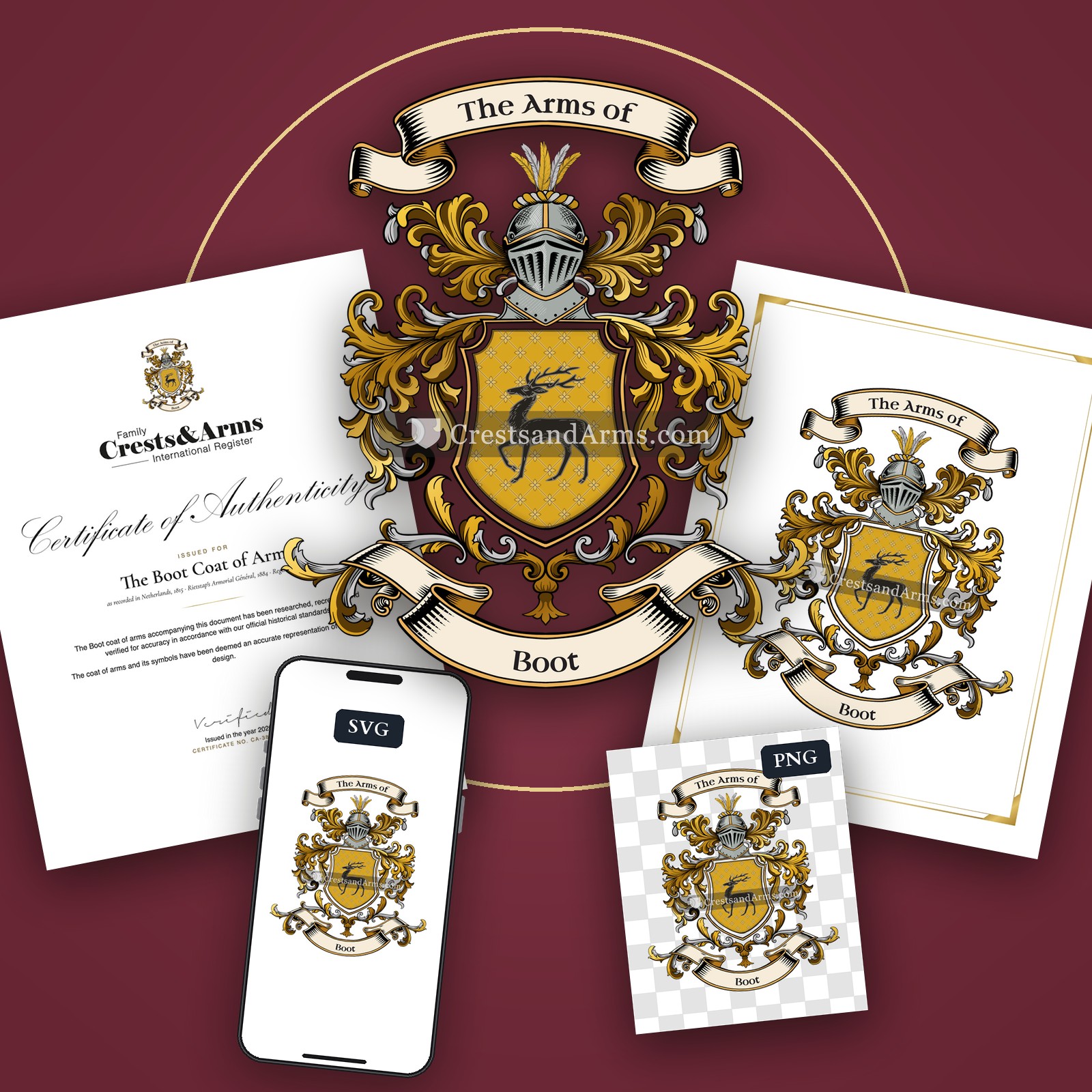
 stagPeace and harmony, and one who will not fight unprovoked
 stagPeace and harmony, and one who will not fight unprovoked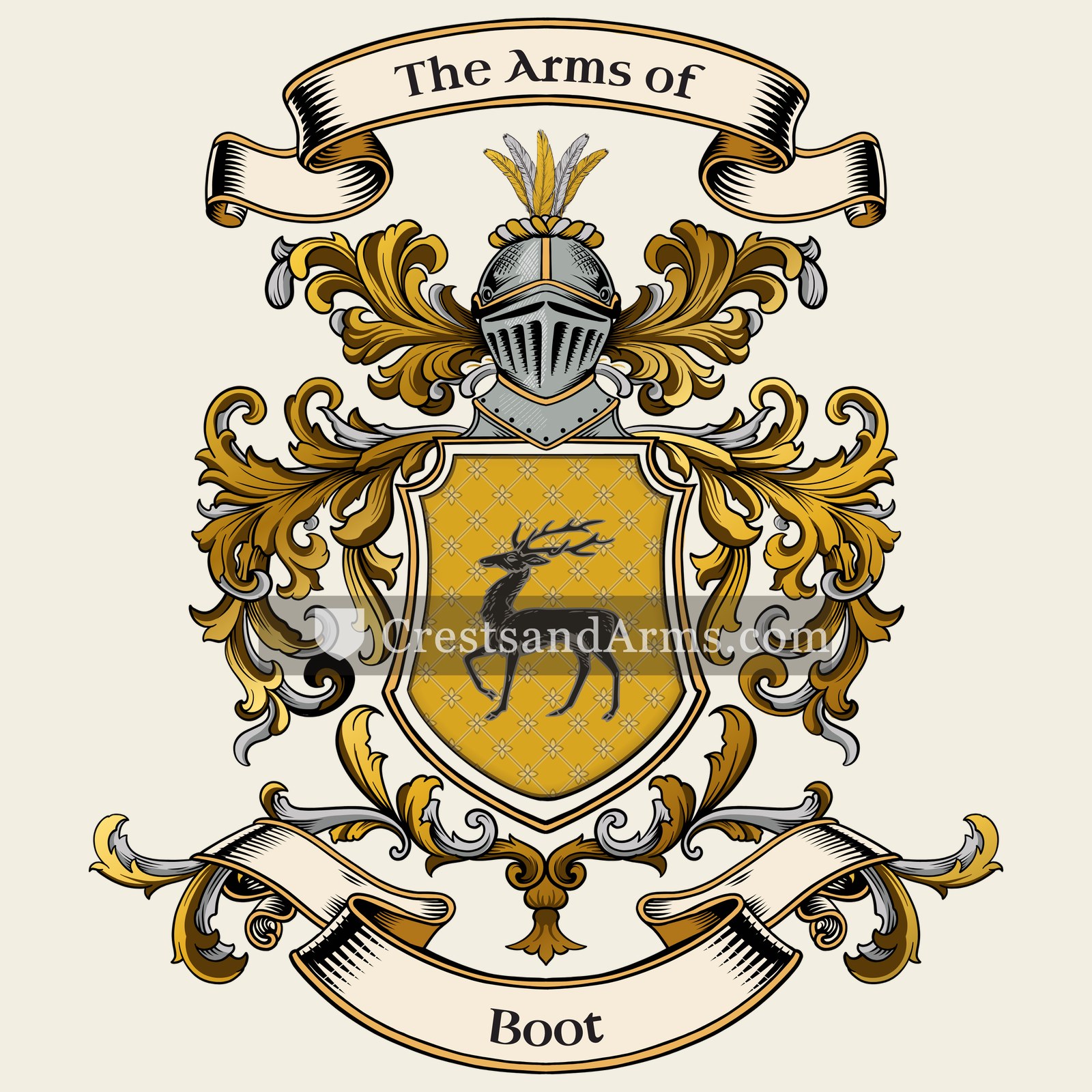


 legStrength and swiftness