Map of France showing where the Borda arms are recorded
The Borda arms were recorded in France, c. 1663.
Arms such as these were typically recorded in Bretagne.
More families held coats of arms in Bretagne than anywhere else in France. The land was divided into many small estates rather than a few large ones, so far more households counted as gentry, and each needed a shield of its own to be told apart.
This is where the arms were entered in the register. Families often moved to other parts of the country, so the same name can turn up in more than one region.
The body that granted and recorded arms in France in this period.
Louis XIV of France
Sovereign of the period
Louis XIV of France
1643–1715
Reigning in France when the Borda arms are first recorded.
How Arms Worked in France
In France, a coat of arms was a mark of honor that passed down through the male line to all legitimate descendants. Families often used the same shield without changes to show their shared heritage. If a branch wanted to stand out, they could add a small mark to their shield to show their specific place in the family tree.
Granting authority
The Juge d'armes de France acted as the official authority that regulated and verified coats of arms across the country.
How they got arms
Families typically inherited their arms from ancestors, though they could also receive them through royal grants or by proving their noble status.
Where arms were recorded
Coats of arms were officially recorded in the Armorial Général de France, which began its main collection in the year 1696.
The family's standing
Recorded among the armigerous families of France.
Origin & History of the Borda Family in France
The Borda family name is deeply rooted in the historical landscape of France, with documented evidence placing its members in the region of Bretagne as early as 1663. The name itself is thought to be topographical in origin, likely derived from the Old Occitan word "borda," which referred to a small farm, a hut, or a piece of land held by a tenant. This suggests that the earliest ancestors were likely agriculturalists or rural landowners who became identified by the specific plots they cultivated. As the family established itself in the western provinces, they integrated into the local social fabric, eventually moving beyond their agrarian beginnings to participate in the professional and administrative life of the French provinces. By the time the family appeared in the records of Bretagne during the mid-seventeenth century, they were part of a broader movement of families who were solidifying their presence in the region through land ownership and community involvement.
Coat of Arms & Family Crest Details
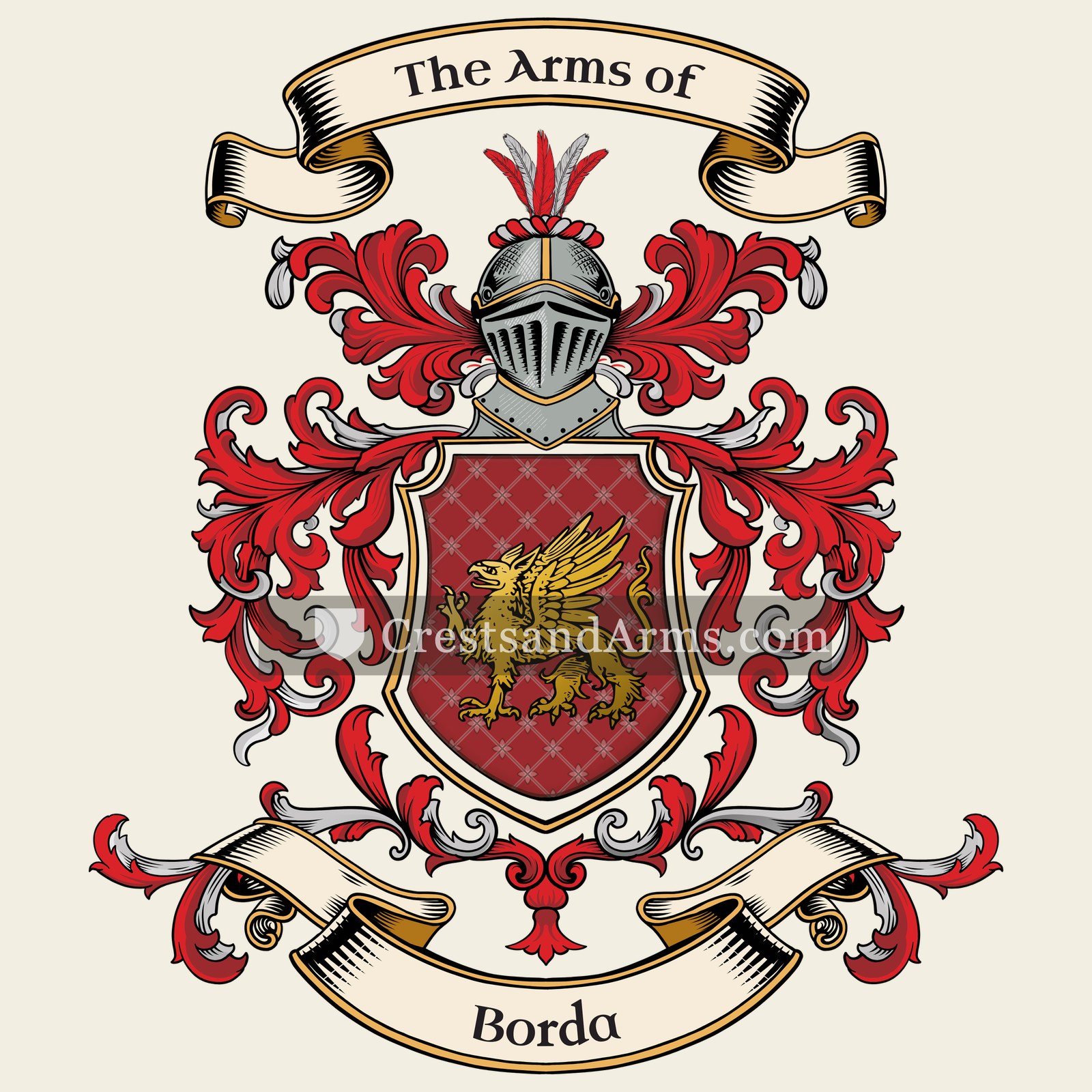
Symbols on this shield
griffinValour and vigilance, guarding great treasure
Colours
Red (Gules)Means: Military strength
Gold (Or)Means: Generosity
Historical info
Source
J. B. Rietstap, Armorial Général, Gouda: G. B. van Goor Zonen, 1884–87
Blazon (the actual original written record)
“De gu. au griffon d'or.”
SpainGuipuzcoa, c. 1722
Digital archive packCoat of arms PNG, gold border print PDF, vector SVG and the certificate of authenticity. Sent to your email in minutes.
Map of Spain showing where the Borda arms are recorded
The Borda arms were recorded in Guipuzcoa, c. 1722.
This is where the arms were entered in the register. Families often moved to other parts of the country, so the same name can turn up in more than one region.
The body that granted and recorded arms in Spain in this period.
Philip V of Spain
Sovereign of the period
Philip V of Spain
1714–1724
Reigning in France when the Borda arms are first recorded.
How Arms Worked in Spain
In Spain, a coat of arms was considered a form of property that belonged to the entire family line. These arms were passed down from a father to all his children equally. Younger branches of the family usually kept the original design without needing to add any special marks to distinguish their specific line.
Granting authority
The Cronista Rey de Armas was the official body that regulated and granted coats of arms throughout Spain.
How they got arms
Families often obtained their arms through royal grants or by proving their noble status to the official heraldic authority.
Where arms were recorded
Coats of arms were officially recorded in the registers of the Cronista Rey de Armas starting in 1496.
The family's standing
Recorded among the armigerous families of Spain.
Origin & History of the Borda Family in Spain
The surname Borda originates from the Basque language, where the word "borda" refers to a small hut or a mountain shelter used by shepherds. In the rugged landscape of the Basque Country, these structures were essential for those tending livestock in high pastures during the summer months. By the early 18th century, the family was well-established in the province of Guipuzcoa, a region defined by its steep mountains and strong maritime traditions. Families bearing this name were often deeply connected to the rural economy of the northern Spanish coast. As the family grew, they became part of the local social structure in towns like Oyarzun and Irún, where their name served as a link to the ancestral lands and the traditional farming life of the Pyrenees. This history reflects a deep bond between the family and the challenging environment of northern Spain.
Borda Meaning & Related Branches
Root word
Bord
Old French term for a small farm or hut.
This name
BordaRefers to someone who lived on or worked a small plot of land.
Documented Sources
J. B. Rietstap, Armorial Général, Gouda: G. B. van Goor Zonen, 1884–87
Dauzat, Albert, Dictionnaire étymologique des noms et prénoms de France, 1951
Morlet, Marie-Thérèse, Dictionnaire étymologique des noms de famille, 1991
Archives départementales du Finistère, Registres paroissiaux et d'état civil, 1663
Digital archive packCoat of arms PNG, gold border print PDF, vector SVG and the certificate of authenticity. Sent to your email in minutes.


 cross symbolChristian faith and service
 escallopThe pilgrim's shell, and a long journey made
 martletA younger son, who must win his own land
 cross symbolChristian faith and service
 escallopThe pilgrim's shell, and a long journey made
 martletA younger son, who must win his own land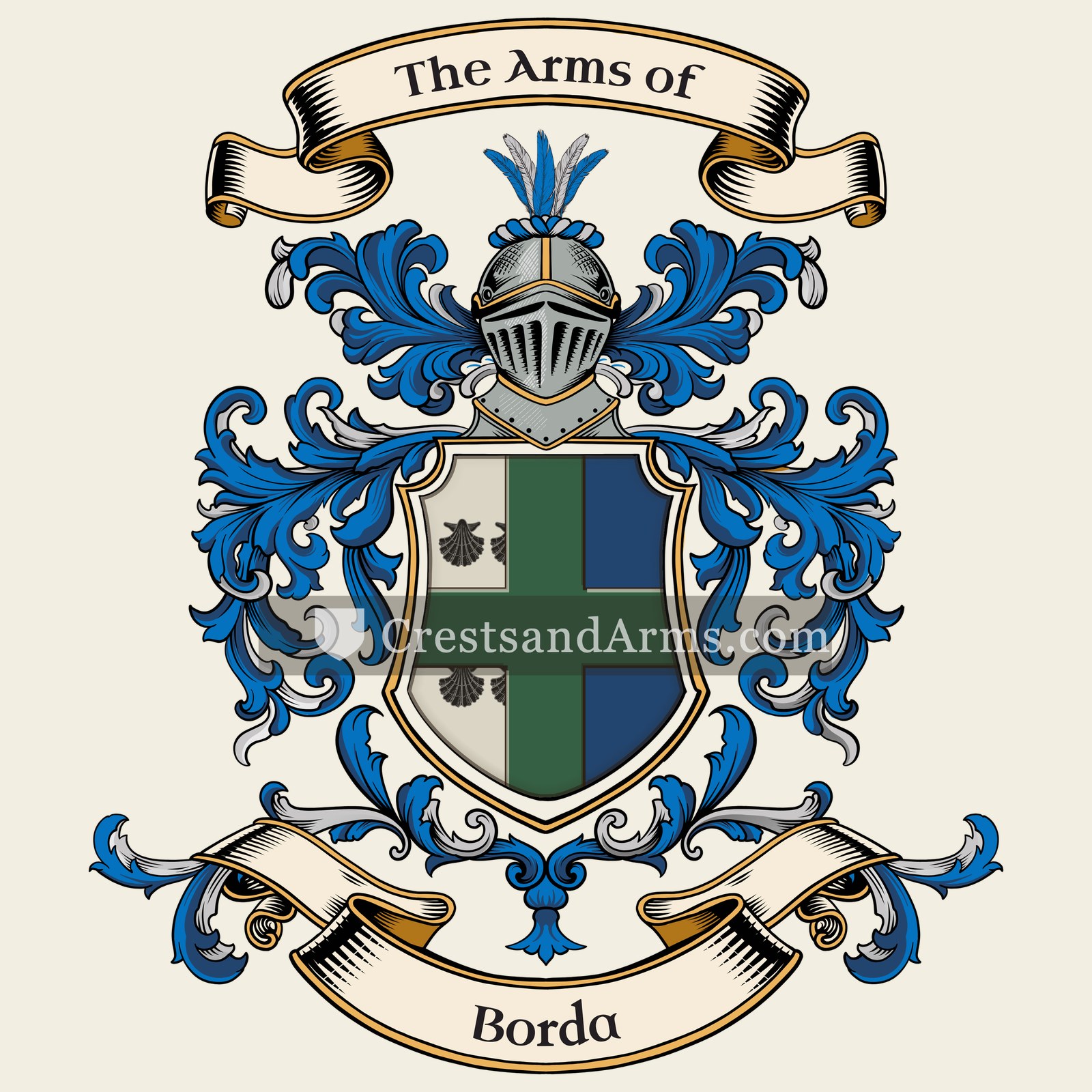


 griffinValour and vigilance, guarding great treasure