A record of documented arms, meaning and origin, researched for the Borski family lines. Documented in 2 countries.
Reg. 9718 · Dutch, A–C
Coat of Arms & Family Crest Details
Symbols on this shield
roseThe seventh son, and beauty with grace
Colours
Black (Sable)Means: Constancy
Gold (Or)Means: Generosity
Historical info
Source
J. B. Rietstap, Armorial Général, Gouda: G. B. van Goor Zonen, 1884–87
Blazon (the actual original written record)
“De sa. à une fleur de néflier de cinq feuilles d'or. C.: une femme iss. de carn., la tête tournée un peu vers sen., les cheveux épars de sa., diadémée d'or, nue jusqu'aux reins, hab. d'une toile d'or en guise de ceinture qu'elle relève de sa main sen., la main dextre abaissée.”
NetherlandsAmsterdam, c. 1815
Digital archive packCoat of arms PNG, gold border print PDF, vector SVG and the certificate of authenticity. Sent to your email in minutes.
Map of Netherlands showing where the Borski arms are recorded
The Borski arms were recorded in Amsterdam, c. 1815.
This is where the arms were entered in the register. Families often moved to other parts of the country, so the same name can turn up in more than one region.
Region
Amsterdam
Town
Amsterdam
First recorded
1815
Granting Authority for the Borski Arms
Hoge Raad van Adel
Photograph made by me · CC BY-SA 3.0
The body that granted and recorded arms in Netherlands in this period.
William I of the Netherlands
Sovereign of the period
William I of the Netherlands
1815–1840
Reigning in Netherlands when the Borski arms are first recorded.
How Arms Worked in Netherlands
In the Netherlands, coats of arms were often used by noble families and those who held specific public offices. These arms were passed down through the generations to legitimate descendants. Younger branches of a family usually kept the original design without needing to add special marks. This system ensured that the family identity remained clear and consistent over many years.
Granting authority
The Hoge Raad van Adel is the official body that regulates and manages noble titles and coats of arms in the Netherlands.
How they got arms
Families typically obtained their coats of arms through official royal grants or by proving their long-standing historical use of the symbols.
Where arms were recorded
Coats of arms are officially recorded in the registers held by the Hoge Raad van Adel, which began its work in 1814.
The family's standing
Recorded among the armigerous families of Netherlands.
Origin & History of the Borski Family in Netherlands
The Borski family name became a prominent fixture in the financial landscape of Amsterdam during the early nineteenth century. While the name likely has roots tracing back to Eastern European or Slavic origins, it gained significant status in the Netherlands through the business acumen of Willem Borski and his wife, Johanna Borski. By 1815, the family was deeply embedded in the Dutch capital, where they played a vital role in the recovery of the national economy following the Napoleonic Wars. Johanna Borski, in particular, became a legendary figure in Dutch history for her decisive actions as a financier. She famously provided the necessary capital to save the Nederlandsche Bank during a period of extreme economic instability. This act solidified the family name as a symbol of reliability and influence within the Dutch banking sector for generations to come.
Coat of Arms & Family Crest Details
Symbols on this shield
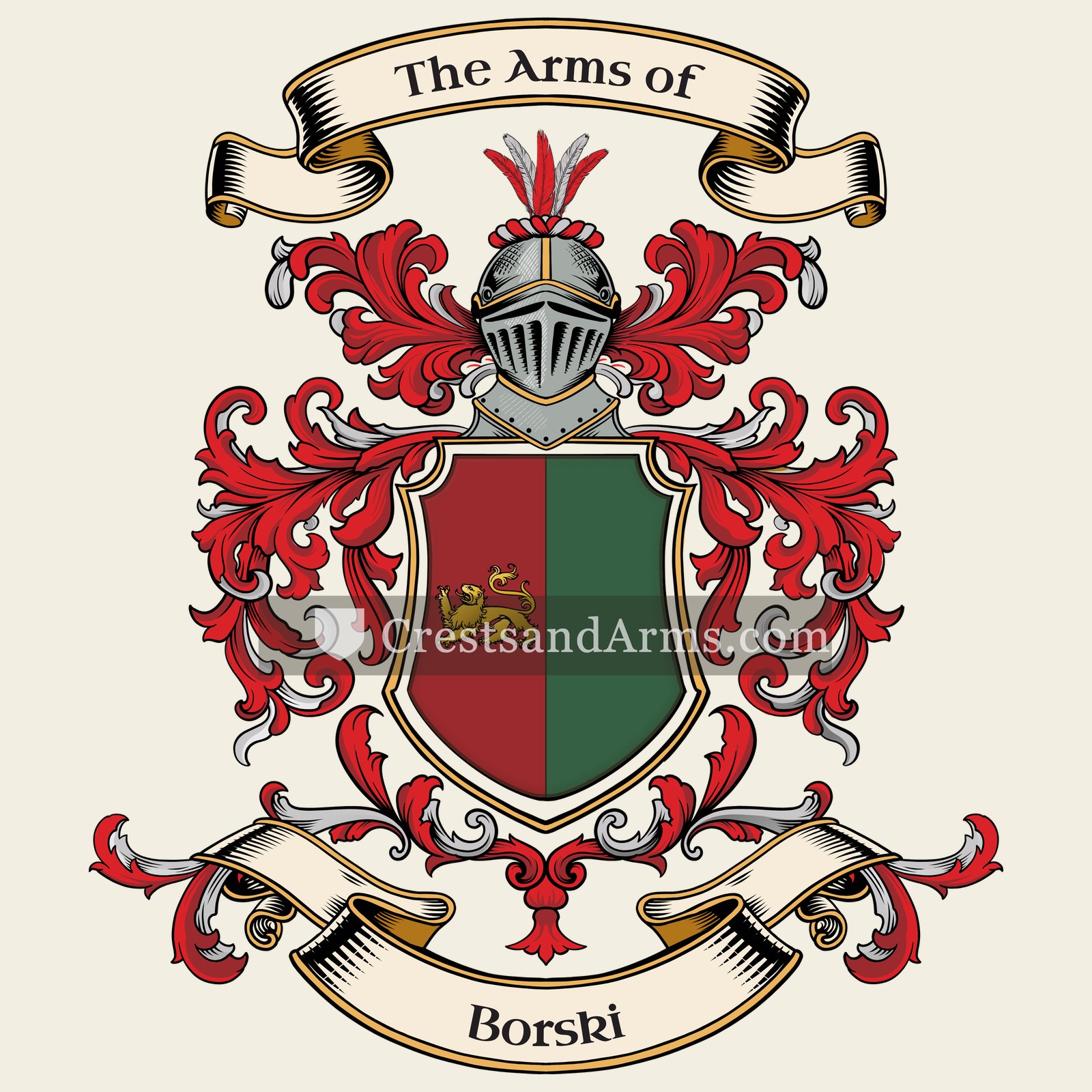
lionCourage, strength and royalty
Colours
Red (Gules)Means: Military strength
Green (Vert)Means: Hope
Gold (Or)Means: Generosity
Historical info
Source
J. B. Rietstap, Armorial Général, Gouda: G. B. van Goor Zonen, 1884–87
Blazon (the actual original written record)
“Tranché: au 1 de gu. au lion naiss. d'or; au 2 de sin. plein.”
PomeraniaPomerania, c. 1765
Digital archive packCoat of arms PNG, gold border print PDF, vector SVG and the certificate of authenticity. Sent to your email in minutes.
Map of Germany showing where the Borski arms are recorded
The Borski arms were recorded in Pomerania, c. 1765.
Pomerania was flat farming country on the Baltic coast, held in large estates by a small number of families. They kept their land for generations, and generations of landholding is what fills the registers.
This is where the arms were entered in the register. Families often moved to other parts of the country, so the same name can turn up in more than one region.
The body that granted and recorded arms in Germany in this period.
Francis I, Holy Roman Emperor
Sovereign of the period
Francis I, Holy Roman Emperor
1745–1765
Reigning in Netherlands when the Borski arms are first recorded.
How Arms Worked in Germany
In the Holy Roman Empire, coats of arms were often granted to individuals by the Emperor or his representatives. These arms were then passed down through the generations to all legitimate descendants of the original holder. Younger branches of a family usually kept the same shield design without needing to change it, as the arms belonged to the entire lineage.
Granting authority
The Holy Roman Emperor held the sole power to grant new coats of arms throughout his vast imperial territories.
How they got arms
Families typically obtained their coats of arms through a formal imperial grant or by proving their noble status to the authorities.
Where arms were recorded
These grants were officially recorded in the Imperial Chancery registers, which began keeping formal records of such honors during the Middle Ages.
The family's standing
Recorded among the armigerous families of Pomerania.
Origin & History of the Borski Family in Germany
The Borski family name is deeply rooted in the historical region of Pomerania, where members of the family were documented as early as 1765. During the eighteenth century, this area was part of the Kingdom of Prussia and served as a vital agricultural landscape along the Baltic Sea. The name itself follows a naming pattern common to Slavic-influenced regions of Germany, often derived from the word "bor," which refers to a pine forest or a woodland area. This suggests that the earliest ancestors of the Borski family were likely settlers or farmers who lived near or worked within the dense forests that defined the Pomeranian countryside. By establishing themselves in these rural communities, the family became part of the long history of migration and land development that shaped the social fabric of northern Germany during the Enlightenment era.
Borski Meaning & Related Branches
Root word
Bork
A shortened form of the Germanic name Borchard meaning brave stronghold.
This name
BorskiA patronymic surname indicating descent from a person named Bork or Borchard.
also spelled
Borsky
Related arms
Borskyvariant spelling
Documented Sources
J. B. Rietstap, Armorial Général, Gouda: G. B. van Goor Zonen, 1884–87
Jonker, Joost. Merchants, Bankers, Middlemen: The Amsterdam Money Market during the First Half of the 19th Century. 1996
Van Dillen, Johannes G. Van Rijkdom en Regenten: Handboek tot de economische en sociale geschiedenis van Nederland tijdens de Republiek. 1970
Amsterdam City Archives (Stadsarchief Amsterdam), Archief van de familie Borski
Digital archive packCoat of arms PNG, gold border print PDF, vector SVG and the certificate of authenticity. Sent to your email in minutes.


 roseThe seventh son, and beauty with grace
 roseThe seventh son, and beauty with grace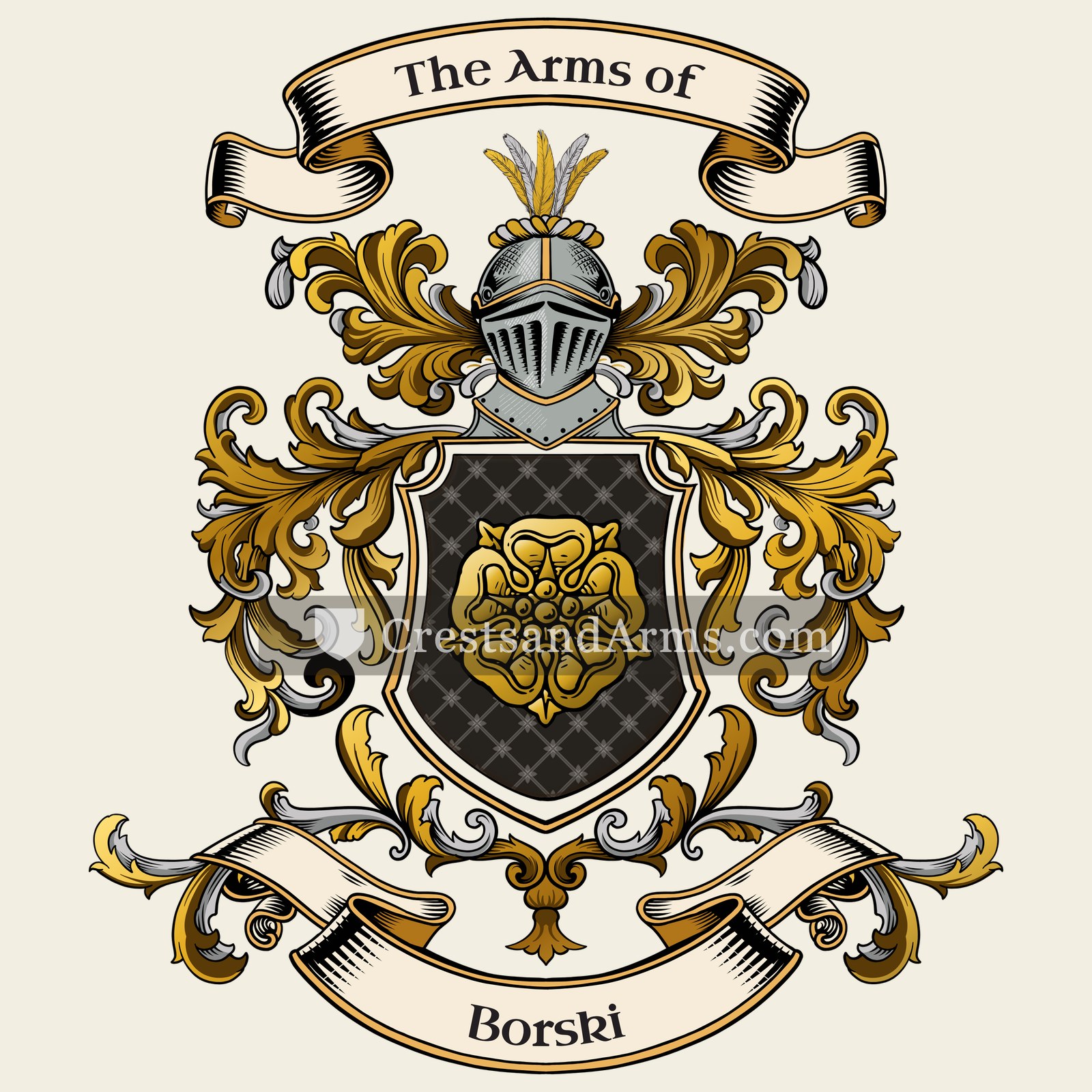


 lionCourage, strength and royalty