Map of France showing where the Bosner arms are recorded
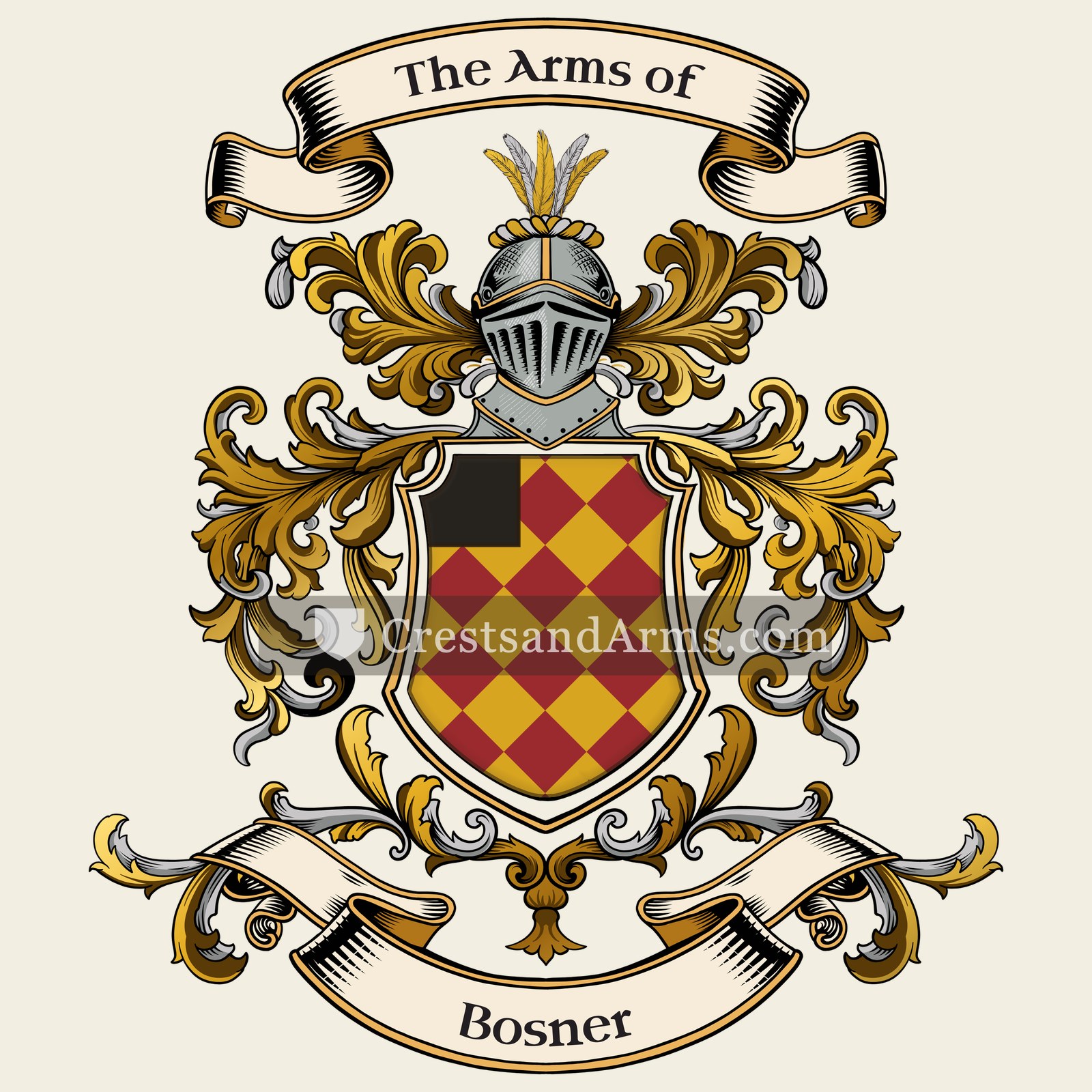
The Bosner arms were recorded in Normandie, c. 1663.
Normandie held a dense crowd of knightly families on some of the best farmland in France. Its men had fought and settled abroad for generations, and a family that sent sons to war needed a shield they could be recognised by.
This is where the arms were entered in the register. Families often moved to other parts of the country, so the same name can turn up in more than one region.
The body that granted and recorded arms in France in this period.
Louis XIV of France
Sovereign of the period
Louis XIV of France
1643–1715
Reigning in France when the Bosner arms are first recorded.
How Arms Worked in France
In France, a coat of arms was a mark of honor that passed down through the male line to all legitimate descendants. Families often used the same shield without changes to show their shared heritage. If a branch wanted to stand out, they could add a small mark to their shield to show their specific place in the family tree.
Granting authority
The Juge d'armes de France acted as the official authority that regulated and verified coats of arms across the country.
How they got arms
Families typically inherited their arms from ancestors, though they could also receive them through royal grants or by proving their noble status.
Where arms were recorded
Coats of arms were officially recorded in the Armorial Général de France, which began its main collection in the year 1696.
The family's standing
Recorded among the armigerous families of Normandie.
Origin & History of the Bosner Family in France
The family name Bosner traces its roots back to the northern region of France known as Normandy. Historical records confirm that members of the family were established in this area by 1663. During the seventeenth century, Normandy was a hub of agricultural activity and maritime trade. Families living in this region often took on surnames that described their trade, their physical traits, or the specific lands they occupied. The name Bosner likely evolved from these local linguistic traditions as families moved through the rural parishes of the French countryside. Life for the family in this era was tied closely to the rhythms of the seasons and the local church, which served as the primary place for recording births, marriages, and deaths. As the seventeenth century progressed, the Bosner family became part of the social fabric of the Norman landscape before many individuals eventually sought new opportunities across the Atlantic.
Related Branches & Arms
Root word
Bos
Old French term for wood or forest.
This name
BosnerA habitational name for someone who lived near or worked in a wooded area.
also spelled
Bosmere
Documented Sources
J. B. Rietstap, Armorial Général, Gouda: G. B. van Goor Zonen, 1884–87
Archives départementales de la Seine-Maritime, Registres paroissiaux et d'état civil
Archives nationales d'outre-mer, Fonds des colonies, Série E
Langlois, Charles-Victor, Archives de l'histoire de France, 1891
Digital archive packCoat of arms PNG, gold border print PDF, vector SVG and the certificate of authenticity. Sent to your email in minutes.