Map of France showing where the Bossio arms are recorded
The Bossio arms were recorded in France, c. 1663.
Arms such as these were typically recorded in Bretagne.
More families held coats of arms in Bretagne than anywhere else in France. The land was divided into many small estates rather than a few large ones, so far more households counted as gentry, and each needed a shield of its own to be told apart.
This is where the arms were entered in the register. Families often moved to other parts of the country, so the same name can turn up in more than one region.
The body that granted and recorded arms in France in this period.
Louis XIV of France
Sovereign of the period
Louis XIV of France
1643–1715
Reigning in France when the Bossio arms are first recorded.
How Arms Worked in France
In France, a coat of arms was a mark of honor that passed down through the male line to all legitimate descendants. Families often used the same shield without changes to show their shared heritage. If a branch wanted to stand out, they could add a small mark to their shield to show their specific place in the family tree.
Granting authority
The Juge d'armes de France acted as the official authority that regulated and verified coats of arms across the country.
How they got arms
Families typically inherited their arms from ancestors, though they could also receive them through royal grants or by proving their noble status.
Where arms were recorded
Coats of arms were officially recorded in the Armorial Général de France, which began its main collection in the year 1696.
The family's standing
Recorded among the armigerous families of France.
Origin & History of the Bossio Family in France
The history of the Bossio family in France is deeply rooted in the coastal region of Bretagne, where records confirm their presence as early as 1663. During the seventeenth century, Bretagne was a distinct province with its own unique customs and strong ties to the sea. Families living in this area often played vital roles in local trade, maritime activities, or the administration of rural parishes. As the Bossio name became established in the region, its members likely integrated into the social and economic life of the Breton countryside. While the name itself may have origins linked to regional dialects or specific ancestral occupations, its survival in the archives of Bretagne highlights a long-standing connection to the history of western France. By maintaining a presence in this area for centuries, the family became part of the enduring cultural tapestry that defines the Breton identity.
Meaning of the Bossio family crest colors & symbols
Symbols on this shield
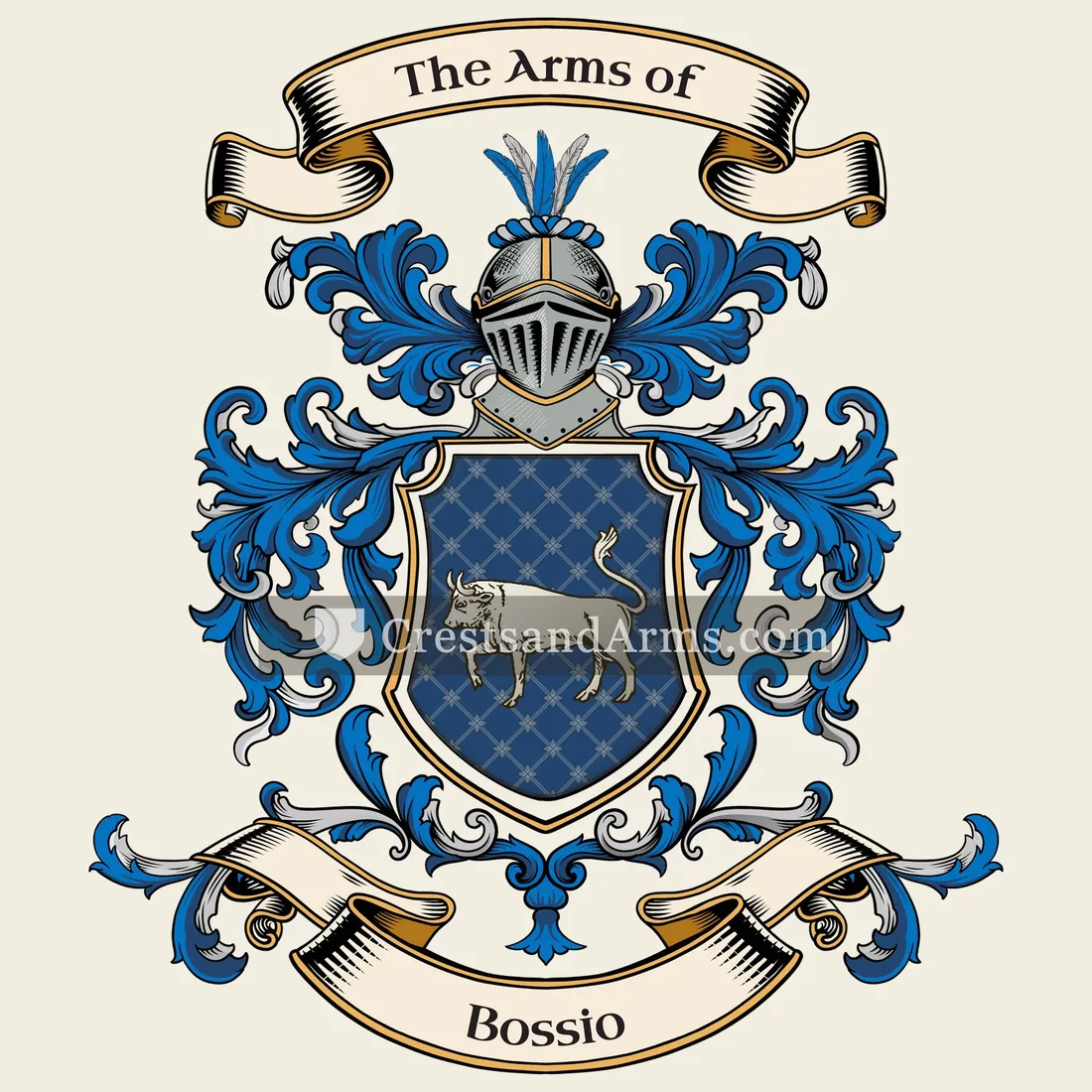
bullValour and generosity
Colours
Blue (Azure)Means: Loyalty and truth
Silver (Argent)Means: Peace and sincerity
Historical info
Source
J. B. Rietstap, Armorial Général, Gouda: G. B. van Goor Zonen, 1884–87
Blazon (the actual original written record)
“D'azur au boeuf pass. d'arg.”
ItalyMilan, c. 1775
Digital archive packCoat of arms PNG, gold border print PDF, vector SVG and the certificate of authenticity. Sent to your email in minutes.
Map of Italy showing where the Bossio arms are recorded
The Bossio arms were recorded in Milan, c. 1775.
This is where the arms were entered in the register. Families often moved to other parts of the country, so the same name can turn up in more than one region.
The body that granted and recorded arms in Italy in this period.
Alvise Giovanni Mocenigo
Sovereign of the period
Alvise Giovanni Mocenigo
1763–1778
Reigning in France when the Bossio arms are first recorded.
How Arms Worked in Italy
In the Italian states, coats of arms were often used by noble families to show their status and history. These symbols were passed down through the generations to all legitimate male descendants. Younger branches of a family usually kept the original design but sometimes added small changes to distinguish their specific line from the main branch.
Granting authority
Various local rulers and city governments controlled the use of coats of arms across the different Italian states.
How they got arms
Families often assumed their own arms or received them as official grants from local lords, popes, or city councils.
Where arms were recorded
Arms were recorded in local city archives or private family books rather than in one single national register.
The family's standing
Recorded among the armigerous families of Italy.
Origin & History of the Bossio Family in Italy
The Bossio family name is deeply rooted in the historical landscape of Northern Italy, with a particularly strong presence in the city of Milan by the late eighteenth century. During the year 1775, records indicate that members of the family were active participants in the social and professional life of this bustling urban center. The name itself likely evolved from regional dialects and nicknames that were common in the Lombardy region during the medieval period. As Milan grew into a major hub for trade and administration, families like the Bossios often held roles that connected them to the local merchant classes or the civil service. Their presence in the city during this era suggests they were well-integrated into the local community, contributing to the development of the region during a time of significant political and cultural change under the influence of the Austrian Empire.
Meaning of the Bossio family crest colors & symbols
Symbols on this shield
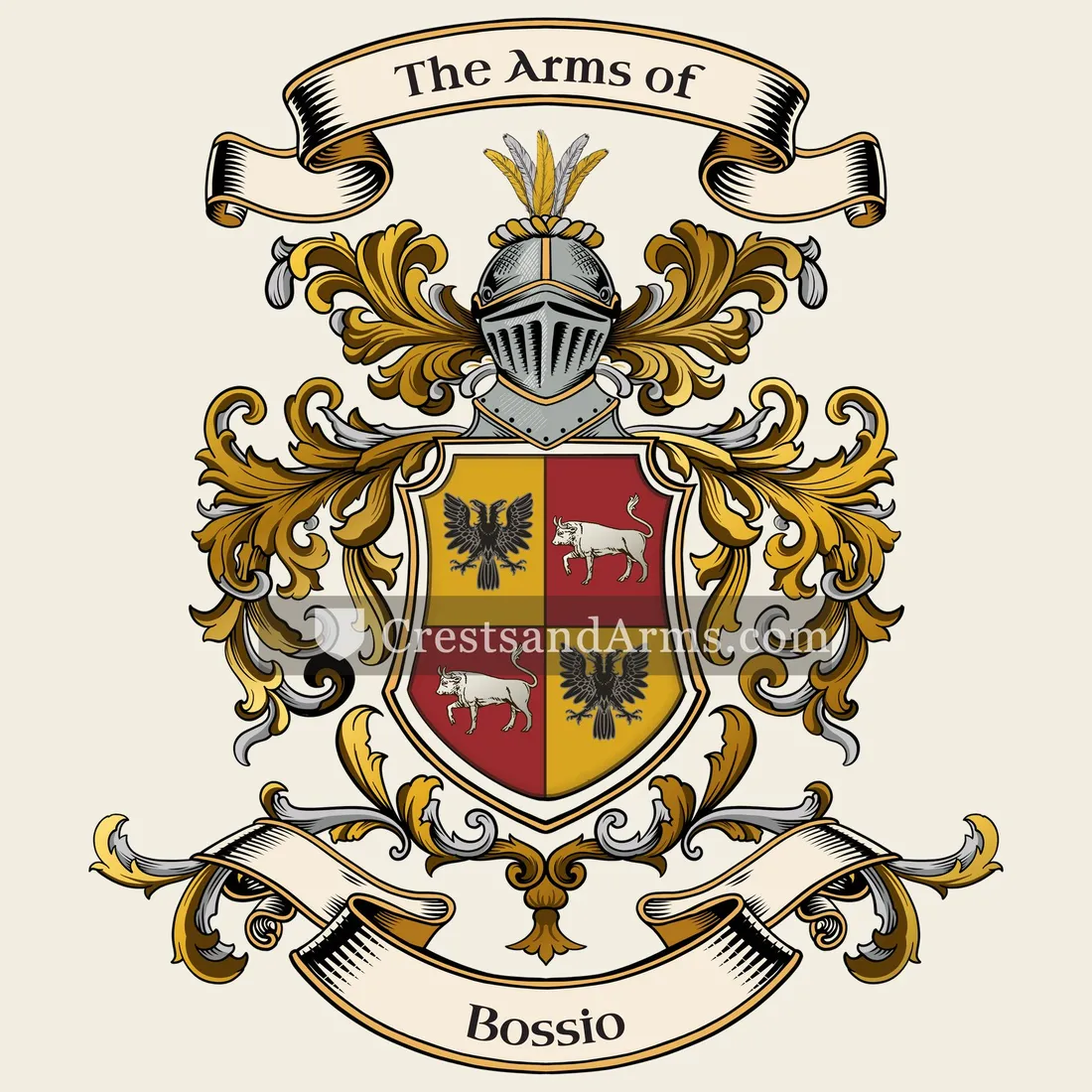
eagleNobility, strength and a keen mind
bullValour and generosity
Colours
Gold (Or)Means: Generosity
Red (Gules)Means: Military strength
Black (Sable)Means: Constancy
Silver (Argent)Means: Peace and sincerity
Historical info
Source
J. B. Rietstap, Armorial Général, Gouda: G. B. van Goor Zonen, 1884–87
Blazon (the actual original written record)
“Ec.: aux 1 et 4 d'or à l'aigle de sa., cour. du champ; aux 2 et 3 de gu. au boeuf pass. d'arg. Cq. cour. C.: l'aigle. L. à dextre d'arg. et de gu., à sen. d'or et de sa.”
Austriac. 1654
Digital archive packCoat of arms PNG, gold border print PDF, vector SVG and the certificate of authenticity. Sent to your email in minutes.
Map of Austria showing where the Bossio arms are recorded
The Bossio arms were recorded in Austria, c. 1654.
Arms such as these were typically recorded in Tyrol.
Tyrol was mountain country in western Austria, where the valleys were held by families who had been there a very long time. Old tenure counted for more than money, and old families carried arms.
This is where the arms were entered in the register. Families often moved to other parts of the country, so the same name can turn up in more than one region.
Region
Tyrol
First recorded
1654
Granting Authority for the Bossio Arms
Imperial and Royal chancery
Sodacan · CC BY-SA 3.0
The body that granted and recorded arms in Austria in this period.
Ferdinand III, Holy Roman Emperor
Sovereign of the period
Ferdinand III, Holy Roman Emperor
1637–1657
Reigning in France when the Bossio arms are first recorded.
How Arms Worked in Austria
Austrian coats of arms were often linked directly to noble titles granted by the Emperor. These symbols belonged to the entire family line rather than just one individual. When a family grew, new branches kept the original design without needing to change it. This system allowed all members of a noble house to share the same identity across many generations.
Granting authority
The Imperial and Royal chancery managed all heraldic matters and controlled the official granting of arms throughout the Austrian lands.
How they got arms
Families typically received their arms through a formal imperial decree that often accompanied the elevation of a person to noble status.
Where arms were recorded
Official records of these grants were kept in the Imperial Register of Nobility which began its formal documentation process in 1453.
The family's standing
Recorded among the armigerous families of Austria.
Origin & History of the Bossio Family in Austria
The history of the Bossio family in Austria is deeply rooted in the rugged landscape of the Tyrol region, where records confirm their presence as early as 1654. During this period, the family likely integrated into the social and economic fabric of the Alpine valleys, which served as a vital crossroads for trade and travel between the Italian states and the German-speaking lands. The name itself reflects a Mediterranean linguistic heritage, suggesting that early members may have migrated northward through the mountain passes to settle in the Tyrol. Life in this region during the mid-seventeenth century was defined by strict local governance and agricultural traditions, requiring families to be resilient and adaptable to the harsh mountain climate. By establishing themselves in this area, the Bossio family became part of the long history of cultural exchange that shaped the identity of the Austrian Tyrol.
Bossio Meaning & Related Branches
Root word
Bosse
A hump, swelling, or rounded protrusion on the body or surface.
This name
BossioRefers to a person with a hunched back or someone living near a rounded hill.
also spelled
Bossy
Bosi
Bosee
Documented Sources
J. B. Rietstap, Armorial Général, Gouda: G. B. van Goor Zonen, 1884–87
Archives départementales d'Ille-et-Vilaine, Registres paroissiaux et d'état civil, 1663
Poterie, Michel, Histoire de la Bretagne et des Bretons, 1977
Digital archive packCoat of arms PNG, gold border print PDF, vector SVG and the certificate of authenticity. Sent to your email in minutes.


 armA person of action, industrious and laborious
 armA person of action, industrious and laborious
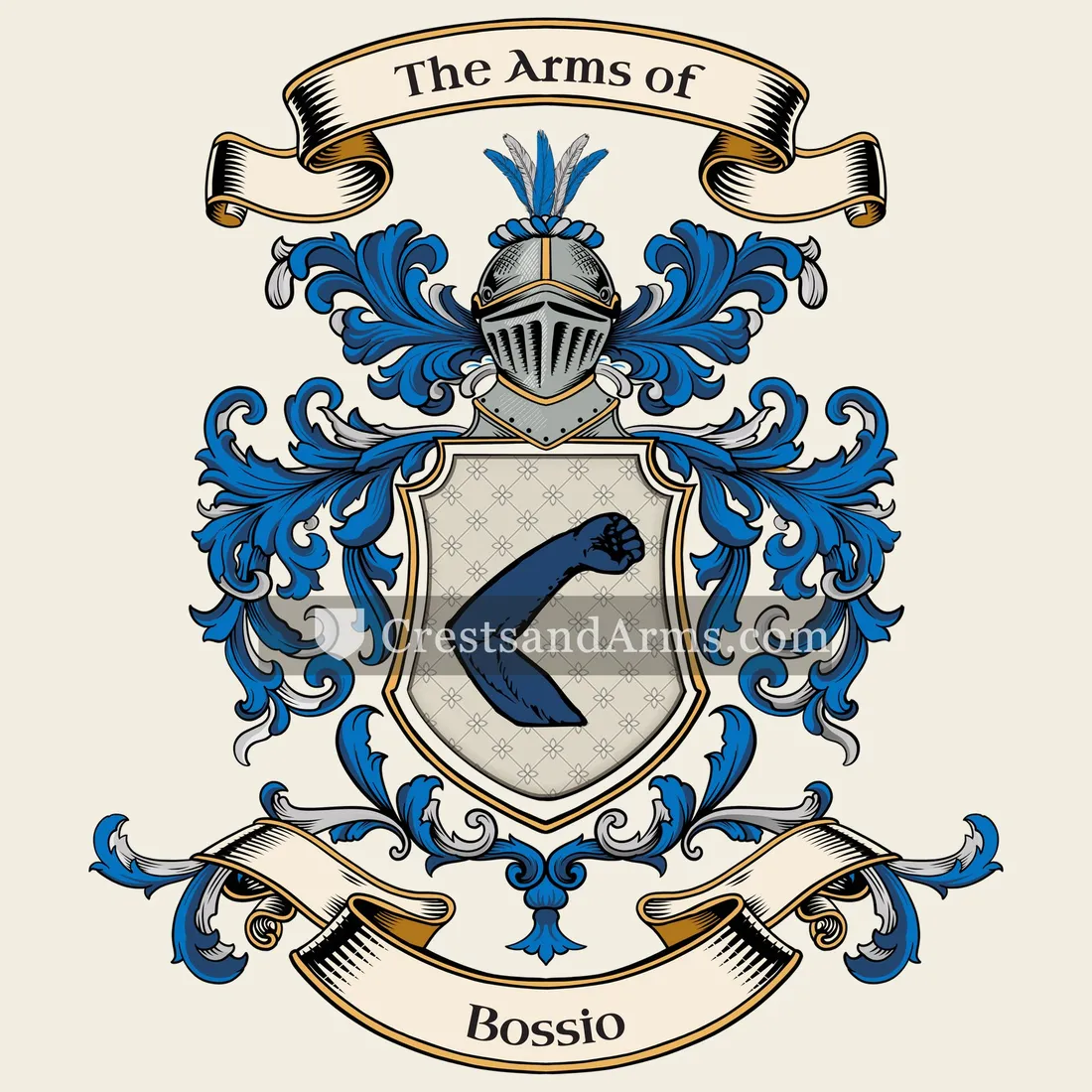


 bullValour and generosity


 eagleNobility, strength and a keen mind