Map of France showing where the Boster arms are recorded
The Boster arms were recorded in Toulouse, c. 1663.
This is where the arms were entered in the register. Families often moved to other parts of the country, so the same name can turn up in more than one region.
The body that granted and recorded arms in France in this period.
Louis XIV of France
Sovereign of the period
Louis XIV of France
1643–1715
Reigning in France when the Boster arms are first recorded.
How Arms Worked in France
In France, a coat of arms was a mark of honor that passed down through the male line to all legitimate descendants. Families often used the same shield without changes to show their shared heritage. If a branch wanted to stand out, they could add a small mark to their shield to show their specific place in the family tree.
Granting authority
The Juge d'armes de France acted as the official authority that regulated and verified coats of arms across the country.
How they got arms
Families typically inherited their arms from ancestors, though they could also receive them through royal grants or by proving their noble status.
Where arms were recorded
Coats of arms were officially recorded in the Armorial Général de France, which began its main collection in the year 1696.
The family's standing
Recorded among the armigerous families of France.
Origin & History of the Boster Family in France
The family name Boster finds its historical roots in the vibrant cultural landscape of southern France. By the year 1663, records confirm that members of the family were established in the city of Toulouse. During this period, Toulouse served as a major center for trade and legal administration within the Languedoc region. Families living in this area often played active roles in the local economy, which relied heavily on the production of pastel dye and the bustling activity of the Garonne River. Life for the Boster family in the seventeenth century would have been shaped by the unique traditions of the Occitan culture and the religious shifts occurring across France at the time. As residents of a prominent urban center, these early ancestors were likely integrated into the professional or merchant classes that defined the social structure of the city. Their presence in the historical registers of Toulouse provides a clear link to the regional identity of the French south during the reign of Louis XIV.
Meaning of the Boster family crest colors & symbols
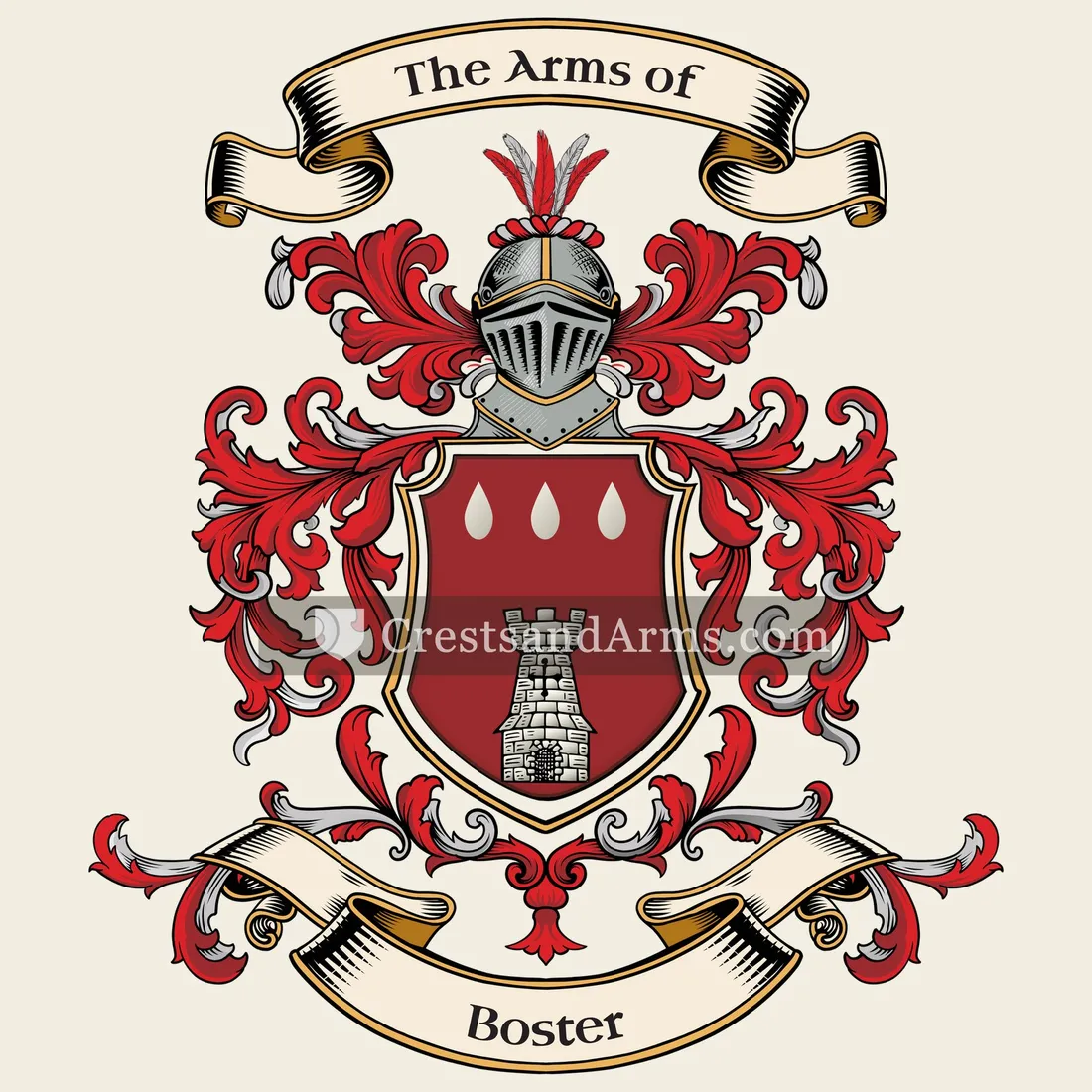
Symbols on this shield
towerGrandeur and solidity, and a stronghold defended
dropletsTears, and grief borne with patience
Colours
Red (Gules)Means: Military strength
Silver (Argent)Means: Peace and sincerity
Historical info
Source
J. B. Rietstap, Armorial Général, Gouda: G. B. van Goor Zonen, 1884–87
Blazon (the actual original written record)
“De gu. au château carré ou rond d'arg., sommé de tourelles couvertes de toits pointus: acc. en chef de trois larmes rangées d'arg. (Quelquefois les larmes sont séparées du château par une fasce d'or.)”
GenevoisGenevois, c. 1745
Digital archive packCoat of arms PNG, gold border print PDF, vector SVG and the certificate of authenticity. Sent to your email in minutes.
Map of Switzerland showing where the Boster arms are recorded
The Boster arms were recorded in Genevois, c. 1745.
Genevois was Alpine country south of Geneva, held in small estates by families who stayed put. Land there passed down the same line for centuries, and long tenure counted for more than wealth.
This is where the arms were entered in the register. Families often moved to other parts of the country, so the same name can turn up in more than one region.
The body that granted and recorded arms in Switzerland in this period.
How Arms Worked in Switzerland
In Switzerland, coats of arms were not restricted to the nobility and were often adopted by common citizens and families. These symbols were passed down through generations to show family identity. When branches of a family grew, they often changed small details of the design to distinguish their own line from the original group.
Granting authority
Cantonal and civic authorities managed the use of coats of arms within their specific regions and local jurisdictions.
How they got arms
Families typically assumed their own coats of arms based on local custom rather than receiving them from a central monarch.
Where arms were recorded
Arms were recorded in various cantonal and civic registers starting from the fourteenth century throughout the Swiss region.
The family's standing
Recorded among the armigerous families of Genevois.
Origin & History of the Boster Family in Switzerland
The history of the Boster family in Switzerland is deeply connected to the region of Genevois during the mid-eighteenth century. Records confirm that members of the family were established in this area by 1745, living within a landscape defined by the influence of the Republic of Geneva and the surrounding Savoyard territories. During this era, families in the Genevois region often moved between rural farming communities and the growing urban center of Geneva to find work in trade or skilled crafts. The name likely evolved as a local identifier for people living near specific geographic landmarks or working in traditional agricultural roles common to the Alpine foothills. As the family settled into these communities, they became part of the social fabric of a region known for its complex political history and its role as a crossroads for travelers moving between France and the Italian states. By maintaining a presence in the Genevois, the early Boster family members contributed to the long-standing traditions of Swiss regional life that persisted well into the modern age.
Boster Meaning & Related Branches
Root word
Bost
Derived from the Old French word for a wooded area or thicket.
This name
BosterAn occupational or locational surname referring to someone who lived near a small forest or grove.
also spelled
Bastyere
Bastyer
Bastiery
Bastie
Documented Sources
J. B. Rietstap, Armorial Général, Gouda: G. B. van Goor Zonen, 1884–87
Archives Départementales de la Haute-Garonne, Registres paroissiaux et d'état civil, 1663
Wolff, Philippe, Histoire de Toulouse, 1974
Digital archive packCoat of arms PNG, gold border print PDF, vector SVG and the certificate of authenticity. Sent to your email in minutes.


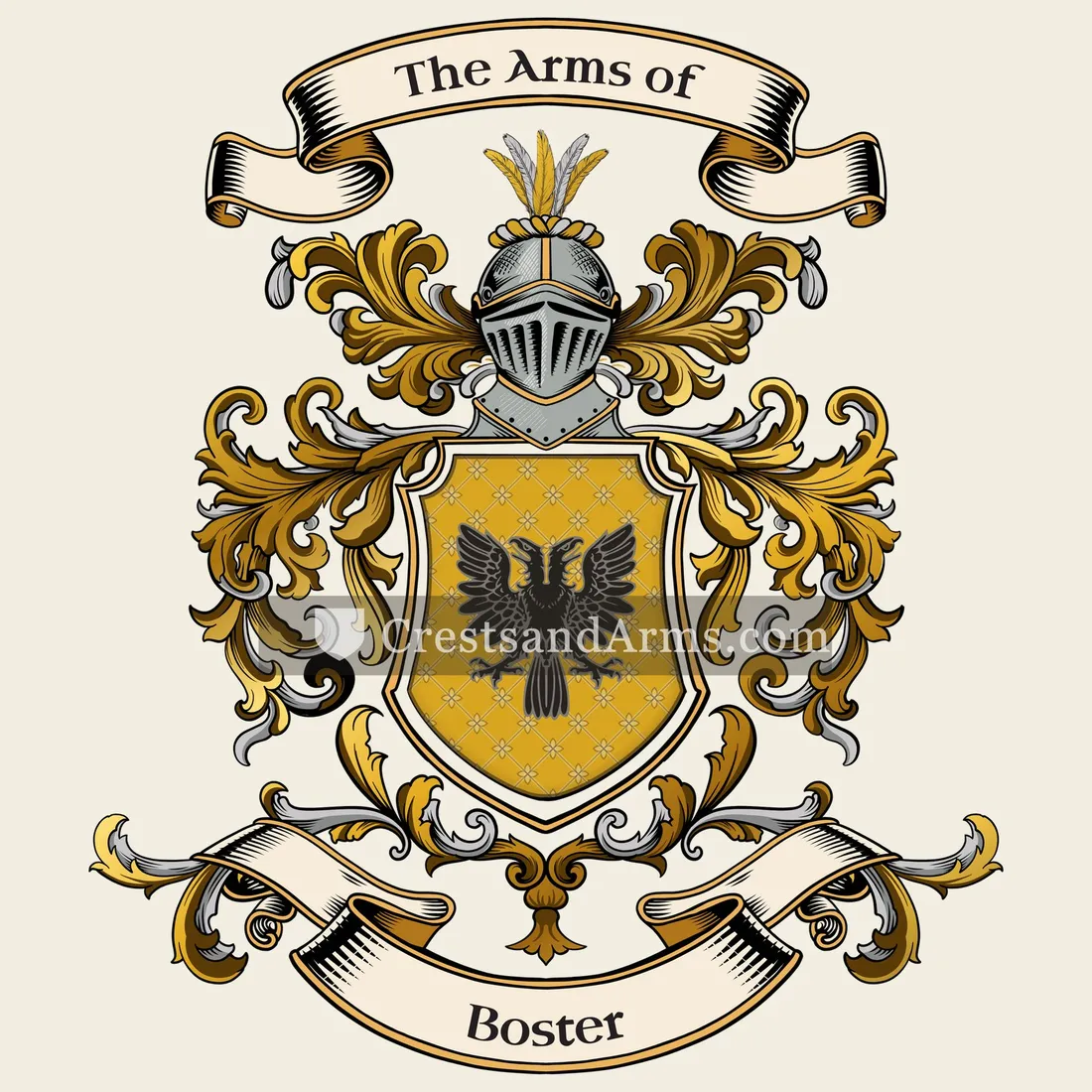
 eagleNobility, strength and a keen mind
 eagleNobility, strength and a keen mind


 towerGrandeur and solidity, and a stronghold defended
 dropletsTears, and grief borne with patience