Map of Netherlands showing where the Bourner arms are recorded
The Bourner arms were recorded in Netherlands, c. 1815.
Arms such as these were typically recorded in Friesland.
Friesland was low, wet country on the northern coast of the Netherlands, farmed by families who had held the same land for centuries. Free landholders were unusually common there, and a free landholder could carry arms.
This is where the arms were entered in the register. Families often moved to other parts of the country, so the same name can turn up in more than one region.
Region
Friesland
First recorded
1815
Granting Authority for the Bourner Arms
Hoge Raad van Adel
Photograph made by me · CC BY-SA 3.0
The body that granted and recorded arms in Netherlands in this period.
William I of the Netherlands
Sovereign of the period
William I of the Netherlands
1815–1840
Reigning in Netherlands when the Bourner arms are first recorded.
How Arms Worked in Netherlands
In the Netherlands, coats of arms were often used by noble families and those who held specific public offices. These arms were passed down through the generations to legitimate descendants. Younger branches of a family usually kept the original design without needing to add special marks. This system ensured that the family identity remained clear and consistent over many years.
Granting authority
The Hoge Raad van Adel is the official body that regulates and manages noble titles and coats of arms in the Netherlands.
How they got arms
Families typically obtained their coats of arms through official royal grants or by proving their long-standing historical use of the symbols.
Where arms were recorded
Coats of arms are officially recorded in the registers held by the Hoge Raad van Adel, which began its work in 1814.
The family's standing
Recorded among the armigerous families of Netherlands.
Origin & History of the Bourner Family in Netherlands
The family name Bourner has roots that trace back to the northern regions of the Netherlands, particularly the province of Friesland. By the early 19th century, records confirm that members of the family were well-established in this area. During this period, the Netherlands underwent significant social changes, including the formal registration of surnames under the Napoleonic civil administration. Because Friesland was a region defined by its unique language and maritime history, families often lived in close-knit rural communities where they worked as farmers or tradespeople. The name likely evolved as a way to identify specific households within these local districts. As the 1800s progressed, the Bourner family became part of the broader Dutch transition toward a standardized national identity, moving from traditional local life into the structured society of the newly formed Kingdom of the Netherlands.
Coat of Arms & Family Crest Details
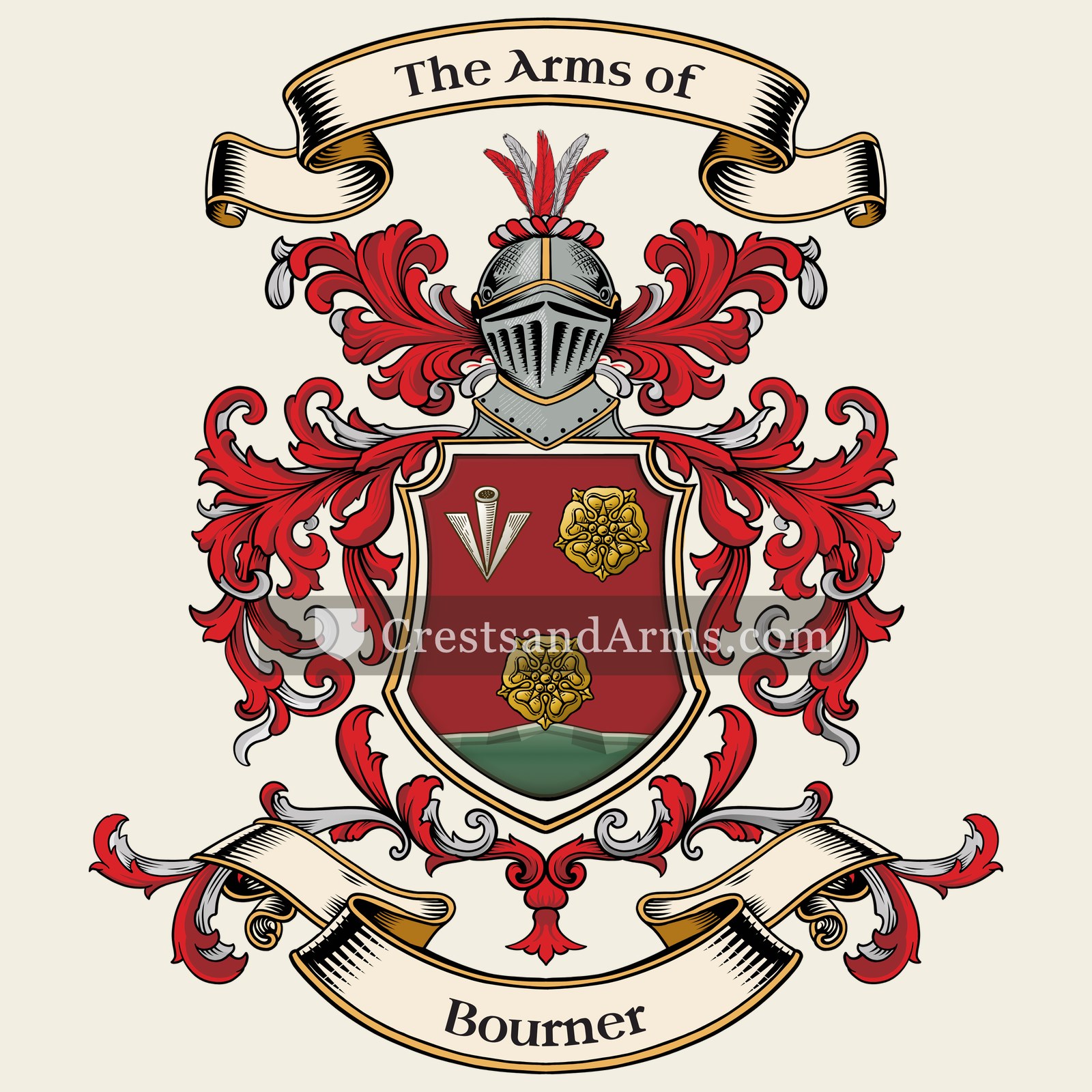
Symbols on this shield
mountThe ground held, and steadfastness upon it
arrowReadiness for battle, and affliction endured
roseThe seventh son, and beauty with grace
Colours
Red (Gules)Means: Military strength
Green (Vert)Means: Hope
Silver (Argent)Means: Peace and sincerity
Gold (Or)Means: Generosity
Historical info
Source
J. B. Rietstap, Armorial Général, Gouda: G. B. van Goor Zonen, 1884–87
Blazon (the actual original written record)
“De gu. à un fer de flèche allongé, le fer d'arg., le fût d'or, croisé de trois traverses du même, courbées vers le bas, soutenu du coupeau du milieu d'un tertre de sin.; les deux autres coupeaux sommés chacun d'une rose d'or, tigée et feuillée de sin.”
SwitzerlandValais, c. 1745
Digital archive packCoat of arms PNG, gold border print PDF, vector SVG and the certificate of authenticity. Sent to your email in minutes.
Map of Switzerland showing where the Bourner arms are recorded
The Bourner arms were recorded in Valais, c. 1745.
This is where the arms were entered in the register. Families often moved to other parts of the country, so the same name can turn up in more than one region.
The body that granted and recorded arms in Switzerland in this period.
How Arms Worked in Switzerland
In Switzerland, coats of arms were not restricted to the nobility and were often adopted by common citizens and families. These symbols were passed down through generations to show family identity. When branches of a family grew, they often changed small details of the design to distinguish their own line from the original group.
Granting authority
Cantonal and civic authorities managed the use of coats of arms within their specific regions and local jurisdictions.
How they got arms
Families typically assumed their own coats of arms based on local custom rather than receiving them from a central monarch.
Where arms were recorded
Arms were recorded in various cantonal and civic registers starting from the fourteenth century throughout the Swiss region.
The family's standing
Recorded among the armigerous families of Switzerland.
Origin & History of the Bourner Family in Switzerland
The family name Bourner traces its roots in Switzerland to the rugged and mountainous region of Valais. By the mid-eighteenth century, records confirm that members of the family were well-established in this area by 1745. During this period, Valais was a collection of independent districts that functioned as a republic under the protection of the Swiss Confederation. Families like the Bourners often lived in small, isolated alpine villages where they relied on agriculture and livestock to survive the harsh winters. The name likely evolved from local dialects spoken in the region, reflecting the linguistic blend of French and German influences common in the Valais valley. Life for these early ancestors was defined by the challenging geography of the Alps, which shaped their traditions and their deep connection to the land. As they moved through the eighteenth century, the Bourner family became part of the local social fabric, contributing to the development of their specific mountain communities.
Related Branches & Arms
Root word
Born
Old Germanic word meaning to carry, bear, or produce.
This name
BournerRefers to a person who carries or transports goods, or one who was born in a specific place.
also spelled
Burnie
Bournier
Burnyer
Documented Sources
J. B. Rietstap, Armorial Général, Gouda: G. B. van Goor Zonen, 1884–87
Tresoar (Fries Historisch en Letterkundig Centrum), Burgerlijke Stand van Friesland (1811–1950)
Van Berkel, G. and Samplonius, K., Nederlandse plaatsnamen verklaard (2018)
Meertens Instituut, Nederlandse Familienamenbank (2023)
Digital archive packCoat of arms PNG, gold border print PDF, vector SVG and the certificate of authenticity. Sent to your email in minutes.


 legStrength and swiftness
 legStrength and swiftness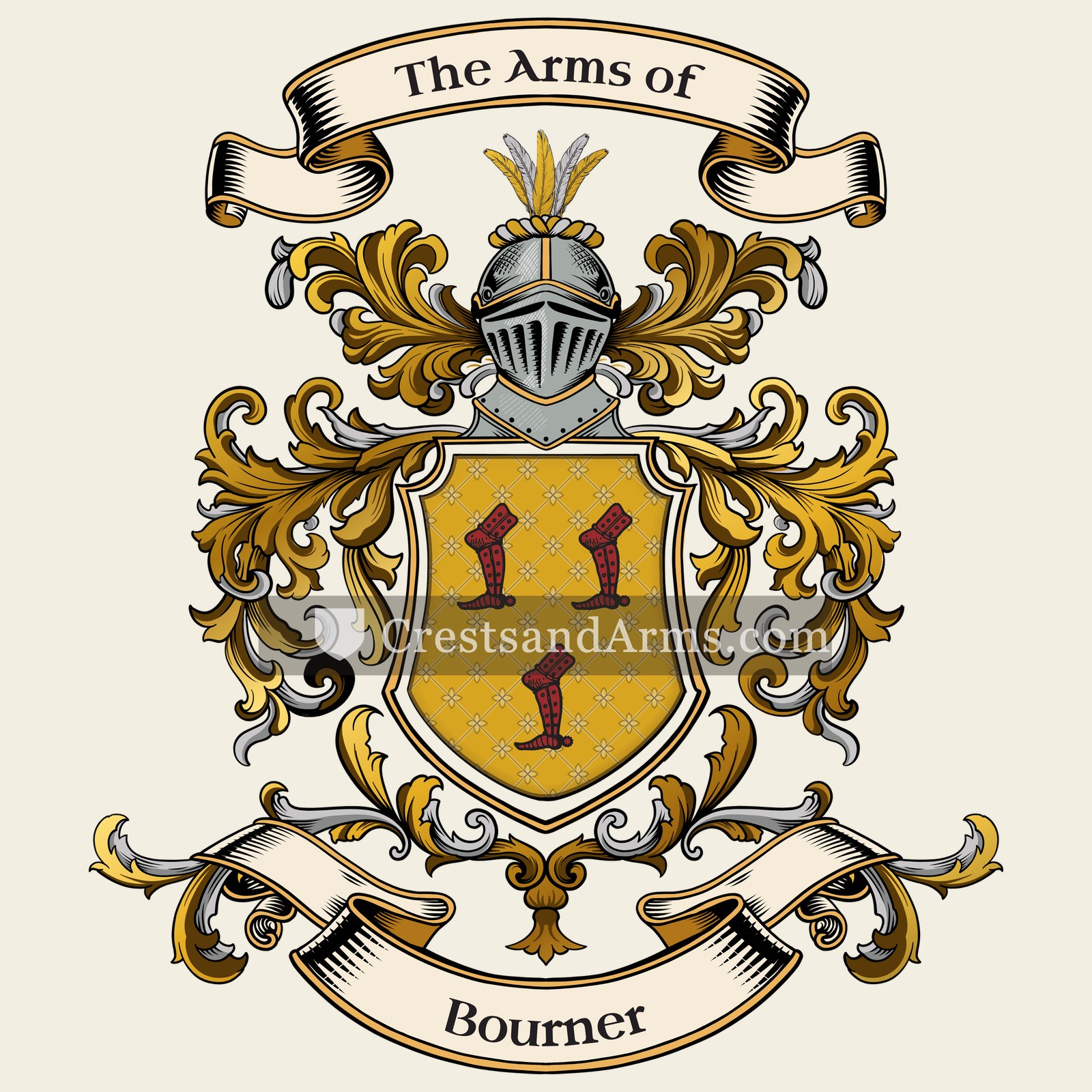


 mountThe ground held, and steadfastness upon it
 arrowReadiness for battle, and affliction endured
 roseThe seventh son, and beauty with grace