Map of France showing where the Bowe arms are recorded
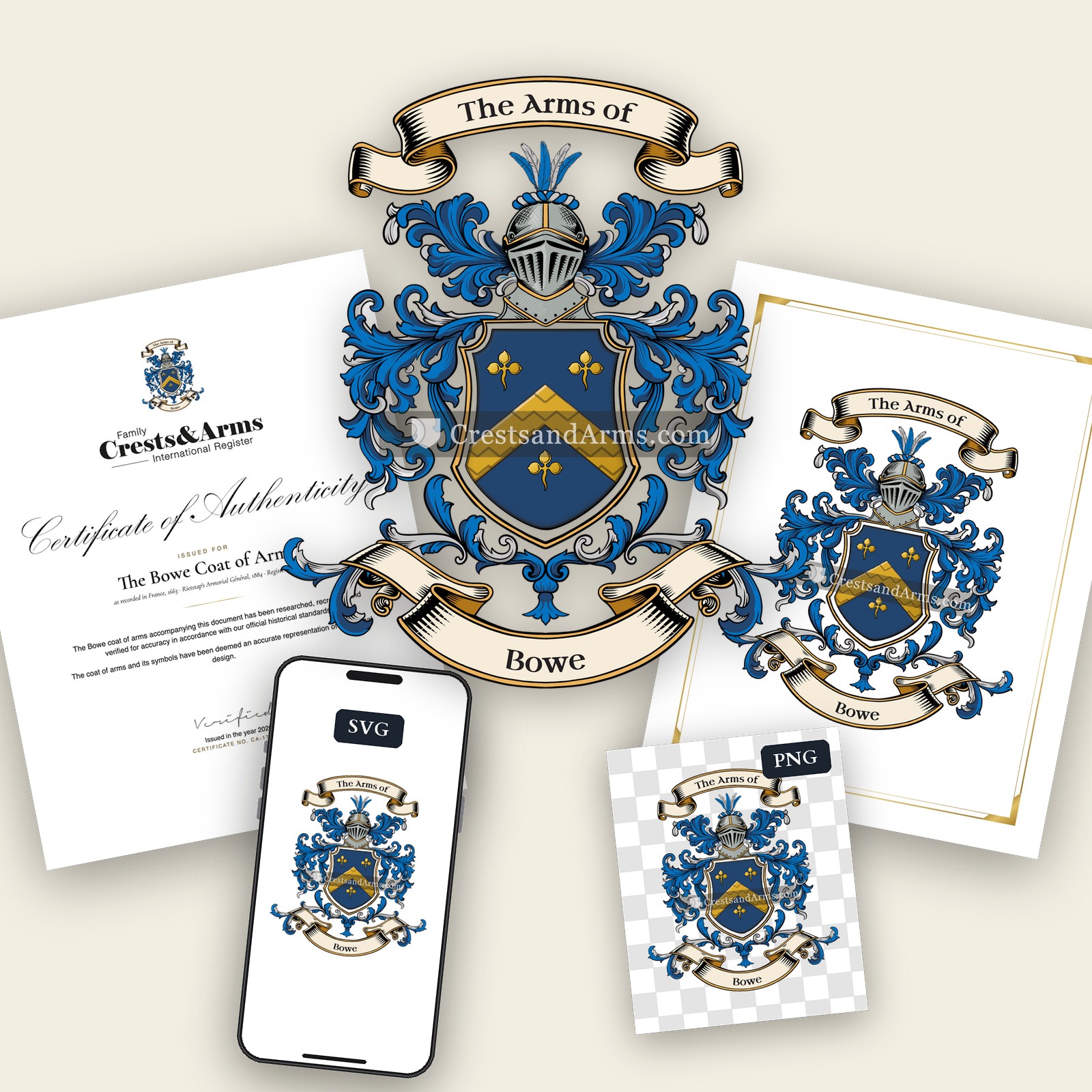
The Bowe arms were recorded in Lyonnais, c. 1663.
Lyonnais centred on Lyon, one of the great banking and silk towns of France. Money made in the city bought estates in the countryside around it, and those estates brought arms with them.
This is where the arms were entered in the register. Families often moved to other parts of the country, so the same name can turn up in more than one region.
The body that granted and recorded arms in France in this period.
Louis XIV of France
Sovereign of the period
Louis XIV of France
1643–1715
Reigning in France when the Bowe arms are first recorded.
How Arms Worked in France
In France, a coat of arms was a mark of honor that passed down through the male line to all legitimate descendants. Families often used the same shield without changes to show their shared heritage. If a branch wanted to stand out, they could add a small mark to their shield to show their specific place in the family tree.
Granting authority
The Juge d'armes de France acted as the official authority that regulated and verified coats of arms across the country.
How they got arms
Families typically inherited their arms from ancestors, though they could also receive them through royal grants or by proving their noble status.
Where arms were recorded
Coats of arms were officially recorded in the Armorial Général de France, which began its main collection in the year 1696.
The family's standing
Recorded among the armigerous families of Lyonnais.
Origin & History of the Bowe Family in France
The history of the Bowe family name in France is deeply rooted in the cultural landscape of the Lyonnais region during the seventeenth century. By 1663, records confirm that members of the family were already established in this area, which served as a major crossroads for trade and agriculture between the Alps and the rest of the country. During this period, the name likely functioned as a descriptor for individuals living near specific geographical landmarks or those involved in the local craft guilds that defined the economy of Lyon. As the region experienced significant growth in silk production and banking, families like the Bowes became integrated into the social fabric of provincial life. Their presence in the Lyonnais reflects the broader movement of families who settled in stable, prosperous hubs to build livelihoods through commerce and local administration. This early history highlights a family that was well-positioned within the shifting social structures of pre-revolutionary France.
Meaning of the Bowe family crest colors & symbols
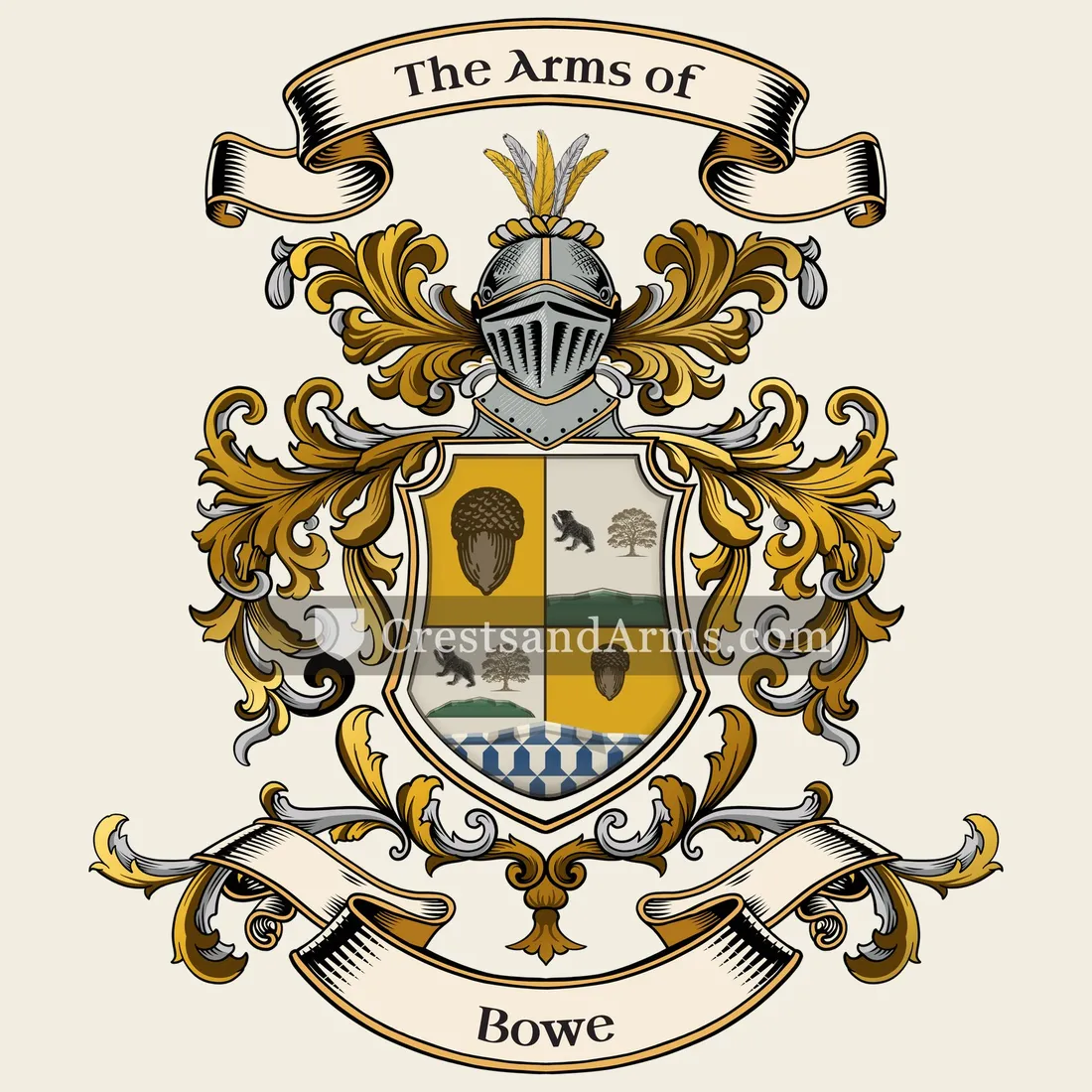
Symbols on this shield
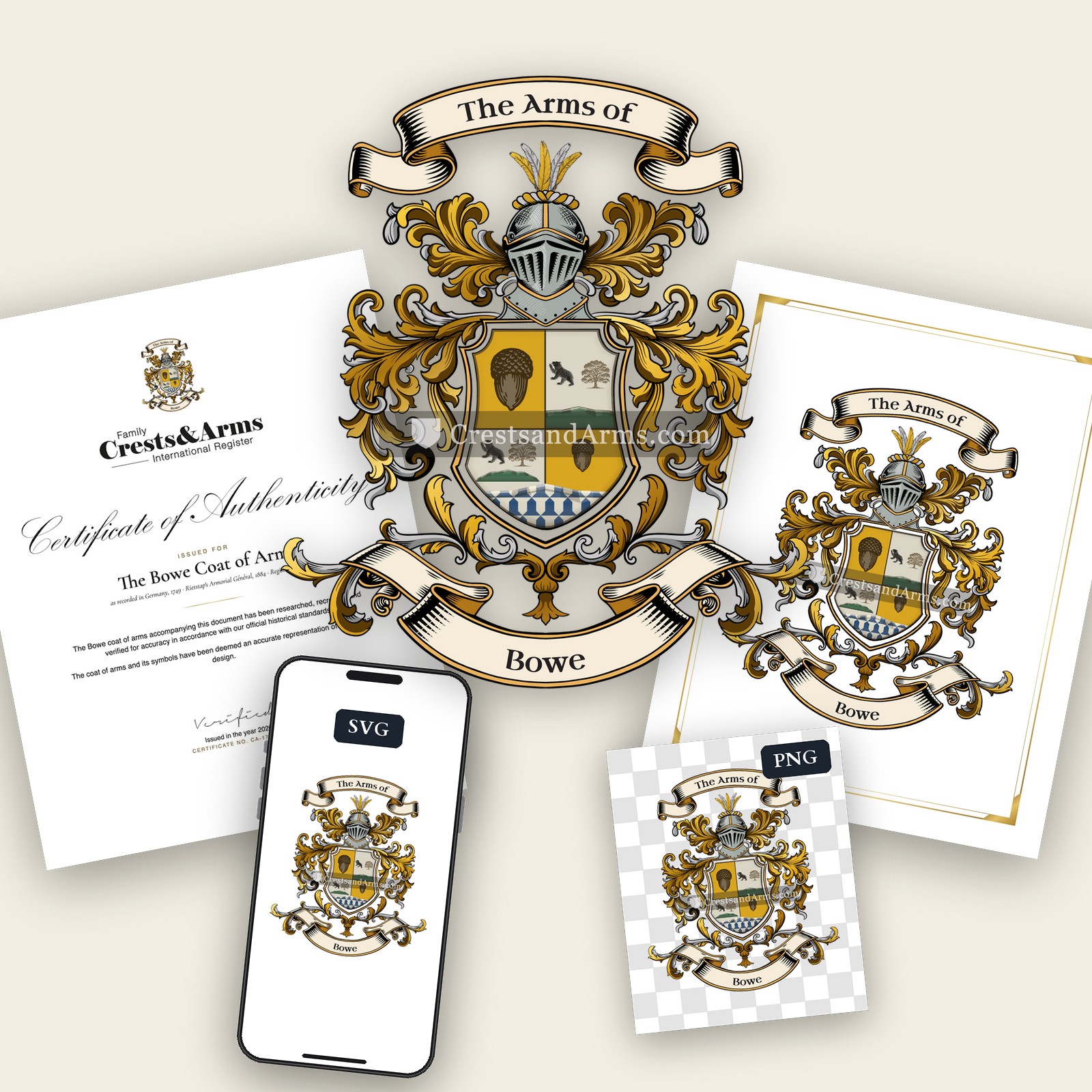
mountThe ground held, and steadfastness upon it
oakGreat age, strength and steadfastness
bearStrength, cunning and protection of kin
treeLife, endurance and deep roots
Colours
Gold (Or)Means: Generosity
Silver (Argent)Means: Peace and sincerity
Green (Vert)Means: Hope
Black (Sable)Means: Constancy
Historical info
Source
J. B. Rietstap, Armorial Général, Gouda: G. B. van Goor Zonen, 1884–87
Blazon (the actual original written record)
“Ec.: aux 1 et 4 d'or à une branche de chêne englantée, au nat., posée en bande; aux 2 et 3 d'arg. à un ours de sa., ramp. contre un tronc écoté au nat., le tout soutenu d'une terrasse de sin. Cq. cour. C.: une queue de paon au nat. L.: à dextre d'or et de sin., à sen. d'arg. et de sa.”
MecklenburgMecklenburg, c. 1749
Digital archive packCoat of arms PNG, gold border print PDF, vector SVG and the certificate of authenticity. Sent to your email in minutes.
Map of Germany showing where the Bowe arms are recorded
The Bowe arms were recorded in Mecklenburg, c. 1749.
Mecklenburg was farming country in the north of Germany, held by a small number of families who kept their estates for generations. Owning land was what entitled a family to arms, so a great many Mecklenburg names ended up in the registers.
This is where the arms were entered in the register. Families often moved to other parts of the country, so the same name can turn up in more than one region.
The body that granted and recorded arms in Germany in this period.
Francis I, Holy Roman Emperor
Sovereign of the period
Francis I, Holy Roman Emperor
1745–1765
Reigning in France when the Bowe arms are first recorded.
How Arms Worked in Germany
In the Holy Roman Empire, coats of arms were often granted to individuals by the Emperor or his representatives. These arms were then passed down through the generations to all legitimate descendants of the original holder. Younger branches of a family usually kept the same shield design without needing to change it, as the arms belonged to the entire lineage.
Granting authority
The Holy Roman Emperor held the sole power to grant new coats of arms throughout his vast imperial territories.
How they got arms
Families typically obtained their coats of arms through a formal imperial grant or by proving their noble status to the authorities.
Where arms were recorded
These grants were officially recorded in the Imperial Chancery registers, which began keeping formal records of such honors during the Middle Ages.
The family's standing
Recorded among the armigerous families of Mecklenburg.
Origin & History of the Bowe Family in Germany
The family name Bowe has deep roots in the northern German region of Mecklenburg, where records confirm members of the family were established by 1749. During this period, Mecklenburg was a rural landscape dominated by large agricultural estates and small village communities. The name likely originated as a descriptive term or a nickname linked to the local Low German dialect, which was the primary language spoken by common people in the region at that time. Families like the Bowes were often tied to the land through farming or local trades, contributing to the steady growth of the population in the Baltic coastal areas. As the eighteenth century progressed, the family remained part of the social fabric of Mecklenburg, living through the shifting political landscape of the German states while maintaining their presence in the local parish registers. These early generations helped shape the identity of the family within the northern German tradition, focusing on community life and regional agriculture long before the name spread to other parts of the world.
Meaning of the Bowe family crest colors & symbols
Symbols on this shield
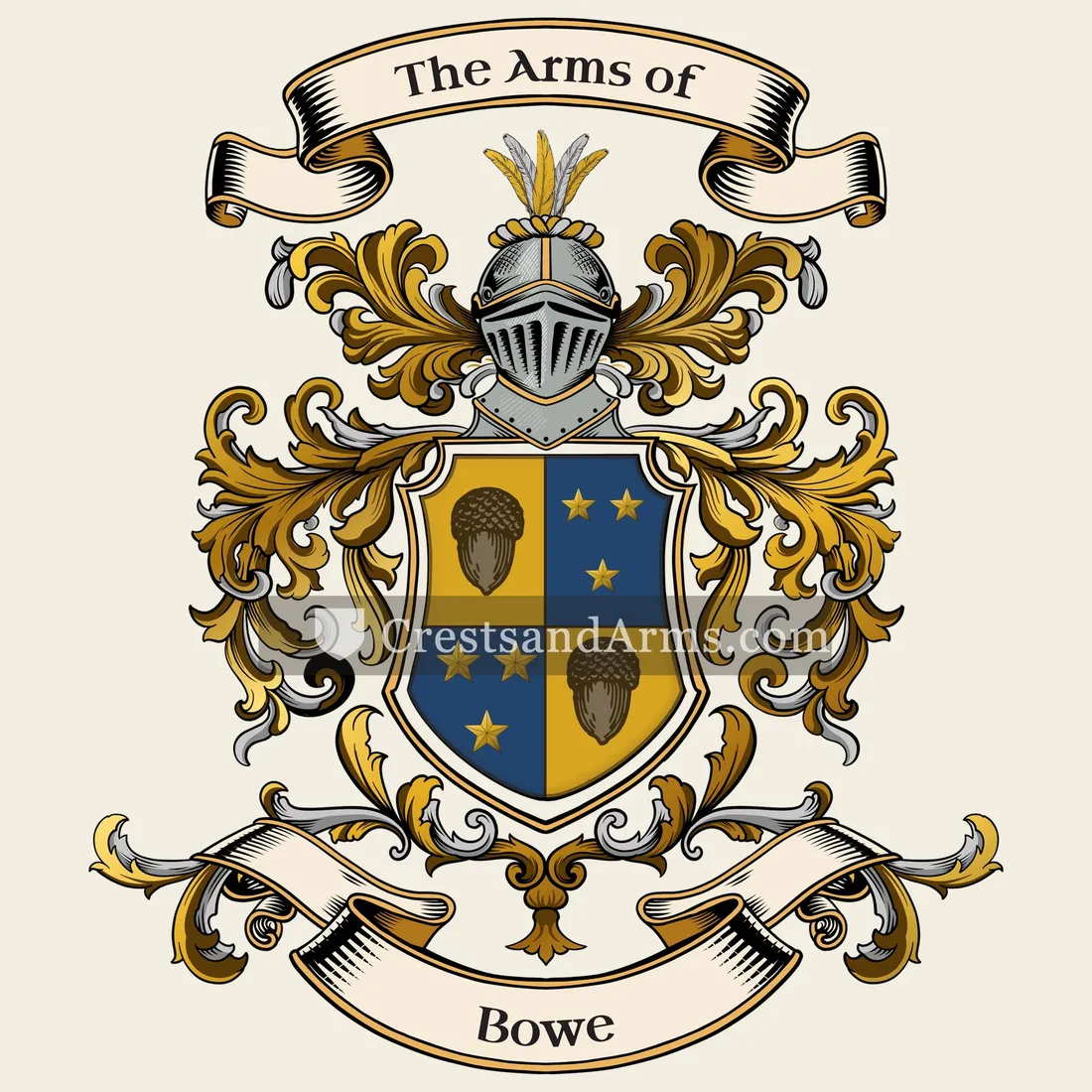
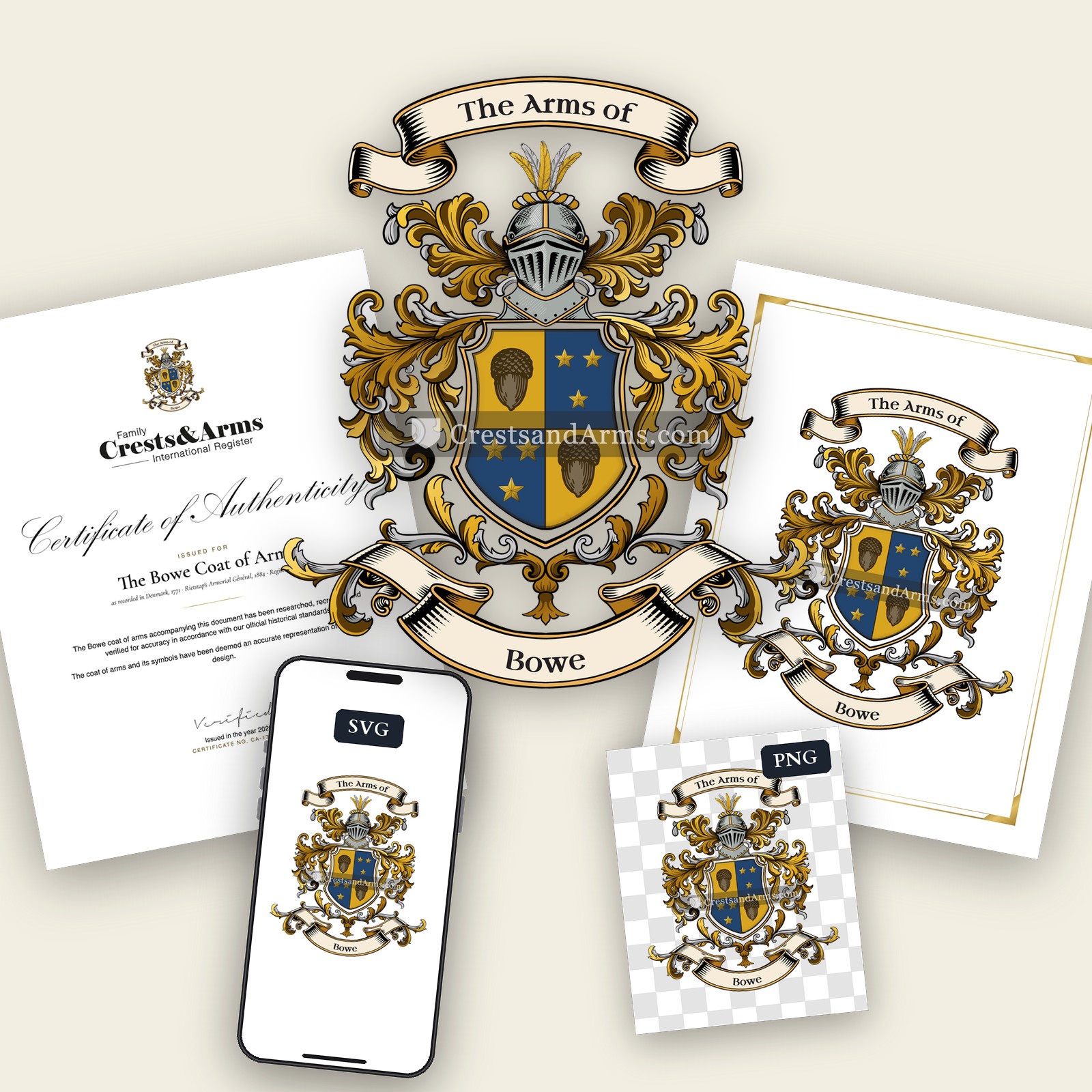
oakGreat age, strength and steadfastness
mulletThe third son, and a divine quality from above
Colours
Gold (Or)Means: Generosity
Blue (Azure)Means: Loyalty and truth
Historical info
Source
J. B. Rietstap, Armorial Général, Gouda: G. B. van Goor Zonen, 1884–87
Blazon (the actual original written record)
“Ec.: aux 1 et 4 d'or à une branche de chêne englantée, au nat., posée en bande; aux 2 et 3 d'azur à trois étoiles d'or, rangées en fasce. Cq. cour. C.: une queue de paon, au nat. L.: à dextre d'or et de sin., à sen. d'or et d'azur.”
Denmarkc. 1771
Digital archive packCoat of arms PNG, gold border print PDF, vector SVG and the certificate of authenticity. Sent to your email in minutes.
Map of Denmark showing where the Bowe arms are recorded
The Bowe arms were recorded in Denmark, c. 1771.
Arms such as these were typically recorded in Sjaælland.
Zealand held the Danish court, the crown's offices and Copenhagen itself. Families who served the king kept estates within reach of it, and royal service was the ordinary route to a coat of arms.
This is where the arms were entered in the register. Families often moved to other parts of the country, so the same name can turn up in more than one region.
The body that granted and recorded arms in Denmark in this period.
Christian VII of Denmark
Sovereign of the period
Christian VII of Denmark
1766–1808
Reigning in France when the Bowe arms are first recorded.
How Arms Worked in Denmark
Danish heraldry during this period was closely tied to noble status and royal favor rather than being open to all citizens. Arms were typically granted by the monarch to individuals, and these symbols were then shared by all members of the noble house. If a family line died out, the right to use those specific arms ended with them.
Granting authority
The Danish royal chancery held the power to issue and regulate official coats of arms for the kingdom.
How they got arms
Families usually received their arms through a formal royal grant that confirmed their noble status and rights.
Where arms were recorded
These grants were officially recorded in the Danish Royal Chancery records starting in the sixteenth century.
The family's standing
Recorded among the armigerous families of Denmark.
Origin & History of the Bowe Family in Denmark
The family name Bowe has deep roots in the island of Sjælland, where records confirm members of the family were living as early as 1771. During this period, Denmark was transitioning through significant social changes, including the end of serfdom and the modernization of rural life. Families like the Bowes were often part of the agrarian class, living in small village communities where their lives were closely tied to the seasonal rhythms of farming and the local parish church. Because surnames were not always fixed in Denmark at this time, the name Bowe likely originated as a descriptive term or a reference to a specific geographic location within the region. As the family moved through the late 18th century, they became part of the backbone of Sjælland’s local economy, contributing to the development of the rural landscape that defined the area for generations.
Bowe Meaning & Related Branches
Root word
Beau
Derived from the Old French word meaning handsome or beautiful.
This name
BoweA locational or descriptive surname originally referring to someone who was handsome or lived near a beautiful place.
also spelled
Boi
Boy
Documented Sources
J. B. Rietstap, Armorial Général, Gouda: G. B. van Goor Zonen, 1884–87
Archives départementales du Rhône, État civil et registres paroissiaux de la province du Lyonnais
Béghain, Patrice, Dictionnaire historique de Lyon, 2009
Le Mer, Anne-Catherine, Lyon avant Lugdunum, 2007
Digital archive packCoat of arms PNG, gold border print PDF, vector SVG and the certificate of authenticity. Sent to your email in minutes.


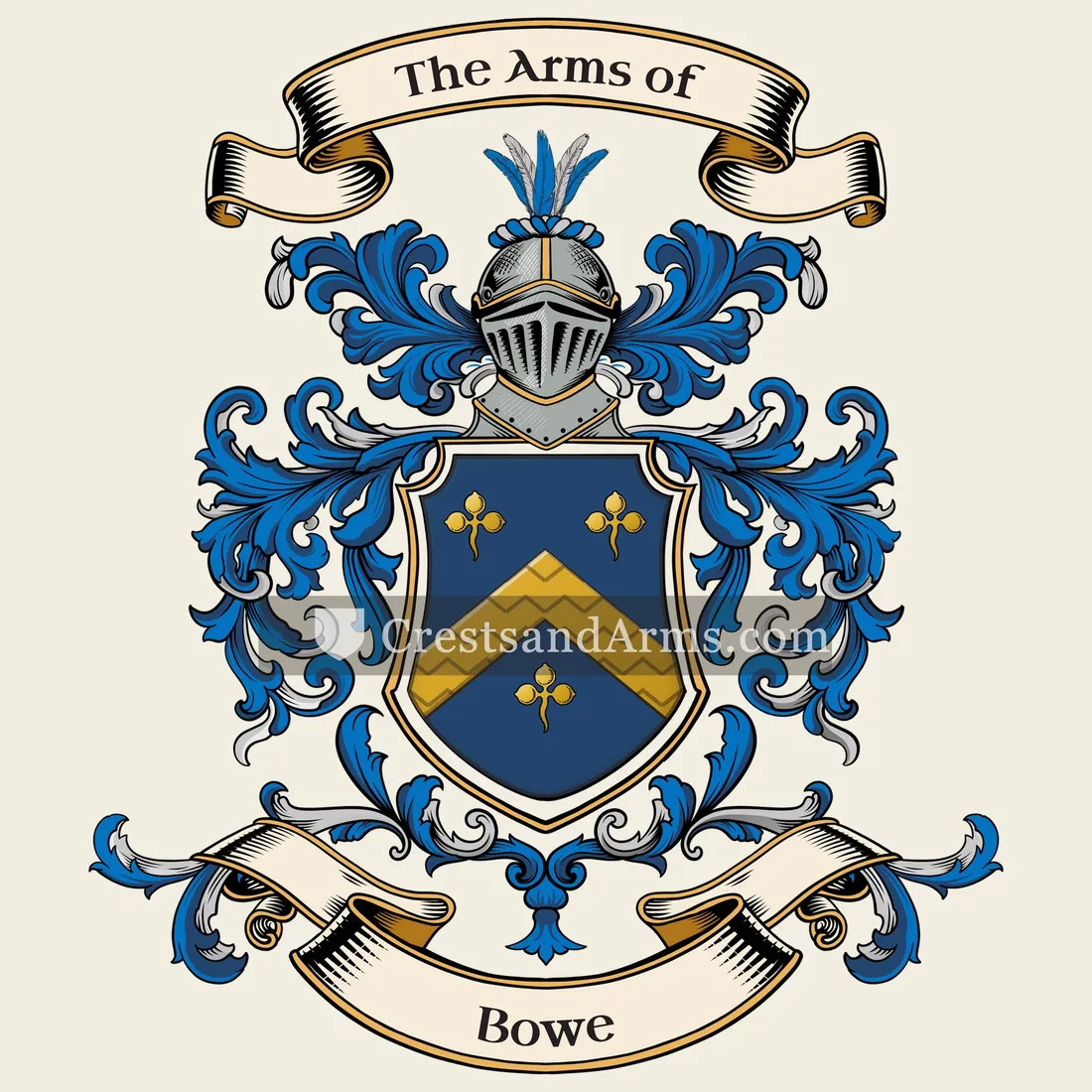
 chevronProtection, and faithful service completed
 trefoilPerpetuity, and the Trinity
 chevronProtection, and faithful service completed
 trefoilPerpetuity, and the Trinity


 mountThe ground held, and steadfastness upon it
 oakGreat age, strength and steadfastness
 bearStrength, cunning and protection of kin
 treeLife, endurance and deep roots


 mulletThe third son, and a divine quality from above