Map of Spain showing where the Braganza arms are recorded
The Braganza arms were recorded in Spain, c. 1722.
Arms such as these were typically recorded in Castile.
Castile was the heart of Spain and the source of most of its noble families. Land won in the long wars against the Moors was granted out to fighting men, and a man granted land was granted arms along with it.
This is where the arms were entered in the register. Families often moved to other parts of the country, so the same name can turn up in more than one region.
The body that granted and recorded arms in Spain in this period.
Philip V of Spain
Sovereign of the period
Philip V of Spain
1714–1724
Reigning in Spain when the Braganza arms are first recorded.
How Arms Worked in Spain
In Spain, a coat of arms was considered a form of property that belonged to the entire family line. These arms were passed down from a father to all his children equally. Younger branches of the family usually kept the original design without needing to add any special marks to distinguish their specific line.
Granting authority
The Cronista Rey de Armas was the official body that regulated and granted coats of arms throughout Spain.
How they got arms
Families often obtained their arms through royal grants or by proving their noble status to the official heraldic authority.
Where arms were recorded
Coats of arms were officially recorded in the registers of the Cronista Rey de Armas starting in 1496.
The family's standing
Recorded among the armigerous families of Spain.
Origin & History of the Braganza Family in Spain
The history of the Braganza family name in Spain is deeply connected to the movement of people across the Iberian Peninsula during the early eighteenth century. While the name is most famously associated with the royal house of Portugal, branches of the family established themselves in the Kingdom of Castile by 1722. During this period, the family members often integrated into the local administrative and social structures of Spanish towns. Their presence in Castile suggests a history of migration that was common among noble and landowning families who sought new opportunities or political stability outside of their traditional territories. By settling in Spanish regions, these early ancestors helped transition the name from a strictly Portuguese identity into a broader Iberian presence that navigated the complex legal and social systems of the Spanish Crown.
Coat of Arms & Family Crest Details
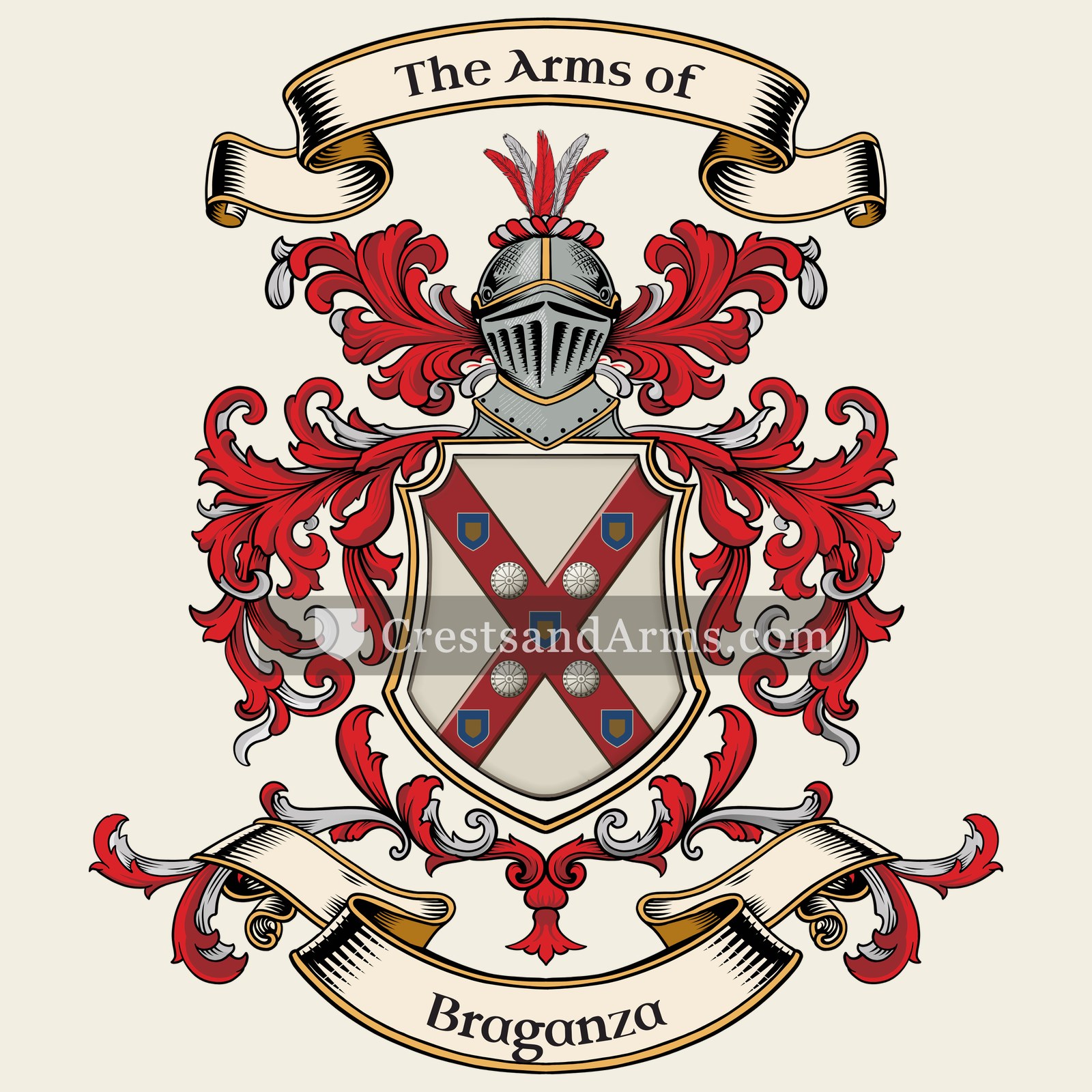
Symbols on this shield
saltireResolution, and St Andrew's cross
escutcheonA shield within a shield, and a claim inherited
roundelA coin, and one who has been to the crusades
Colours
Silver (Argent)Means: Peace and sincerity
Red (Gules)Means: Military strength
Blue (Azure)Means: Loyalty and truth
Historical info
Source
J. B. Rietstap, Armorial Général, Gouda: G. B. van Goor Zonen, 1884–87
Blazon (the actual original written record)
“D'arg. au saut. de gu., ch. de cinq écussons d'azur, surch. chacun de cinq bes. d'arg., rangés en croix.”
Portugalc. 1706
Digital archive packCoat of arms PNG, gold border print PDF, vector SVG and the certificate of authenticity. Sent to your email in minutes.
Map of Portugal showing where the Braganza arms are recorded
The Braganza arms were recorded in Portugal, c. 1706.
Arms such as these were typically recorded in Lisboa.
Lisbon was the seat of the Portuguese crown and the port its wealth came through. Families made rich by trade and by service to the king took arms, and the crown's heralds recorded them there.
This is where the arms were entered in the register. Families often moved to other parts of the country, so the same name can turn up in more than one region.
The body that granted and recorded arms in Portugal in this period.
Peter II of Portugal
Sovereign of the period
Peter II of Portugal
1683–1706
Reigning in Spain when the Braganza arms are first recorded.
How Arms Worked in Portugal
In Portugal, a coat of arms was a family possession that passed from a father to his children. Every legitimate descendant had the right to use the family shield without needing to change it. Younger branches of the family kept the original design, though they sometimes added small symbols to distinguish their specific line from the main branch.
Granting authority
The Cartório da Nobreza acted as the official body that managed and regulated noble titles and coats of arms in Portugal.
How they got arms
Families typically inherited their arms through bloodline, though they could also receive new grants from the crown for distinguished service.
Where arms were recorded
Coats of arms were officially recorded in the books of the Cartório da Nobreza starting in the year 1512.
The family's standing
Recorded among the armigerous families of Portugal.
Origin & History of the Braganza Family in Portugal
The Braganza family name is deeply rooted in the political and social fabric of Portugal, gaining significant prominence as a noble house that eventually ascended to the throne. While the name is famously associated with the royal dynasty that began in the seventeenth century, the family’s influence was already well-established among the elite circles of Lisbon by 1706. During this era, members of the family held high-ranking positions that allowed them to shape the nation's governance and cultural life. They were deeply involved in the complex power structures of the Portuguese court, often serving as key advisors and administrators who managed the affairs of the kingdom. This period of history highlights how the family transitioned from regional landholders into a central force in the capital city. By maintaining strong ties to the monarchy and the church, the family ensured their legacy remained a permanent fixture in the historical narrative of Portugal.
Braganza Meaning & Related Branches
Root word
Bragantia
A Celtic term referring to a high place or mountain.
This name
BraganzaDerived from a place name in Portugal, signifying a settlement located on a high or elevated site.
also spelled
Bragansa
Related arms
Pereira de Mellosimilar arms
Portugal-Lemossimilar arms
Documented Sources
J. B. Rietstap, Armorial Général, Gouda: G. B. van Goor Zonen, 1884–87
Serrão, Joel. Dicionário de História de Portugal. 1971
Mattoso, José. A Nobreza Medieval Portuguesa: A Família e o Poder. 1981
Archivo General de Simancas, Registro del Sello de Corte
Arquivo Nacional da Torre do Tombo, Chancelaria de D. João V
Digital archive packCoat of arms PNG, gold border print PDF, vector SVG and the certificate of authenticity. Sent to your email in minutes.


 crescentHonour by the sovereign, and the second son
 mulletThe third son, and a divine quality from above
 crescentHonour by the sovereign, and the second son
 mulletThe third son, and a divine quality from above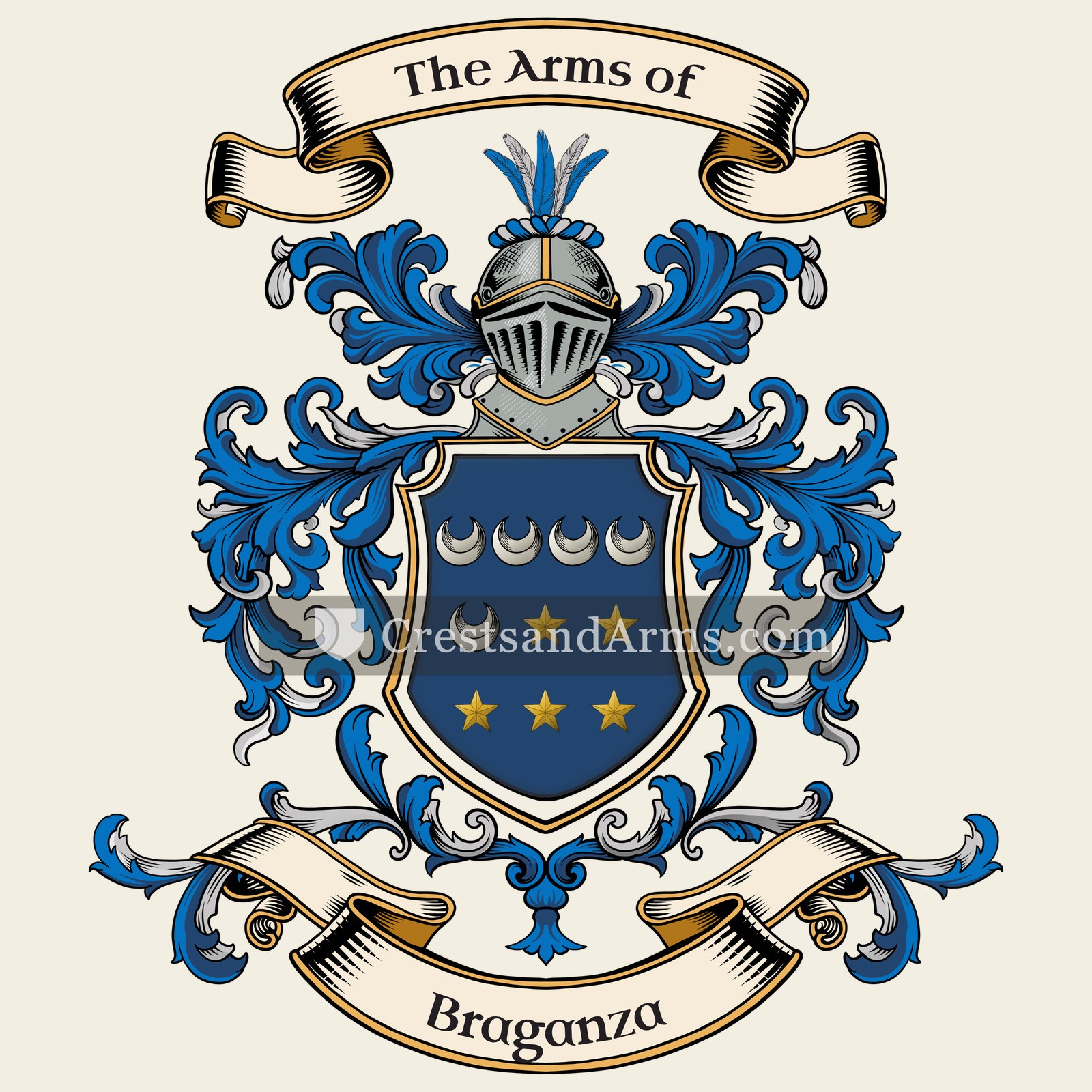


 saltireResolution, and St Andrew's cross
 escutcheonA shield within a shield, and a claim inherited
 roundelA coin, and one who has been to the crusades