Map of Germany showing where the Brawn arms are recorded
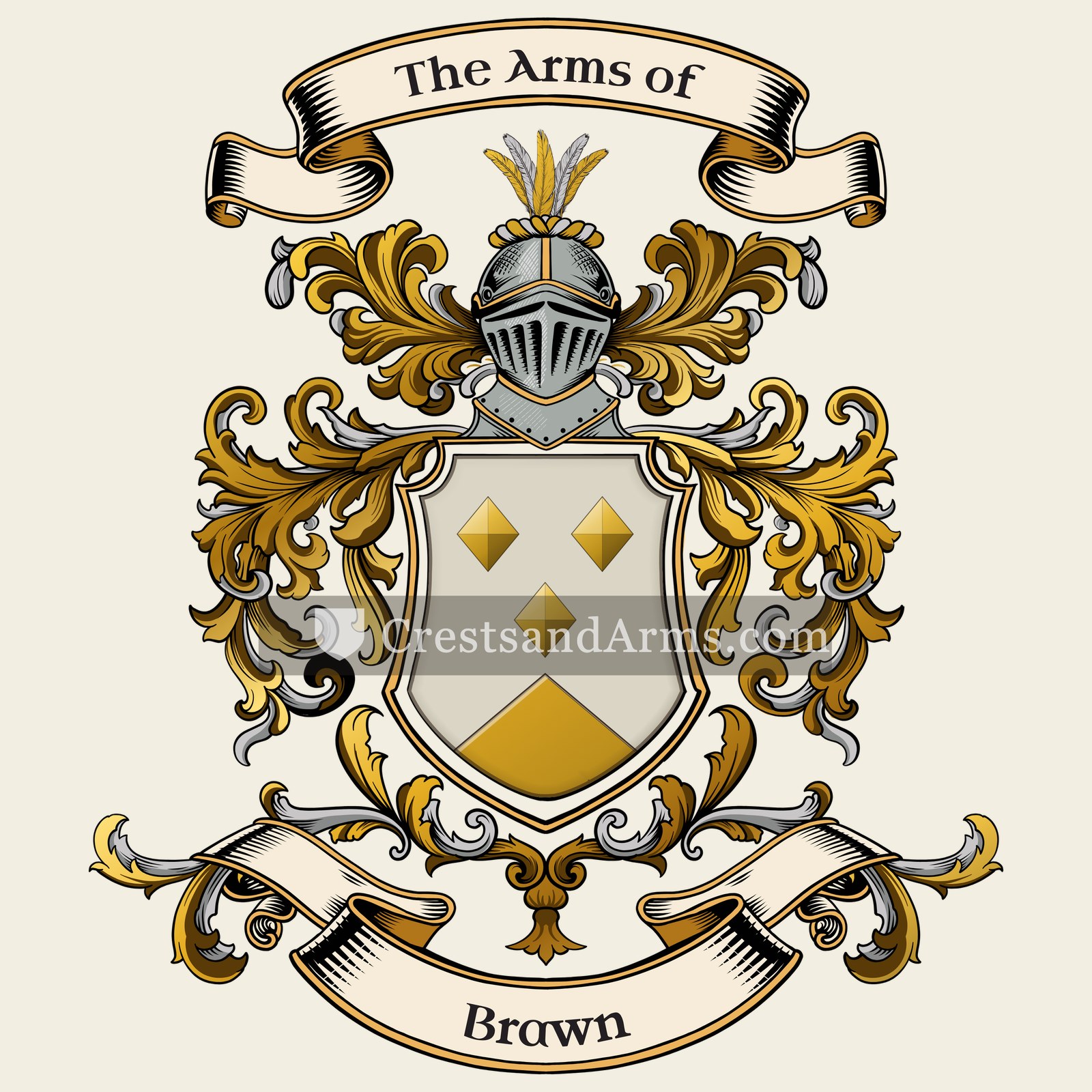
The Brawn arms were recorded in Germany, c. 1765.
Arms such as these were typically recorded in Bavaria.
Bavaria was a country of old landed families and walled market towns. Estates passed down the same line for centuries, and both the landowners and the leading townsmen kept arms, which is why so many Bavarian names sit in the registers.
This is where the arms were entered in the register. Families often moved to other parts of the country, so the same name can turn up in more than one region.
The body that granted and recorded arms in Germany in this period.
Francis I, Holy Roman Emperor
Sovereign of the period
Francis I, Holy Roman Emperor
1745–1765
Reigning in Germany when the Brawn arms are first recorded.
How Arms Worked in Germany
In the Holy Roman Empire, coats of arms were often granted to individuals by the Emperor or his representatives. These arms were then passed down through the generations to all legitimate descendants of the original holder. Younger branches of a family usually kept the same shield design without needing to change it, as the arms belonged to the entire lineage.
Granting authority
The Holy Roman Emperor held the sole power to grant new coats of arms throughout his vast imperial territories.
How they got arms
Families typically obtained their coats of arms through a formal imperial grant or by proving their noble status to the authorities.
Where arms were recorded
These grants were officially recorded in the Imperial Chancery registers, which began keeping formal records of such honors during the Middle Ages.
The family's standing
Recorded among the armigerous families of Germany.
Origin & History of the Brawn Family in Germany
The surname Brawn, often appearing as Braun in its original German context, is deeply rooted in the history of Bavaria. By the middle of the eighteenth century, the name was well-established within the region, reflecting the common practice of identifying individuals by their physical traits or social roles. The name itself is derived from the Middle High German word for brown, which likely served as a descriptive nickname for an ancestor with dark hair or a tanned complexion. Families bearing this name in 1765 were typically integrated into the local agrarian or artisan communities that defined the Bavarian landscape. These early generations lived through a period of significant transition as the region moved toward modernization under the influence of the Wittelsbach dynasty. Because the name was tied to a common physical descriptor, it emerged independently across various villages, meaning that those who carried the name were often connected by their local heritage rather than a single common ancestor.
Brawn Meaning & Related Branches
Root word
Brun
A Germanic term referring to the color brown or dark.
This name
BrawnA descriptive nickname for a person with brown hair or a dark complexion.
also spelled
Braune
Brown
Brawn
Documented Sources
Sir Bernard Burke, The General Armory of England, Scotland, Ireland and Wales, London: Harrison & Sons, 1884
Bahlow, Hans, Deutsches Namenlexikon: Familien- und Vornamen nach Ursprung und Sinn erklärt, 1967


 lozengeHonour and nobility, and the arms of a woman
 lozengeHonour and nobility, and the arms of a woman