Map of Germany showing where the Breeding arms are recorded
The Breeding arms were recorded in Nuremberg, c. 1765.
This is where the arms were entered in the register. Families often moved to other parts of the country, so the same name can turn up in more than one region.
The body that granted and recorded arms in Germany in this period.
Francis I, Holy Roman Emperor
Sovereign of the period
Francis I, Holy Roman Emperor
1745–1765
Reigning in Germany when the Breeding arms are first recorded.
How Arms Worked in Germany
In the Holy Roman Empire, coats of arms were often granted to individuals by the Emperor or his representatives. These arms were then passed down through the generations to all legitimate descendants of the original holder. Younger branches of a family usually kept the same shield design without needing to change it, as the arms belonged to the entire lineage.
Granting authority
The Holy Roman Emperor held the sole power to grant new coats of arms throughout his vast imperial territories.
How they got arms
Families typically obtained their coats of arms through a formal imperial grant or by proving their noble status to the authorities.
Where arms were recorded
These grants were officially recorded in the Imperial Chancery registers, which began keeping formal records of such honors during the Middle Ages.
The family's standing
Recorded among the armigerous families of Germany.
Origin & History of the Breeding Family in Germany
The family name Breeding has roots that trace back to the cultural landscape of Central Europe, specifically within the historic city of Nuremberg. By the year 1765, records confirm that members of the family were established residents of this influential German hub. During the eighteenth century, Nuremberg served as a major center for trade, craftsmanship, and intellectual growth. Families living there were often connected to the city’s thriving guild systems or its reputation as a leader in metalworking and printing. The name itself likely evolved from older Germanic naming conventions that described a person’s occupation, location, or a specific character trait. As the family moved through the changing political borders of Europe, the spelling of the name adapted to fit the phonetic patterns of different regions and languages. This transition from a localized German identity to a broader international presence reflects the movement of many families who sought new opportunities during the late colonial and early industrial eras.
Related Branches & Arms
Root word
Brede
Old High German word for a broad or wide expanse of land.
This name
BreedingA topographic name for someone who lived on a broad stretch of land or a wide field.
also spelled
Bryding
Documented Sources
J. B. Rietstap, Armorial Général, Gouda: G. B. van Goor Zonen, 1884–87
Stadtarchiv Nürnberg, Bürgerbücher der Stadt Nürnberg, 1765
Heintze, Albert, Die deutschen Familiennamen: geschichtlich, geographisch, sprachlich, 1903
Bahlow, Hans, Deutsches Namenlexikon: Familien- und Vornamen nach Ursprung und Sinn erklärt, 1967
Digital archive packCoat of arms PNG, gold border print PDF, vector SVG and the certificate of authenticity. Sent to your email in minutes.


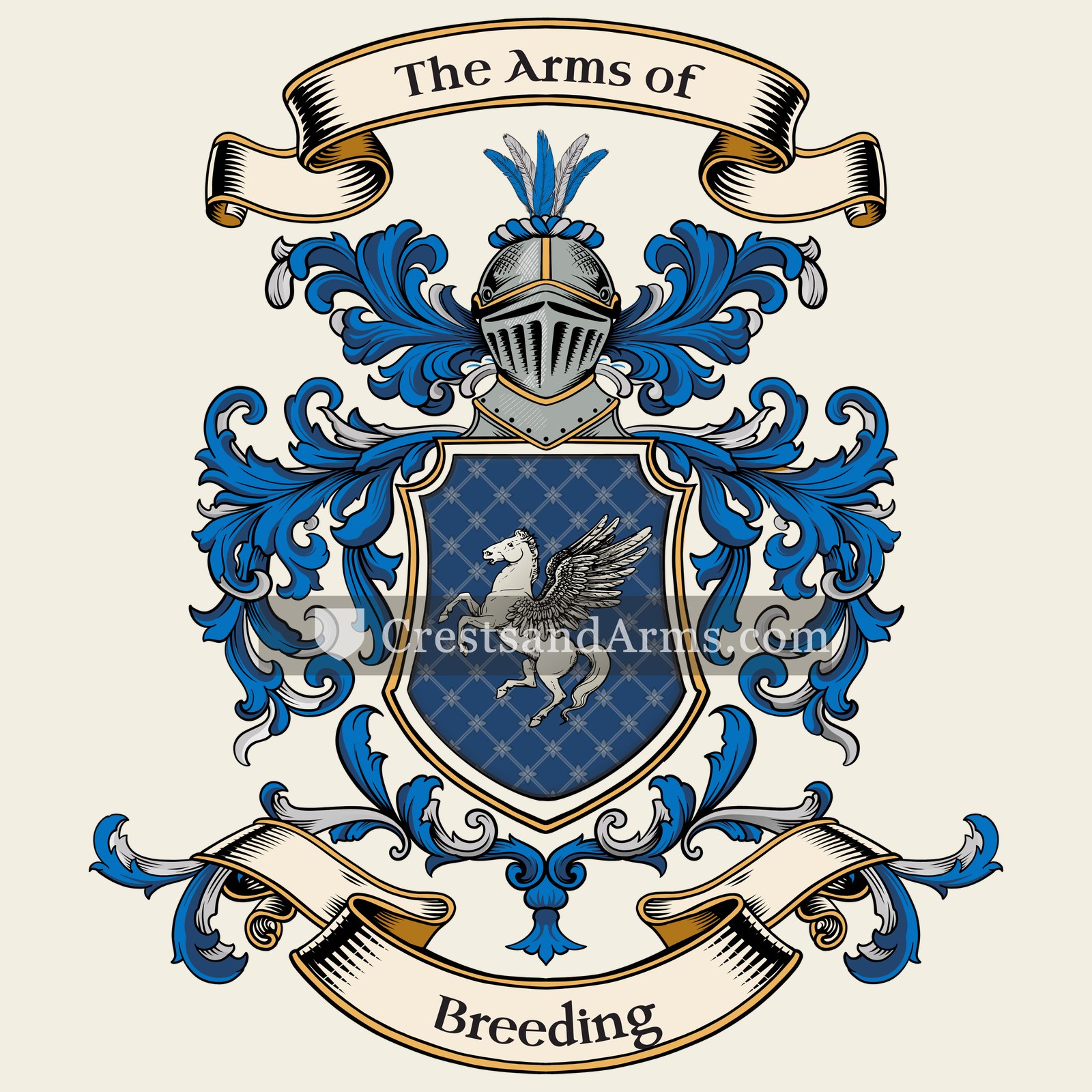
 pegasusFame, eloquence and swift renown
 pegasusFame, eloquence and swift renown