Map of France showing where the Breeze arms are recorded
The Breeze arms were recorded in Bourbonnais, c. 1663.
This is where the arms were entered in the register. Families often moved to other parts of the country, so the same name can turn up in more than one region.
The body that granted and recorded arms in France in this period.
Louis XIV of France
Sovereign of the period
Louis XIV of France
1643–1715
Reigning in France when the Breeze arms are first recorded.
How Arms Worked in France
In France, a coat of arms was a mark of honor that passed down through the male line to all legitimate descendants. Families often used the same shield without changes to show their shared heritage. If a branch wanted to stand out, they could add a small mark to their shield to show their specific place in the family tree.
Granting authority
The Juge d'armes de France acted as the official authority that regulated and verified coats of arms across the country.
How they got arms
Families typically inherited their arms from ancestors, though they could also receive them through royal grants or by proving their noble status.
Where arms were recorded
Coats of arms were officially recorded in the Armorial Général de France, which began its main collection in the year 1696.
The family's standing
Recorded among the armigerous families of France.
Origin & History of the Breeze Family in France
The family name Breeze, often linked to the historical region of Bourbonnais, traces its roots back to the rural landscape of central France. By 1663, records confirm that members of the family were well-established in this province, a territory known for its dense forests and strong ties to the French monarchy. During the seventeenth century, families in this area were typically tied to the land through agriculture or local craftsmanship. The name likely evolved as a descriptive term or a localized identifier for people living near specific geographic features, such as open clearings or windy hillsides common to the Bourbonnais countryside. As the family grew, they became part of the social fabric of the region, participating in the parish life and local economy that defined life in rural France before the turn of the eighteenth century.
Coat of Arms & Family Crest Details
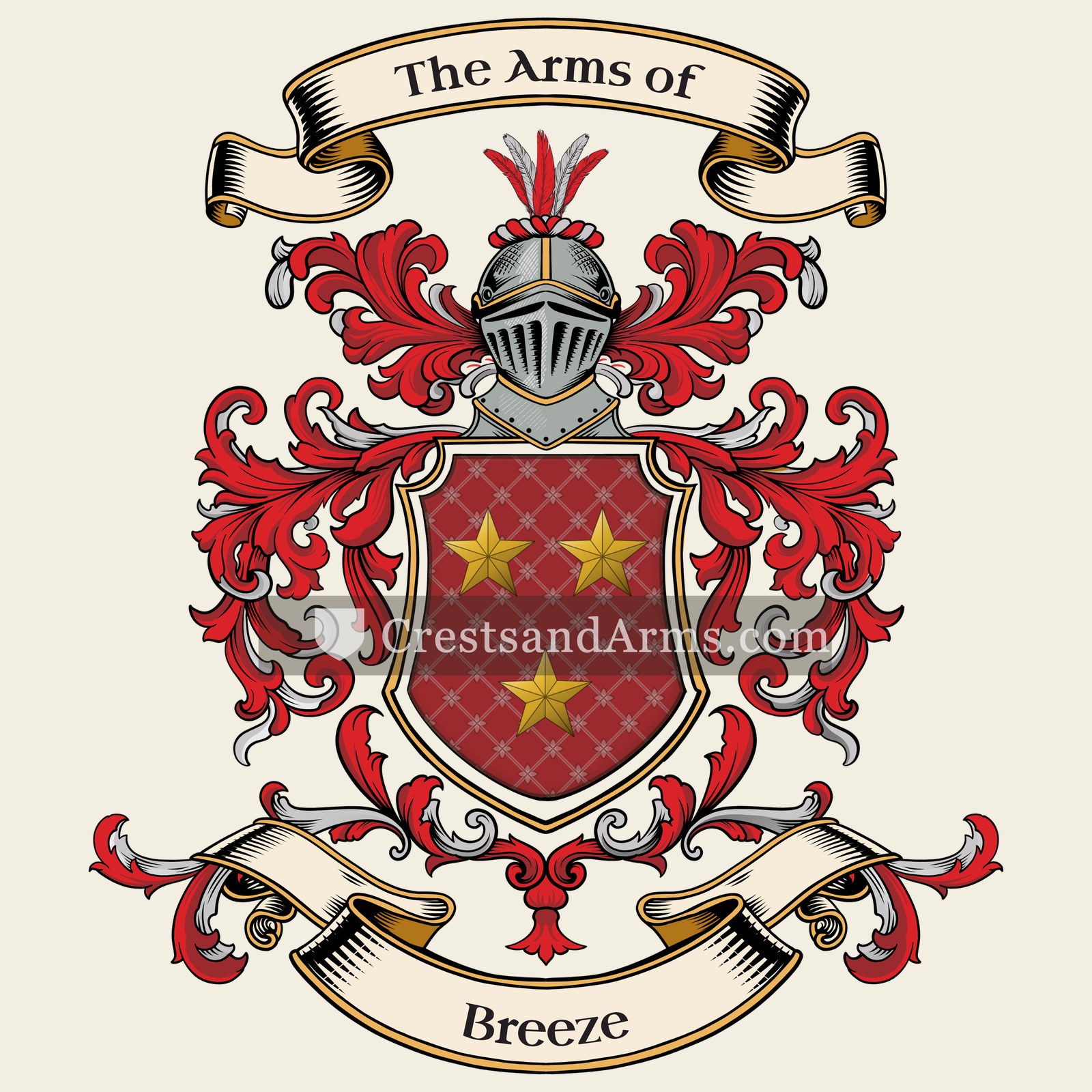
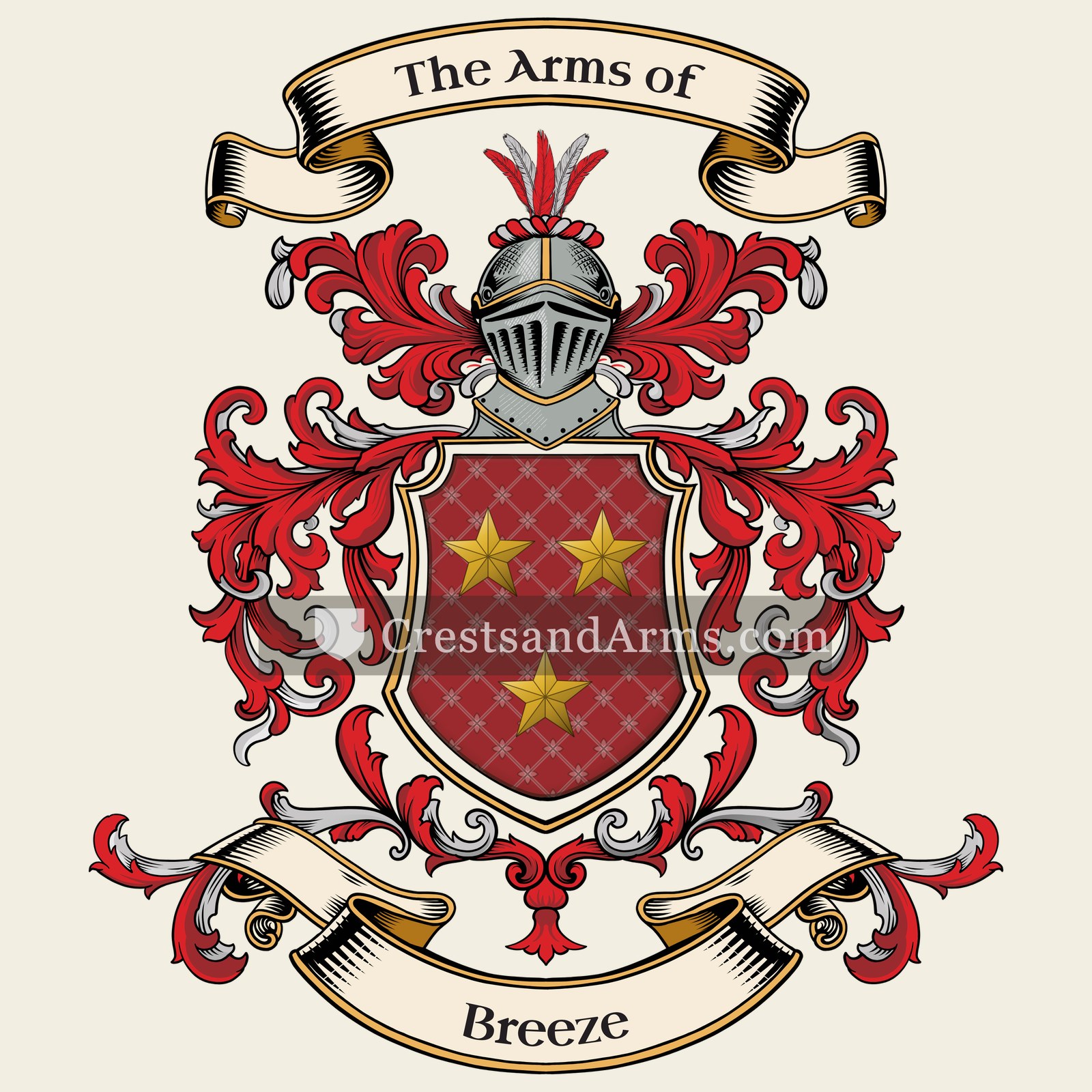
Symbols on this shield
mulletThe third son, and a divine quality from above
Colours
Red (Gules)Means: Military strength
Gold (Or)Means: Generosity
Historical info
Source
Sir Bernard Burke, The General Armory of England, Scotland, Ireland and Wales, London: Harrison & Sons, 1884
Blazon (the actual original written record)
“Gu. three mullets or”
Irelandc. 1645
Digital archive packCoat of arms PNG, gold border print PDF, vector SVG and the certificate of authenticity. Sent to your email in minutes.
Map of Ireland showing where the Breeze arms are recorded
The Breeze arms were recorded in Ireland, c. 1645.
Arms such as these were typically recorded in Dublin.
Dublin was the seat of government in Ireland and the place where grants were sought and recorded. Families with business at the castle or the courts settled nearby, and settling there put their arms on record.
This is where the arms were entered in the register. Families often moved to other parts of the country, so the same name can turn up in more than one region.
The body that granted and recorded arms in Ireland in this period.
Charles I of England
Sovereign of the period
Charles I of England
1625–1649
Reigning in France when the Breeze arms are first recorded.
How Arms Worked in Ireland
The Ulster King of Arms granted coats of arms to individuals who proved their social standing and good character. These symbols were typically inherited by all legitimate descendants of the original holder. If a family branch wanted a unique look, they could apply for a specific change to their design through the office to ensure their identity remained distinct.
Granting authority
The Ulster King of Arms acted as the official body that regulated and issued all coats of arms throughout Ireland.
How they got arms
Families obtained their arms through formal grants issued by the office after proving their eligibility and paying the required fees.
Where arms were recorded
All official grants were recorded in the registers held by the Ulster King of Arms starting from the year 1552.
The family's standing
Recorded among the armigerous families of Ireland.
Origin & History of the Breeze Family in Ireland
The history of the Breeze family in Ireland is deeply connected to the bustling urban environment of seventeenth-century Dublin. By 1645, records confirm that members of the family were already established residents within the city, a time when Dublin was undergoing significant social and political shifts. The name itself is thought to have originated as a descriptive nickname, likely referring to a person with a brisk or lively personality. During this period, families in Dublin often lived near the city walls or within the busy merchant districts where trade and commerce defined daily life. As the Breeze family settled into the capital, they became part of the diverse population that navigated the complex religious and economic changes of the mid-1600s. Their presence in the city archives suggests they were integrated into the local community, contributing to the growth of Dublin as it transitioned into a major center of Irish life.
Breeze Meaning & Related Branches
Root word
Braise
Derived from the Old French word for glowing embers or charcoal.
This name
BreezeA topographic name for someone who lived near a place where charcoal was produced or burned.
also spelled
Breza
Breese
Documented Sources
J. B. Rietstap, Armorial Général, Gouda: G. B. van Goor Zonen, 1884–87
Guillaume, Jean, Histoire du Bourbonnais, 1978
Nicolle, David, The French Army in the Seventeenth Century, 1995
Archives départementales de l'Allier, Registres paroissiaux et d'état civil du Bourbonnais
Digital archive packCoat of arms PNG, gold border print PDF, vector SVG and the certificate of authenticity. Sent to your email in minutes.


 mulletThe third son, and a divine quality from above
 mulletThe third son, and a divine quality from above