Map of Austria showing where the Breitwieser arms are recorded
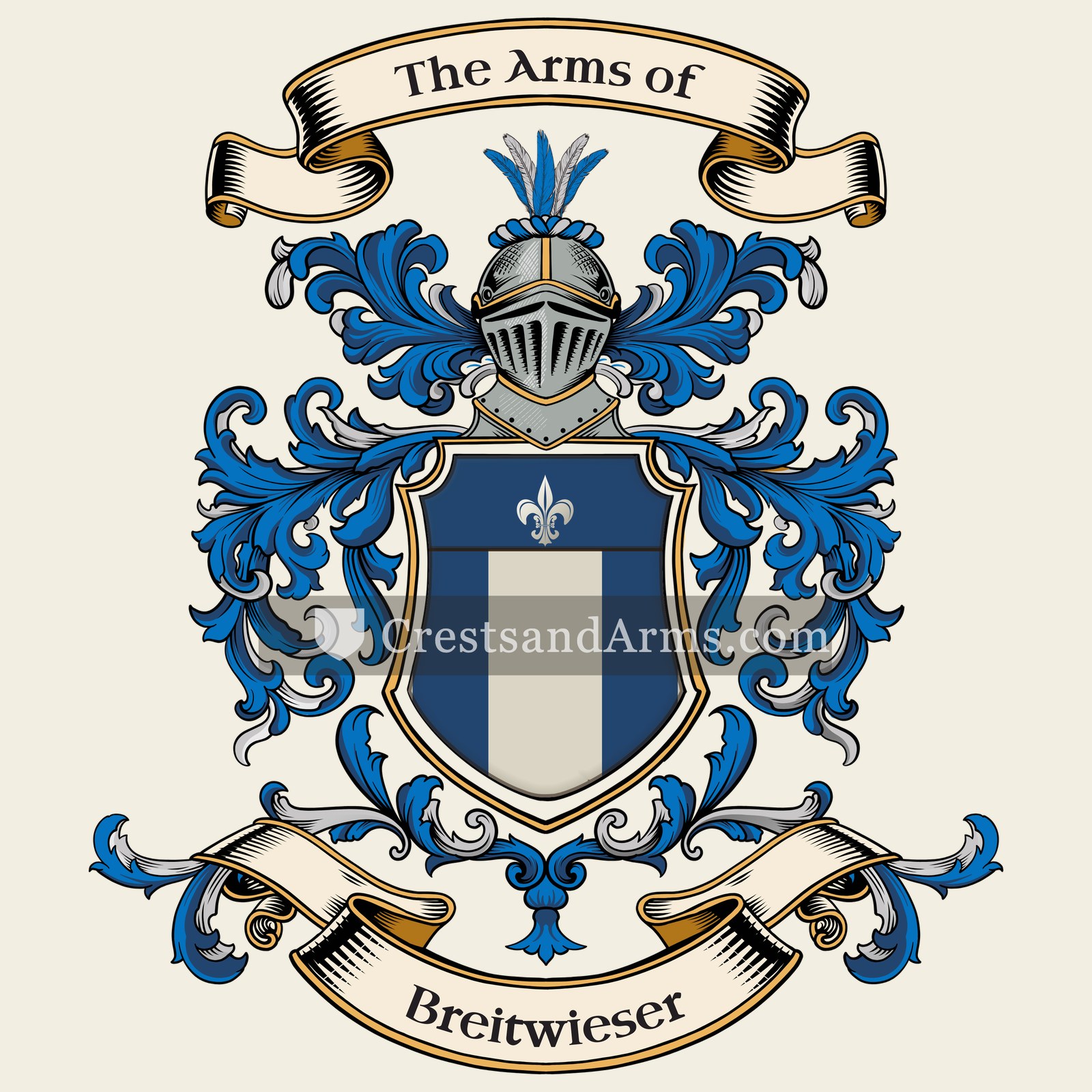
The Breitwieser arms were recorded in Austria, c. 1630.
Arms such as these were typically recorded in Tyrol.
Tyrol was mountain country in western Austria, where the valleys were held by families who had been there a very long time. Old tenure counted for more than money, and old families carried arms.
This is where the arms were entered in the register. Families often moved to other parts of the country, so the same name can turn up in more than one region.
Region
Tyrol
First recorded
1630
Granting Authority for the Breitwieser Arms
Imperial and Royal chancery
Sodacan · CC BY-SA 3.0
The body that granted and recorded arms in Austria in this period.
Ferdinand II, Holy Roman Emperor
Sovereign of the period
Ferdinand II, Holy Roman Emperor
1619–1637
Reigning in Austria when the Breitwieser arms are first recorded.
How Arms Worked in Austria
Austrian coats of arms were often linked directly to noble titles granted by the Emperor. These symbols belonged to the entire family line rather than just one individual. When a family grew, new branches kept the original design without needing to change it. This system allowed all members of a noble house to share the same identity across many generations.
Granting authority
The Imperial and Royal chancery managed all heraldic matters and controlled the official granting of arms throughout the Austrian lands.
How they got arms
Families typically received their arms through a formal imperial decree that often accompanied the elevation of a person to noble status.
Where arms were recorded
Official records of these grants were kept in the Imperial Register of Nobility which began its formal documentation process in 1453.
The family's standing
Recorded among the armigerous families of Austria.
Origin & History of the Breitwieser Family in Austria
The name Breitwieser is a topographic surname that originated in the German-speaking regions of Central Europe. It is composed of two distinct parts: "breit," meaning wide or broad, and "wies," which refers to a meadow. This suggests that the family’s earliest ancestors were likely farmers or landowners who lived near a prominent, expansive field. By the year 1630, records confirm that the family had established a significant presence in the Tyrol region of the Alps. During this period, families often took their names from the specific landscapes they cultivated or inhabited. Living in the mountainous terrain of Tyrol, the early Breitwiesers were likely shaped by the challenges of alpine agriculture and the close-knit social structures of mountain village life. As the family grew, they became part of the local history of the region, contributing to the development of the rural communities that defined the Austrian landscape during the seventeenth century.
Related Branches & Arms
Root word
Breit Wiese
Broad or wide meadow
This name
BreitwieserRefers to someone who lived on or near a wide, expansive meadow.
also spelled
Braitwies
Braitwiesee
Braytveesa
Documented Sources
J. B. Rietstap, Armorial Général, Gouda: G. B. van Goor Zonen, 1884–87
Bahlow, Hans, Deutsches Namenlexikon: Familien- und Vornamen nach Ursprung und Sinn erklärt, 1967


 paleMilitary strength, and a fortified defence
 chiefAuthority, wisdom and dominion
 fleur de lisPurity, light, and the sixth son
 paleMilitary strength, and a fortified defence
 chiefAuthority, wisdom and dominion
 fleur de lisPurity, light, and the sixth son