Map of Russia showing where the Bremen arms are recorded
The Bremen arms were recorded in Esthonie, c. 1725.
Arms such as these were typically recorded in Moscow.
Moscow held the Russian court, and rank there came from service rather than land. Families who served the Tsar were entered in the registers of nobility, and that entry is where their arms are recorded.
This is where the arms were entered in the register. Families often moved to other parts of the country, so the same name can turn up in more than one region.
The body that granted and recorded arms in Russia in this period.
Peter the Great
Sovereign of the period
Peter the Great
1721–1725
Reigning in Russia when the Bremen arms are first recorded.
How Arms Worked in Russia
Russian heraldry was strictly tied to the nobility and the state service system. Families proved their ancient status or earned new rank to receive an official grant from the Tsar. These symbols were then inherited by all legitimate children of the noble line. If a family lacked proof of their status, they were often excluded from the official records entirely.
Granting authority
The Herald Master's Office acted as the central state body that strictly regulated and verified all noble heraldic symbols.
How they got arms
Families typically received their arms through a formal state grant or by proving their noble status to the government authorities.
Where arms were recorded
All approved coats of arms were officially recorded in the General Armorial of the Noble Families of the Russian Empire starting in 1797.
The family's standing
Recorded among the armigerous families of Russia.
Origin & History of the Bremen Family in Russia
The history of the Bremen family in Russia began to take shape during the early eighteenth century, with records confirming their presence in Moscow by 1725. This period was a time of significant transformation for the Russian Empire, as Peter the Great sought to modernize the nation by integrating European expertise and administrative talent. Families like the Bremens often arrived during this era to serve in the growing imperial bureaucracy or the military, finding opportunities in a society that was rapidly expanding its reach. As they settled into the social fabric of Moscow, the name became associated with the influx of foreign professionals who helped bridge the gap between Russia and the rest of the continent. Over time, these early members transitioned from newcomers into established residents, contributing to the professional and cultural life of the city as they integrated into the Russian nobility and civil service.
Coat of Arms & Family Crest Details
Symbols on this shield
chequyConstancy, and the counting-board
keyGuardianship, and the office of a steward
eagleNobility, strength and a keen mind
Colours
Blue (Azure)Means: Loyalty and truth
Silver (Argent)Means: Peace and sincerity
Red (Gules)Means: Military strength
Black (Sable)Means: Constancy
Gold (Or)Means: Generosity
Historical info
Source
J. B. Rietstap, Armorial Général, Gouda: G. B. van Goor Zonen, 1884–87
Blazon (the actual original written record)
“Parti: au 1 d'azur à deux barres d'or, ch. chacune de quatre chev. de sa.; au 2 d'arg. à une aigle de sa., cour. d'or, et une champagne échiq. de gu. et de sa. Sur le tout coupé d'arg. sur gu., à deux clés d'or, passées en saut., br. sur le coupé, les pannetons en haut, adossés. C.: un panache de plumes de héron de sa., enfilé d'un annelet d'or orné sur le devant d'une fleur-de-lis du même; ledit panache posé entre quatre pl. d'aut., alt. d'arg. et d'azur. L.: à dextre d'arg. et de gu., à sen. d'or et d'azur.”
Germanyc. 1707
Digital archive packCoat of arms PNG, gold border print PDF, vector SVG and the certificate of authenticity. Sent to your email in minutes.
Map of Germany showing where the Bremen arms are recorded
The Bremen arms were recorded in Germany, c. 1707.
Arms such as these were typically recorded in Bavaria.
Bavaria was a country of old landed families and walled market towns. Estates passed down the same line for centuries, and both the landowners and the leading townsmen kept arms, which is why so many Bavarian names sit in the registers.
This is where the arms were entered in the register. Families often moved to other parts of the country, so the same name can turn up in more than one region.
The body that granted and recorded arms in Germany in this period.
Joseph I, Holy Roman Emperor
Sovereign of the period
Joseph I, Holy Roman Emperor
1705–1711
Reigning in Russia when the Bremen arms are first recorded.
How Arms Worked in Germany
In the Holy Roman Empire, coats of arms were often granted to individuals by the Emperor or his representatives. These arms were then passed down through the generations to all legitimate descendants of the original holder. Younger branches of a family usually kept the same shield design without needing to change it, as the arms belonged to the entire lineage.
Granting authority
The Holy Roman Emperor held the sole power to grant new coats of arms throughout his vast imperial territories.
How they got arms
Families typically obtained their coats of arms through a formal imperial grant or by proving their noble status to the authorities.
Where arms were recorded
These grants were officially recorded in the Imperial Chancery registers, which began keeping formal records of such honors during the Middle Ages.
The family's standing
Recorded among the armigerous families of Germany.
Origin & History of the Bremen Family in Germany
The family name Bremen is a locative surname, which means it was originally used to identify people based on the place where they lived. While the name is famously associated with the major port city in northern Germany, the presence of the family in Bavaria by 1707 suggests a fascinating migration pattern across the region. During the early eighteenth century, Bavaria was a hub of agricultural and trade activity, and families often moved between provinces to seek better land or employment opportunities. Because surnames were becoming more permanent during this era, the name Bremen likely served as a way for these individuals to maintain a connection to their ancestral roots while establishing themselves in the southern German landscape. This movement reflects the broader history of internal migration in the Holy Roman Empire, where people frequently traveled long distances to settle in new communities while carrying the history of their home towns in their names.
Coat of Arms & Family Crest Details
Symbols on this shield
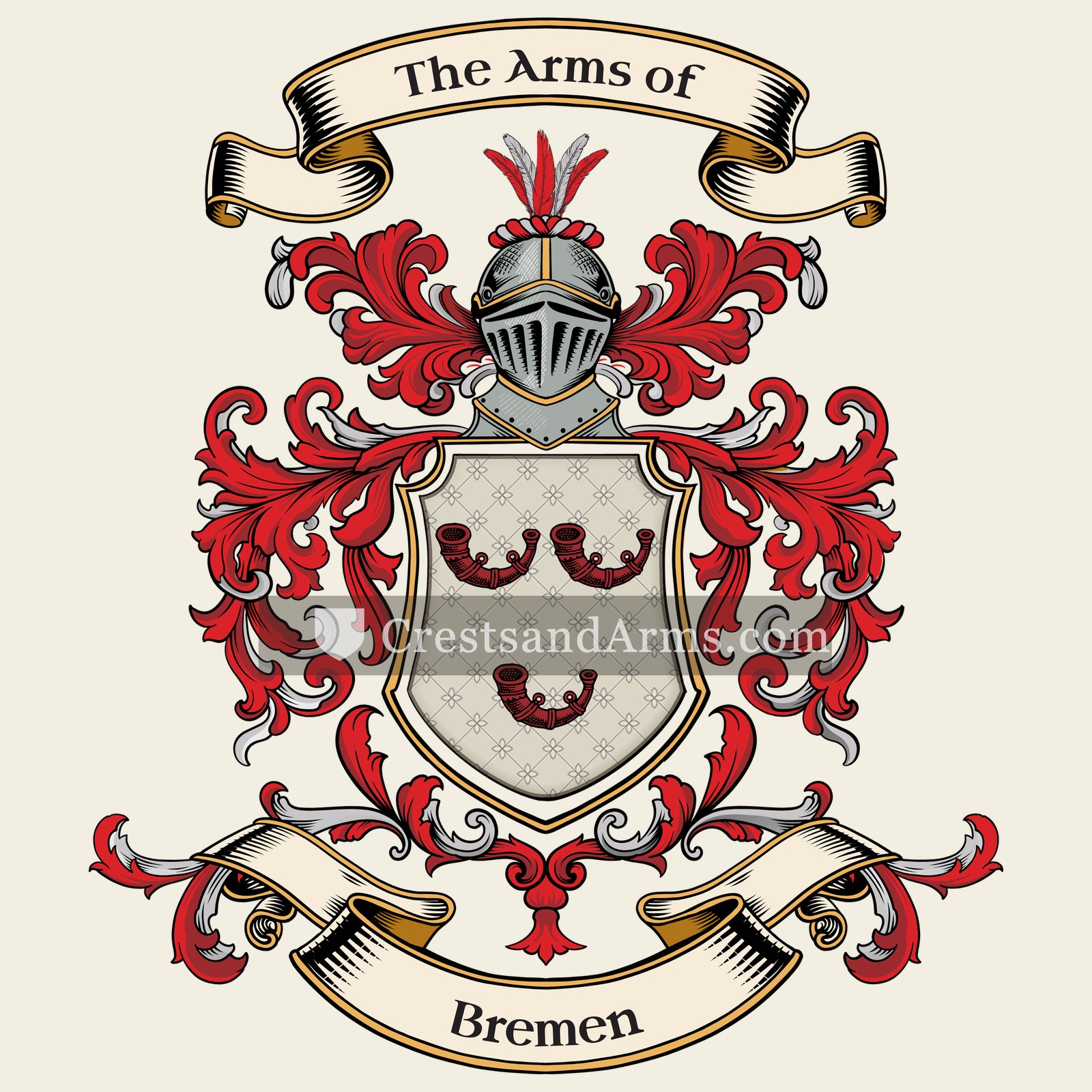
hunting horn stringedOne who delights in the chase
Colours
Silver (Argent)Means: Peace and sincerity
Red (Gules)Means: Military strength
Historical info
Source
Sir Bernard Burke, The General Armory of England, Scotland, Ireland and Wales, London: Harrison & Sons, 1884
Blazon (the actual original written record)
“Ar. three trumpets gu”
Irelandc. 1645
Digital archive packCoat of arms PNG, gold border print PDF, vector SVG and the certificate of authenticity. Sent to your email in minutes.
Map of Ireland showing where the Bremen arms are recorded
The Bremen arms were recorded in Ireland, c. 1645.
Arms such as these were typically recorded in Dublin.
Dublin was the seat of government in Ireland and the place where grants were sought and recorded. Families with business at the castle or the courts settled nearby, and settling there put their arms on record.
This is where the arms were entered in the register. Families often moved to other parts of the country, so the same name can turn up in more than one region.
The body that granted and recorded arms in Ireland in this period.
Charles I of England
Sovereign of the period
Charles I of England
1625–1649
Reigning in Russia when the Bremen arms are first recorded.
How Arms Worked in Ireland
The Ulster King of Arms granted coats of arms to individuals who proved their social standing and good character. These symbols were typically inherited by all legitimate descendants of the original holder. If a family branch wanted a unique look, they could apply for a specific change to their design through the office to ensure their identity remained distinct.
Granting authority
The Ulster King of Arms acted as the official body that regulated and issued all coats of arms throughout Ireland.
How they got arms
Families obtained their arms through formal grants issued by the office after proving their eligibility and paying the required fees.
Where arms were recorded
All official grants were recorded in the registers held by the Ulster King of Arms starting from the year 1552.
The family's standing
Recorded among the armigerous families of Ireland.
Origin & History of the Bremen Family in Ireland
The history of the Bremen name in Ireland is deeply connected to the bustling port city of Dublin during the middle of the seventeenth century. By 1645, records confirm that members of the family were already established residents within the city walls. During this period, Dublin served as a vital hub for trade and migration between Ireland and continental Europe. It is highly probable that the family arrived as part of the growing merchant class that moved across the Irish Sea to take advantage of the city’s expanding commercial opportunities. As these early settlers integrated into local society, they likely participated in the urban economy, which was defined by the exchange of goods and the development of new trade networks. Their presence in the capital during the mid-1600s suggests that the family was part of a broader movement of people who helped shape the cultural and economic landscape of Dublin during a time of significant political change.
Bremen Meaning & Related Branches
Root word
Bremen
Derived from the Germanic word for a border or river bank.
This name
BremenRefers to a person who originated from the city of Bremen, Germany.
also spelled
Breman
Bremon
Bremin
Documented Sources
J. B. Rietstap, Armorial Général, Gouda: G. B. van Goor Zonen, 1884–87
Erik Amburger, Die ständige diplomatische Vertretung der Mächte in Moskau 1478–1917, 1966
Erik Amburger, Geschichte der Behördenorganisation Russlands von Peter dem Grossen bis 1917, 1966
Russian State Historical Archive (RGIA), Fond 1343: Delo o dvoryanstve roda fon Bremen
Digital archive packCoat of arms PNG, gold border print PDF, vector SVG and the certificate of authenticity. Sent to your email in minutes.


 fessThe military belt, and readiness to serve
 keyGuardianship, and the office of a steward
 fessThe military belt, and readiness to serve
 keyGuardianship, and the office of a steward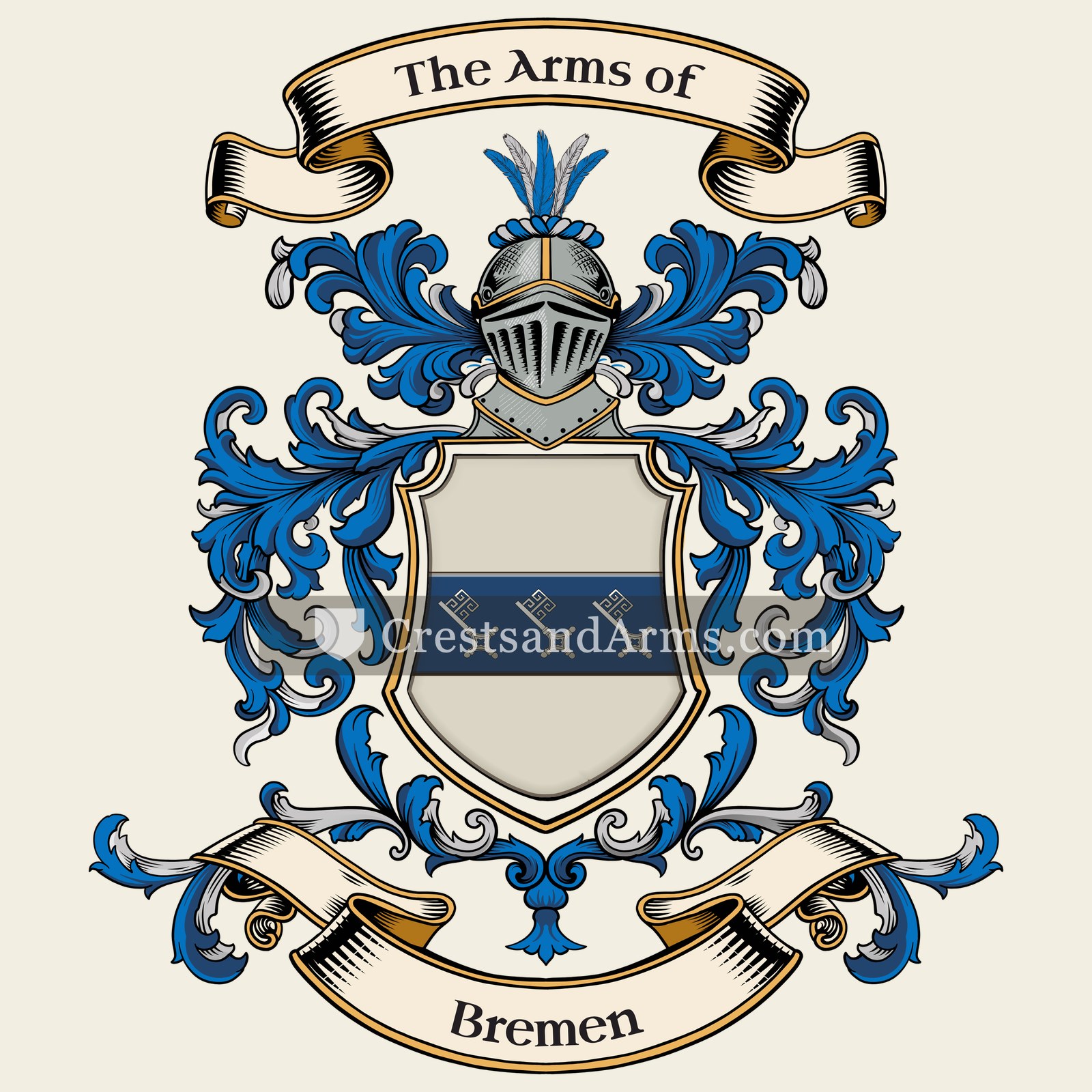


 chequyConstancy, and the counting-board
 eagleNobility, strength and a keen mind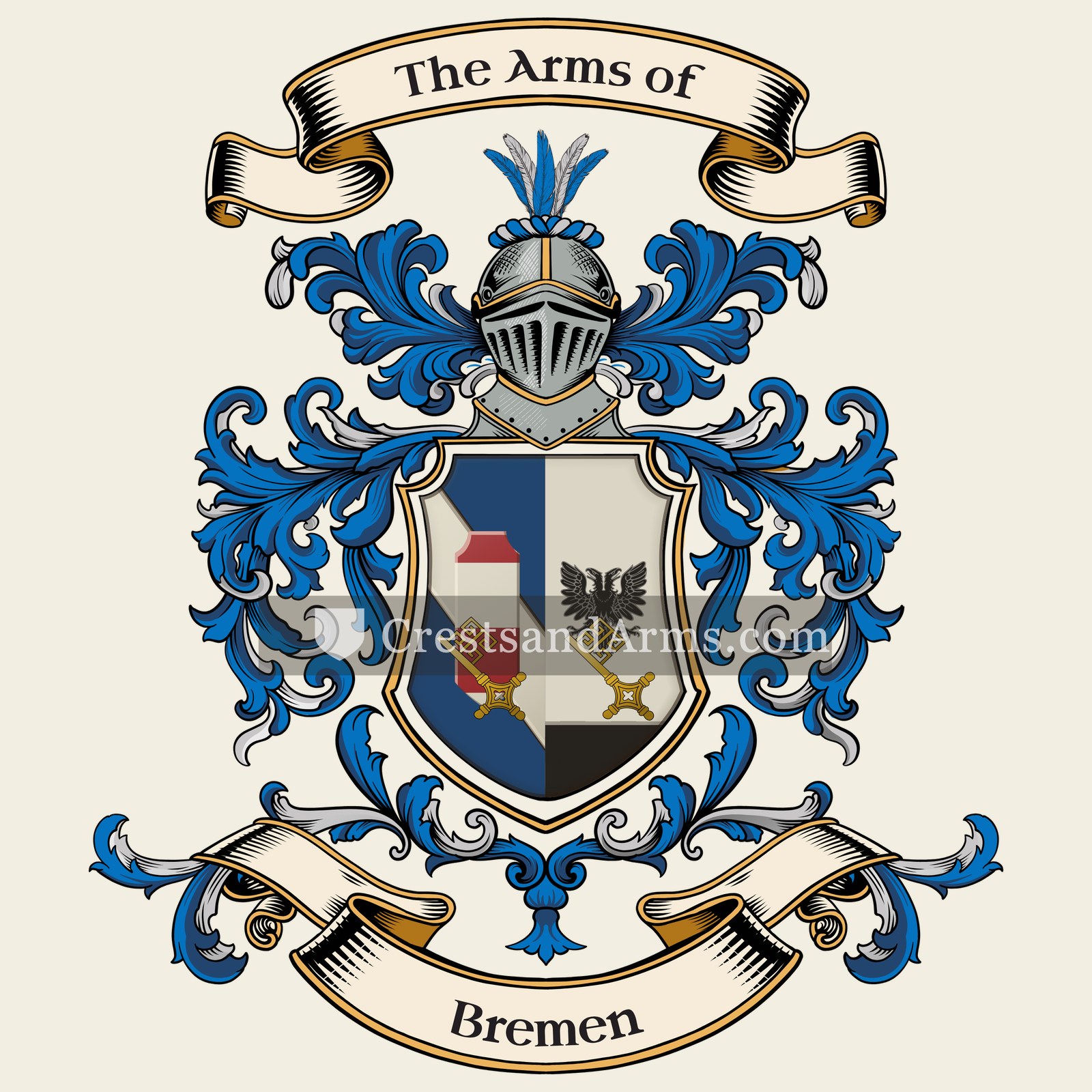


 hunting horn stringedOne who delights in the chase