A record of documented arms, meaning and origin, researched for the Bremond family lines. Documented in 2 countries.
Reg. 4734 · French, A–C
Coat of Arms & Family Crest Details
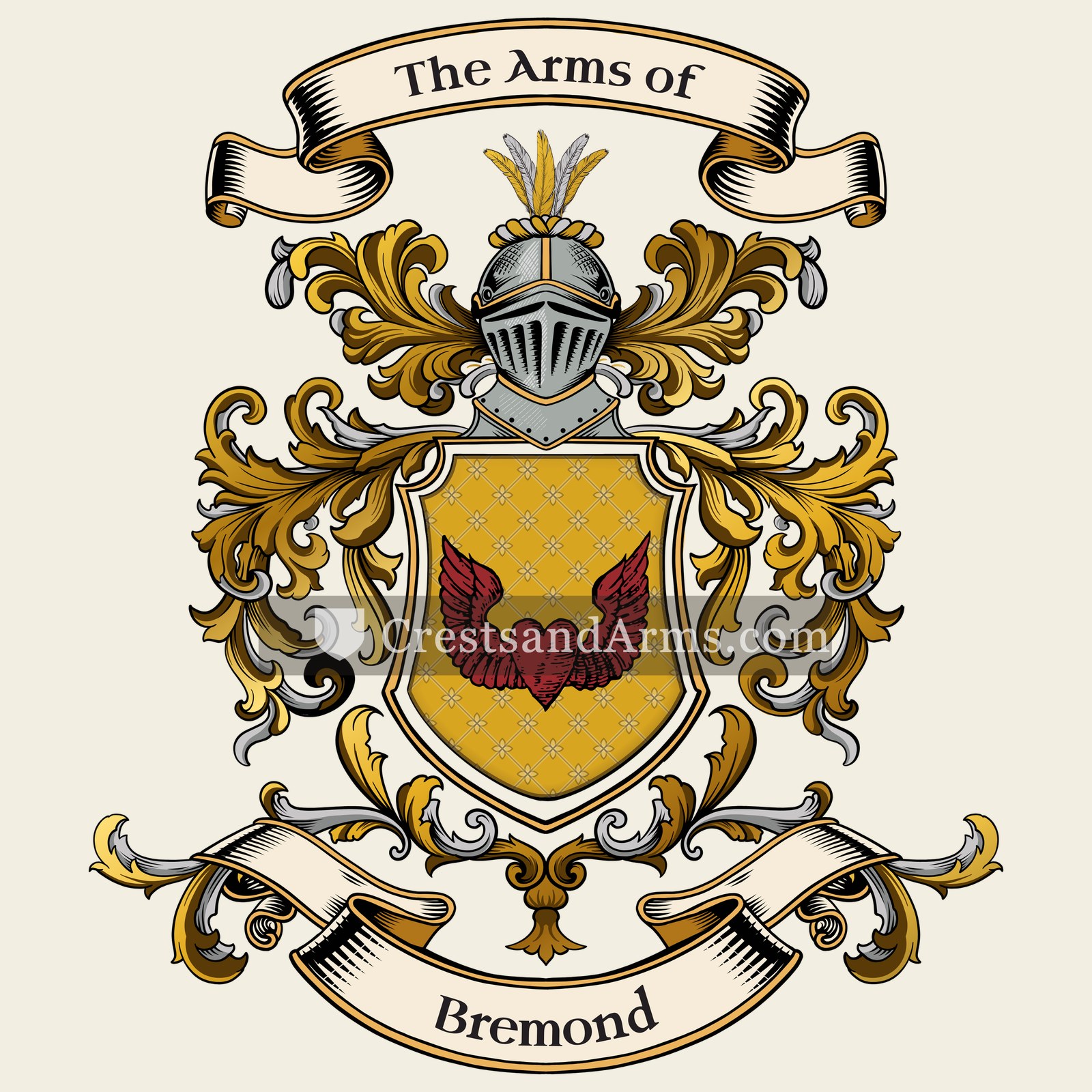
Symbols on this shield
heartSincerity, charity and true affection
Colours
Gold (Or)Means: Generosity
Red (Gules)Means: Military strength
Historical info
Source
J. B. Rietstap, Armorial Général, Gouda: G. B. van Goor Zonen, 1884–87
Blazon (the actual original written record)
“D'or au coeur de gu. D.: EX TOTA ANIMA MEA ET TOTO CORDE MEO.”
DauphineDauphine, c. 1663
Where the Bremond Arms Were Recorded
Dauphine
Map of France showing where the Bremond arms are recorded
The Bremond arms were recorded in Dauphine, c. 1663.
Dauphine lay in the mountains of south-eastern France, a country of small estates and scattered valleys. Its gentry were many and mostly modest, and even a small landholding was enough to justify arms.
This is where the arms were entered in the register. Families often moved to other parts of the country, so the same name can turn up in more than one region.
The body that granted and recorded arms in France in this period.
Louis XIV of France
Sovereign of the period
Louis XIV of France
1643–1715
Reigning in France when the Bremond arms are first recorded.
How Arms Worked in France
In France, a coat of arms was a mark of honor that passed down through the male line to all legitimate descendants. Families often used the same shield without changes to show their shared heritage. If a branch wanted to stand out, they could add a small mark to their shield to show their specific place in the family tree.
Granting authority
The Juge d'armes de France acted as the official authority that regulated and verified coats of arms across the country.
How they got arms
Families typically inherited their arms from ancestors, though they could also receive them through royal grants or by proving their noble status.
Where arms were recorded
Coats of arms were officially recorded in the Armorial Général de France, which began its main collection in the year 1696.
The family's standing
Recorded among the armigerous families of Dauphine.
Origin & History of the Bremond Family in France
The family name Bremond finds its deep historical roots in the rugged landscape of the Dauphiné region in southeastern France. By the mid-seventeenth century, records confirm that members of the family were firmly established in this mountainous area, which served as a vital crossroads between the Rhône Valley and the Italian border. During this period, the name was closely tied to the social and agricultural life of the local communities. Families like the Bremonds often played active roles in the provincial administration or the management of land, reflecting the typical experience of established families in the old French provinces. As the region transitioned through various political shifts, the Bremond family maintained a consistent presence, contributing to the local culture and economy of the Dauphiné long before the major upheavals of the eighteenth century.
Coat of Arms & Family Crest Details
Symbols on this shield
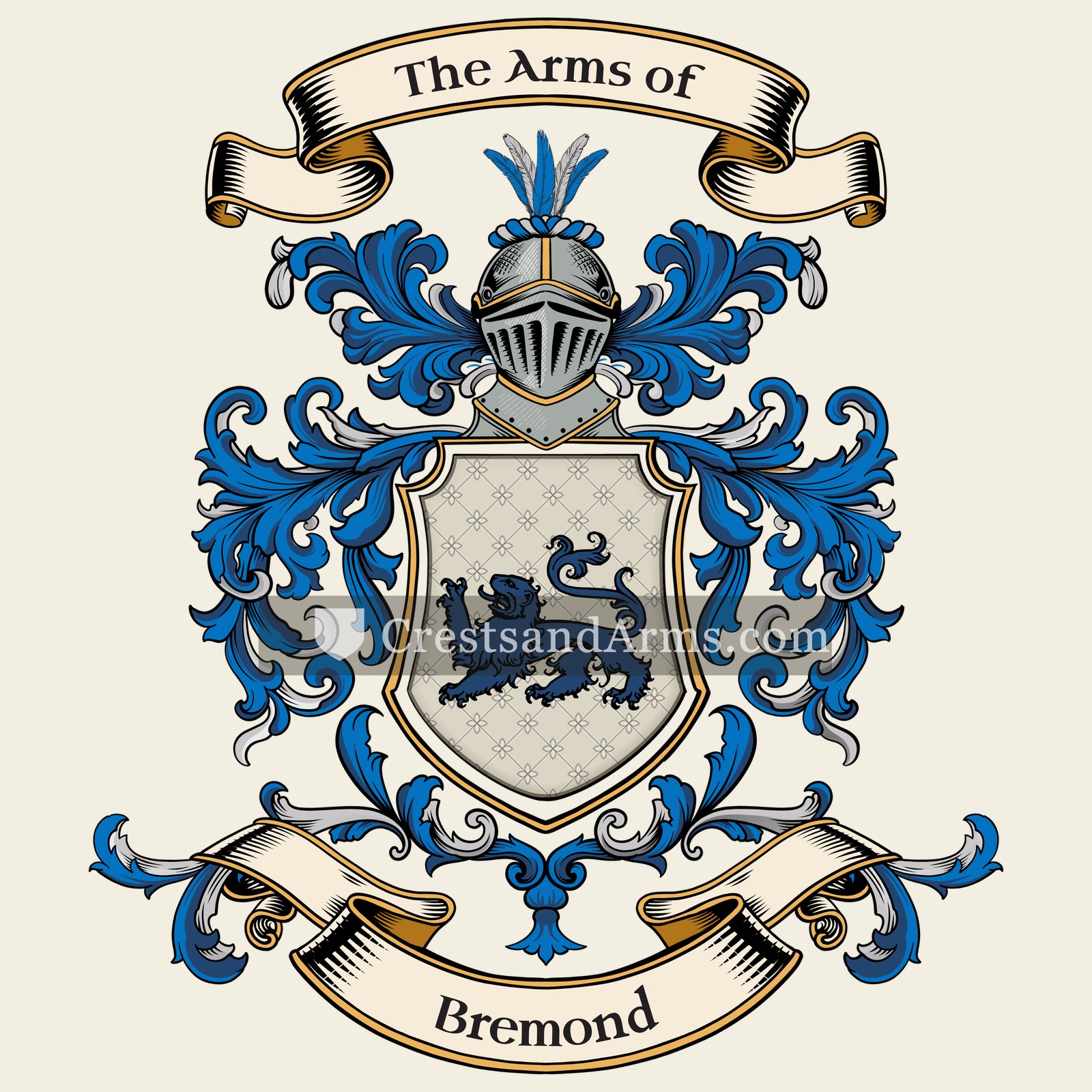
lionCourage, strength and royalty
Colours
Silver (Argent)Means: Peace and sincerity
Blue (Azure)Means: Loyalty and truth
Historical info
Source
Sir Bernard Burke, The General Armory of England, Scotland, Ireland and Wales, London: Harrison & Sons, 1884
Blazon (the actual original written record)
“Ar. a lion ramp. az”
Irelandc. 1645
Where the Bremond Arms Were Recorded
Dublin
Map of Ireland showing where the Bremond arms are recorded
The Bremond arms were recorded in Ireland, c. 1645.
Arms such as these were typically recorded in Dublin.
Dublin was the seat of government in Ireland and the place where grants were sought and recorded. Families with business at the castle or the courts settled nearby, and settling there put their arms on record.
This is where the arms were entered in the register. Families often moved to other parts of the country, so the same name can turn up in more than one region.
The body that granted and recorded arms in Ireland in this period.
Charles I of England
Sovereign of the period
Charles I of England
1625–1649
Reigning in France when the Bremond arms are first recorded.
How Arms Worked in Ireland
The Ulster King of Arms granted coats of arms to individuals who proved their social standing and good character. These symbols were typically inherited by all legitimate descendants of the original holder. If a family branch wanted a unique look, they could apply for a specific change to their design through the office to ensure their identity remained distinct.
Granting authority
The Ulster King of Arms acted as the official body that regulated and issued all coats of arms throughout Ireland.
How they got arms
Families obtained their arms through formal grants issued by the office after proving their eligibility and paying the required fees.
Where arms were recorded
All official grants were recorded in the registers held by the Ulster King of Arms starting from the year 1552.
The family's standing
Recorded among the armigerous families of Ireland.
Origin & History of the Bremond Family in Ireland
The Bremond family name arrived in Ireland as part of the complex migration patterns that defined the seventeenth century. By 1645, records confirm that members of the family were established in Dublin, a city that served as a vital hub for trade and political activity during this period. The name itself is of French origin, likely linked to the Old Occitan word for a brave protector or guardian. As these individuals settled in the capital, they integrated into the local urban society, navigating the shifting religious and political landscape of the time. Their presence in Dublin suggests they were part of a growing community of continental Europeans who brought new skills and connections to the Irish economy. Over the following decades, the family became a part of the city’s historical fabric, transitioning from newcomers to residents who participated in the daily life and development of the region.
Related Branches & Arms
Root word
Bragman
A Germanic term referring to a person who is brave or bold.
This name
BremondDerived from a nickname for a courageous or valiant individual.
also spelled
Bremont
Bremon
Bremund
Bremound
Related arms
Bremontvariant spelling
Documented Sources
J. B. Rietstap, Armorial Général, Gouda: G. B. van Goor Zonen, 1884–87
Borel d'Hauterive, André, Annuaire de la noblesse de France et des maisons souveraines de l'Europe, 1855
Archives Départementales de l'Isère, Série E, État civil et registres paroissiaux de la province du Dauphiné
Digital archive packCoat of arms PNG, gold border print PDF, vector SVG and the certificate of authenticity. Sent to your email in minutes.


 heartSincerity, charity and true affection
 heartSincerity, charity and true affection

 lionCourage, strength and royalty