Map of Germany showing where the Breshears arms are recorded
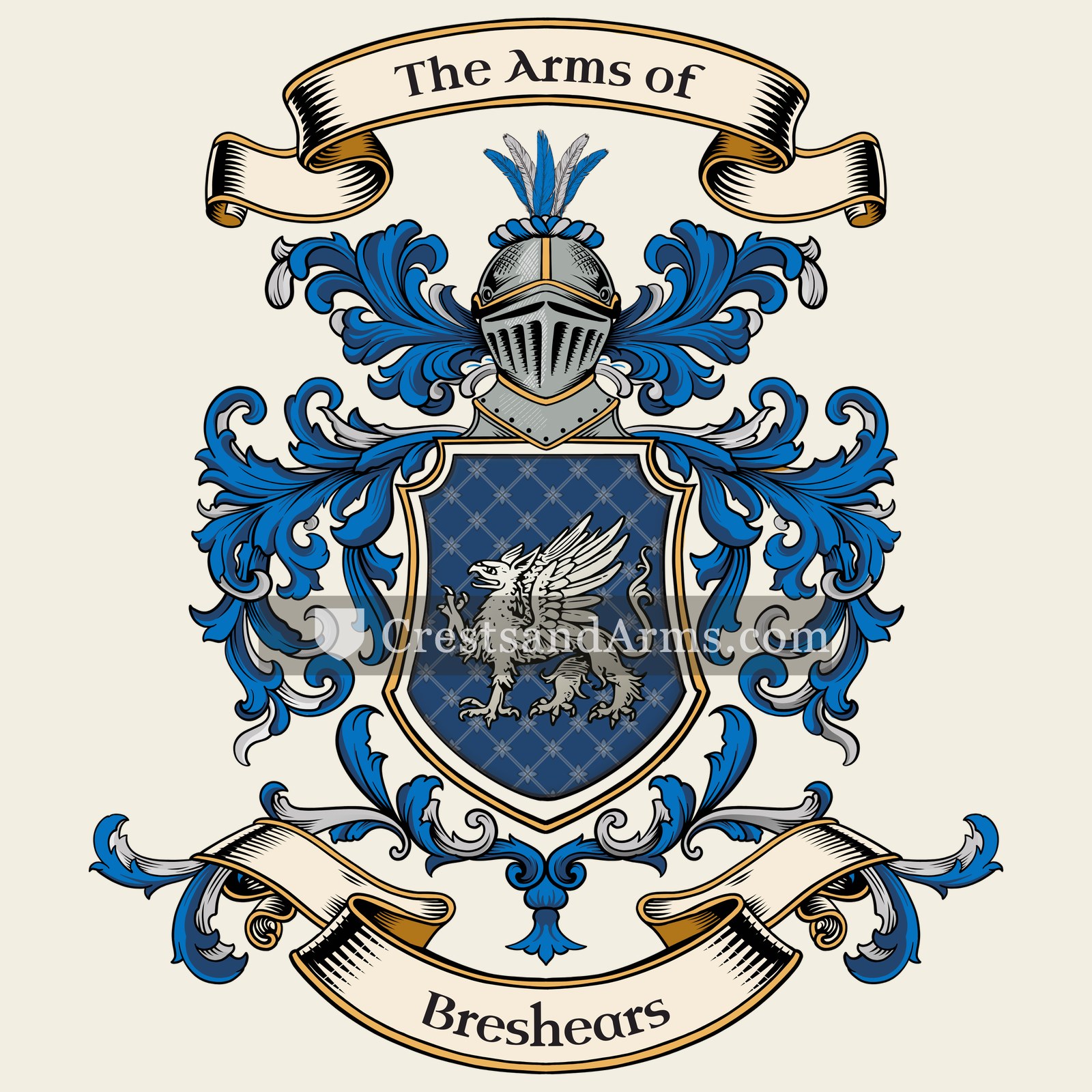
The Breshears arms were recorded in Francfort s, c. 1765.
This is where the arms were entered in the register. Families often moved to other parts of the country, so the same name can turn up in more than one region.
The body that granted and recorded arms in Germany in this period.
Francis I, Holy Roman Emperor
Sovereign of the period
Francis I, Holy Roman Emperor
1745–1765
Reigning in Germany when the Breshears arms are first recorded.
How Arms Worked in Germany
In the Holy Roman Empire, coats of arms were often granted to individuals by the Emperor or his representatives. These arms were then passed down through the generations to all legitimate descendants of the original holder. Younger branches of a family usually kept the same shield design without needing to change it, as the arms belonged to the entire lineage.
Granting authority
The Holy Roman Emperor held the sole power to grant new coats of arms throughout his vast imperial territories.
How they got arms
Families typically obtained their coats of arms through a formal imperial grant or by proving their noble status to the authorities.
Where arms were recorded
These grants were officially recorded in the Imperial Chancery registers, which began keeping formal records of such honors during the Middle Ages.
The family's standing
Recorded among the armigerous families of Germany.
Origin & History of the Breshears Family in Germany
The family name Breshears is a variation of the French surname Brasseur, which historically identified a person who worked as a brewer. Many families with this name lived in the regions of France and the Low Countries before seeking new opportunities abroad. By 1765, records show that members of the family were established in the area of Frankfort, which was then a developing settlement in the American colonies. These early settlers likely moved to the frontier to secure land and participate in the growing trade networks of the Ohio River Valley. As they integrated into their new communities, the spelling of their name evolved to reflect the way it sounded to English-speaking neighbors. This transition from a professional title in Europe to a distinct family name in America highlights the adaptability of early immigrant families as they built lives in a changing landscape.
Related Branches & Arms
Root word
Bresch
A Middle High German term referring to a breach or gap.
This name
BreshearsAn occupational or topographic name for someone living near a gap or a broken terrain.
also spelled
Brueser
Bruesser
Bruesere
Bruzers
Documented Sources
J. B. Rietstap, Armorial Général, Gouda: G. B. van Goor Zonen, 1884–87
Dauzat, Albert. Dictionnaire étymologique des noms de famille et prénoms de France. 1951
Reaney, P.H. A Dictionary of English Surnames. 1958
Library of Congress, Early American Land Grant Records
National Archives and Records Administration, Passenger and Immigration Lists Index
Digital archive packCoat of arms PNG, gold border print PDF, vector SVG and the certificate of authenticity. Sent to your email in minutes.


 griffinValour and vigilance, guarding great treasure
 griffinValour and vigilance, guarding great treasure