Map of France showing where the Brézé arms are recorded
The Brézé arms were recorded in Bourbonnais, c. 1663.
This is where the arms were entered in the register. Families often moved to other parts of the country, so the same name can turn up in more than one region.
The body that granted and recorded arms in France in this period.
Louis XIV of France
Sovereign of the period
Louis XIV of France
1643–1715
Reigning in France when the Brézé arms are first recorded.
How Arms Worked in France
In France, a coat of arms was a mark of honor that passed down through the male line to all legitimate descendants. Families often used the same shield without changes to show their shared heritage. If a branch wanted to stand out, they could add a small mark to their shield to show their specific place in the family tree.
Granting authority
The Juge d'armes de France acted as the official authority that regulated and verified coats of arms across the country.
How they got arms
Families typically inherited their arms from ancestors, though they could also receive them through royal grants or by proving their noble status.
Where arms were recorded
Coats of arms were officially recorded in the Armorial Général de France, which began its main collection in the year 1696.
The family's standing
Recorded among the armigerous families of France.
Origin & History of the Brézé Family in France
The family name Brézé is deeply rooted in the historical landscape of France, with its origins tied to the shifting power structures of the French nobility. While the name is famously associated with the powerful lords of the Loire Valley during the Middle Ages, the branch of the family established in the Bourbonnais region by 1663 represents a transition into the provincial administration of the Ancien Régime. Families in this area often served as local officials or landowners who helped manage the king's interests in the heart of the country. By the mid-seventeenth century, the name had moved away from the high-stakes politics of the royal court and toward the stable management of rural estates. This shift allowed the family to integrate into the local social hierarchy, where they remained influential figures in the regional administration for generations.
Coat of Arms & Family Crest Details
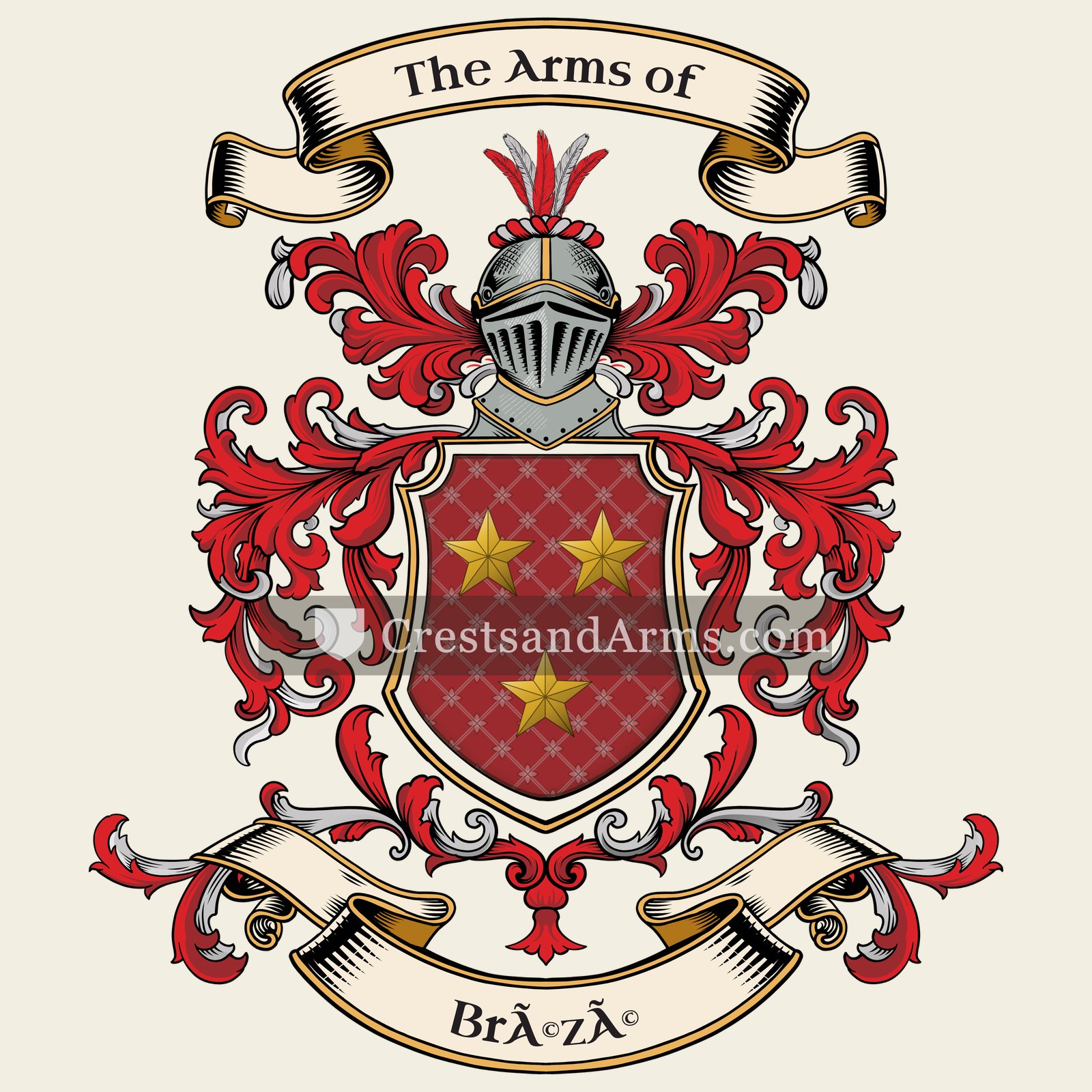
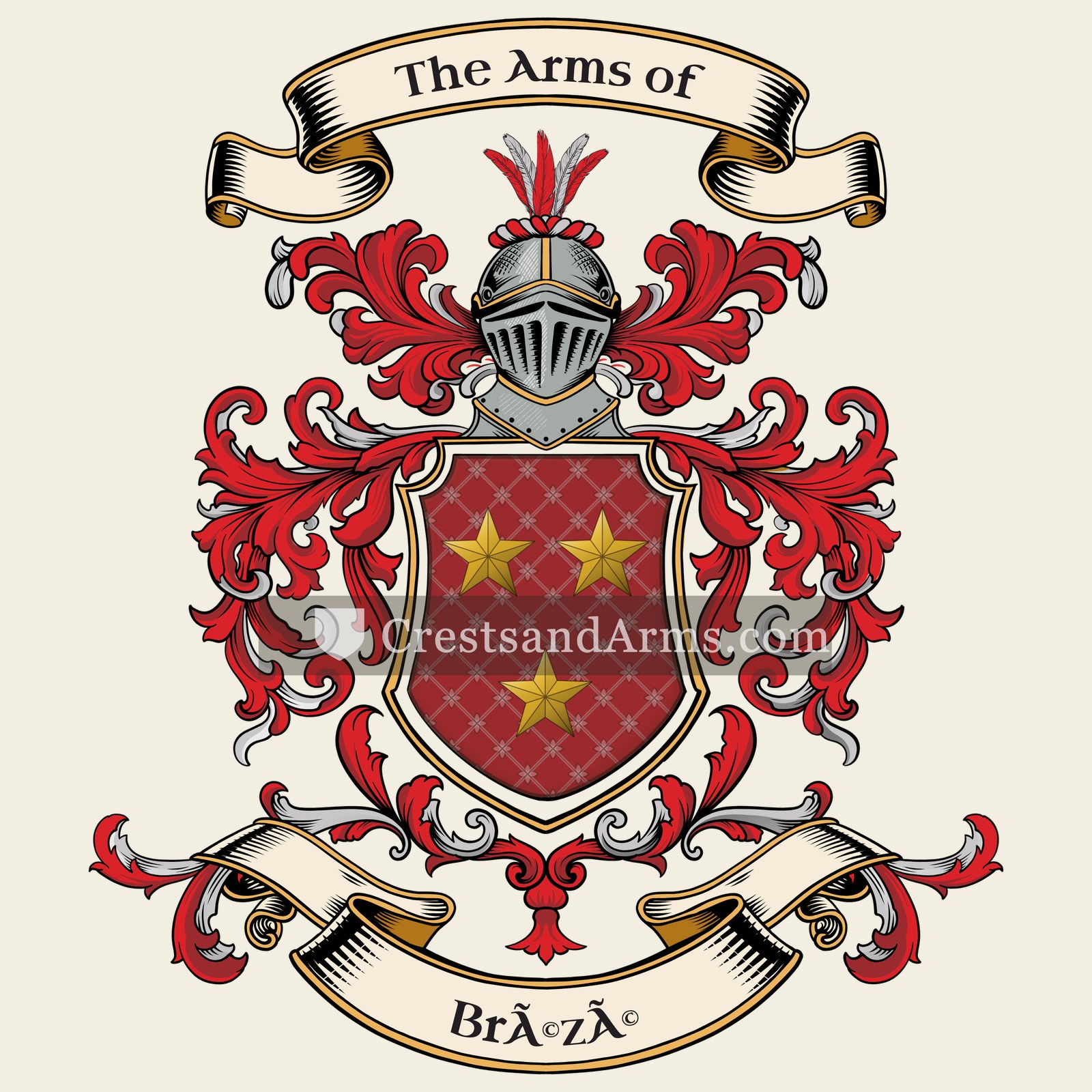
Symbols on this shield
mulletThe third son, and a divine quality from above
Colours
Red (Gules)Means: Military strength
Gold (Or)Means: Generosity
Historical info
Source
Sir Bernard Burke, The General Armory of England, Scotland, Ireland and Wales, London: Harrison & Sons, 1884
Blazon (the actual original written record)
“Gu. three mullets or”
Irelandc. 1645
Digital archive packCoat of arms PNG, gold border print PDF, vector SVG and the certificate of authenticity. Sent to your email in minutes.
Map of Ireland showing where the Brézé arms are recorded
The Brézé arms were recorded in Ireland, c. 1645.
Arms such as these were typically recorded in Dublin.
Dublin was the seat of government in Ireland and the place where grants were sought and recorded. Families with business at the castle or the courts settled nearby, and settling there put their arms on record.
This is where the arms were entered in the register. Families often moved to other parts of the country, so the same name can turn up in more than one region.
The body that granted and recorded arms in Ireland in this period.
Charles I of England
Sovereign of the period
Charles I of England
1625–1649
Reigning in France when the Brézé arms are first recorded.
How Arms Worked in Ireland
The Ulster King of Arms granted coats of arms to individuals who proved their social standing and good character. These symbols were typically inherited by all legitimate descendants of the original holder. If a family branch wanted a unique look, they could apply for a specific change to their design through the office to ensure their identity remained distinct.
Granting authority
The Ulster King of Arms acted as the official body that regulated and issued all coats of arms throughout Ireland.
How they got arms
Families obtained their arms through formal grants issued by the office after proving their eligibility and paying the required fees.
Where arms were recorded
All official grants were recorded in the registers held by the Ulster King of Arms starting from the year 1552.
The family's standing
Recorded among the armigerous families of Ireland.
Origin & History of the Brézé Family in Ireland
The history of the Brézé name in Ireland is deeply connected to the movement of people across the English Channel during the seventeenth century. While the name originates from the Anjou region of France, records confirm that members of the family were established in Dublin by 1645. During this period, Dublin was a bustling center for trade and military activity, attracting many continental Europeans who sought new opportunities or refuge from political instability. These early settlers likely integrated into the city’s merchant and professional classes, navigating the complex social landscape of a changing Ireland. By settling in the capital, the family became part of a small but significant network of immigrants who contributed to the urban development and cultural diversity of the city during the mid-1600s.
Brézé Meaning & Related Branches
Root word
Bresiacum
A Gallo-Roman estate or settlement belonging to a person named Bricius.
This name
BrézéRefers to a place of origin or a landed estate located in the Anjou region.
also spelled
Breza
Breese
Documented Sources
J. B. Rietstap, Armorial Général, Gouda: G. B. van Goor Zonen, 1884–87
Boucher de Molandon, L'Hôtel de Brézé à Orléans, 1885
Archives départementales de l'Allier, Série E, État civil et documents familiaux du Bourbonnais
Société d'émulation du Bourbonnais, Bulletin de la Société d'émulation du Bourbonnais, 1902
Digital archive packCoat of arms PNG, gold border print PDF, vector SVG and the certificate of authenticity. Sent to your email in minutes.


 mulletThe third son, and a divine quality from above
 mulletThe third son, and a divine quality from above