Map of France showing where the Brice arms are recorded
The Brice arms were recorded in France, c. 1663.
Arms such as these were typically recorded in Bretagne.
More families held coats of arms in Bretagne than anywhere else in France. The land was divided into many small estates rather than a few large ones, so far more households counted as gentry, and each needed a shield of its own to be told apart.
This is where the arms were entered in the register. Families often moved to other parts of the country, so the same name can turn up in more than one region.
The body that granted and recorded arms in France in this period.
Louis XIV of France
Sovereign of the period
Louis XIV of France
1643–1715
Reigning in France when the Brice arms are first recorded.
How Arms Worked in France
In France, a coat of arms was a mark of honor that passed down through the male line to all legitimate descendants. Families often used the same shield without changes to show their shared heritage. If a branch wanted to stand out, they could add a small mark to their shield to show their specific place in the family tree.
Granting authority
The Juge d'armes de France acted as the official authority that regulated and verified coats of arms across the country.
How they got arms
Families typically inherited their arms from ancestors, though they could also receive them through royal grants or by proving their noble status.
Where arms were recorded
Coats of arms were officially recorded in the Armorial Général de France, which began its main collection in the year 1696.
The family's standing
Recorded among the armigerous families of France.
Origin & History of the Brice Family in France
The name Brice has deep roots in the French region of Brittany, where members of the family were documented as early as 1663. The name itself is derived from the ancient personal name Brictius, which was popularized by a fourth-century saint who served as a bishop in the city of Tours. During the medieval period, names based on saints were frequently adopted by families to signify their religious devotion or local heritage. In the context of Brittany, the Brice family likely integrated into the local social structure as the region maintained its distinct cultural identity while gradually becoming more connected to the French crown. By the mid-seventeenth century, families bearing this name were established within the parish systems of the province, where they participated in the agricultural and community life that defined the Breton countryside. These early ancestors were part of a long tradition of families who helped shape the local history of their villages through generations of work and regional loyalty.
Meaning of the Brice family crest colors & symbols
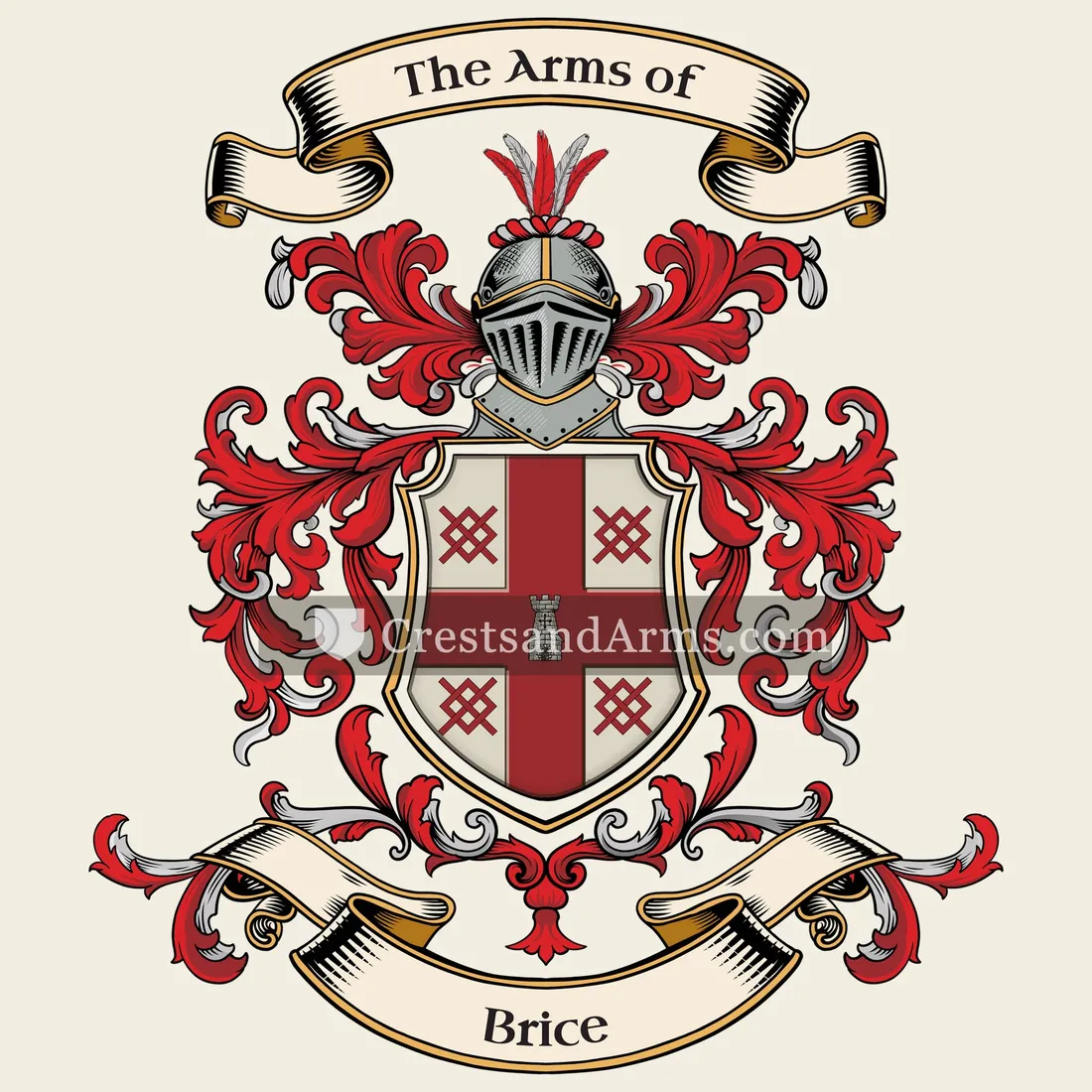
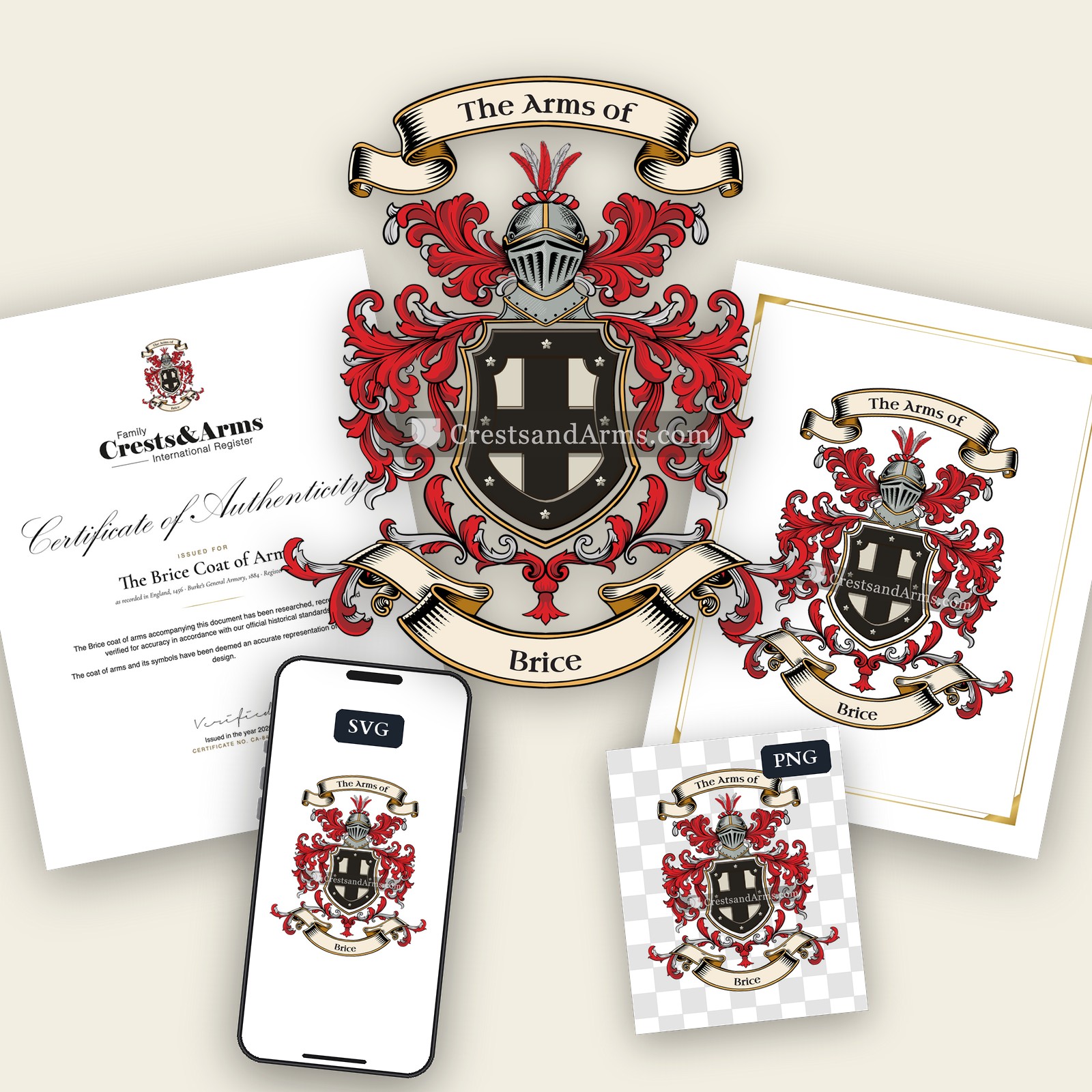
Symbols on this shield
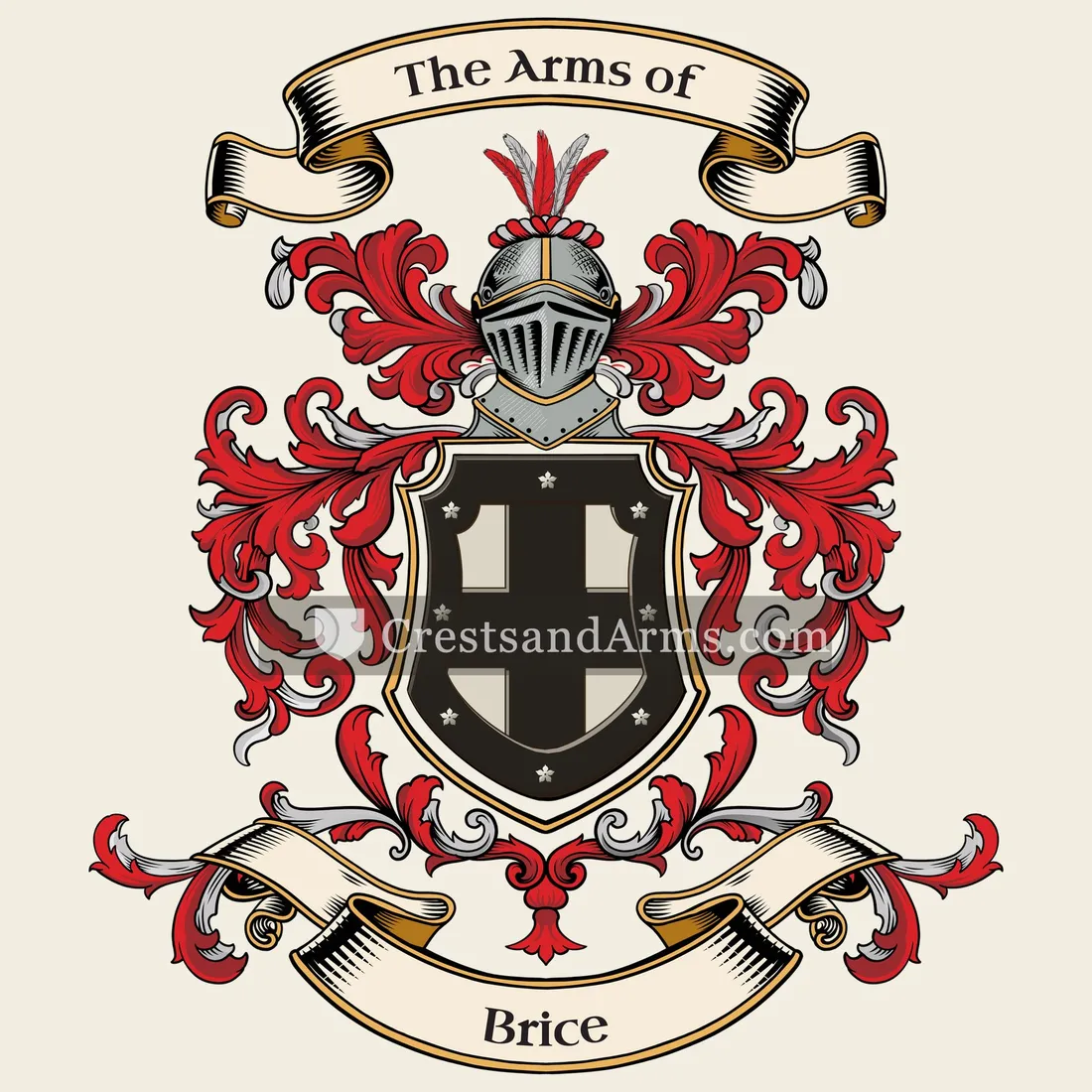
cross symbolChristian faith and service
bordureA difference between branches of one family
cinquefoilHope and joy
Colours
Silver (Argent)Means: Peace and sincerity
Black (Sable)Means: Constancy
Historical info
Source
Sir Bernard Burke, The General Armory of England, Scotland, Ireland and Wales, London: Harrison & Sons, 1884
Blazon (the actual original written record)
“Ar. fretty gu. over all a cross of the first, all within a bordure sa. charged with eight cinquefoils of the field”
LancashireLondon · Lancashire, c. 1456
Digital archive packCoat of arms PNG, gold border print PDF, vector SVG and the certificate of authenticity. Sent to your email in minutes.
Map of England showing where the Brice arms are recorded
The Brice arms were recorded in Lancashire, c. 1456.
This is where the arms were entered in the register. Families often moved to other parts of the country, so the same name can turn up in more than one region.
The body that granted and recorded arms in England in this period.
Henry VI of England
Sovereign of the period
Henry VI of England
1422–1461
Reigning in France when the Brice arms are first recorded.
How Arms Worked in England
English heraldry allowed arms to be shared by all legitimate descendants of the original owner. These symbols were treated as personal property that moved through the generations to all children. While the eldest son kept the original design, other family members could use the same shield without needing to change it or register their own unique versions.
Granting authority
The College of Arms in London has regulated the use of coats of arms throughout England and Wales since 1484.
How they got arms
Families typically obtained their coats of arms through a formal grant from the Crown or by proving their ancient right to them.
Where arms were recorded
All official coats of arms are recorded in the registers kept at the College of Arms, which date back to the fifteenth century.
The family's standing
Recorded among the armigerous families of Lancashire.
Origin & History of the Brice Family in England
The surname Brice has deep roots in the English landscape, with historical records confirming that members of the family were established in the county of Lancashire by 1456. The name itself is thought to have originated from the ancient personal name Bricius, which was popular in various parts of Europe during the Middle Ages. As surnames became more common in England, families often adopted these personal names to distinguish themselves within their local communities. By the mid-15th century, those carrying the name Brice were already integrated into the social and economic fabric of Northern England. These early ancestors likely lived as farmers or tradespeople, contributing to the growth of local parishes and towns during a time of significant change in English society. Their presence in Lancashire highlights how the family name became a permanent part of the regional identity long before the modern era.
Meaning of the Brice family crest colors & symbols
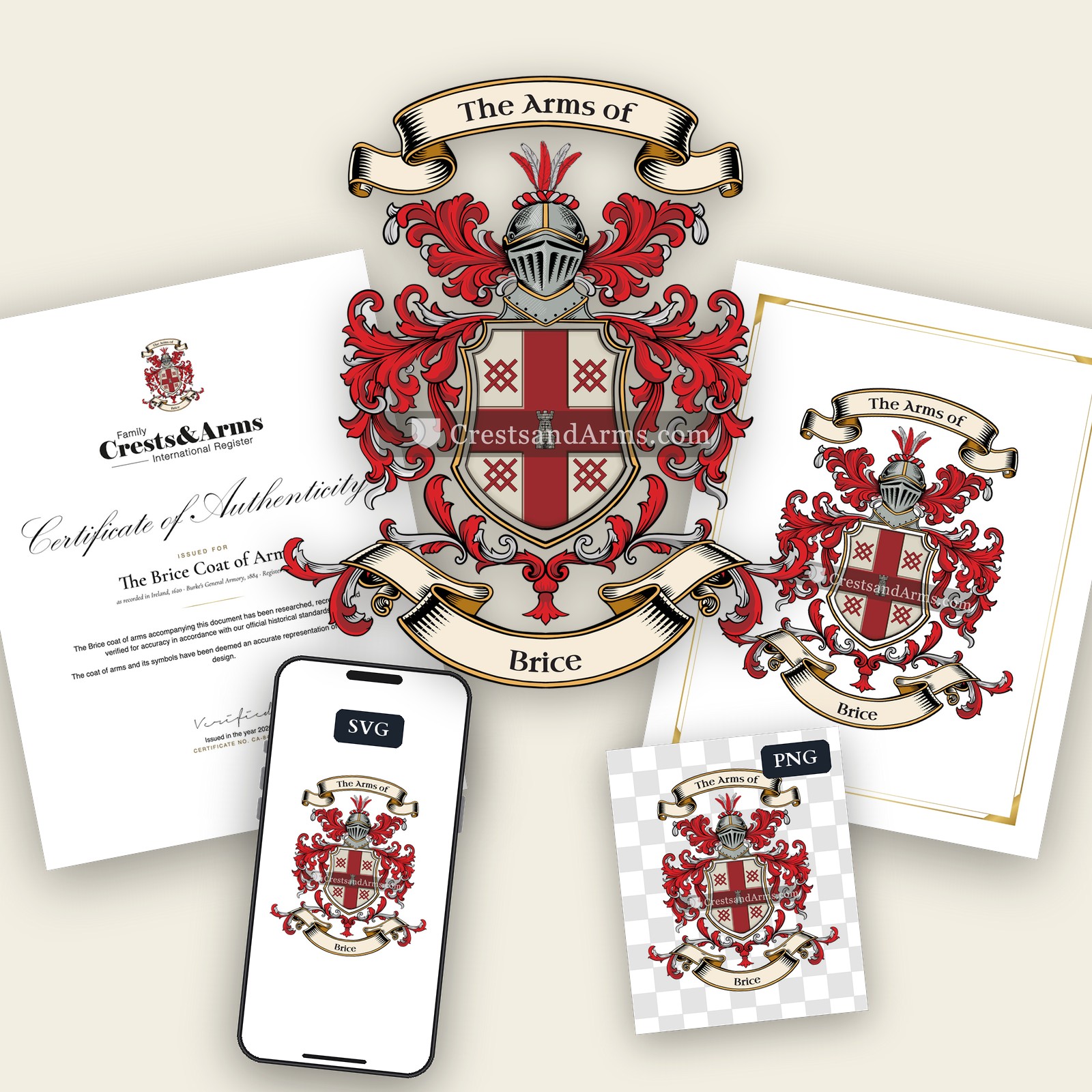
Symbols on this shield
cross symbolChristian faith and service
towerGrandeur and solidity, and a stronghold defended
fretPersuasion, and the net that holds
Colours
Silver (Argent)Means: Peace and sincerity
Red (Gules)Means: Military strength
Historical info
Source
Sir Bernard Burke, The General Armory of England, Scotland, Ireland and Wales, London: Harrison & Sons, 1884
Blazon (the actual original written record)
“Ar. on a cross gu. a castle triple-towered of the first betw. four frets of the second”
DublinJohn Brice · Dublin, c. 1620
Digital archive packCoat of arms PNG, gold border print PDF, vector SVG and the certificate of authenticity. Sent to your email in minutes.
Map of Ireland showing where the Brice arms are recorded
The Brice arms were recorded in Dublin, c. 1620.
Dublin was the seat of government in Ireland and the place where grants were sought and recorded. Families with business at the castle or the courts settled nearby, and settling there put their arms on record.
This is where the arms were entered in the register. Families often moved to other parts of the country, so the same name can turn up in more than one region.
The body that granted and recorded arms in Ireland in this period.
James VI and I
Sovereign of the period
James VI and I
1603–1625
Reigning in France when the Brice arms are first recorded.
How Arms Worked in Ireland
The Ulster King of Arms granted coats of arms to individuals who proved their social standing and good character. These symbols were typically inherited by all legitimate descendants of the original holder. If a family branch wanted a unique look, they could apply for a specific change to their design through the office to ensure their identity remained distinct.
Granting authority
The Ulster King of Arms acted as the official body that regulated and issued all coats of arms throughout Ireland.
How they got arms
Families obtained their arms through formal grants issued by the office after proving their eligibility and paying the required fees.
Where arms were recorded
All official grants were recorded in the registers held by the Ulster King of Arms starting from the year 1552.
The family's standing
Recorded among the armigerous families of Dublin.
Origin & History of the Brice Family in Ireland
The Brice family name established a notable presence in Ireland by the early seventeenth century, particularly within the urban environment of Dublin. Records confirm that members of the family were living in the city by 1620, a time when Dublin was undergoing significant social and economic shifts as a center of administration and trade. The name itself is believed to have roots in the Old French name Brice, which was brought to the British Isles following the Norman Conquest and eventually spread into Ireland through migration and settlement. As these early settlers integrated into Irish society, they participated in the growing commercial life of the capital. Over the following decades, the family became part of the broader tapestry of Dublin’s population, contributing to the development of the city during a period of intense historical change.
Brice Meaning & Related Branches
Root word
Brictius
Derived from the Celtic word for speckled or spotted.
This name
BriceA French surname originating from a saint's name meaning one who is spotted or freckled.
also spelled
Bryce
Bris
Brise
Bryse
Related arms
Brisevariant spelling
Brycevariant spelling
Brysevariant spelling
Documented Sources
J. B. Rietstap, Armorial Général, Gouda: G. B. van Goor Zonen, 1884–87
Archives Départementales d'Ille-et-Vilaine, Registres paroissiaux et d'état civil
Dauzat, Albert, Dictionnaire étymologique des noms et prénoms de France, 1951
Morlet, Marie-Thérèse, Dictionnaire étymologique des noms de famille, 1991
Digital archive packCoat of arms PNG, gold border print PDF, vector SVG and the certificate of authenticity. Sent to your email in minutes.


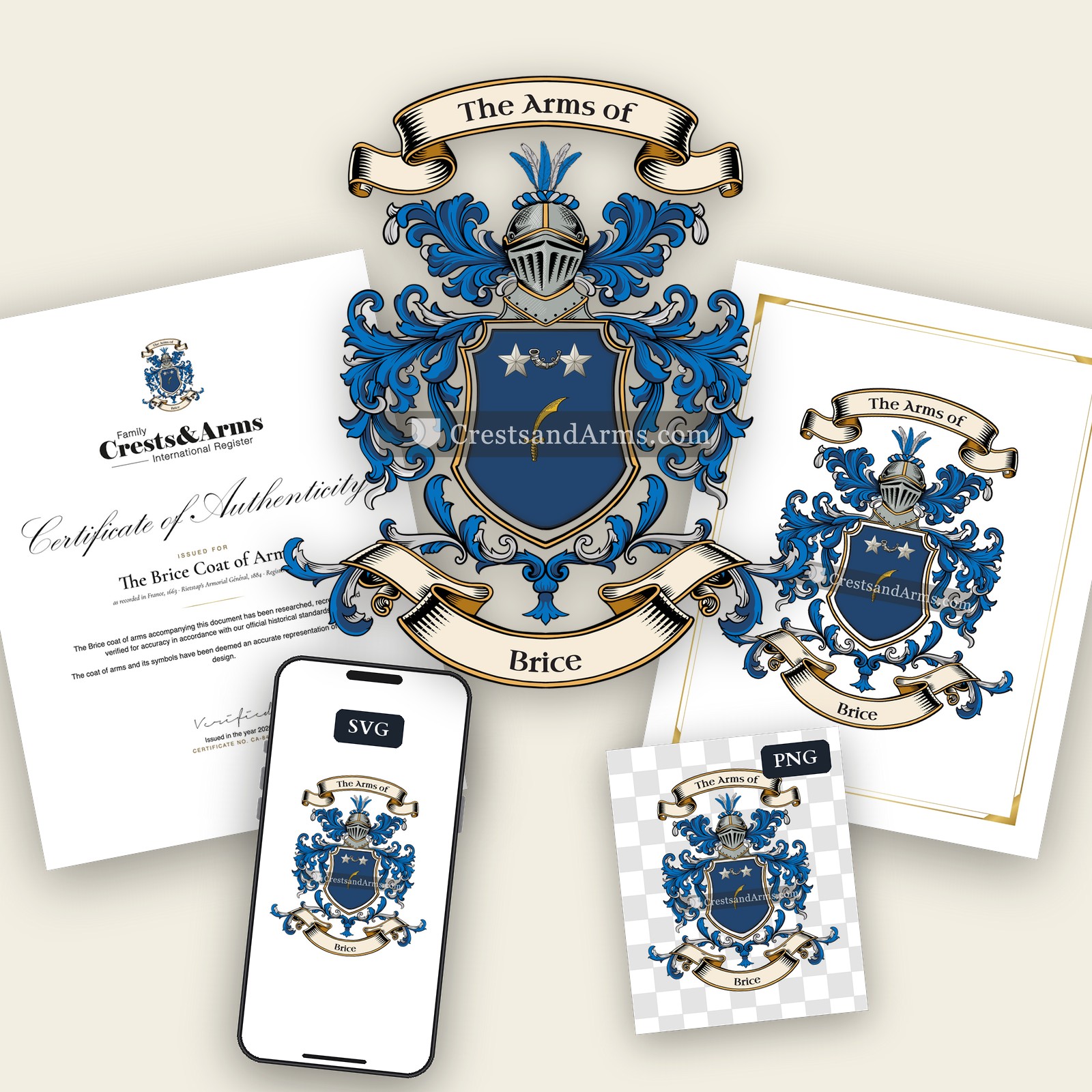
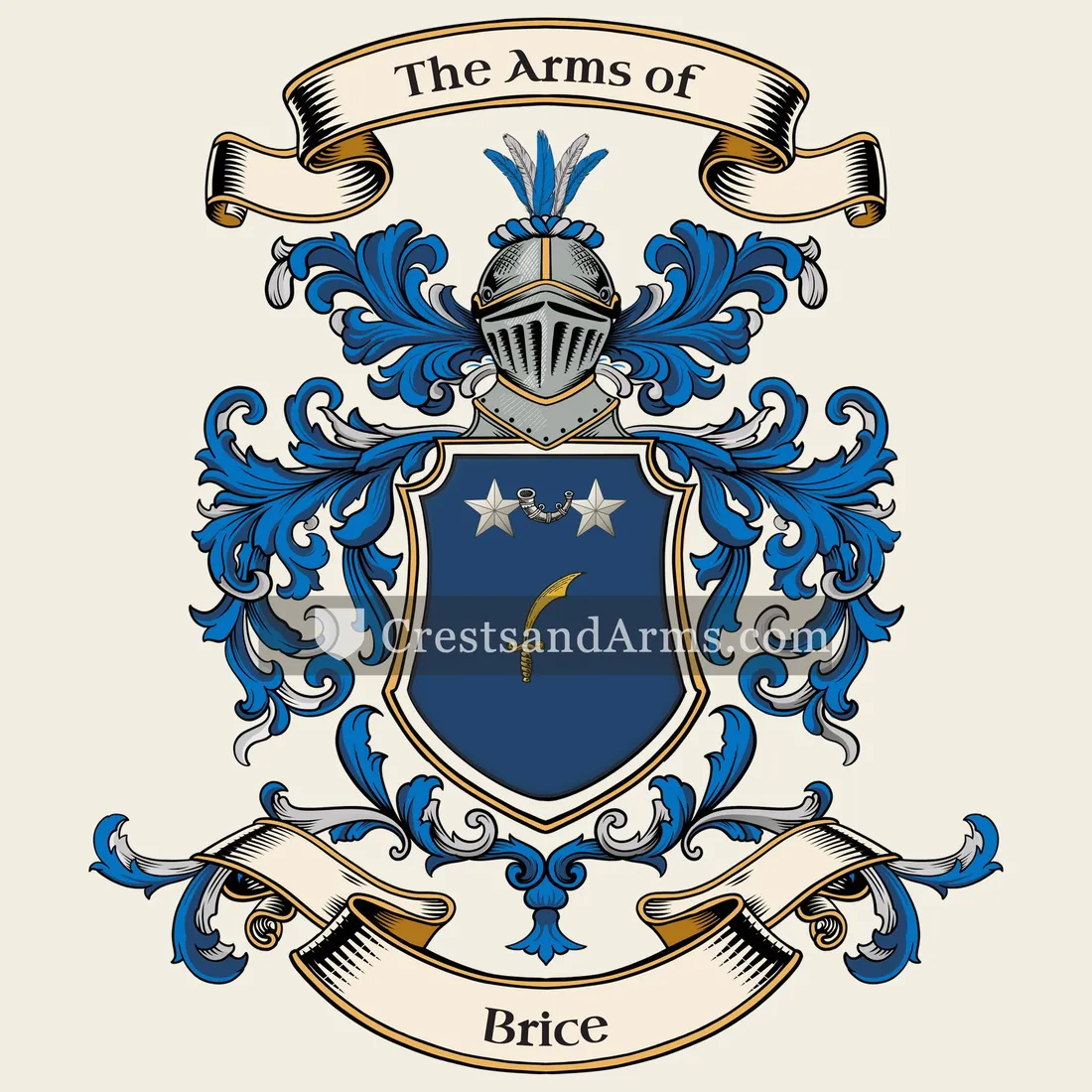
 swordJustice, and military honour
 mulletThe third son, and a divine quality from above
 hunting horn stringedOne who delights in the chase
 swordJustice, and military honour
 mulletThe third son, and a divine quality from above
 hunting horn stringedOne who delights in the chase


 cross symbolChristian faith and service
 bordureA difference between branches of one family
 cinquefoilHope and joy


 towerGrandeur and solidity, and a stronghold defended
 fretPersuasion, and the net that holds