Map of Sweden showing where the Bring arms are recorded
The Bring arms were recorded in Sweden, c. 1764.
Arms such as these were typically recorded in Stockholm.
Stockholm held the Swedish court and the House of Nobility, where every noble family's arms were entered and kept. Families ennobled for service registered there, which is why so many are recorded around the city.
This is where the arms were entered in the register. Families often moved to other parts of the country, so the same name can turn up in more than one region.
The body that granted and recorded arms in Sweden in this period.
Adolf Fredrik of Sweden
Sovereign of the period
Adolf Fredrik of Sweden
1751–1771
Reigning in Sweden when the Bring arms are first recorded.
How Arms Worked in Sweden
In Sweden, a coat of arms belonged to a noble family as a whole rather than just one individual. These arms were passed down through the generations to all legitimate descendants. Younger branches of the family used the same shield without needing to change it. This system ensured that the entire lineage shared the same identity and status under the law.
Granting authority
The Riddarhuset, or House of Nobility, regulated all noble coats of arms in Sweden under royal authority.
How they got arms
Families received their coats of arms through royal grants of nobility which were then officially registered with the House.
Where arms were recorded
Coats of arms were officially recorded in the Swedish House of Nobility register starting in the year 1626.
The family's standing
Recorded among the armigerous families of Sweden.
Origin & History of the Bring Family in Sweden
The family name Bring has deep roots in Swedish history, with documented evidence placing early family members in Stockholm as far back as 1764. During this period, the name was associated with individuals who were active in the urban development and professional life of the capital city. Families with this surname often held positions that required formal education or specialized skills, which allowed them to integrate into the growing middle class of eighteenth-century Sweden. As the family expanded, they became known for their contributions to various academic and public sectors, helping to establish the name as a respected fixture in Swedish society. The history of the name reflects the broader social mobility occurring in Stockholm at the time, as families moved from smaller towns to the city to pursue new opportunities in trade, administration, and the arts.
Bring Meaning & Related Branches
Root word
bringa
Old Swedish term referring to the chest or breast area.
This name
BringA topographic name for someone living near a chest-shaped hill or a descriptive nickname for a person.
Documented Sources
J. B. Rietstap, Armorial Général, Gouda: G. B. van Goor Zonen, 1884–87
Anrep, Gabriel. Svenska Slägtboken. 1871
Elgenstierna, Gustaf. Den introducerade svenska adelns ättartavlor. 1925
Riksarkivet (National Archives of Sweden), Stockholms rådhusrätt och magistrat, Bouppteckningar
Digital archive packCoat of arms PNG, gold border print PDF, vector SVG and the certificate of authenticity. Sent to your email in minutes.


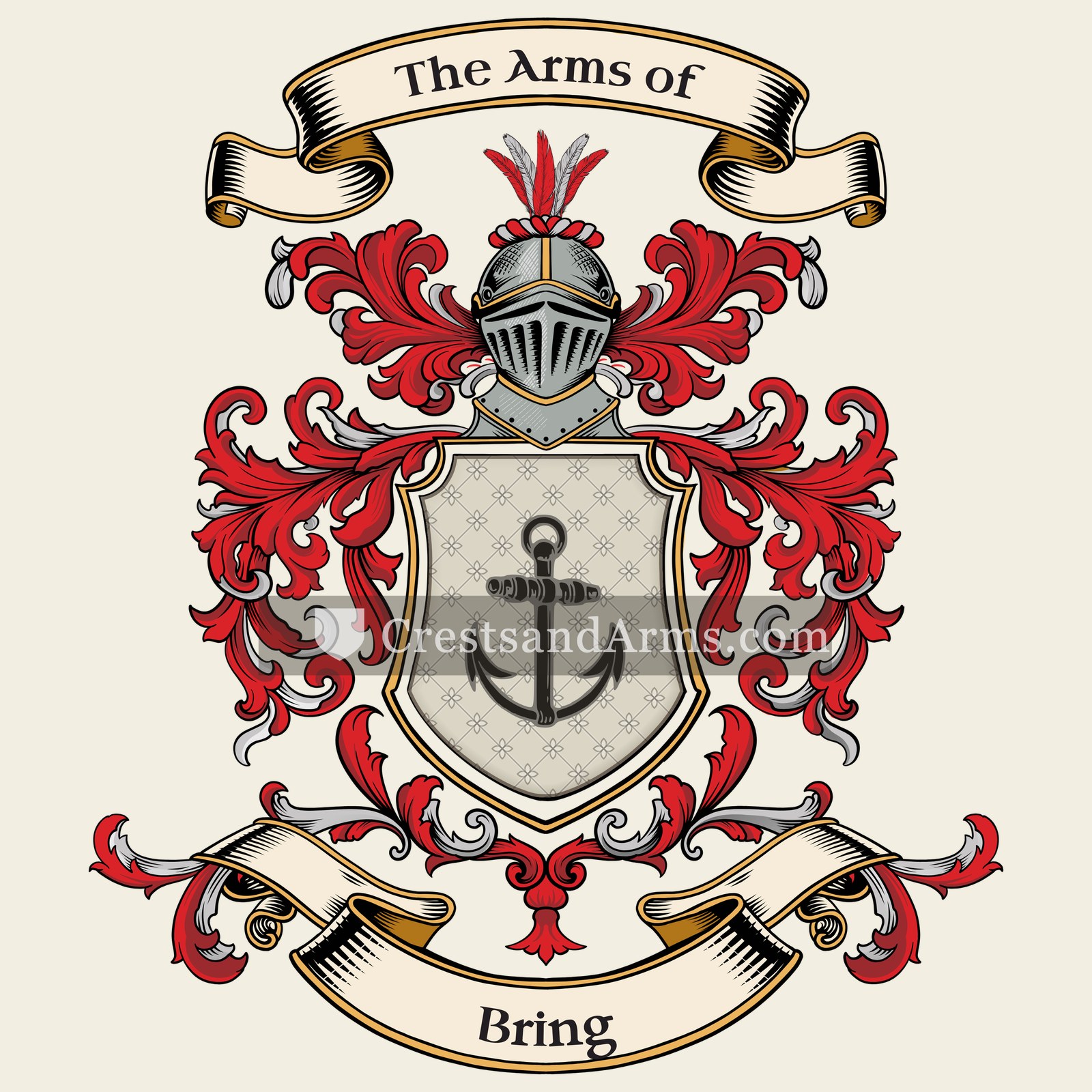
 anchorHope, and steadfastness in trouble
 anchorHope, and steadfastness in trouble