Map of Spain showing where the Bringas arms are recorded
The Bringas arms were recorded in Biscaye, c. 1722.
This is where the arms were entered in the register. Families often moved to other parts of the country, so the same name can turn up in more than one region.
The body that granted and recorded arms in Spain in this period.
Philip V of Spain
Sovereign of the period
Philip V of Spain
1714–1724
Reigning in Spain when the Bringas arms are first recorded.
How Arms Worked in Spain
In Spain, a coat of arms was considered a form of property that belonged to the entire family line. These arms were passed down from a father to all his children equally. Younger branches of the family usually kept the original design without needing to add any special marks to distinguish their specific line.
Granting authority
The Cronista Rey de Armas was the official body that regulated and granted coats of arms throughout Spain.
How they got arms
Families often obtained their arms through royal grants or by proving their noble status to the official heraldic authority.
Where arms were recorded
Coats of arms were officially recorded in the registers of the Cronista Rey de Armas starting in 1496.
The family's standing
Recorded among the armigerous families of Spain.
Origin & History of the Bringas Family in Spain
The family name Bringas originates from the rugged and mountainous region of Biscay in the Basque Country of northern Spain. Historical records confirm that members of the Bringas family were well-established in this area by the early 18th century, specifically by 1722. The name is deeply tied to the Basque language, which is one of the oldest living languages in Europe. Families in this region often took their surnames from the specific farmsteads or small villages where they lived, meaning the name likely identifies a group of people who occupied a particular piece of land in the Biscayan countryside. Over time, as these families moved from their ancestral homes to larger towns and cities, the name became a permanent way to track their lineage and connection to their Basque roots.
Bringas Meaning & Related Branches
Root word
Berengarius
Derived from Germanic elements meaning bear and spear.
This name
BringasA topographic surname referring to someone who lived near a place of reeds or rushes.
Documented Sources
J. B. Rietstap, Armorial Général, Gouda: G. B. van Goor Zonen, 1884–87
Arrieta Alberdi, Jon. El estado moderno y el gobierno de la monarquía. 2007
Gorrochategui Churruca, Joaquín. Onomástica indígena de Aquitania. 1984
Archivo Histórico de Euskadi, Fondo de la Diputación Foral de Bizkaia, series Registros de Hidalguía
Digital archive packCoat of arms PNG, gold border print PDF, vector SVG and the certificate of authenticity. Sent to your email in minutes.


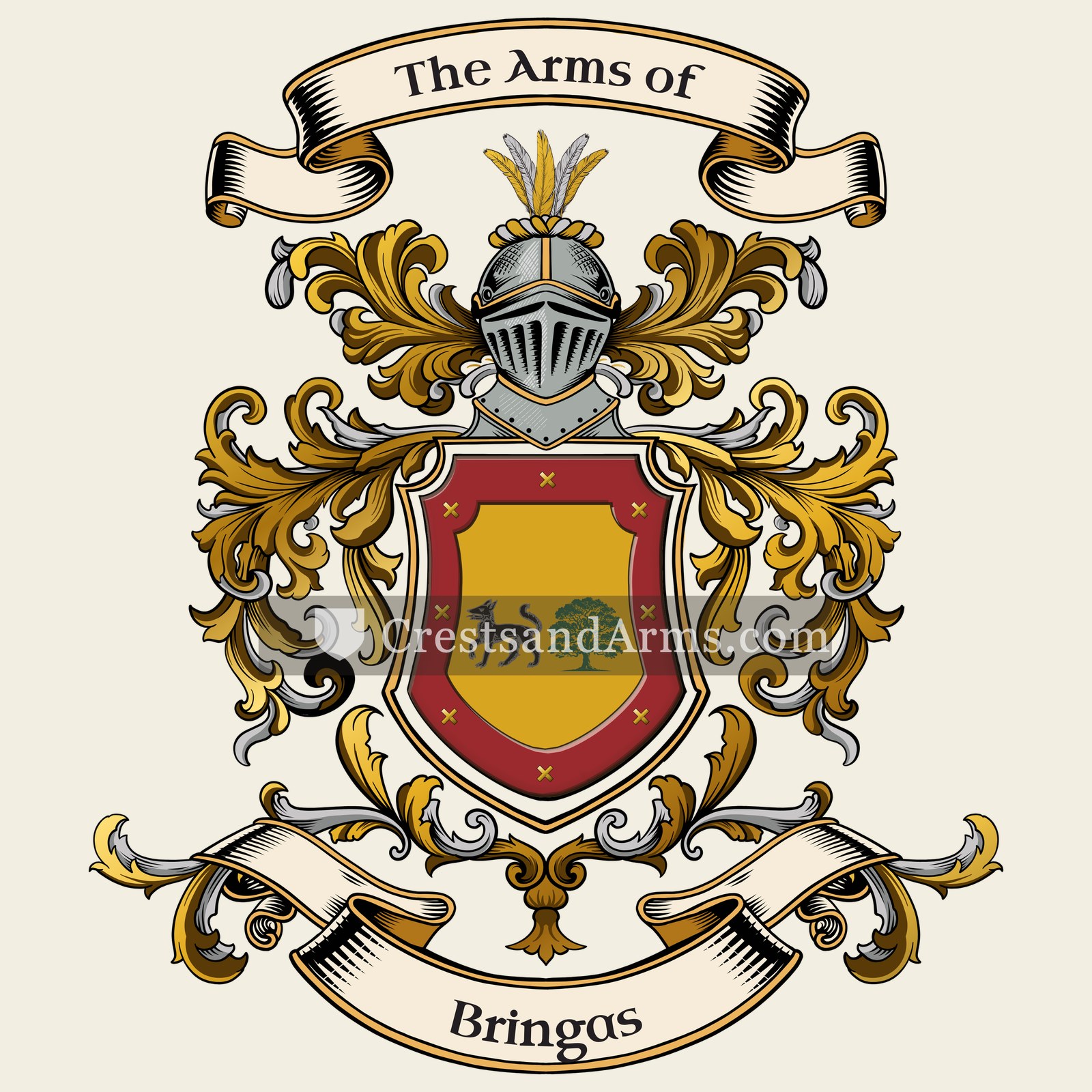
 wolfReward from long service and hard work
 treeLife, endurance and deep roots
 saltire coupedResolution, and the cross of St Andrew
 wolfReward from long service and hard work
 treeLife, endurance and deep roots
 saltire coupedResolution, and the cross of St Andrew