Map of France showing where the Brno arms are recorded
The Brno arms were recorded in Dauphine, c. 1663.
Dauphine lay in the mountains of south-eastern France, a country of small estates and scattered valleys. Its gentry were many and mostly modest, and even a small landholding was enough to justify arms.
This is where the arms were entered in the register. Families often moved to other parts of the country, so the same name can turn up in more than one region.
The body that granted and recorded arms in France in this period.
Louis XIV of France
Sovereign of the period
Louis XIV of France
1643–1715
Reigning in France when the Brno arms are first recorded.
How Arms Worked in France
In France, a coat of arms was a mark of honor that passed down through the male line to all legitimate descendants. Families often used the same shield without changes to show their shared heritage. If a branch wanted to stand out, they could add a small mark to their shield to show their specific place in the family tree.
Granting authority
The Juge d'armes de France acted as the official authority that regulated and verified coats of arms across the country.
How they got arms
Families typically inherited their arms from ancestors, though they could also receive them through royal grants or by proving their noble status.
Where arms were recorded
Coats of arms were officially recorded in the Armorial Général de France, which began its main collection in the year 1696.
The family's standing
Recorded among the armigerous families of Dauphine.
Origin & History of the Brno Family in France
The history of the Brno family in France begins in the rugged, mountainous region of Dauphiné during the seventeenth century. By 1663, records confirm that family members were established in this area, which served as a strategic crossroads between the Alps and the Rhône Valley. During this period, the region was characterized by a mix of agricultural life and shifting political loyalties under the French crown. Families living in Dauphiné often navigated the complexities of local feudal traditions while adapting to the centralizing power of King Louis XIV. The presence of the Brno name in these early parish and tax records suggests that the family was part of the local social fabric, likely involved in the trade or land management that defined the economy of the province. Their early life in this landscape reflects the resilience of families who lived through the transition from the late Renaissance to the structured era of absolute monarchy in France.
Meaning of the Brno family crest colors & symbols
Symbols on this shield
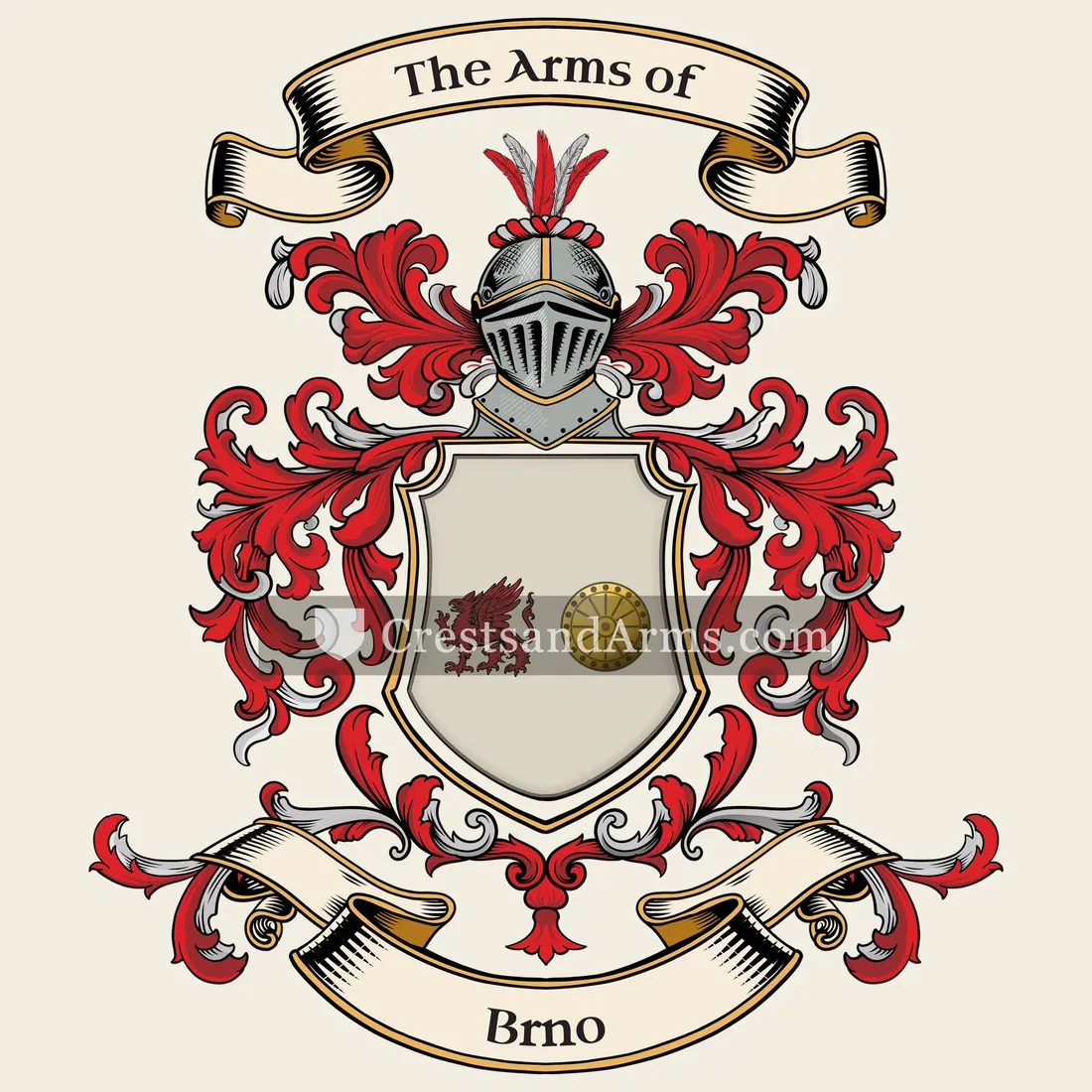
griffinValour and vigilance, guarding great treasure
roundelA coin, and one who has been to the crusades
Colours
Silver (Argent)Means: Peace and sincerity
Red (Gules)Means: Military strength
Gold (Or)Means: Generosity
Historical info
Source
J. B. Rietstap, Armorial Général, Gouda: G. B. van Goor Zonen, 1884–87
Blazon (the actual original written record)
“D'arg. au griffon de gu., supp. de ses pattes une fontaine jaillissante, en forme de coupe d'or, sommée d'une girouette de gu. Cq. cour. C.: la fontaine, entre un vol de gu.”
GermanyRatisbonne, c. 1765
Digital archive packCoat of arms PNG, gold border print PDF, vector SVG and the certificate of authenticity. Sent to your email in minutes.
Map of Germany showing where the Brno arms are recorded
The Brno arms were recorded in Ratisbonne, c. 1765.
This is where the arms were entered in the register. Families often moved to other parts of the country, so the same name can turn up in more than one region.
The body that granted and recorded arms in Germany in this period.
Francis I, Holy Roman Emperor
Sovereign of the period
Francis I, Holy Roman Emperor
1745–1765
Reigning in France when the Brno arms are first recorded.
How Arms Worked in Germany
In the Holy Roman Empire, coats of arms were often granted to individuals by the Emperor or his representatives. These arms were then passed down through the generations to all legitimate descendants of the original holder. Younger branches of a family usually kept the same shield design without needing to change it, as the arms belonged to the entire lineage.
Granting authority
The Holy Roman Emperor held the sole power to grant new coats of arms throughout his vast imperial territories.
How they got arms
Families typically obtained their coats of arms through a formal imperial grant or by proving their noble status to the authorities.
Where arms were recorded
These grants were officially recorded in the Imperial Chancery registers, which began keeping formal records of such honors during the Middle Ages.
The family's standing
Recorded among the armigerous families of Germany.
Origin & History of the Brno Family in Germany
The family name Brno traces its roots to the cultural landscape of the Holy Roman Empire, where it emerged as a localized identifier linked to geographic origins. By 1765, historical records confirm that members of the family were firmly established in Ratisbonne, which is known today as Regensburg. During this period, Ratisbonne served as a vital political hub and the permanent seat of the Perpetual Diet, making it a center of significant administrative and social activity. Families living in this city often navigated a complex environment of trade guilds and civic governance, which influenced how surnames were recorded and passed down through generations. The presence of the Brno name in such a prominent urban center suggests that early family members were integrated into the professional or merchant classes that defined eighteenth-century German society. As the family moved through these historical shifts, the name served as a link to their ancestral ties while they adapted to the changing political climate of the region.
Meaning of the Brno family crest colors & symbols
Symbols on this shield
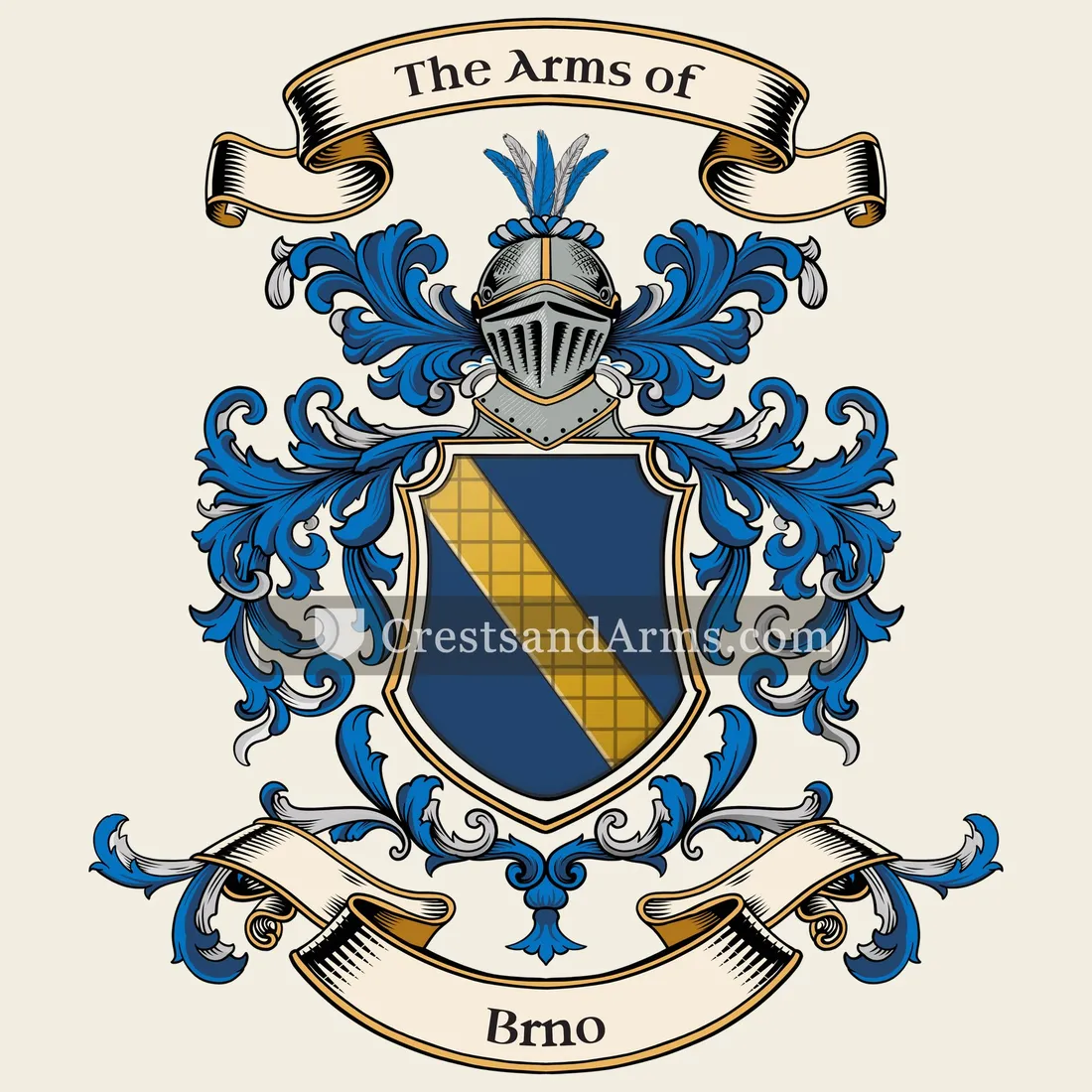
bendDefence, and the scarf of a commander
Colours
Blue (Azure)Means: Loyalty and truth
Gold (Or)Means: Generosity
Historical info
Source
J. B. Rietstap, Armorial Général, Gouda: G. B. van Goor Zonen, 1884–87
Blazon (the actual original written record)
“D'azur à la bande d'or.”
SicilySicily, c. 1775
Digital archive packCoat of arms PNG, gold border print PDF, vector SVG and the certificate of authenticity. Sent to your email in minutes.
Map of Italy showing where the Brno arms are recorded
The Brno arms were recorded in Sicily, c. 1775.
Sicily was ruled in turn by Normans, Germans, French and Spanish, and each left landed families behind. The island kept formal lists of its noble houses, which is why so many Sicilian names carry recorded arms.
This is where the arms were entered in the register. Families often moved to other parts of the country, so the same name can turn up in more than one region.
The body that granted and recorded arms in Italy in this period.
Alvise Giovanni Mocenigo
Sovereign of the period
Alvise Giovanni Mocenigo
1763–1778
Reigning in France when the Brno arms are first recorded.
How Arms Worked in Italy
In the Italian states, coats of arms were often used by noble families to show their status and history. These symbols were passed down through the generations to all legitimate male descendants. Younger branches of a family usually kept the original design but sometimes added small changes to distinguish their specific line from the main branch.
Granting authority
Various local rulers and city governments controlled the use of coats of arms across the different Italian states.
How they got arms
Families often assumed their own arms or received them as official grants from local lords, popes, or city councils.
Where arms were recorded
Arms were recorded in local city archives or private family books rather than in one single national register.
The family's standing
Recorded among the armigerous families of Sicily.
Origin & History of the Brno Family in Italy
The history of the Brno family in Italy is deeply rooted in the social landscape of late eighteenth-century Sicily. By 1775, records indicate that members of the family were already established within the island’s complex administrative and agricultural systems. During this period, Sicily was undergoing significant shifts under the rule of the House of Bourbon, which influenced how families managed land and local commerce. The name Brno appears in regional documents that track the movement of people and the ownership of property in rural districts. These early ancestors likely played a role in the local economy, which relied heavily on the trade of grains and citrus fruits. Because the family was present in Sicily during this era of reform, they were part of a generation that navigated the transition from feudal traditions to more modern bureaucratic structures. Their presence in these historical records provides a clear window into the lives of families who helped shape the identity of southern Italy before the unification of the country.
Brno Meaning & Related Branches
Root word
Brennus
A Celtic term meaning king, prince, or leader.
This name
BrnoA toponymic surname derived from the city of Brno, signifying a place of armor or fortification.
also spelled
Brunno
Bruneau
Brunou
Documented Sources
J. B. Rietstap, Armorial Général, Gouda: G. B. van Goor Zonen, 1884–87
Archives départementales de l'Isère, Registres paroissiaux de l'ancien diocèse de Grenoble, Series E
Borel d'Hauterive, André, Annuaire de la noblesse de France et des maisons souveraines de l'Europe, 1855
Chorier, Nicolas, Histoire générale de Dauphiné, 1661
Digital archive packCoat of arms PNG, gold border print PDF, vector SVG and the certificate of authenticity. Sent to your email in minutes.


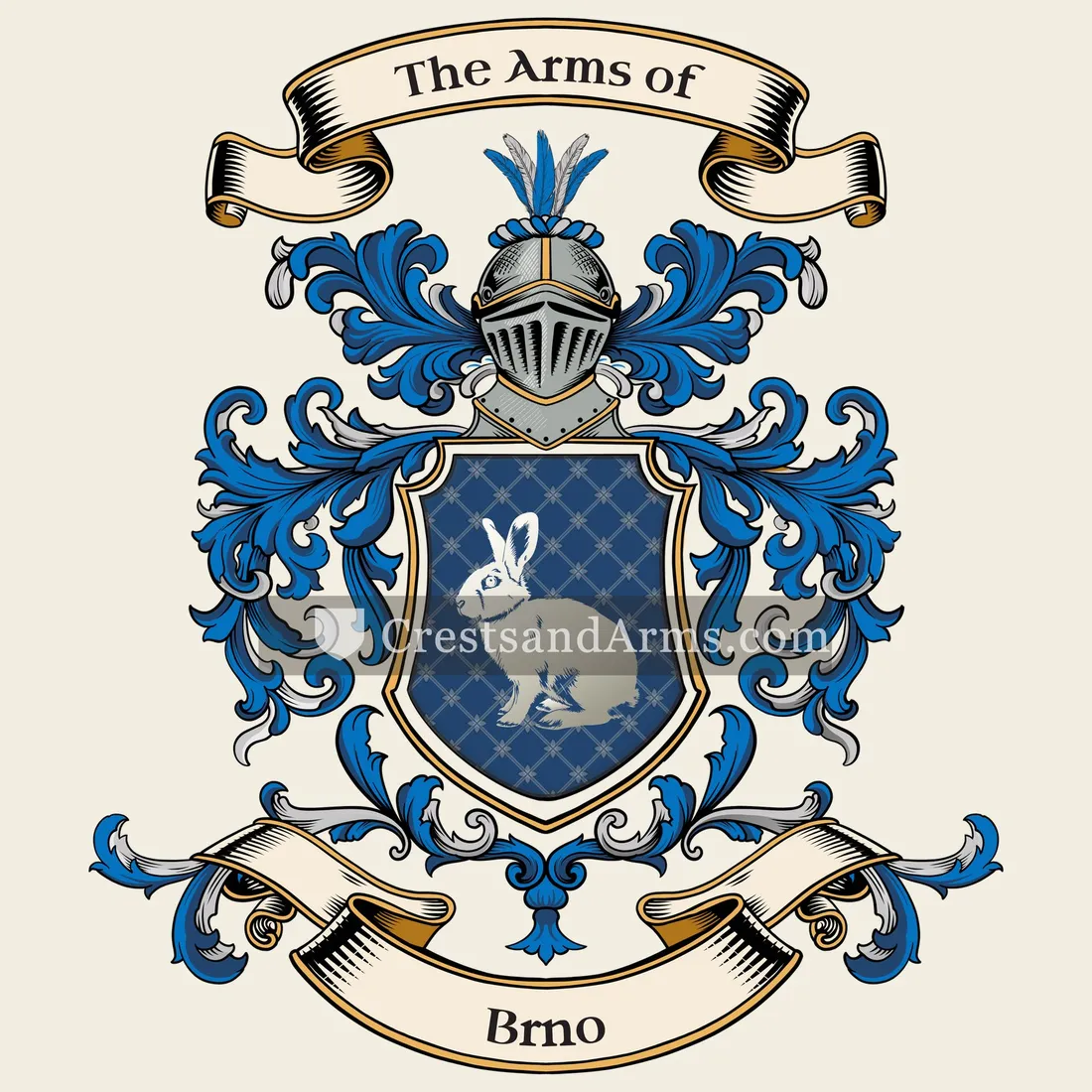
 rabbitOne who lives peaceably and well
 rabbitOne who lives peaceably and well


 griffinValour and vigilance, guarding great treasure
 roundelA coin, and one who has been to the crusades


 bendDefence, and the scarf of a commander