A record of documented arms, meaning and origin, researched for the Broc family lines. Documented in 3 countries.
Reg. 8655 · French, A–C
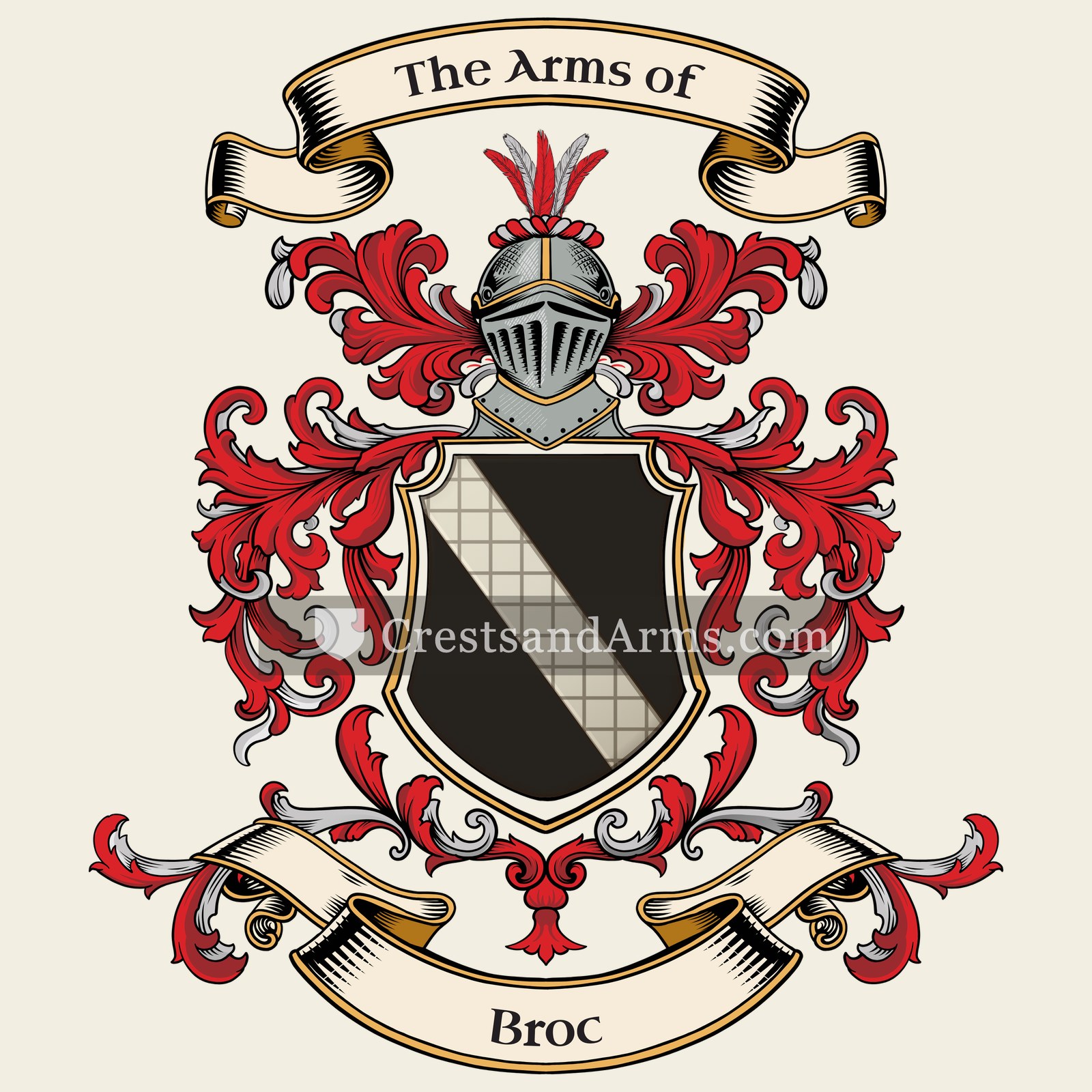
Coat of Arms & Family Crest Details
Symbols on this shield
bendDefence, and the scarf of a commander
Colours
Black (Sable)Means: Constancy
Silver (Argent)Means: Peace and sincerity
Historical info
Source
J. B. Rietstap, Armorial Général, Gouda: G. B. van Goor Zonen, 1884–87
Blazon (the actual original written record)
“De sa. à la bande fuselée de neuf pièces d'arg.”
AnjouAnjou, c. 1663
Where the Broc Arms Were Recorded
Anjou
Map of France showing where the Broc arms are recorded
The Broc arms were recorded in Anjou, c. 1663.
Anjou was rich valley country along the Loire, with a dense scatter of small manors. Its gentry were numerous rather than wealthy, and even a modest holding was enough to justify a shield of one's own.
This is where the arms were entered in the register. Families often moved to other parts of the country, so the same name can turn up in more than one region.
The body that granted and recorded arms in France in this period.
Louis XIV of France
Sovereign of the period
Louis XIV of France
1643–1715
Reigning in France when the Broc arms are first recorded.
How Arms Worked in France
In France, a coat of arms was a mark of honor that passed down through the male line to all legitimate descendants. Families often used the same shield without changes to show their shared heritage. If a branch wanted to stand out, they could add a small mark to their shield to show their specific place in the family tree.
Granting authority
The Juge d'armes de France acted as the official authority that regulated and verified coats of arms across the country.
How they got arms
Families typically inherited their arms from ancestors, though they could also receive them through royal grants or by proving their noble status.
Where arms were recorded
Coats of arms were officially recorded in the Armorial Général de France, which began its main collection in the year 1696.
The family's standing
Recorded among the armigerous families of Anjou.
Origin & History of the Broc Family in France
The family name Broc finds its historical roots in the lush landscapes of western France, specifically within the province of Anjou. By the year 1663, records confirm that members of the family were well-established residents of this region, which was then a vital center of agricultural and political life under the French monarchy. The name itself is thought to be topographical, likely derived from the Old French word for a small pitcher or a sharp, pointed rock, suggesting that the earliest ancestors may have lived near a distinct landmark or worked in a trade involving such vessels. As the family grew, they integrated into the local social fabric of Anjou, living through a period of significant transition as France moved toward the absolute rule of King Louis XIV. Their presence in this specific province highlights a deep connection to the rural traditions and feudal history that defined the French countryside during the seventeenth century.
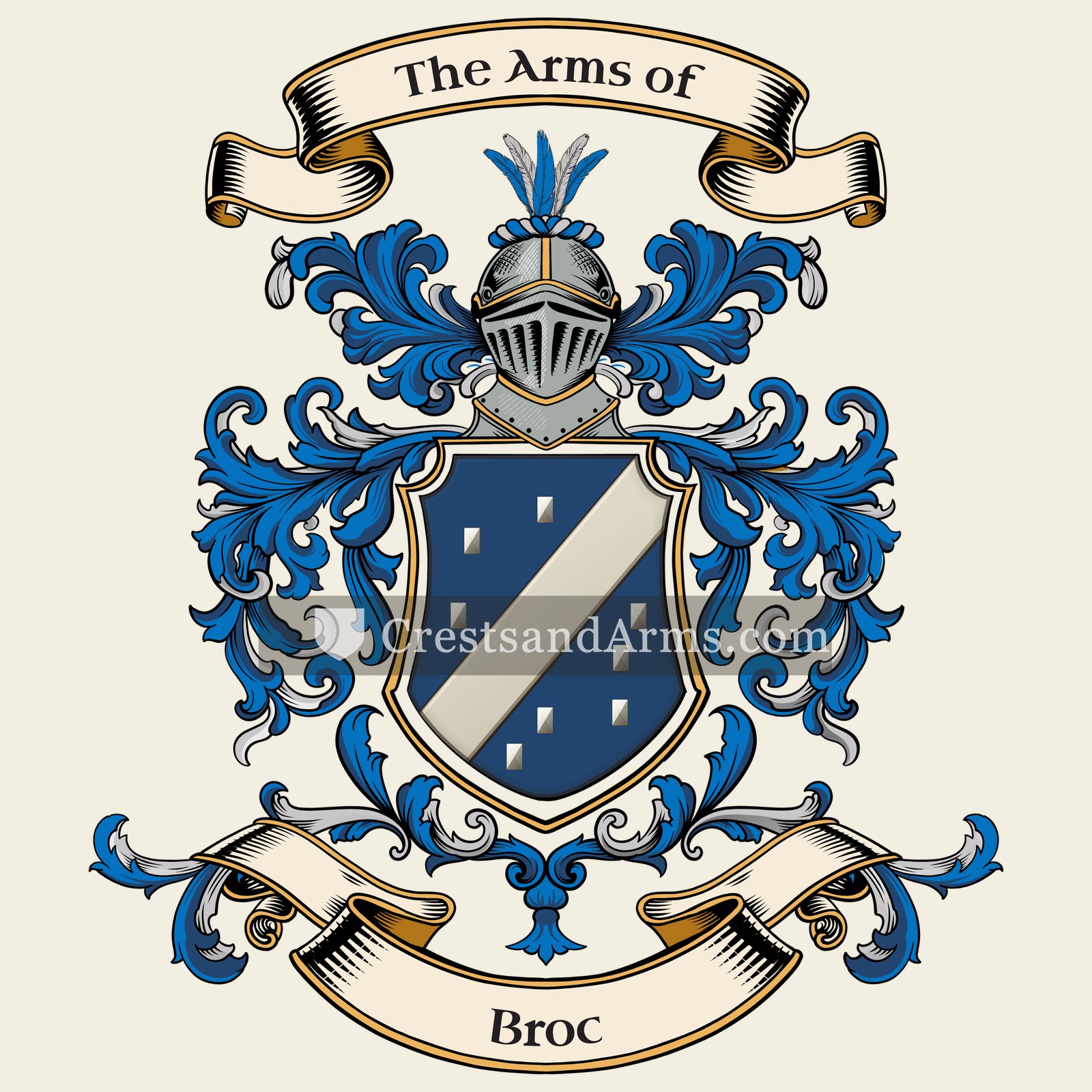
Coat of Arms & Family Crest Details
Symbols on this shield
billetThe sealed letter, and a message delivered
Colours
Blue (Azure)Means: Loyalty and truth
Silver (Argent)Means: Peace and sincerity
Historical info
Source
J. B. Rietstap, Armorial Général, Gouda: G. B. van Goor Zonen, 1884–87
Blazon (the actual original written record)
“D'azur à huit bill. couchées d'arg., 3, 2 et 3; à la barre du même, br. sur le tout.”
SwitzerlandFribourg, c. 1745
Where the Broc Arms Were Recorded
Fribourg
Map of Switzerland showing where the Broc arms are recorded
The Broc arms were recorded in Fribourg, c. 1745.
This is where the arms were entered in the register. Families often moved to other parts of the country, so the same name can turn up in more than one region.
The body that granted and recorded arms in Switzerland in this period.
How Arms Worked in Switzerland
In Switzerland, coats of arms were not restricted to the nobility and were often adopted by common citizens and families. These symbols were passed down through generations to show family identity. When branches of a family grew, they often changed small details of the design to distinguish their own line from the original group.
Granting authority
Cantonal and civic authorities managed the use of coats of arms within their specific regions and local jurisdictions.
How they got arms
Families typically assumed their own coats of arms based on local custom rather than receiving them from a central monarch.
Where arms were recorded
Arms were recorded in various cantonal and civic registers starting from the fourteenth century throughout the Swiss region.
The family's standing
Recorded among the armigerous families of Switzerland.
Origin & History of the Broc Family in Switzerland
The family name Broc is deeply connected to the geography and social structure of the Swiss canton of Fribourg. While the name is associated with a specific village of the same name in the Gruyère district, families bearing this surname established themselves as important local citizens in the city of Fribourg by at least 1745. During this period, the region was defined by a strict social hierarchy where families often held specific rights based on their status as burghers or residents. The Broc family likely participated in the agricultural and craft-based economy that sustained the pre-industrial Swiss landscape. By settling in urban centers like Fribourg, these early ancestors moved away from rural feudal ties to engage in the growing trade and administrative life of the city. Their presence in official records from the mid-eighteenth century suggests that they were integrated into the local community, contributing to the development of the region during a time of significant political and social change in Switzerland.
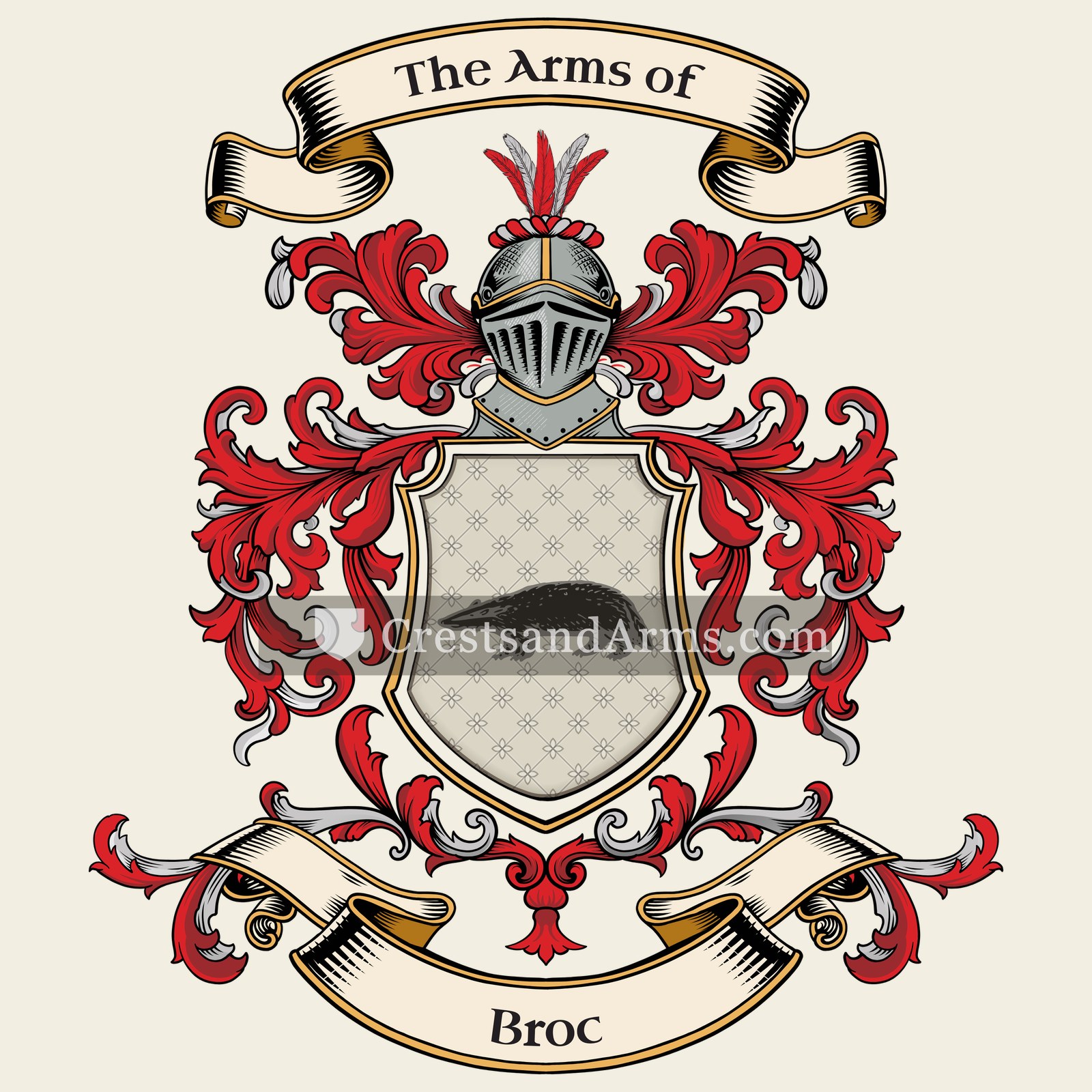
Coat of Arms & Family Crest Details
Symbols on this shield
badgerSteadfastness and persistence
Colours
Silver (Argent)Means: Peace and sincerity
Black (Sable)Means: Constancy
Historical info
Source
Sir Bernard Burke, The General Armory of England, Scotland, Ireland and Wales, London: Harrison & Sons, 1884
Blazon (the actual original written record)
“Ar. a badger pass. sa”
Englandc. 1620
Where the Broc Arms Were Recorded
York
Map of England showing where the Broc arms are recorded
The Broc arms were recorded in England, c. 1620.
Arms such as these were typically recorded in York.
Yorkshire is the largest of the English counties, and it held more gentry families than any other. Land there was split among a great many households rather than a few, so a great many of them carried arms.
This is where the arms were entered in the register. Families often moved to other parts of the country, so the same name can turn up in more than one region.
The body that granted and recorded arms in England in this period.
James VI and I
Sovereign of the period
James VI and I
1603–1625
Reigning in France when the Broc arms are first recorded.
How Arms Worked in England
English heraldry allowed arms to be shared by all legitimate descendants of the original owner. These symbols were treated as personal property that moved through the generations to all children. While the eldest son kept the original design, other family members could use the same shield without needing to change it or register their own unique versions.
Granting authority
The College of Arms in London has regulated the use of coats of arms throughout England and Wales since 1484.
How they got arms
Families typically obtained their coats of arms through a formal grant from the Crown or by proving their ancient right to them.
Where arms were recorded
All official coats of arms are recorded in the registers kept at the College of Arms, which date back to the fifteenth century.
The family's standing
Recorded among the armigerous families of England.
Origin & History of the Broc Family in England
The family name Broc has deep roots in the northern regions of England, with documented evidence placing members of the family in the city of York by the year 1620. During this period, York was a bustling hub of trade and religious life, and families with this name were often integrated into the local merchant or artisan classes. The name itself likely originated as a descriptive term, possibly referring to a person’s physical traits or their association with the local landscape, as was common for surnames developing in the Middle Ages. By the early seventeenth century, the Broc family was well-established enough to appear in official parish registers and legal documents of the time. These early records suggest that the family was part of the steady growth of urban populations in Yorkshire, contributing to the local economy and community life long before the industrial changes of later centuries.
Related Branches & Arms
Root word
broc
Old French term for a pitcher, jug, or a pointed tool.
This name
BrocAn occupational name for a maker of pitchers or a nickname for someone with a sharp feature.
also spelled
Brok
Brock
Brocke
Documented Sources
J. B. Rietstap, Armorial Général, Gouda: G. B. van Goor Zonen, 1884–87
Archives départementales de Maine-et-Loire, Registres paroissiaux et d'état civil (1600-1700)
Moreri, Louis, Le Grand Dictionnaire historique ou le mélange curieux de l'histoire sacrée et profane, 1674
Port, Célestin, Dictionnaire historique, géographique et biographique de Maine-et-Loire, 1874
Digital archive packCoat of arms PNG, gold border print PDF, vector SVG and the certificate of authenticity. Sent to your email in minutes.


 bendDefence, and the scarf of a commander
 bendDefence, and the scarf of a commander

 billetThe sealed letter, and a message delivered
 badgerSteadfastness and persistence