Map of France showing where the Broch arms are recorded
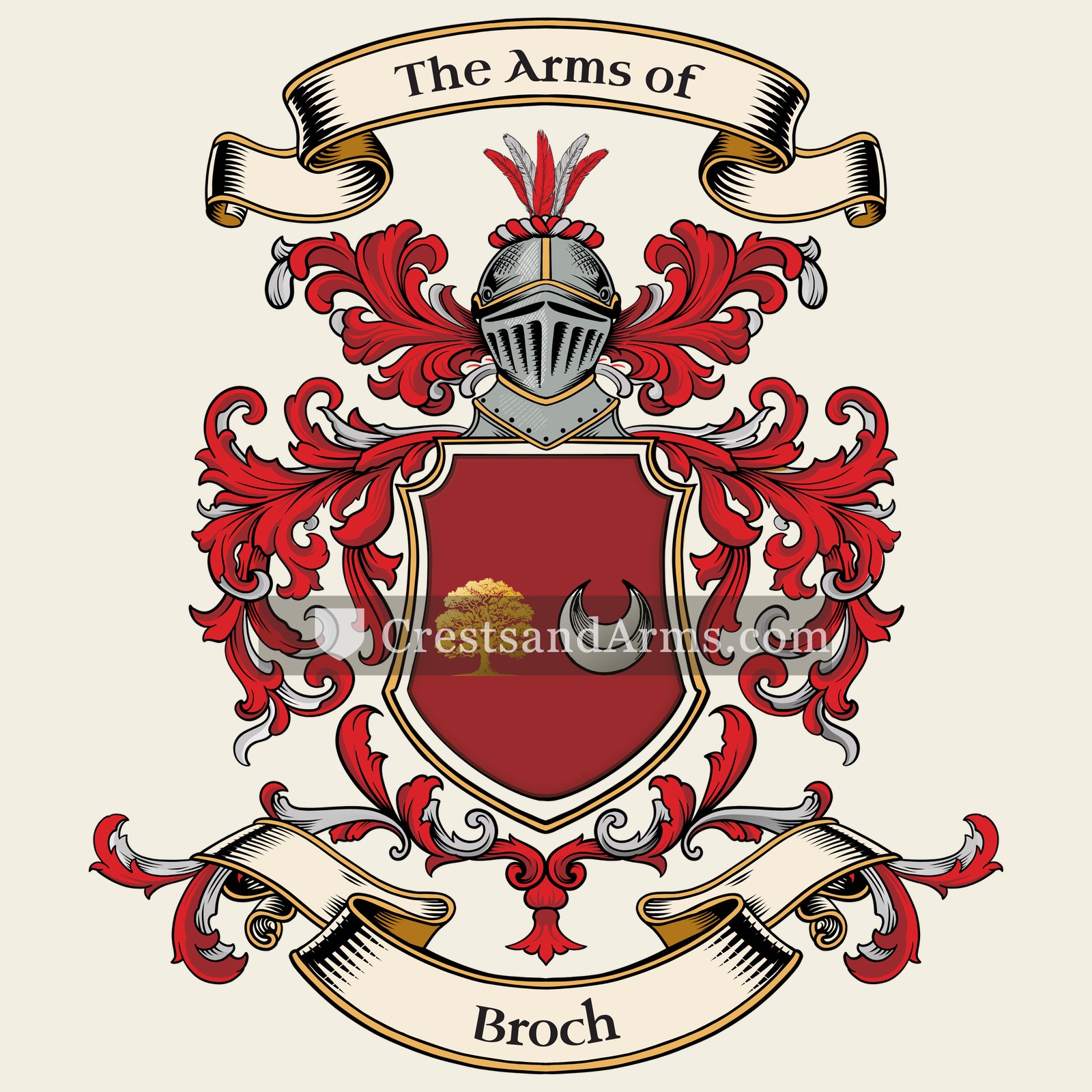
The Broch arms were recorded in Franche-Comte, c. 1600.
Franche-Comte sat between France and the Empire and changed hands more than once. Border families held their land under arms and expected to defend it, so a shield was a practical thing rather than an ornament.
This is where the arms were entered in the register. Families often moved to other parts of the country, so the same name can turn up in more than one region.
The body that granted and recorded arms in France in this period.
Henry IV of France
Sovereign of the period
Henry IV of France
1589–1610
Reigning in France when the Broch arms are first recorded.
How Arms Worked in France
In France, a coat of arms was a mark of honor that passed down through the male line to all legitimate descendants. Families often used the same shield without changes to show their shared heritage. If a branch wanted to stand out, they could add a small mark to their shield to show their specific place in the family tree.
Granting authority
The Juge d'armes de France acted as the official authority that regulated and verified coats of arms across the country.
How they got arms
Families typically inherited their arms from ancestors, though they could also receive them through royal grants or by proving their noble status.
Where arms were recorded
Coats of arms were officially recorded in the Armorial Général de France, which began its main collection in the year 1696.
The family's standing
Recorded among the armigerous families of Franche-Comte.
Origin & History of the Broch Family in France
The surname Broch has deep roots in the historical region of Franche-Comté, where members of the family were firmly established by the year 1600. During this period, the area was a crossroads of culture and trade located between the Kingdom of France and the Holy Roman Empire. Families like the Broch were often tied to the land and the local economy of this mountainous territory. Because the region was frequently caught in the middle of shifting political borders and religious conflicts, the people living there developed a strong sense of local identity. The name itself likely evolved from regional dialects, reflecting the daily lives and occupations of those who lived in the Jura Mountains. By settling in this rugged landscape, the early Broch family became part of a resilient community that navigated the complex social changes of the seventeenth century.
Coat of Arms & Family Crest Details
Colours
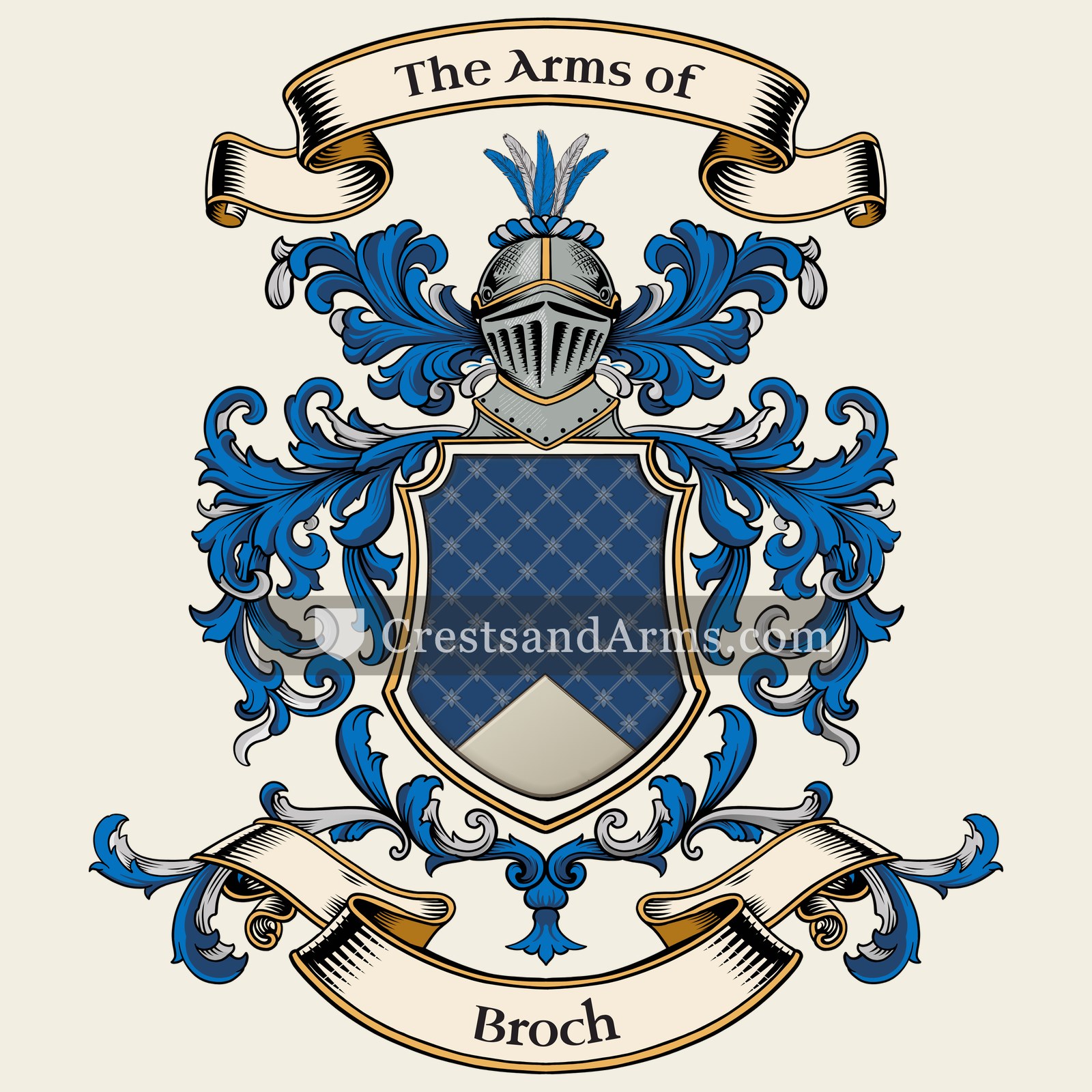
Blue (Azure)Means: Loyalty and truth
Silver (Argent)Means: Peace and sincerity
Historical info
Source
J. B. Rietstap, Armorial Général, Gouda: G. B. van Goor Zonen, 1884–87
Blazon (the actual original written record)
“D'azur, chapé d'arg. C.: deux bras, arm. au nat., les mains de carn. tenant un miroir ovale, encadré et emm. d'or, en pal.”
Denmarkc. 1722
Digital archive packCoat of arms PNG, gold border print PDF, vector SVG and the certificate of authenticity. Sent to your email in minutes.
Map of Denmark showing where the Broch arms are recorded
The Broch arms were recorded in Denmark, c. 1722.
Arms such as these were typically recorded in Sjaælland.
Zealand held the Danish court, the crown's offices and Copenhagen itself. Families who served the king kept estates within reach of it, and royal service was the ordinary route to a coat of arms.
This is where the arms were entered in the register. Families often moved to other parts of the country, so the same name can turn up in more than one region.
The body that granted and recorded arms in Denmark in this period.
Frederik IV of Denmark
Sovereign of the period
Frederik IV of Denmark
1699–1730
Reigning in France when the Broch arms are first recorded.
How Arms Worked in Denmark
Danish heraldry during this period was closely tied to noble status and royal favor rather than being open to all citizens. Arms were typically granted by the monarch to individuals, and these symbols were then shared by all members of the noble house. If a family line died out, the right to use those specific arms ended with them.
Granting authority
The Danish royal chancery held the power to issue and regulate official coats of arms for the kingdom.
How they got arms
Families usually received their arms through a formal royal grant that confirmed their noble status and rights.
Where arms were recorded
These grants were officially recorded in the Danish Royal Chancery records starting in the sixteenth century.
The family's standing
Recorded among the armigerous families of Denmark.
Origin & History of the Broch Family in Denmark
The family name Broch has deep roots in the Danish landscape, with documented evidence placing members of the family on the island of Sjælland as early as 1722. During this period, the name was closely tied to the social and agricultural shifts occurring in rural Denmark. Families like the Brochs often lived in small village communities where their identity was shaped by the local parish and the seasonal rhythms of farming. As the eighteenth century progressed, the name became associated with individuals who moved between these rural estates and the growing urban centers of the region. This transition allowed the family to integrate into the broader administrative and economic life of Denmark. By staying rooted in the Sjælland area, the early generations of the Broch family helped establish a lasting presence in the region that persisted long after their first recorded appearances in the local census and church registers.
Broch Meaning & Related Branches
Root word
broc
Old French term for a pitcher, jug, or a badger.
This name
BrochA topographic name for someone living near a badger sett or an occupational name for a maker of jugs.
also spelled
Brok
Brock
Related arms
Bloksimilar arms
Documented Sources
J. B. Rietstap, Armorial Général, Gouda: G. B. van Goor Zonen, 1884–87
Bavoux, Francis. La vie quotidienne en Franche-Comté au XVIIe siècle. 1966
Archives Départementales du Doubs. Série E: Familles, seigneuries et terres
Digital archive packCoat of arms PNG, gold border print PDF, vector SVG and the certificate of authenticity. Sent to your email in minutes.


 treeLife, endurance and deep roots
 crescentHonour by the sovereign, and the second son
 treeLife, endurance and deep roots
 crescentHonour by the sovereign, and the second son