Map of Poland showing where the Bronski arms are recorded
The Bronski arms were recorded in Silesia, c. 1772.
Silesia was farming country in the east of the German lands, held in large estates by families who stayed put for generations. Owning land was what entitled a family to arms, so the region fills a good deal of the register.
This is where the arms were entered in the register. Families often moved to other parts of the country, so the same name can turn up in more than one region.
Region
Silesia
First recorded
1772
Granting Authority for the Bronski Arms
Ennoblement by the Sejm
Author: Olek Remesz · CC BY-SA 3.0
The body that granted and recorded arms in Poland in this period.
Stanisław August Poniatowski
Sovereign of the period
Stanisław August Poniatowski
1764–1795
Reigning in Poland when the Bronski arms are first recorded.
How Arms Worked in Poland
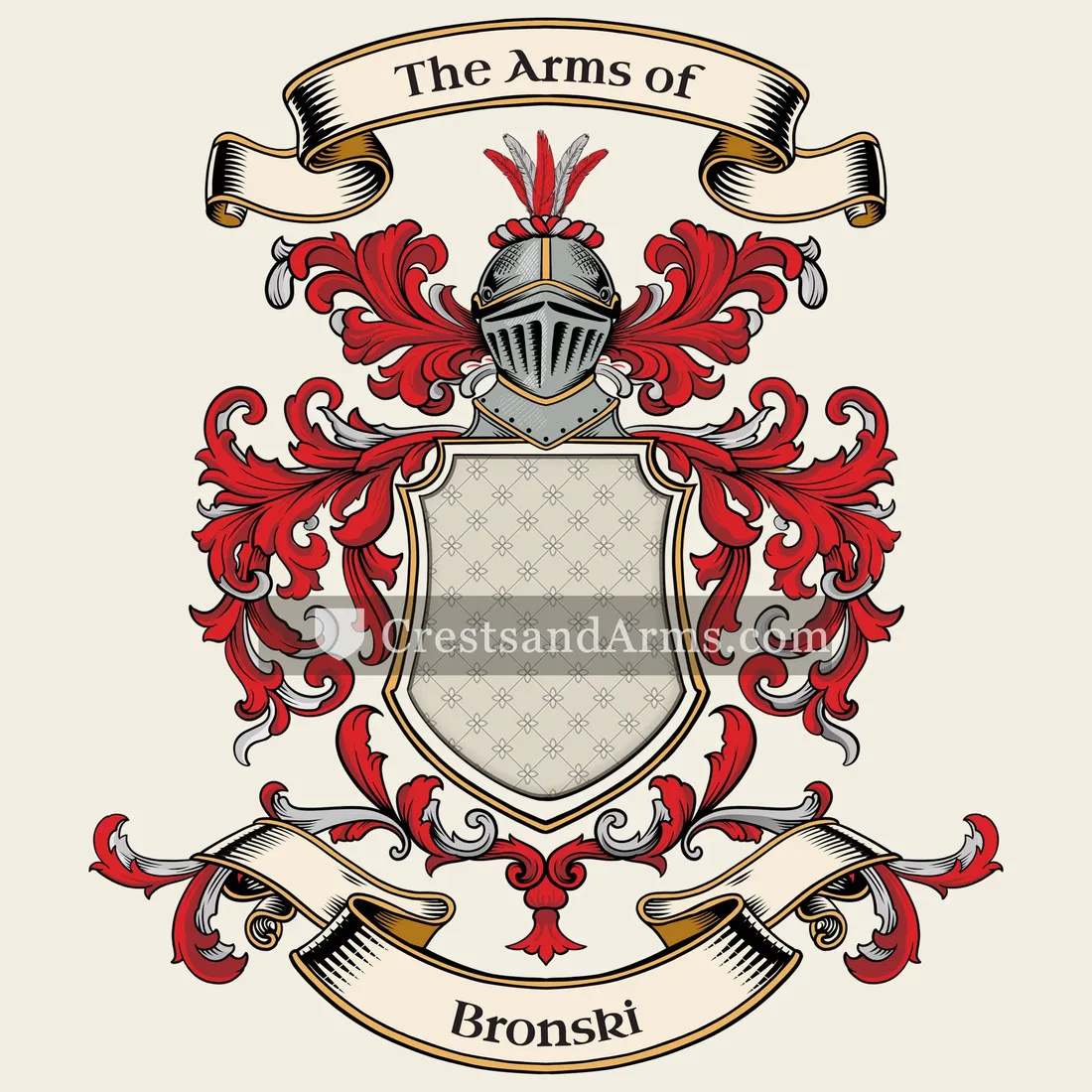
Polish noble families shared a single coat of arms across many different surnames, creating large clans rather than individual designs. These symbols were held collectively by all members of the clan regardless of their specific family name. When a new family joined the nobility, they were adopted into an existing clan and began using that group's established shield.
Granting authority
The Sejm, which was the Polish parliament, held the power to grant noble status and the right to bear arms.
How they got arms
Families typically received their coat of arms through a formal act of ennoblement granted by the Sejm for distinguished service.
Where arms were recorded
These grants were officially recorded in the Crown Metrica, which served as the central archive for state documents starting in the sixteenth century.
The family's standing
Recorded among the armigerous families of Silesia.
Origin & History of the Bronski Family in Poland
The surname Bronski is rooted in the linguistic traditions of the Slavic regions of Central Europe. The name is generally considered a topographic or habitational name, likely derived from the word "brona," which refers to a harrow used in farming, or from place names containing similar roots that describe a marshy or wooded area. By the year 1772, historical records confirm that members of the Bronski family were established in the region of Silesia. During this period, Silesia was a territory undergoing significant political transition under the Prussian monarchy. Families in this area often lived in rural communities where their surname reflected their connection to the land or their specific village of origin. As the family grew, they became part of the diverse social fabric of the region, contributing to the agricultural and local development of the Silesian landscape throughout the late eighteenth century.
Bronski Meaning & Related Branches
Root word
Bron
Derived from the Slavic element bron meaning armor or protection.
This name
BronskiA topographic name for someone who lived near a defensive fortification or armored settlement.
also spelled
Bronikowski
Documented Sources
J. B. Rietstap, Armorial Général, Gouda: G. B. van Goor Zonen, 1884–87
Bahlow, Hans, Deutsches Namenlexikon: Familien- und Vornamen nach Ursprung und Sinn erklärt, 1967
Heintze, Albert, Die deutschen Familien-Namen: geschichtlich, geographisch, sprachlich, 1903
State Archive in Wrocław (Archiwum Państwowe we Wrocławiu), Akta stanu cywilnego (Civil Registry Records for the Silesian region), 1772
Digital archive packCoat of arms PNG, gold border print PDF, vector SVG and the certificate of authenticity. Sent to your email in minutes.