Map of Germany showing where the Brucken arms are recorded
The Brucken arms were recorded in Franconia, c. 1765.
Franconia was a patchwork of small territories in central Germany, full of minor landowners and prosperous market towns. So many separate households held land there that the region produced a great many coats of arms.
This is where the arms were entered in the register. Families often moved to other parts of the country, so the same name can turn up in more than one region.
The body that granted and recorded arms in Germany in this period.
Francis I, Holy Roman Emperor
Sovereign of the period
Francis I, Holy Roman Emperor
1745–1765
Reigning in Germany when the Brucken arms are first recorded.
How Arms Worked in Germany
In the Holy Roman Empire, coats of arms were often granted to individuals by the Emperor or his representatives. These arms were then passed down through the generations to all legitimate descendants of the original holder. Younger branches of a family usually kept the same shield design without needing to change it, as the arms belonged to the entire lineage.
Granting authority
The Holy Roman Emperor held the sole power to grant new coats of arms throughout his vast imperial territories.
How they got arms
Families typically obtained their coats of arms through a formal imperial grant or by proving their noble status to the authorities.
Where arms were recorded
These grants were officially recorded in the Imperial Chancery registers, which began keeping formal records of such honors during the Middle Ages.
The family's standing
Recorded among the armigerous families of Franconia.
Origin & History of the Brucken Family in Germany
The family name Brucken is a topographic surname, which means it was originally used to identify people based on the landscape where they lived. In the German language, the word *Brücke* refers to a bridge, suggesting that the earliest ancestors of the family likely resided near a significant bridge or a crossing point over a river. By the year 1765, historical records confirm that the family had established a firm presence in the Franconia region of Germany. During this era, Franconia was a collection of diverse territories within the Holy Roman Empire, and families often remained in the same rural villages for generations to work the land. Because travel was difficult and expensive in the eighteenth century, the family likely maintained strong ties to their local community, serving as farmers, craftsmen, or laborers who were known to their neighbors by their proximity to the local bridge. This connection to the physical environment helped define the family identity long before the modern era of standardized record-keeping.
Coat of Arms & Family Crest Details
Symbols on this shield
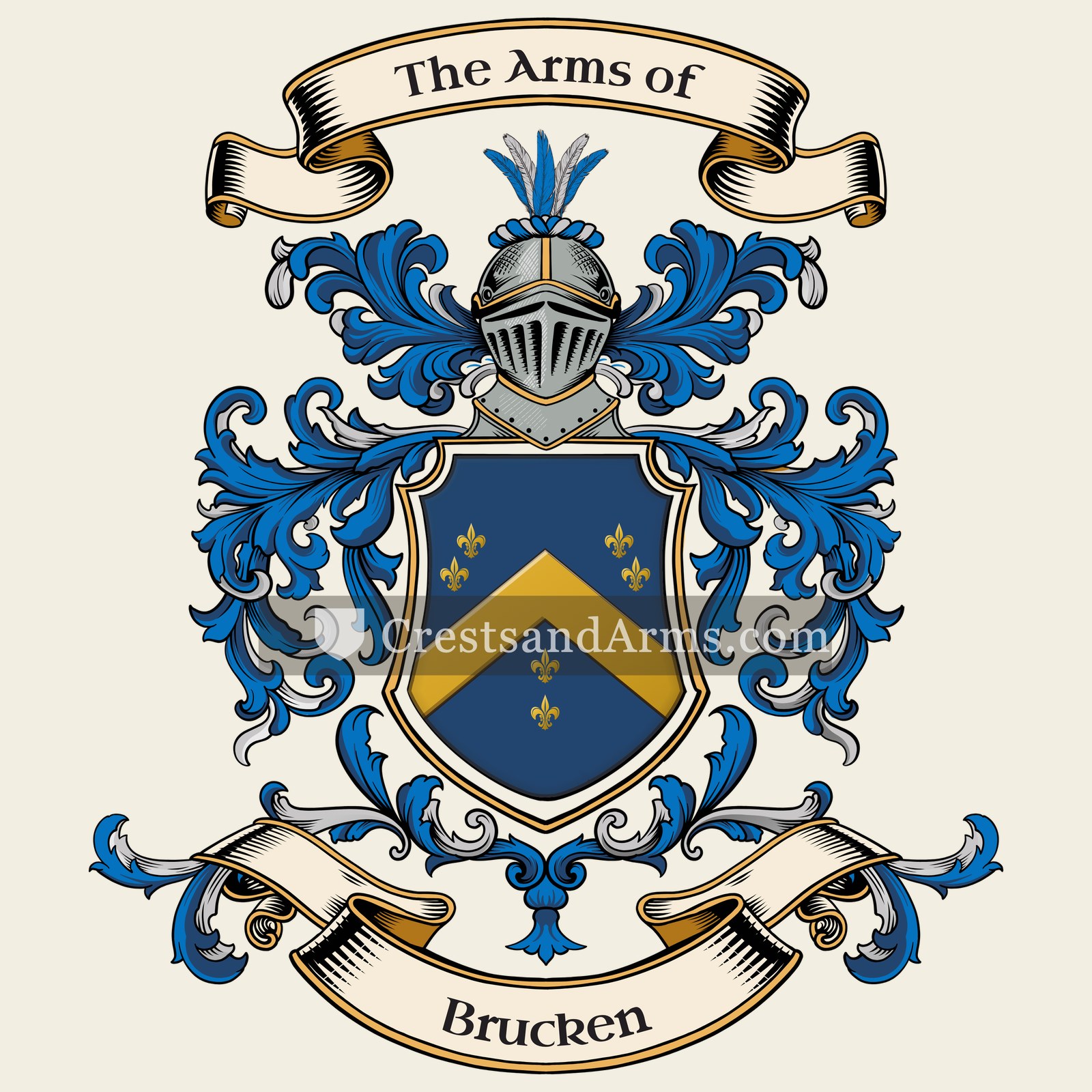
chevronProtection, and faithful service completed
fleur de lisPurity, light, and the sixth son
Colours
Blue (Azure)Means: Loyalty and truth
Gold (Or)Means: Generosity
Historical info
Source
J. B. Rietstap, Armorial Général, Gouda: G. B. van Goor Zonen, 1884–87
Blazon (the actual original written record)
“D'azur à deux chev. d'or, acc. de six fleurs-de-lis du même, 2, 3 et 1. C.: deux lis de jardin d'or, tigés et feuillés de sin.”
PolandThorn, c. 1772
Digital archive packCoat of arms PNG, gold border print PDF, vector SVG and the certificate of authenticity. Sent to your email in minutes.
Map of Poland showing where the Brucken arms are recorded
The Brucken arms were recorded in Thorn, c. 1772.
This is where the arms were entered in the register. Families often moved to other parts of the country, so the same name can turn up in more than one region.
Region
Thorn
Town
Thorn
First recorded
1772
Granting Authority for the Brucken Arms
Ennoblement by the Sejm
Author: Olek Remesz · CC BY-SA 3.0
The body that granted and recorded arms in Poland in this period.
Stanisław August Poniatowski
Sovereign of the period
Stanisław August Poniatowski
1764–1795
Reigning in Germany when the Brucken arms are first recorded.
How Arms Worked in Poland
Polish noble families shared a single coat of arms across many different surnames, creating large clans rather than individual designs. These symbols were held collectively by all members of the clan regardless of their specific family name. When a new family joined the nobility, they were adopted into an existing clan and began using that group's established shield.
Granting authority
The Sejm, which was the Polish parliament, held the power to grant noble status and the right to bear arms.
How they got arms
Families typically received their coat of arms through a formal act of ennoblement granted by the Sejm for distinguished service.
Where arms were recorded
These grants were officially recorded in the Crown Metrica, which served as the central archive for state documents starting in the sixteenth century.
The family's standing
Recorded among the armigerous families of Poland.
Origin & History of the Brucken Family in Poland
The history of the Brucken family in Poland is deeply connected to the city of Thorn, known today as Toruń. By 1772, members of the family were already established residents of this strategically important city located along the Vistula River. During this period, Thorn was a center of trade and cultural exchange, and families like the Bruckens often played roles in the local merchant or civic life of the region. The name itself suggests a connection to the German word for bridges, which may indicate that early ancestors were involved in infrastructure, engineering, or living near significant river crossings. As the political borders shifted during the late eighteenth century, the family remained part of the local fabric of the city, navigating the complex social changes that defined life in West Prussia. Their presence in the historical records of Thorn provides a clear starting point for understanding how the family integrated into the urban landscape of the Polish territories during a time of great regional transition.
Coat of Arms & Family Crest Details
Colours
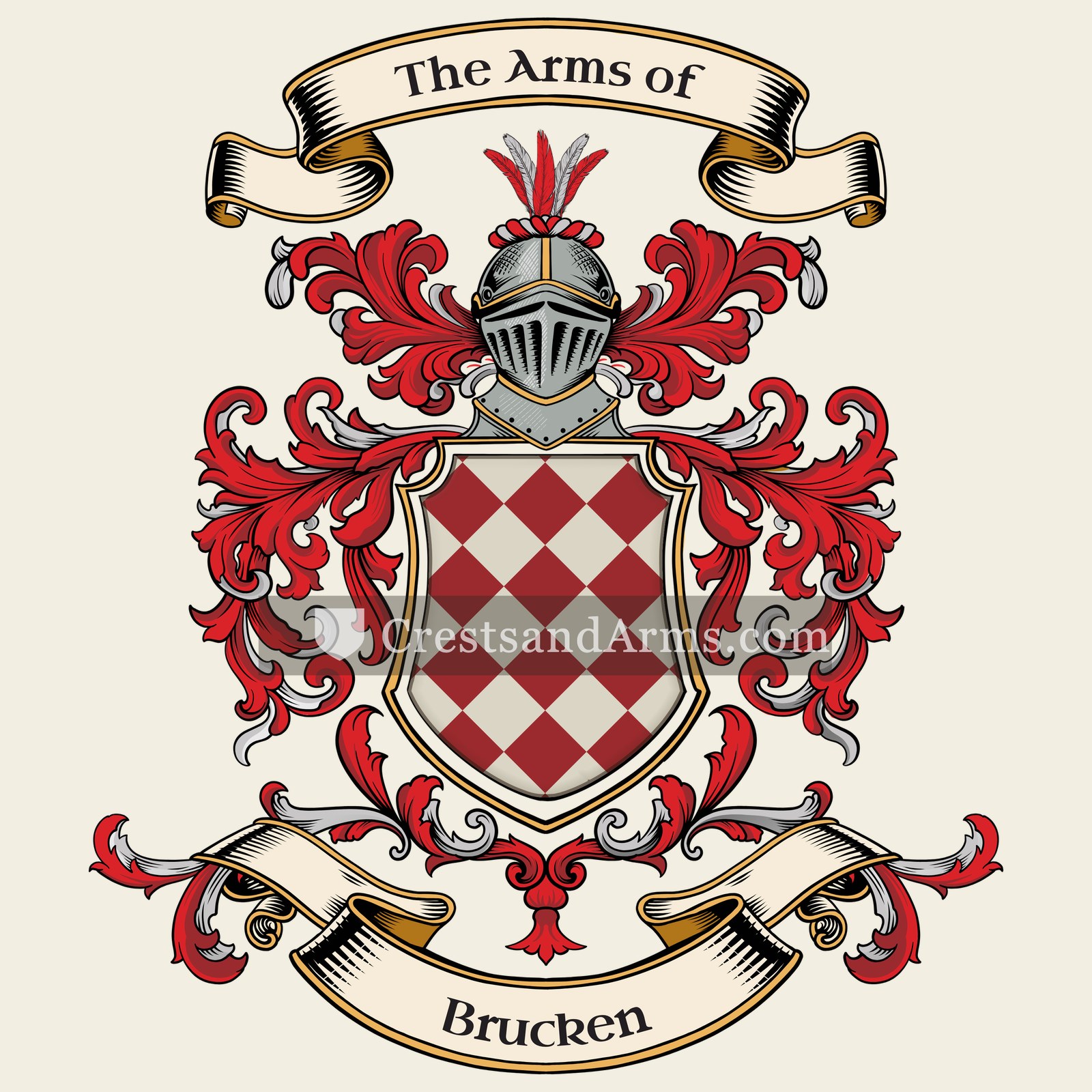
Silver (Argent)Means: Peace and sincerity
Red (Gules)Means: Military strength
Historical info
Source
J. B. Rietstap, Armorial Général, Gouda: G. B. van Goor Zonen, 1884–87
Blazon (the actual original written record)
“Losangé de gu. et d'arg. C.: une hermine au nat., posée entre un vol-banneret d'arg., le tout soutenu d'un chapeau de tournoi de gu., retroussé d'un losangé de gu. et d'arg.”
LorraineLorraine, c. 1663
Digital archive packCoat of arms PNG, gold border print PDF, vector SVG and the certificate of authenticity. Sent to your email in minutes.
Map of France showing where the Brucken arms are recorded
The Brucken arms were recorded in Lorraine, c. 1663.
Lorraine sat on the border between France and the German lands, and border country bred soldiers. Families here held small estates and served in arms, and a fighting man was exactly the sort who carried a shield of his own.
This is where the arms were entered in the register. Families often moved to other parts of the country, so the same name can turn up in more than one region.
The body that granted and recorded arms in France in this period.
Louis XIV of France
Sovereign of the period
Louis XIV of France
1643–1715
Reigning in Germany when the Brucken arms are first recorded.
How Arms Worked in France
In France, a coat of arms was a mark of honor that passed down through the male line to all legitimate descendants. Families often used the same shield without changes to show their shared heritage. If a branch wanted to stand out, they could add a small mark to their shield to show their specific place in the family tree.
Granting authority
The Juge d'armes de France acted as the official authority that regulated and verified coats of arms across the country.
How they got arms
Families typically inherited their arms from ancestors, though they could also receive them through royal grants or by proving their noble status.
Where arms were recorded
Coats of arms were officially recorded in the Armorial Général de France, which began its main collection in the year 1696.
The family's standing
Recorded among the armigerous families of Lorraine.
Origin & History of the Brucken Family in France
The family name Brucken finds its early roots in the historic region of Lorraine, a territory that has long served as a cultural bridge between France and its neighbors. By 1663, records confirm that members of the family were established in this area, which was known for its complex social structure and shifting borders. The name itself is closely tied to the German word for bridge, suggesting that the earliest ancestors likely lived near a prominent crossing or worked as bridge keepers in the river-rich landscape of the Moselle valley. During the seventeenth century, Lorraine was a place of significant transition, and families like the Bruckens were often involved in the local agricultural or trade networks that defined the provincial economy. As the region became more integrated into the French kingdom, the family name persisted as a marker of their deep connection to the land and their role within the local community.
Brucken Meaning & Related Branches
Root word
Brücke
A structure built to span a physical obstacle like a river.
This name
BruckenRefers to someone who lived near or worked at a bridge.
also spelled
Brucke
Bruken
Broken
Bruckin
Bruckon
Related arms
Beckerecorded with Brucken, same area
Documented Sources
J. B. Rietstap, Armorial Général, Gouda: G. B. van Goor Zonen, 1884–87
Bahlow, Hans, Deutsches Namenlexikon: Familien- und Vornamen nach Ursprung und Sinn erklärt, 1967
Gottschald, Max, Deutsche Namenkunde: Unsere Familiennamen nach ihrer Entstehung und Bedeutung, 1971
Staatsarchiv Bamberg, Standesamtliche Unterlagen und Kirchenbücher der Region Franken, 1765
Digital archive packCoat of arms PNG, gold border print PDF, vector SVG and the certificate of authenticity. Sent to your email in minutes.


 elephantGreat strength, wit and ambition
 elephantGreat strength, wit and ambition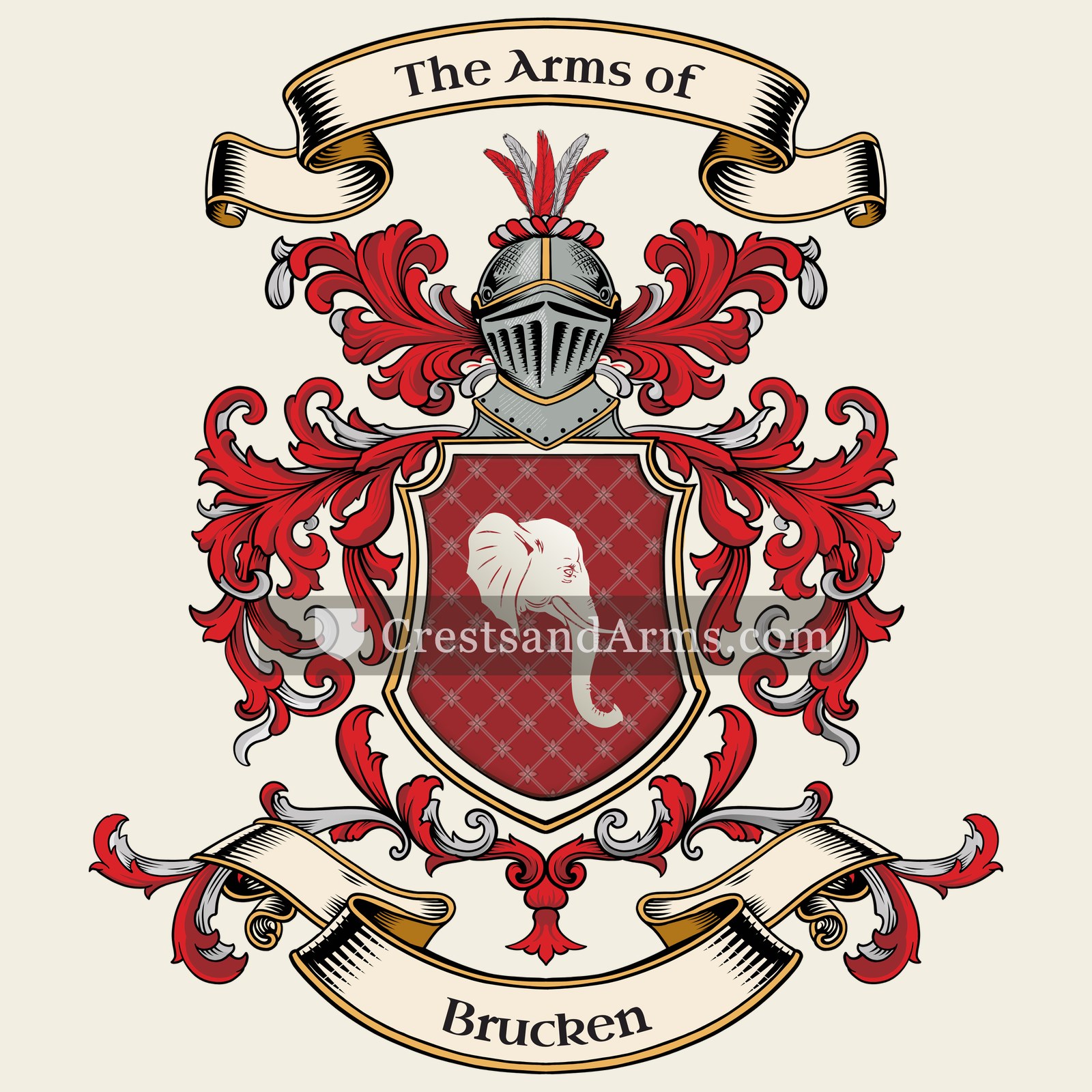


 chevronProtection, and faithful service completed
 fleur de lisPurity, light, and the sixth son