Map of Belgium showing where the Buga arms are recorded
The Buga arms were recorded in Brabant, c. 1737.
Brabant lay at the heart of the Low Countries, where the trade routes met. Its towns were wealthy and its landowners many, and both kinds of family kept arms, which is why the region is so heavily represented.
This is where the arms were entered in the register. Families often moved to other parts of the country, so the same name can turn up in more than one region.
The body that granted and recorded arms in Belgium in this period.
Charles VI, Holy Roman Emperor
Sovereign of the period
Charles VI, Holy Roman Emperor
1711–1740
Reigning in Belgium when the Buga arms are first recorded.
How Arms Worked in Belgium
In Belgium, a coat of arms is considered personal property that is passed down through the male line to legitimate descendants. Families often use the same shield design across generations to show their shared heritage. If a branch of the family wants to change the design, they must apply for an official update to their specific version of the arms.
Granting authority
The Conseil héraldique is the official body that regulates and approves all coats of arms in Belgium.
How they got arms
Families obtain their coats of arms through formal royal grants or by confirming their historical right to use existing designs.
Where arms were recorded
All approved coats of arms are officially recorded in the public registers of the Conseil héraldique since 1844.
The family's standing
Recorded among the armigerous families of Brabant.
Origin & History of the Buga Family in Belgium
The history of the Buga family in Belgium is rooted in the fertile lands of the Brabant region, where records confirm their presence as early as 1737. During the eighteenth century, Brabant was a central hub for agriculture and trade within the Southern Netherlands, and families like the Bugas were often integrated into the local rural economy. The name itself likely emerged from regional linguistic patterns common in the Low Countries, reflecting the way families were identified by their neighbors or their specific trade. By settling in this area, the early Buga ancestors became part of a stable community that navigated the transition from the Austrian rule of the era into the modern Belgian state. Their survival and persistence in the region suggest they were well-established members of the local population who contributed to the social fabric of their villages through generations of labor and community involvement.
Coat of Arms & Family Crest Details
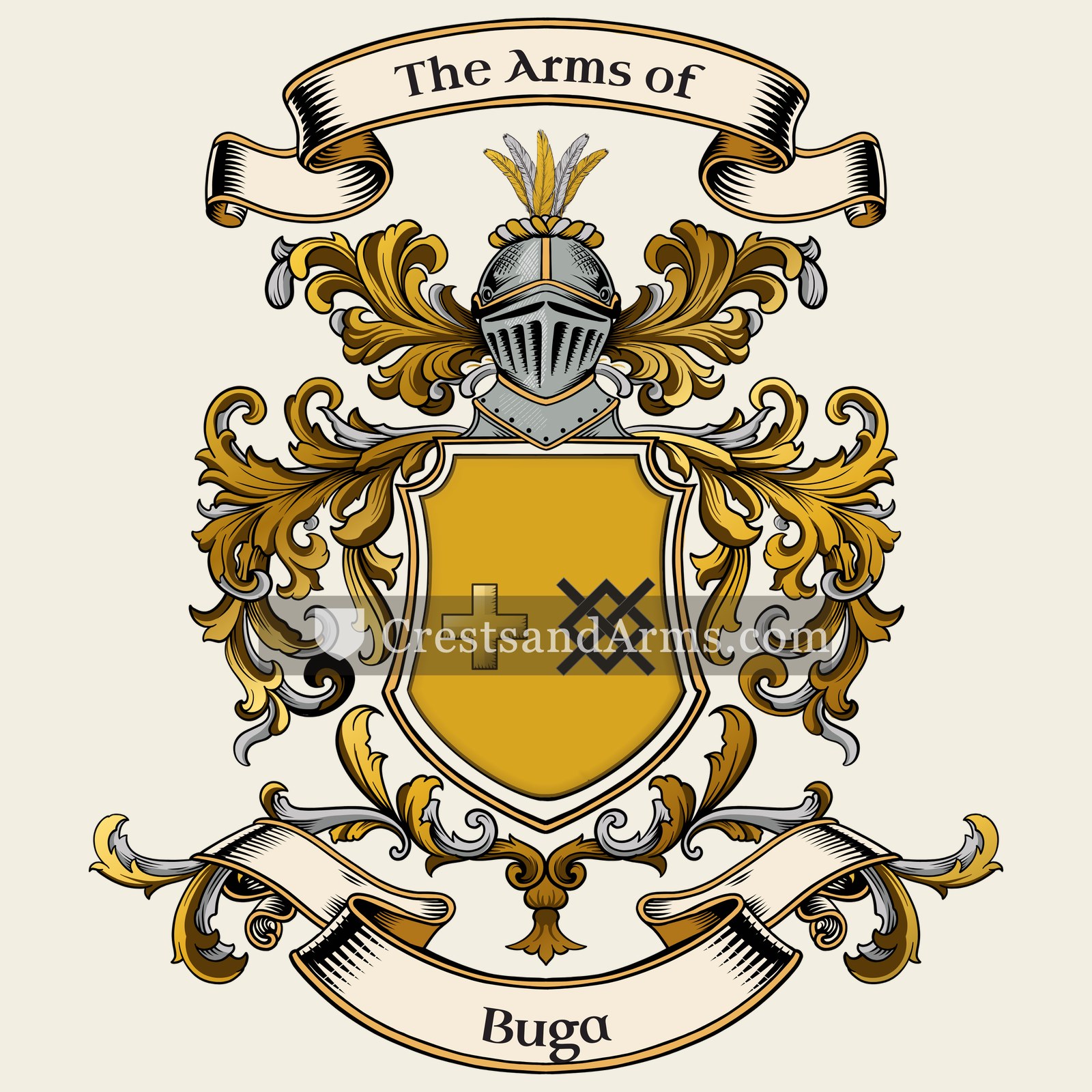
Symbols on this shield
cross symbolChristian faith and service
fretPersuasion, and the net that holds
Colours
Gold (Or)Means: Generosity
Black (Sable)Means: Constancy
Historical info
Source
J. B. Rietstap, Armorial Général, Gouda: G. B. van Goor Zonen, 1884–87
Blazon (the actual original written record)
“D'or fretté de sa., chacune des intersections ch. d'une croix recr. au pied fiché du champ.”
Britainc. 1700
Digital archive packCoat of arms PNG, gold border print PDF, vector SVG and the certificate of authenticity. Sent to your email in minutes.
Map of Britain showing where the Buga arms are recorded
The Buga arms were recorded in Britain, c. 1700.
Arms such as these were typically recorded in Kent.
Kent sits between London and the short crossing to Europe, and the trade passing through made it wealthy. Merchant families bought land with that money, and it was landowners who took coats of arms.
This is where the arms were entered in the register. Families often moved to other parts of the country, so the same name can turn up in more than one region.
The body that granted and recorded arms in Britain in this period.
William III of England
Sovereign of the period
William III of England
1694–1702
Reigning in Belgium when the Buga arms are first recorded.
How Arms Worked in Britain
English heraldry allowed arms to be shared by all legitimate descendants of the original owner. These symbols were treated as personal property that moved through the generations to all children. While the eldest son kept the original design, other family members could use the same shield without needing to change it or register their own unique versions.
Granting authority
The College of Arms in London has regulated the use of coats of arms throughout England and Wales since 1484.
How they got arms
Families typically obtained their coats of arms through a formal grant from the Crown or by proving their ancient right to them.
Where arms were recorded
All official coats of arms are recorded in the registers kept at the College of Arms, which date back to the fifteenth century.
The family's standing
Recorded among the armigerous families of Britain.
Origin & History of the Buga Family in Britain
The history of the Buga name in Britain begins with its presence in the county of Kent during the early eighteenth century. During this period, Kent was a bustling region defined by its proximity to London and its strong ties to maritime trade and agricultural production. Families with this surname likely integrated into the local parish systems, which served as the primary method for recording births, marriages, and deaths at the time. Because surnames were often influenced by regional dialects and the phonetic spelling habits of local clerks, the name Buga likely maintained a consistent identity within the tight-knit communities of the Kentish countryside. These early ancestors were part of a society that was transitioning into the modern era, and their presence in the local records suggests they were settled members of the working or landholding classes who contributed to the social fabric of southeastern England.
Coat of Arms & Family Crest Details
Colours
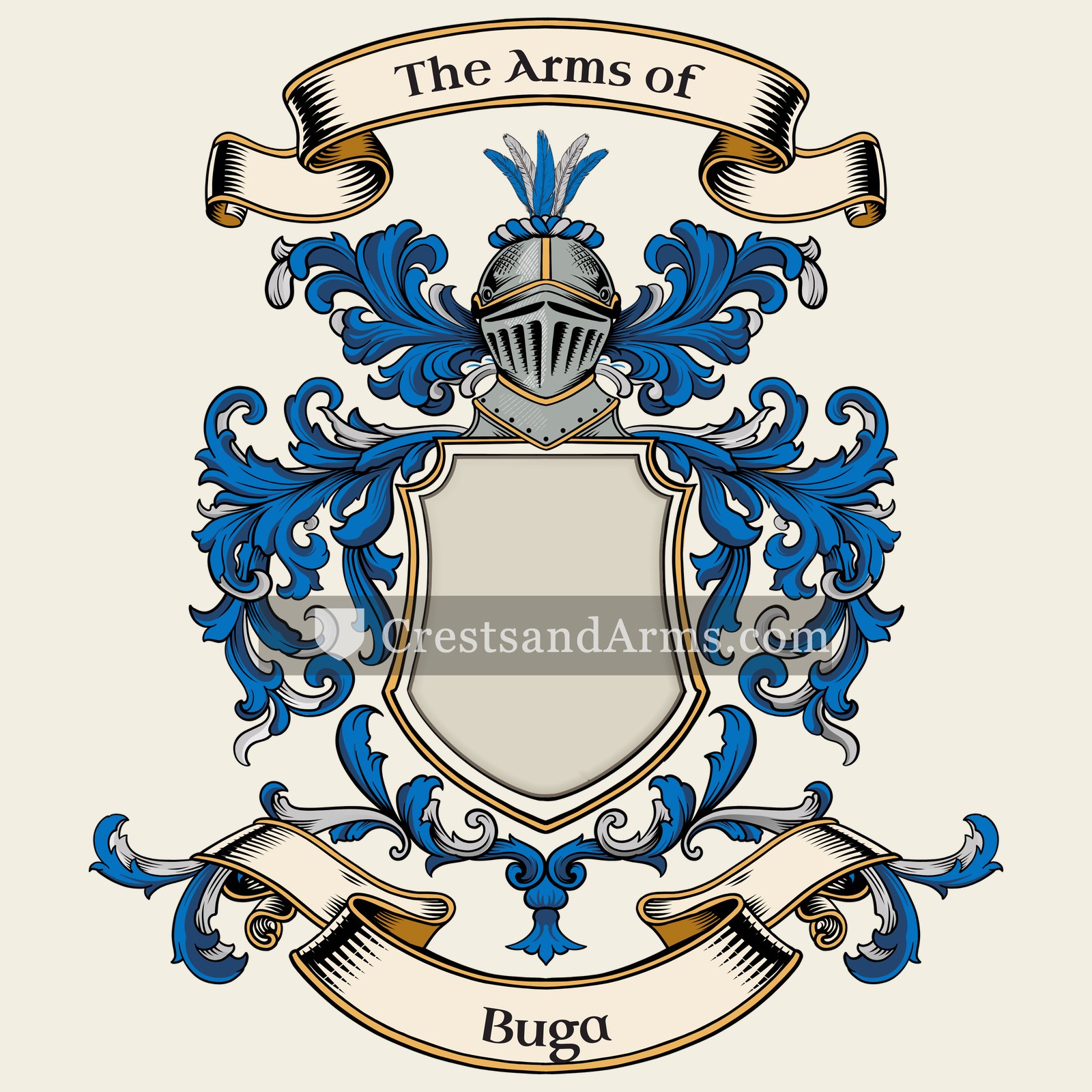
Silver (Argent)Means: Peace and sincerity
Blue (Azure)Means: Loyalty and truth
Historical info
Source
J. B. Rietstap, Armorial Général, Gouda: G. B. van Goor Zonen, 1884–87
Blazon (the actual original written record)
“Coupé d'arg. sur azur. C.: deux prob., coupées alt. d'arg. et d'azur.”
Denmarkc. 1722
Digital archive packCoat of arms PNG, gold border print PDF, vector SVG and the certificate of authenticity. Sent to your email in minutes.
Map of Denmark showing where the Buga arms are recorded
The Buga arms were recorded in Denmark, c. 1722.
Arms such as these were typically recorded in Sjaælland.
Zealand held the Danish court, the crown's offices and Copenhagen itself. Families who served the king kept estates within reach of it, and royal service was the ordinary route to a coat of arms.
This is where the arms were entered in the register. Families often moved to other parts of the country, so the same name can turn up in more than one region.
The body that granted and recorded arms in Denmark in this period.
Frederik IV of Denmark
Sovereign of the period
Frederik IV of Denmark
1699–1730
Reigning in Belgium when the Buga arms are first recorded.
How Arms Worked in Denmark
Danish heraldry during this period was closely tied to noble status and royal favor rather than being open to all citizens. Arms were typically granted by the monarch to individuals, and these symbols were then shared by all members of the noble house. If a family line died out, the right to use those specific arms ended with them.
Granting authority
The Danish royal chancery held the power to issue and regulate official coats of arms for the kingdom.
How they got arms
Families usually received their arms through a formal royal grant that confirmed their noble status and rights.
Where arms were recorded
These grants were officially recorded in the Danish Royal Chancery records starting in the sixteenth century.
The family's standing
Recorded among the armigerous families of Denmark.
Origin & History of the Buga Family in Denmark
The history of the Buga family in Denmark begins with documented records placing members of the lineage on the island of Sjælland as early as 1722. During this period, the Danish population was largely tied to the land, and families often lived in small rural communities where surnames were passed down through generations of farmers and laborers. The name Buga likely emerged during a time when local officials and church clerks began recording family names more consistently in parish registers to track tax obligations and military service. Because Sjælland served as the political and economic heart of the kingdom, families living there were often subject to strict record-keeping practices by the Lutheran Church. These early ancestors were part of the foundational social fabric of the region, living through a time of agricultural transition and shifting land laws that defined the lives of common Danish families in the eighteenth century.
Related Branches & Arms
Root word
Bugge
Old Norse term for a large or powerful person.
This name
BugaA surname of Germanic origin likely denoting a person of significant physical stature or influence.
also spelled
Bug
Buga
Documented Sources
J. B. Rietstap, Armorial Général, Gouda: G. B. van Goor Zonen, 1884–87
State Archives in Belgium (Algemeen Rijksarchief), Parochieregisters van Brabant
Vandenbroeke, C., Sociale geschiedenis van het Vlaamse volk, 1981
Willems, J., Geschiedenis van Brabant van het hertogdom tot heden, 1996
Digital archive packCoat of arms PNG, gold border print PDF, vector SVG and the certificate of authenticity. Sent to your email in minutes.


 fessThe military belt, and readiness to serve
 hedgehogA provident provider
 fessThe military belt, and readiness to serve
 hedgehogA provident provider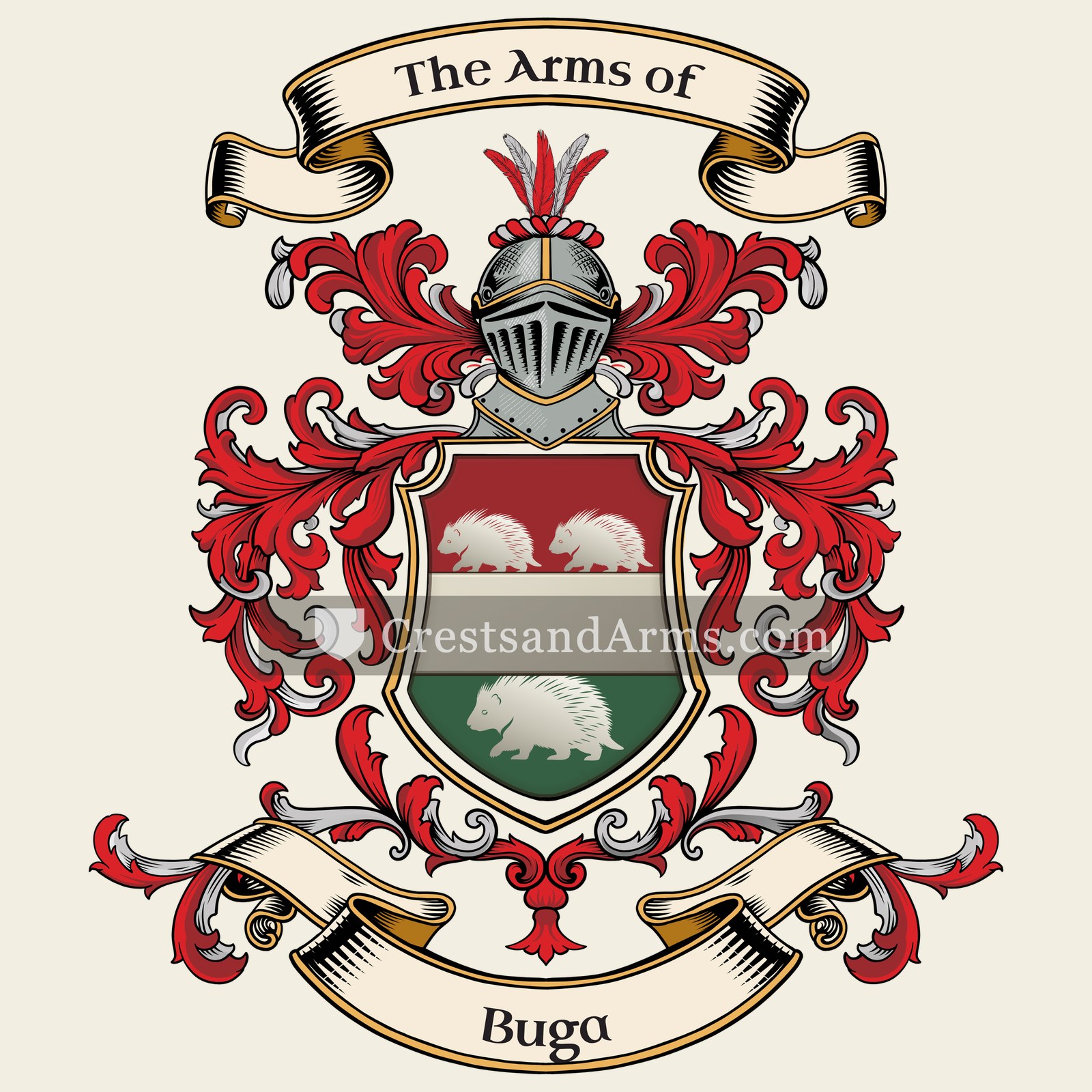


 cross symbolChristian faith and service
 fretPersuasion, and the net that holds