A record of documented arms, meaning and origin, researched for the Bülow family lines. Documented in 3 countries.
Reg. 4790 · German, A–C
Coat of Arms & Family Crest Details
Symbols on this shield
triangleThe Trinity, and stability
martletA younger son, who must win his own land
Colours
Blue (Azure)Means: Loyalty and truth
Silver (Argent)Means: Peace and sincerity
Gold (Or)Means: Generosity
Historical info
Source
J. B. Rietstap, Armorial Général, Gouda: G. B. van Goor Zonen, 1884–87
Blazon (the actual original written record)
“Ec.: aux 1 et 4 d'azur à cinq triangles ondées d'arg.; aux 2 et 3 d'azur à un loriot d'or, tenant en son bec une bague du même, châtonnée d'un diamant. Sur le tout d'azur à quatorze boules d'or, 4, 4, 3, 2 et 1. Deux cq. cour. C.: 1° un vol aux armes du 1; l. d'arg. et d'azur; 2° le loriot du 2, entre deux prob. d'azur, ch. chacune de sept boules d'or, rangées en pal; les prob. br. sur un vol du même; l. d'or et d'azur. S.: deux lions reg., au nat. D.: IN UTRAQUE FORTUNA IPSIUS FORTUNÆ MEMOR.”
SaxonyHan · Saxony, c. 1705
Digital archive packCoat of arms PNG, gold border print PDF, vector SVG and the certificate of authenticity. Sent to your email in minutes.
Map of Germany showing where the Bülow arms are recorded
The Bülow arms were recorded in Saxony, c. 1705.
Saxony had mines, trade and old landed families all at once. Silver made some fortunes and land held others, and both sorts of family kept arms, which is why Saxon names appear so often in the registers.
This is where the arms were entered in the register. Families often moved to other parts of the country, so the same name can turn up in more than one region.
The body that granted and recorded arms in Germany in this period.
Leopold I, Holy Roman Emperor
Sovereign of the period
Leopold I, Holy Roman Emperor
1658–1705
Reigning in Germany when the Bülow arms are first recorded.
How Arms Worked in Germany
In the Holy Roman Empire, coats of arms were often granted to individuals by the Emperor or his representatives. These arms were then passed down through the generations to all legitimate descendants of the original holder. Younger branches of a family usually kept the same shield design without needing to change it, as the arms belonged to the entire lineage.
Granting authority
The Holy Roman Emperor held the sole power to grant new coats of arms throughout his vast imperial territories.
How they got arms
Families typically obtained their coats of arms through a formal imperial grant or by proving their noble status to the authorities.
Where arms were recorded
These grants were officially recorded in the Imperial Chancery registers, which began keeping formal records of such honors during the Middle Ages.
The family's standing
Recorded among the armigerous families of Saxony.
Origin & History of the Bülow Family in Germany
The Bülow family is an ancient noble house with deep roots in the northern regions of Germany. Historical records confirm their presence in the territory of Mecklenburg as early as the thirteenth century, where they established themselves as significant landowners and political figures. By the time members of the family were documented in Saxony in 1705, they had already spent hundreds of years building a reputation as influential administrators and military officers. The name itself is believed to be derived from a place name, likely referring to a settlement near a marshy or muddy area. Over the centuries, the family expanded across various German states, consistently maintaining their status within the regional aristocracy. Their long history reflects the broader patterns of German noble families who served as local leaders and advisors to various dukes and princes throughout the Middle Ages and the early modern period.
Coat of Arms & Family Crest Details
Symbols on this shield
eagleNobility, strength and a keen mind
bearStrength, cunning and protection of kin
Colours
Silver (Argent)Means: Peace and sincerity
Black (Sable)Means: Constancy
Historical info
Source
J. B. Rietstap, Armorial Général, Gouda: G. B. van Goor Zonen, 1884–87
Blazon (the actual original written record)
“Ec.: aux 1 et 4 d'arg. à l'aigle de Prusse; au 2 d'azur à un loriot d'or, tenant en son bec une bague du même, châtonnée d'un diamant; au 3 d'or à un ours de sa., grimpant sur une terrasse inclinée de sin. Sur le tout d'azur à quatorze boules d'or, 4, 4, 3, 2 et 1. C.: le loriot, entre deux prob. d'azur, ch. chacune de sept boules d'or, rangées en pal; les prob. br. sur un vol d'or. L. d'or et d'azur.”
Francec. 1663
Digital archive packCoat of arms PNG, gold border print PDF, vector SVG and the certificate of authenticity. Sent to your email in minutes.
Map of France showing where the Bülow arms are recorded
The Bülow arms were recorded in France, c. 1663.
Arms such as these were typically recorded in Bretagne.
More families held coats of arms in Bretagne than anywhere else in France. The land was divided into many small estates rather than a few large ones, so far more households counted as gentry, and each needed a shield of its own to be told apart.
This is where the arms were entered in the register. Families often moved to other parts of the country, so the same name can turn up in more than one region.
The body that granted and recorded arms in France in this period.
Louis XIV of France
Sovereign of the period
Louis XIV of France
1643–1715
Reigning in Germany when the Bülow arms are first recorded.
How Arms Worked in France
In France, a coat of arms was a mark of honor that passed down through the male line to all legitimate descendants. Families often used the same shield without changes to show their shared heritage. If a branch wanted to stand out, they could add a small mark to their shield to show their specific place in the family tree.
Granting authority
The Juge d'armes de France acted as the official authority that regulated and verified coats of arms across the country.
How they got arms
Families typically inherited their arms from ancestors, though they could also receive them through royal grants or by proving their noble status.
Where arms were recorded
Coats of arms were officially recorded in the Armorial Général de France, which began its main collection in the year 1696.
The family's standing
Recorded among the armigerous families of France.
Origin & History of the Bülow Family in France
The history of the Bülow family in France begins with a notable presence in the region of Bretagne by the year 1663. While the name is widely recognized for its deep roots in Northern Germany and the Baltic territories, its appearance in Western France suggests a period of movement and integration during the seventeenth century. Families with this name often moved across European borders due to military service, trade, or political shifts that defined the era. By settling in Bretagne, these early family members became part of the local social fabric, navigating the unique cultural and legal landscape of a French province. This migration highlights how a noble or prominent family could maintain its identity while adapting to a new country and language. The records from this period provide a glimpse into the mobility of the European elite and the ways in which families established themselves in foreign lands long before the modern era.
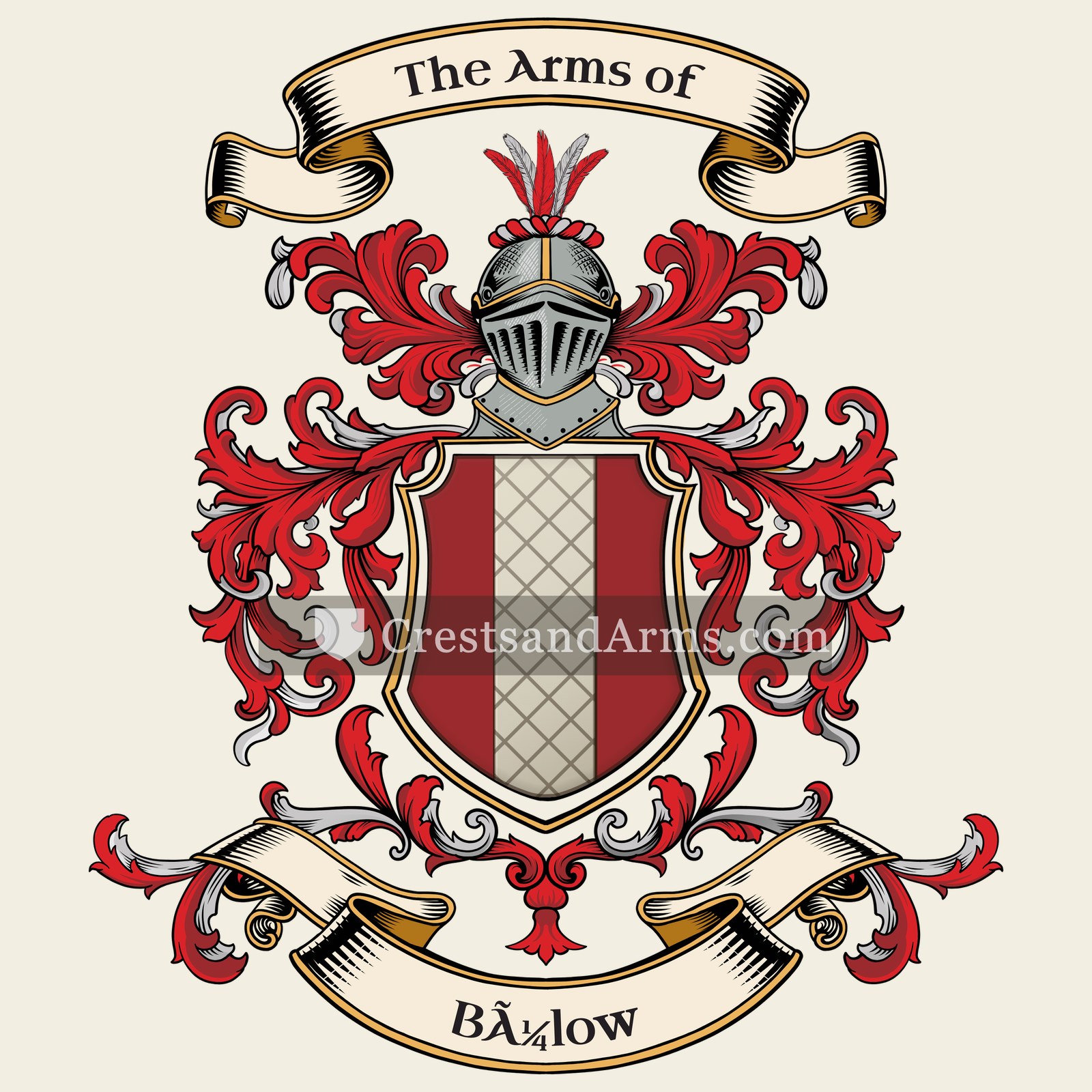
Coat of Arms & Family Crest Details
Symbols on this shield
paleMilitary strength, and a fortified defence
Colours
Red (Gules)Means: Military strength
Silver (Argent)Means: Peace and sincerity
Historical info
Source
J. B. Rietstap, Armorial Général, Gouda: G. B. van Goor Zonen, 1884–87
Blazon (the actual original written record)
“De gu. au pal d'arg. C.: une plume de paon au nat., entre deux prob. de gu., ch. chacune d'une fasce d'arg., et ornées à l'ext. de trois plumes de paon au nat., dont une dans l'embouchure.”
Denmarkc. 1722
Digital archive packCoat of arms PNG, gold border print PDF, vector SVG and the certificate of authenticity. Sent to your email in minutes.
Map of Denmark showing where the Bülow arms are recorded
The Bülow arms were recorded in Denmark, c. 1722.
Arms such as these were typically recorded in Sjaælland.
Zealand held the Danish court, the crown's offices and Copenhagen itself. Families who served the king kept estates within reach of it, and royal service was the ordinary route to a coat of arms.
This is where the arms were entered in the register. Families often moved to other parts of the country, so the same name can turn up in more than one region.
The body that granted and recorded arms in Denmark in this period.
Frederik IV of Denmark
Sovereign of the period
Frederik IV of Denmark
1699–1730
Reigning in Germany when the Bülow arms are first recorded.
How Arms Worked in Denmark
Danish heraldry during this period was closely tied to noble status and royal favor rather than being open to all citizens. Arms were typically granted by the monarch to individuals, and these symbols were then shared by all members of the noble house. If a family line died out, the right to use those specific arms ended with them.
Granting authority
The Danish royal chancery held the power to issue and regulate official coats of arms for the kingdom.
How they got arms
Families usually received their arms through a formal royal grant that confirmed their noble status and rights.
Where arms were recorded
These grants were officially recorded in the Danish Royal Chancery records starting in the sixteenth century.
The family's standing
Recorded among the armigerous families of Denmark.
Origin & History of the Bülow Family in Denmark
The Bülow family is a prominent noble house that established deep roots in the Danish landscape over several centuries. While the family originated in the region of Mecklenburg, they became deeply integrated into the Danish aristocracy after migrating north. By the early eighteenth century, the family was well-established in the region of Sjælland, where they held significant social and political influence. Members of the family often served as high-ranking officials, military officers, and landowners who helped shape the administration of the Danish state. Their presence in Sjælland by 1722 reflects a period where the family was actively consolidating their status within the royal court and the broader Danish society. Through these roles, the Bülows became a fixture of the Danish elite, leaving a lasting mark on the history of the region through their service to the crown and their management of rural estates.
Bülow Meaning & Related Branches
Root word
bul
A Slavic term referring to a swamp, marsh, or muddy area.
This name
BülowDerived from a place name in Mecklenburg, indicating someone from a muddy settlement.
also spelled
Bulo
Byulow
Documented Sources
J. B. Rietstap, Armorial Général, Gouda: G. B. van Goor Zonen, 1884–87
Gerd Heinrich, Die Grafen von Bülow: Geschichte einer Familie, 1994


 triangleThe Trinity, and stability
 martletA younger son, who must win his own land
 triangleThe Trinity, and stability
 martletA younger son, who must win his own land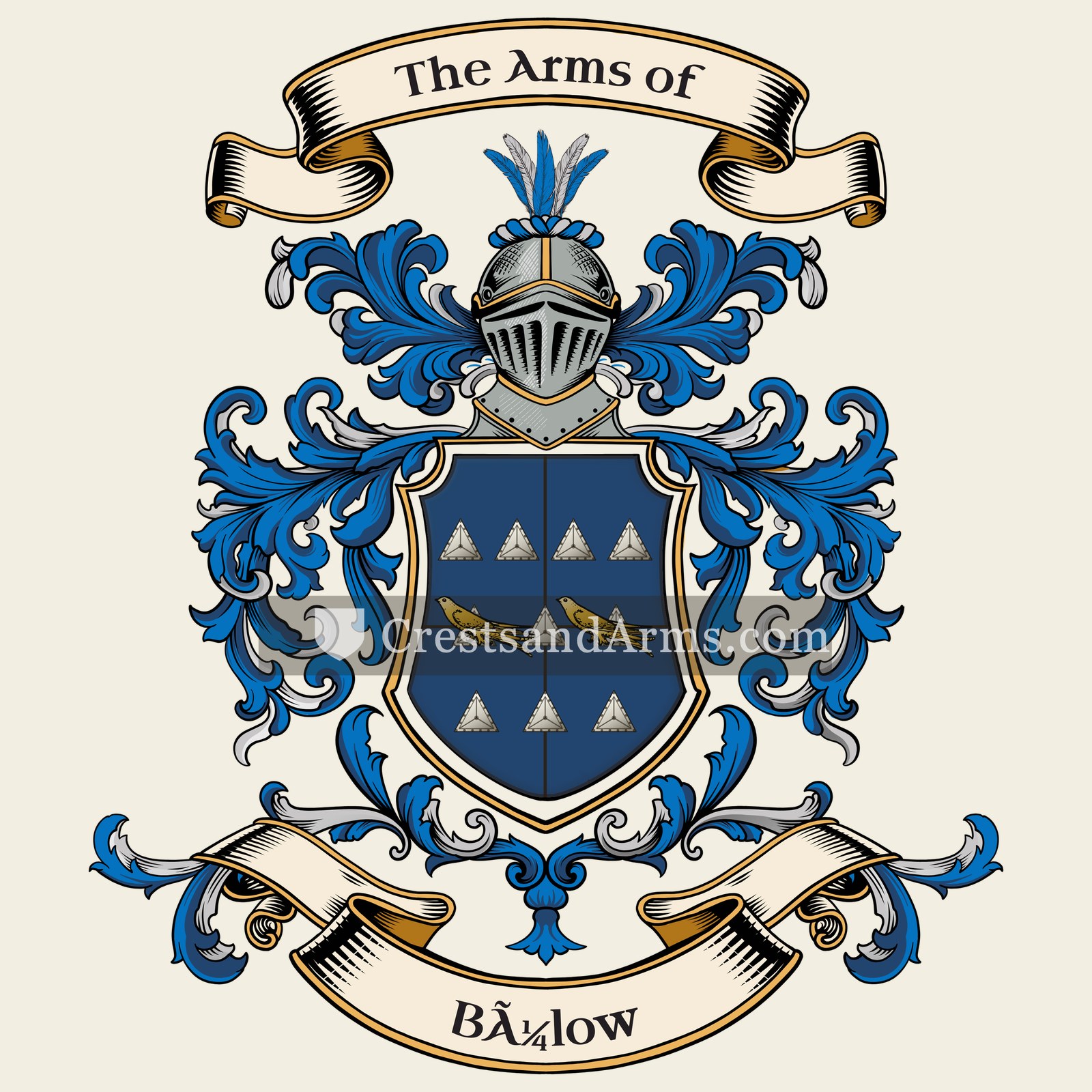


 eagleNobility, strength and a keen mind
 bearStrength, cunning and protection of kin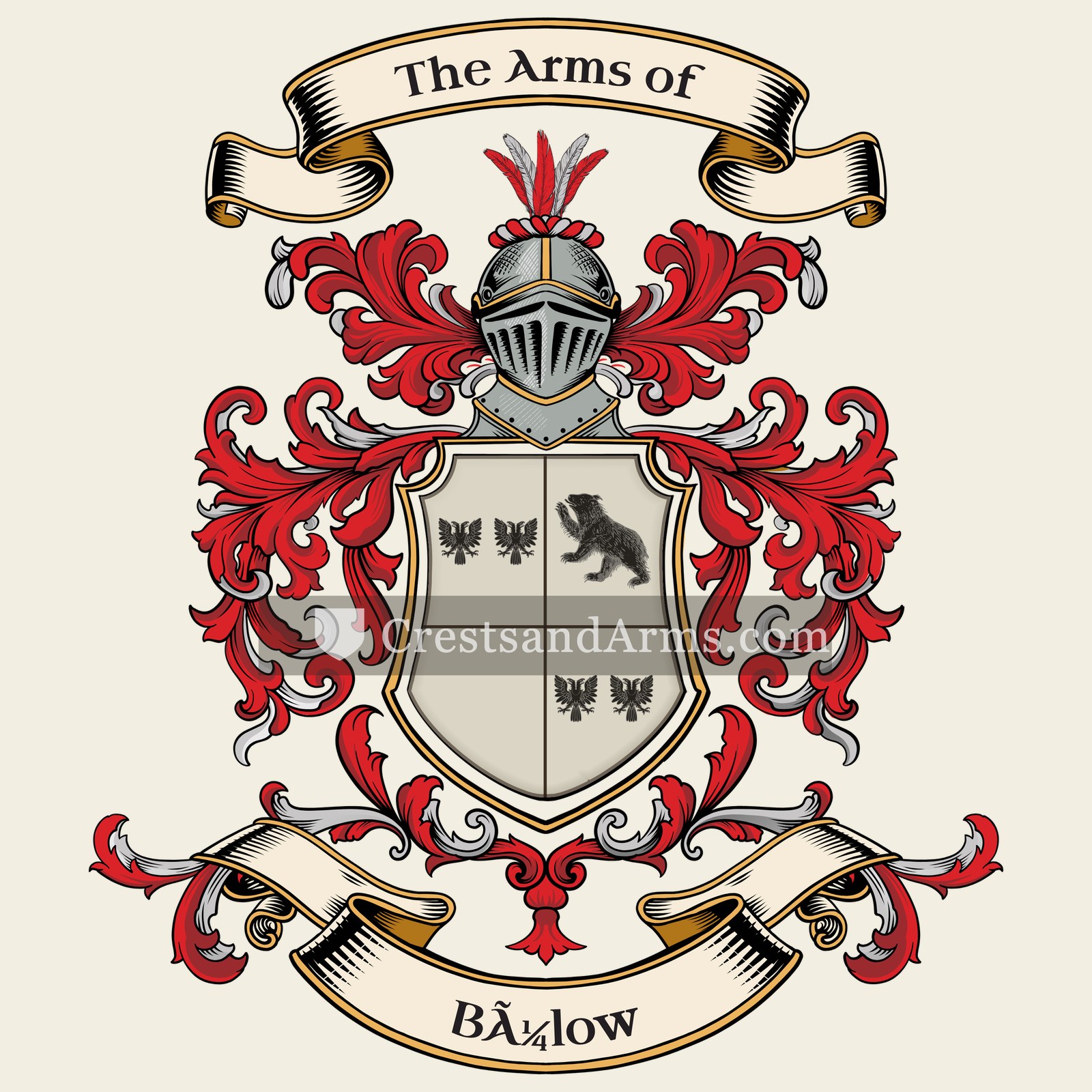


 paleMilitary strength, and a fortified defence