Map of Austria showing where the Caamano arms are recorded
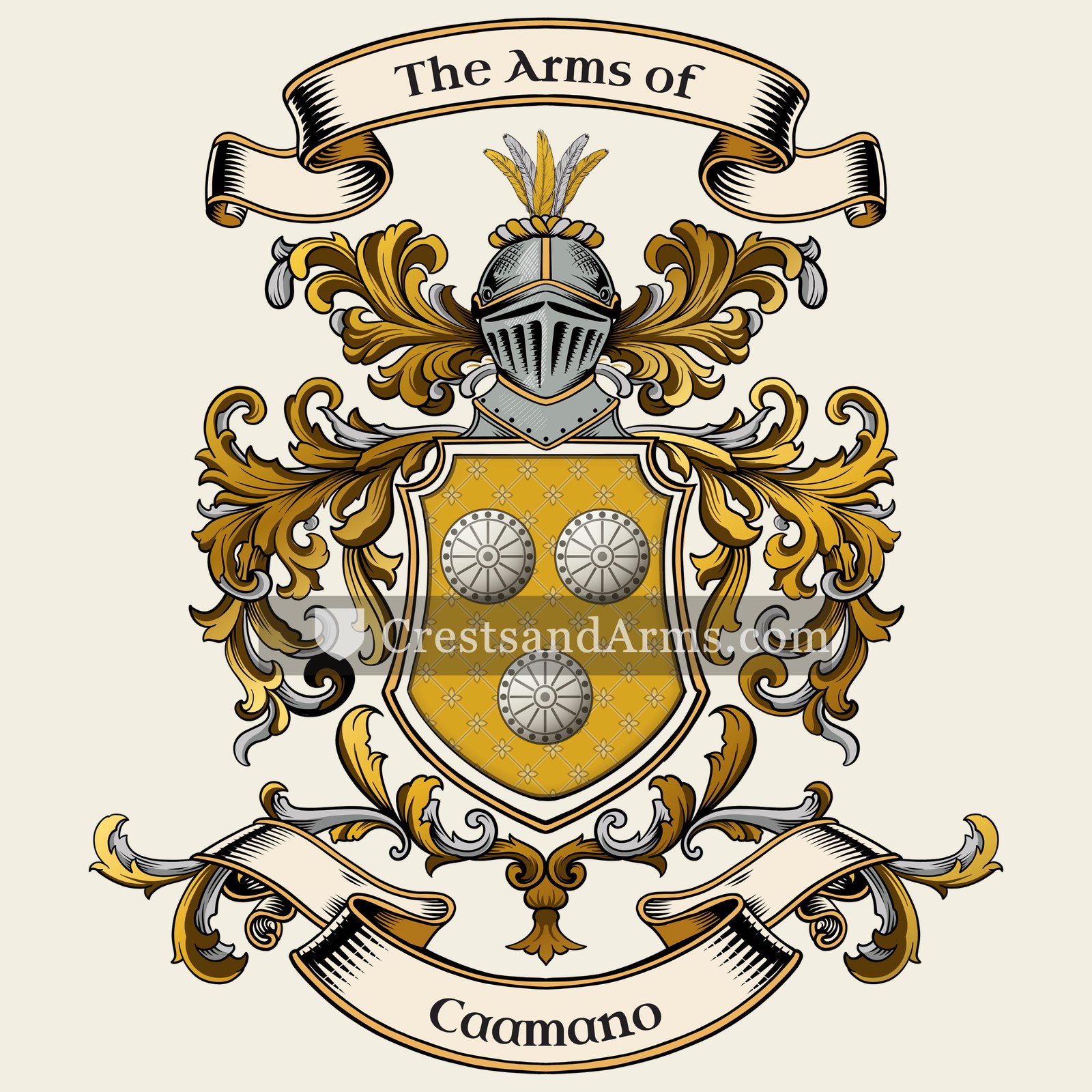
The Caamano arms were recorded in Austria, c. 1772.
Arms such as these were typically recorded in Tyrol.
Tyrol was mountain country in western Austria, where the valleys were held by families who had been there a very long time. Old tenure counted for more than money, and old families carried arms.
This is where the arms were entered in the register. Families often moved to other parts of the country, so the same name can turn up in more than one region.
Region
Tyrol
First recorded
1772
Granting Authority for the Caamano Arms
Imperial and Royal chancery
Sodacan · CC BY-SA 3.0
The body that granted and recorded arms in Austria in this period.
Joseph II, Holy Roman Emperor
Sovereign of the period
Joseph II, Holy Roman Emperor
1765–1790
Reigning in Austria when the Caamano arms are first recorded.
How Arms Worked in Austria
Austrian coats of arms were often linked directly to noble titles granted by the Emperor. These symbols belonged to the entire family line rather than just one individual. When a family grew, new branches kept the original design without needing to change it. This system allowed all members of a noble house to share the same identity across many generations.
Granting authority
The Imperial and Royal chancery managed all heraldic matters and controlled the official granting of arms throughout the Austrian lands.
How they got arms
Families typically received their arms through a formal imperial decree that often accompanied the elevation of a person to noble status.
Where arms were recorded
Official records of these grants were kept in the Imperial Register of Nobility which began its formal documentation process in 1453.
The family's standing
Recorded among the armigerous families of Austria.
Origin & History of the Caamano Family in Austria
The history of the Caamaño name is deeply rooted in the rugged landscapes of the Iberian Peninsula, specifically within the Galicia region of northwestern Spain. The name is topographic in origin, likely derived from the Galician word for a specific type of stone or a rocky landmark, which suggests that the earliest ancestors were people who lived near a prominent natural feature. By the late 18th century, members of the family had migrated far from these coastal origins, establishing a documented presence in the Tyrol region by 1772. This movement indicates that the family was highly mobile during the Enlightenment era, likely participating in the administrative or military networks that connected different parts of the Habsburg territories. As they settled in new environments, the family adapted to local customs while maintaining their distinct identity, eventually becoming integrated into the social and economic fabric of their new alpine home.
Related Branches & Arms
Root word
Caminum
Latin term referring to a path, road, or way.
This name
CaamanoDerived from a topographic descriptor for someone living near a specific road or path.
also spelled
Kamano
Kamanyo
Documented Sources
J. B. Rietstap, Armorial Général, Gouda: G. B. van Goor Zonen, 1884–87
Pardo de Guevara y Valdés, Eduardo. Los señores de Galicia: tenentes y condes de Galicia en la Edad Media. 2000
Varela, José Luis. La familia Caamaño: linaje y memoria en la historia de Galicia. 1995
Archivo del Reino de Galicia, Sección Nobleza y Genealogía
Tiroler Landesarchiv, Personenstandsregister und Familienakten
Digital archive packCoat of arms PNG, gold border print PDF, vector SVG and the certificate of authenticity. Sent to your email in minutes.


 roundelA coin, and one who has been to the crusades
 roundelA coin, and one who has been to the crusades