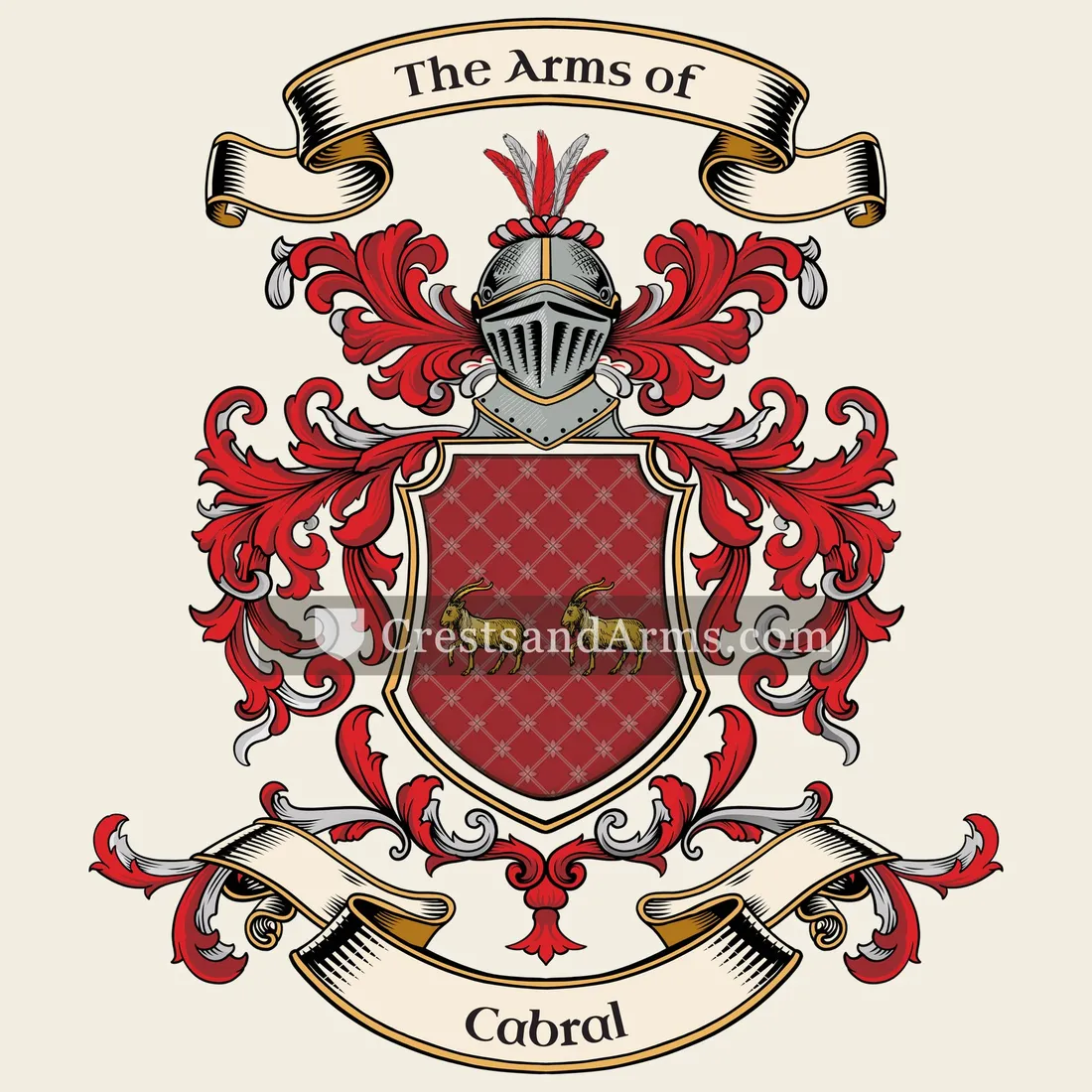
Map of Portugal showing where the Cabral arms are recorded
The Cabral arms were recorded in Portugal, c. 1706.
Arms such as these were typically recorded in Lisboa.
Lisbon was the seat of the Portuguese crown and the port its wealth came through. Families made rich by trade and by service to the king took arms, and the crown's heralds recorded them there.
This is where the arms were entered in the register. Families often moved to other parts of the country, so the same name can turn up in more than one region.
The body that granted and recorded arms in Portugal in this period.
Peter II of Portugal
Sovereign of the period
Peter II of Portugal
1683–1706
Reigning in Portugal when the Cabral arms are first recorded.
How Arms Worked in Portugal
In Portugal, a coat of arms was a family possession that passed from a father to his children. Every legitimate descendant had the right to use the family shield without needing to change it. Younger branches of the family kept the original design, though they sometimes added small symbols to distinguish their specific line from the main branch.
Granting authority
The Cartório da Nobreza acted as the official body that managed and regulated noble titles and coats of arms in Portugal.
How they got arms
Families typically inherited their arms through bloodline, though they could also receive new grants from the crown for distinguished service.
Where arms were recorded
Coats of arms were officially recorded in the books of the Cartório da Nobreza starting in the year 1512.
The family's standing
Recorded among the armigerous families of Portugal.
Origin & History of the Cabral Family in Portugal
The surname Cabral has deep roots in the Iberian Peninsula, originating as a descriptive name that likely referred to a person who herded or traded goats. By the time members of the family were documented in Lisboa in 1706, the name was already well-established within the social and administrative fabric of Portugal. Historically, the family gained prominence through maritime exploration and service to the Portuguese crown, most notably through the voyages of Pedro Álvares Cabral. As the family grew in influence, they became deeply integrated into the urban life of the capital, holding various roles in local government and trade. Their presence in Lisboa during the early eighteenth century reflects a period when the family was transitioning from their origins in the rural nobility to becoming key figures in the bustling commercial and political center of the Portuguese Empire.
Cabral Meaning & Related Branches
Root word
Capra
Latin term for a female goat.
This name
CabralA topographic or habitational name referring to a place where goats were kept or grazed.
also spelled
Kabral
Documented Sources
J. B. Rietstap, Armorial Général, Gouda: G. B. van Goor Zonen, 1884–87
Freitas, Judice de. Os Cabrais. 1920
Sottomayor-Pizarro, José Augusto. Linhagens Medievais Portuguesas: Genealogias e Estratégias. 1999
Arquivo Nacional da Torre do Tombo. Chancelaria de D. João V. 1706
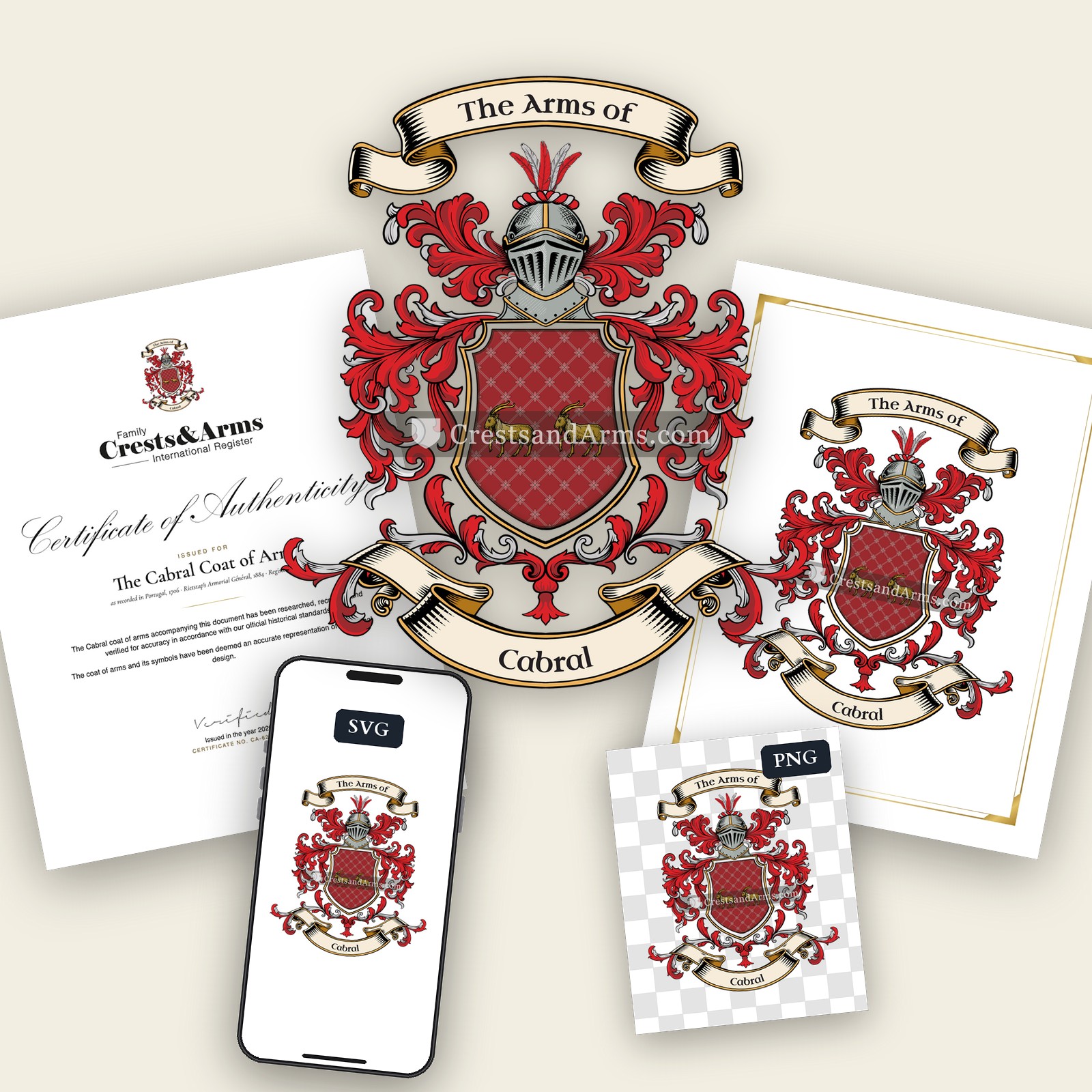
Digital archive packCoat of arms PNG, gold border print PDF, vector SVG and the certificate of authenticity. Sent to your email in minutes.


 goatOne who wins by diplomacy rather than force
 goatOne who wins by diplomacy rather than force