Map of Belgium showing where the Cairy arms are recorded
The Cairy arms were recorded in Bruges, c. 1737.
This is where the arms were entered in the register. Families often moved to other parts of the country, so the same name can turn up in more than one region.
The body that granted and recorded arms in Belgium in this period.
Charles VI, Holy Roman Emperor
Sovereign of the period
Charles VI, Holy Roman Emperor
1711–1740
Reigning in Belgium when the Cairy arms are first recorded.
How Arms Worked in Belgium
In Belgium, a coat of arms is considered personal property that is passed down through the male line to legitimate descendants. Families often use the same shield design across generations to show their shared heritage. If a branch of the family wants to change the design, they must apply for an official update to their specific version of the arms.
Granting authority
The Conseil héraldique is the official body that regulates and approves all coats of arms in Belgium.
How they got arms
Families obtain their coats of arms through formal royal grants or by confirming their historical right to use existing designs.
Where arms were recorded
All approved coats of arms are officially recorded in the public registers of the Conseil héraldique since 1844.
The family's standing
Recorded among the armigerous families of Belgium.
Origin & History of the Cairy Family in Belgium
The history of the Cairy family in Belgium centers on the historic city of Bruges, where records confirm their presence as early as 1737. During the eighteenth century, Bruges was a significant center for trade and craftsmanship, and families like the Cairys often integrated into the local urban economy. The name likely evolved from regional dialects spoken in the Low Countries, reflecting the linguistic shifts common in the Flanders region during that era. As residents of a major commercial hub, early family members would have navigated the complex social structures of a city defined by its guilds and merchant networks. By establishing themselves in Bruges, the Cairy family became part of the long-standing tradition of families who contributed to the civic and daily life of the city throughout the Enlightenment period.
Coat of Arms & Family Crest Details
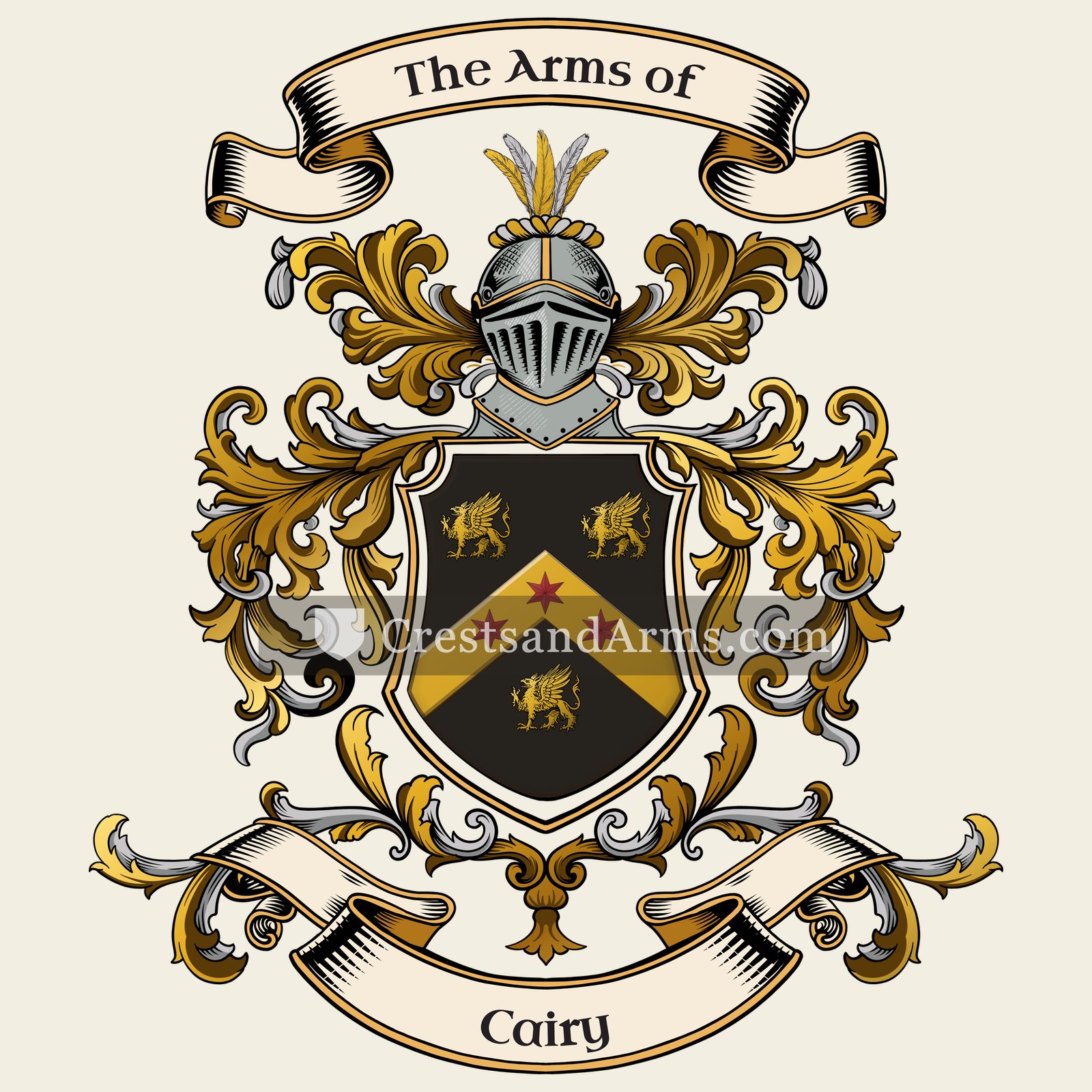
Symbols on this shield
chevronProtection, and faithful service completed
griffinValour and vigilance, guarding great treasure
starThe celestial goddess, and nobility
Colours
Black (Sable)Means: Constancy
Gold (Or)Means: Generosity
Red (Gules)Means: Military strength
Historical info
Source
Sir Bernard Burke, The General Armory of England, Scotland, Ireland and Wales, London: Harrison & Sons, 1884
Blazon (the actual original written record)
“Sa. on a chev. betw. three griffins' heads erased or, as many estoiles gu”
EnglandLondon, c. 1612
Digital archive packCoat of arms PNG, gold border print PDF, vector SVG and the certificate of authenticity. Sent to your email in minutes.
Map of England showing where the Cairy arms are recorded
The Cairy arms were recorded in London, c. 1612.
This is where the arms were entered in the register. Families often moved to other parts of the country, so the same name can turn up in more than one region.
The body that granted and recorded arms in England in this period.
James VI and I
Sovereign of the period
James VI and I
1603–1625
Reigning in Belgium when the Cairy arms are first recorded.
How Arms Worked in England
English heraldry allowed arms to be shared by all legitimate descendants of the original owner. These symbols were treated as personal property that moved through the generations to all children. While the eldest son kept the original design, other family members could use the same shield without needing to change it or register their own unique versions.
Granting authority
The College of Arms in London has regulated the use of coats of arms throughout England and Wales since 1484.
How they got arms
Families typically obtained their coats of arms through a formal grant from the Crown or by proving their ancient right to them.
Where arms were recorded
All official coats of arms are recorded in the registers kept at the College of Arms, which date back to the fifteenth century.
The family's standing
Recorded among the armigerous families of England.
Origin & History of the Cairy Family in England
The family name Cairy emerged within the bustling urban landscape of seventeenth-century London, marking its presence in historical records as early as 1612. During this period, London was a rapidly expanding center of trade and migration, drawing individuals from across the British Isles to seek new opportunities in the capital. The name likely functioned as a locational or occupational identifier, common for families settling into the city’s dense neighborhoods near the Thames. As the family established roots in the city, they became part of the growing merchant and artisan classes that defined London’s social structure during the reign of King James I. By documenting their lives through parish registers and local administrative papers, these early members of the Cairy family helped weave their name into the complex tapestry of English urban history.
Coat of Arms & Family Crest Details
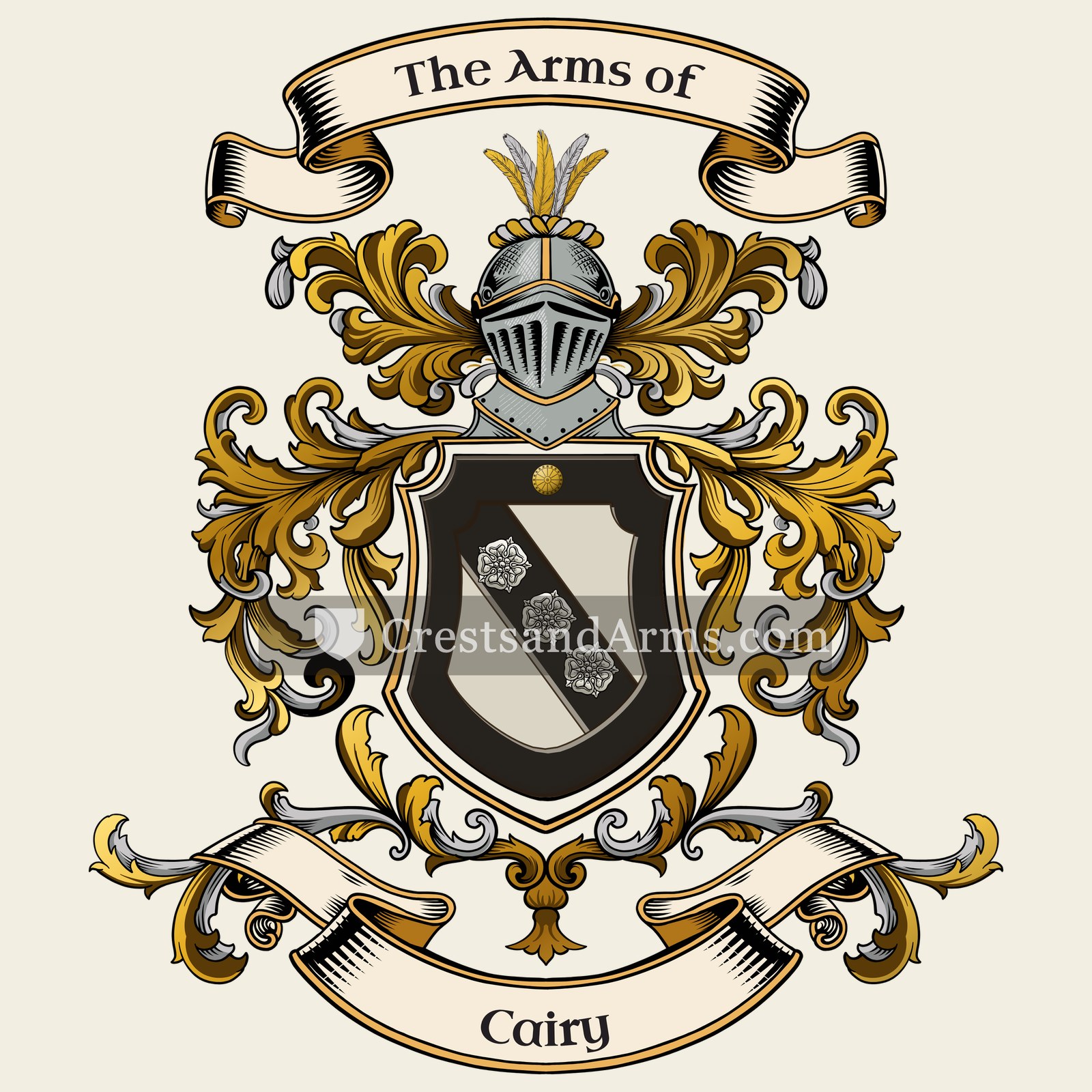
Symbols on this shield
bendDefence, and the scarf of a commander
bordureA difference between branches of one family
roseThe seventh son, and beauty with grace
roundelA coin, and one who has been to the crusades
Colours
Silver (Argent)Means: Peace and sincerity
Black (Sable)Means: Constancy
Gold (Or)Means: Generosity
Historical info
Source
Sir Bernard Burke, The General Armory of England, Scotland, Ireland and Wales, London: Harrison & Sons, 1884
Blazon (the actual original written record)
“Ar. on a bend sa. three roses of the first seeded or, barbed vert a border of the second bezantée”
Irelandc. 1618
Digital archive packCoat of arms PNG, gold border print PDF, vector SVG and the certificate of authenticity. Sent to your email in minutes.
Map of Ireland showing where the Cairy arms are recorded
The Cairy arms were recorded in Ireland, c. 1618.
Arms such as these were typically recorded in Dublin.
Dublin was the seat of government in Ireland and the place where grants were sought and recorded. Families with business at the castle or the courts settled nearby, and settling there put their arms on record.
This is where the arms were entered in the register. Families often moved to other parts of the country, so the same name can turn up in more than one region.
The body that granted and recorded arms in Ireland in this period.
James VI and I
Sovereign of the period
James VI and I
1603–1625
Reigning in Belgium when the Cairy arms are first recorded.
How Arms Worked in Ireland
The Ulster King of Arms granted coats of arms to individuals who proved their social standing and good character. These symbols were typically inherited by all legitimate descendants of the original holder. If a family branch wanted a unique look, they could apply for a specific change to their design through the office to ensure their identity remained distinct.
Granting authority
The Ulster King of Arms acted as the official body that regulated and issued all coats of arms throughout Ireland.
How they got arms
Families obtained their arms through formal grants issued by the office after proving their eligibility and paying the required fees.
Where arms were recorded
All official grants were recorded in the registers held by the Ulster King of Arms starting from the year 1552.
The family's standing
Recorded among the armigerous families of Ireland.
Origin & History of the Cairy Family in Ireland
The family name Cairy has deep roots in the urban landscape of seventeenth-century Ireland, particularly within the bustling port city of Dublin. Official records confirm that members of the family were established residents of the city by 1618, a time when Dublin was rapidly expanding as a center of trade and administration. During this period, the city was a melting pot of local Irish families and settlers from across the Irish Sea, creating a unique environment for those bearing the name to integrate into the professional and mercantile life of the capital. While the name is often associated with specific regional dialects, its presence in Dublin suggests that the family was likely involved in the civic growth of the city during the early modern era. By living in the heart of the Pale, the Cairy family navigated the complex social and political shifts of the time, leaving behind a legacy that is tied to the development of Dublin as a major European hub.
Cairy Meaning & Related Branches
Root word
Carius
Latin name derived from the word for dear or beloved.
This name
CairyA locative or patronymic surname indicating a descendant of one named Carius.
also spelled
Kary
Carie
Caree
Carey
Documented Sources
J. B. Rietstap, Armorial Général, Gouda: G. B. van Goor Zonen, 1884–87
Stadsarchief Brugge, Registers van de Burgerlijke Stand en Parochieregisters
Vandenbussche, L., Brugge in de achttiende eeuw, 1984
Digital archive packCoat of arms PNG, gold border print PDF, vector SVG and the certificate of authenticity. Sent to your email in minutes.


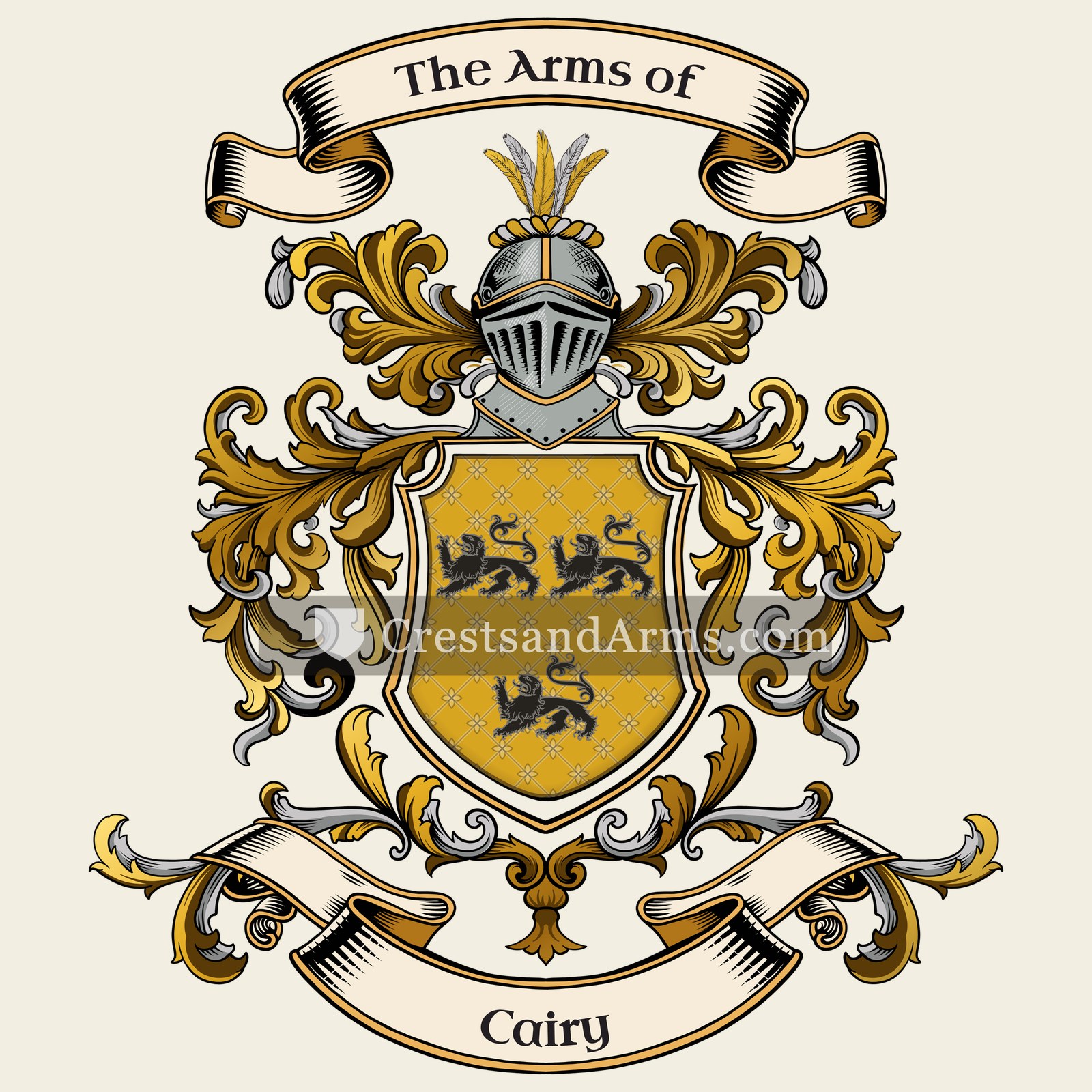
 lionCourage, strength and royalty
 lionCourage, strength and royalty


 chevronProtection, and faithful service completed
 griffinValour and vigilance, guarding great treasure
 starThe celestial goddess, and nobility


 bendDefence, and the scarf of a commander
 bordureA difference between branches of one family
 roseThe seventh son, and beauty with grace
 roundelA coin, and one who has been to the crusades