Map of Spain showing where the Caldas arms are recorded
The Caldas arms were recorded in Catalonia, c. 1722.
Catalonia lived by sea trade, and its merchant houses were as powerful as its landowners. Both sorts of family took arms, and Barcelona kept records of the houses entitled to bear them.
This is where the arms were entered in the register. Families often moved to other parts of the country, so the same name can turn up in more than one region.
The body that granted and recorded arms in Spain in this period.
Philip V of Spain
Sovereign of the period
Philip V of Spain
1714–1724
Reigning in Spain when the Caldas arms are first recorded.
How Arms Worked in Spain
In Spain, a coat of arms was considered a form of property that belonged to the entire family line. These arms were passed down from a father to all his children equally. Younger branches of the family usually kept the original design without needing to add any special marks to distinguish their specific line.
Granting authority
The Cronista Rey de Armas was the official body that regulated and granted coats of arms throughout Spain.
How they got arms
Families often obtained their arms through royal grants or by proving their noble status to the official heraldic authority.
Where arms were recorded
Coats of arms were officially recorded in the registers of the Cronista Rey de Armas starting in 1496.
The family's standing
Recorded among the armigerous families of Catalonia.
Origin & History of the Caldas Family in Spain
The surname Caldas traces its linguistic roots to the Latin word *calidus*, which translates to warm or hot. In the context of early Spanish history, the name was often used as a topographic identifier for families who lived near natural thermal springs or hot mineral baths. By the early 18th century, the family had established a notable presence in the Catalonia region of Spain. During this era, Catalan society was deeply influenced by agricultural land management and local trade guilds. Families like the Caldas often integrated into these rural communities, where their name served as a permanent link to the specific geography of their ancestral lands. Because the region was a crossroads for movement between the Iberian Peninsula and the rest of Europe, the family name became a marker of local identity that persisted through generations of social and economic change.
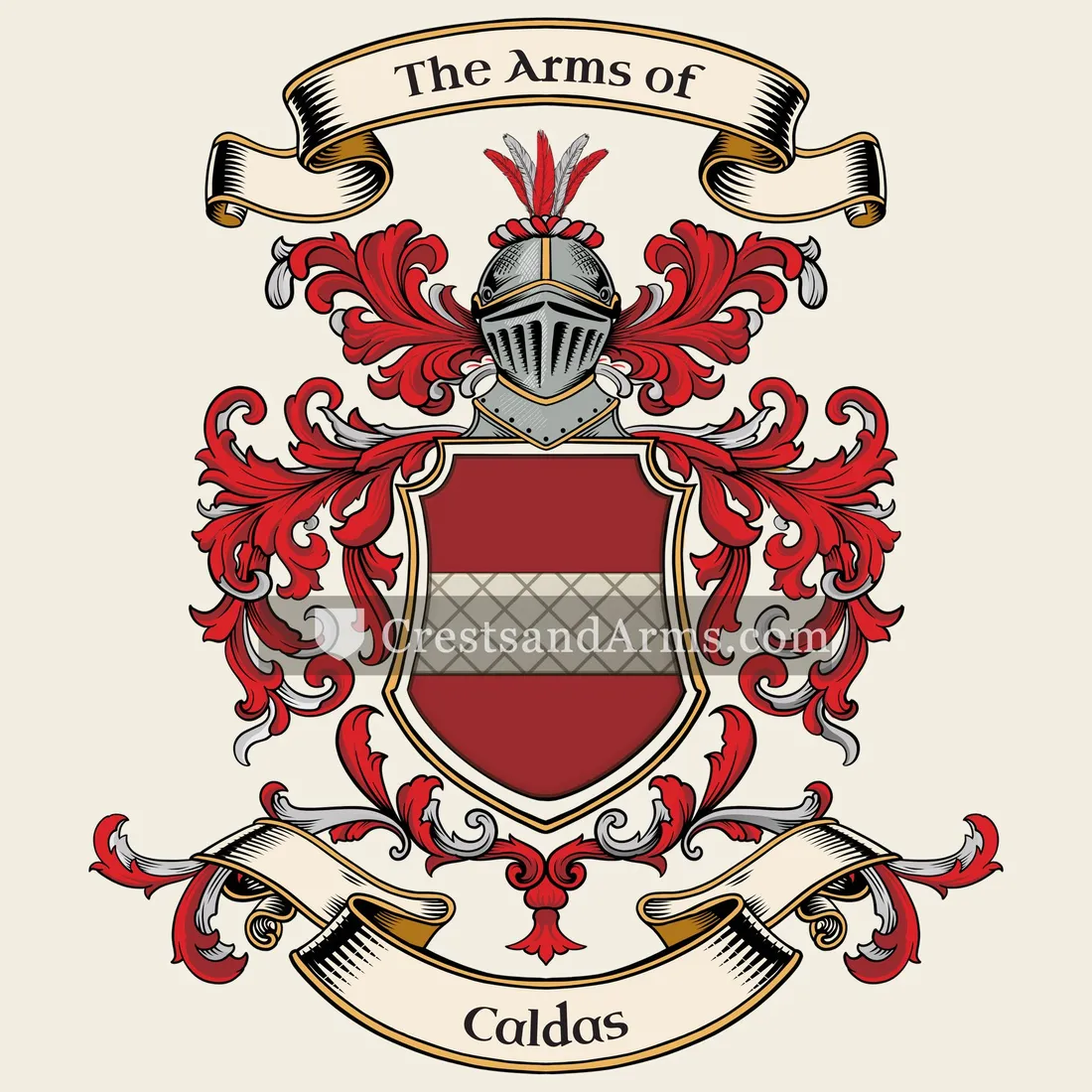
Meaning of the Caldas family crest colors & symbols
Symbols on this shield
fessThe military belt, and readiness to serve
Colours
Red (Gules)Means: Military strength
Silver (Argent)Means: Peace and sincerity
Historical info
Source
J. B. Rietstap, Armorial Général, Gouda: G. B. van Goor Zonen, 1884–87
Blazon (the actual original written record)
“De gu. à la fasce d'arg. C.: une tête et col de licorne de gu., ch. d'une fasce d'arg.”
TyrolTyrol, c. 1772
Digital archive packCoat of arms PNG, gold border print PDF, vector SVG and the certificate of authenticity. Sent to your email in minutes.
Map of Austria showing where the Caldas arms are recorded
The Caldas arms were recorded in Tyrol, c. 1772.
Tyrol was mountain country in western Austria, where the valleys were held by families who had been there a very long time. Old tenure counted for more than money, and old families carried arms.
This is where the arms were entered in the register. Families often moved to other parts of the country, so the same name can turn up in more than one region.
Region
Tyrol
First recorded
1772
Granting Authority for the Caldas Arms
Imperial and Royal chancery
Sodacan · CC BY-SA 3.0
The body that granted and recorded arms in Austria in this period.
Joseph II, Holy Roman Emperor
Sovereign of the period
Joseph II, Holy Roman Emperor
1765–1790
Reigning in Spain when the Caldas arms are first recorded.
How Arms Worked in Austria
Austrian coats of arms were often linked directly to noble titles granted by the Emperor. These symbols belonged to the entire family line rather than just one individual. When a family grew, new branches kept the original design without needing to change it. This system allowed all members of a noble house to share the same identity across many generations.
Granting authority
The Imperial and Royal chancery managed all heraldic matters and controlled the official granting of arms throughout the Austrian lands.
How they got arms
Families typically received their arms through a formal imperial decree that often accompanied the elevation of a person to noble status.
Where arms were recorded
Official records of these grants were kept in the Imperial Register of Nobility which began its formal documentation process in 1453.
The family's standing
Recorded among the armigerous families of Tyrol.
Origin & History of the Caldas Family in Austria
The family name Caldas traces its roots in the Austrian region of Tyrol back to at least 1772, when records first confirm their presence in the area. While the name itself is often associated with Iberian origins, its appearance in the Alpine landscape suggests a history of migration and integration into the local social fabric of the late eighteenth century. During this period, Tyrol served as a vital crossroads for trade and travel between northern and southern Europe, which likely facilitated the movement of families across borders. Settling in this mountainous region, the early members of the Caldas family became part of a community defined by strict local governance and traditional agricultural practices. By establishing themselves in Tyrol, they adapted to the unique cultural and linguistic environment of the Habsburg lands, transitioning from their ancestral background into the distinct historical narrative of the Austrian Tyrol.
Caldas Meaning & Related Branches
Root word
calidus
Latin term meaning warm or hot.
This name
CaldasRefers to a person living near warm springs or thermal waters.
also spelled
Kaldes
Calde
Documented Sources
J. B. Rietstap, Armorial Général, Gouda: G. B. van Goor Zonen, 1884–87
Alcover, Antoni Maria and Moll, Francesc de Borja, Diccionari català-valencià-balear, 1962
Moll, Francesc de Borja, Els llinatges catalans, 1959
Arxiu de la Corona d'Aragó, Generalitat de Catalunya, Registres de la Batllia General
Digital archive packCoat of arms PNG, gold border print PDF, vector SVG and the certificate of authenticity. Sent to your email in minutes.


 cupFaith, office, and a trust discharged
 cupFaith, office, and a trust discharged
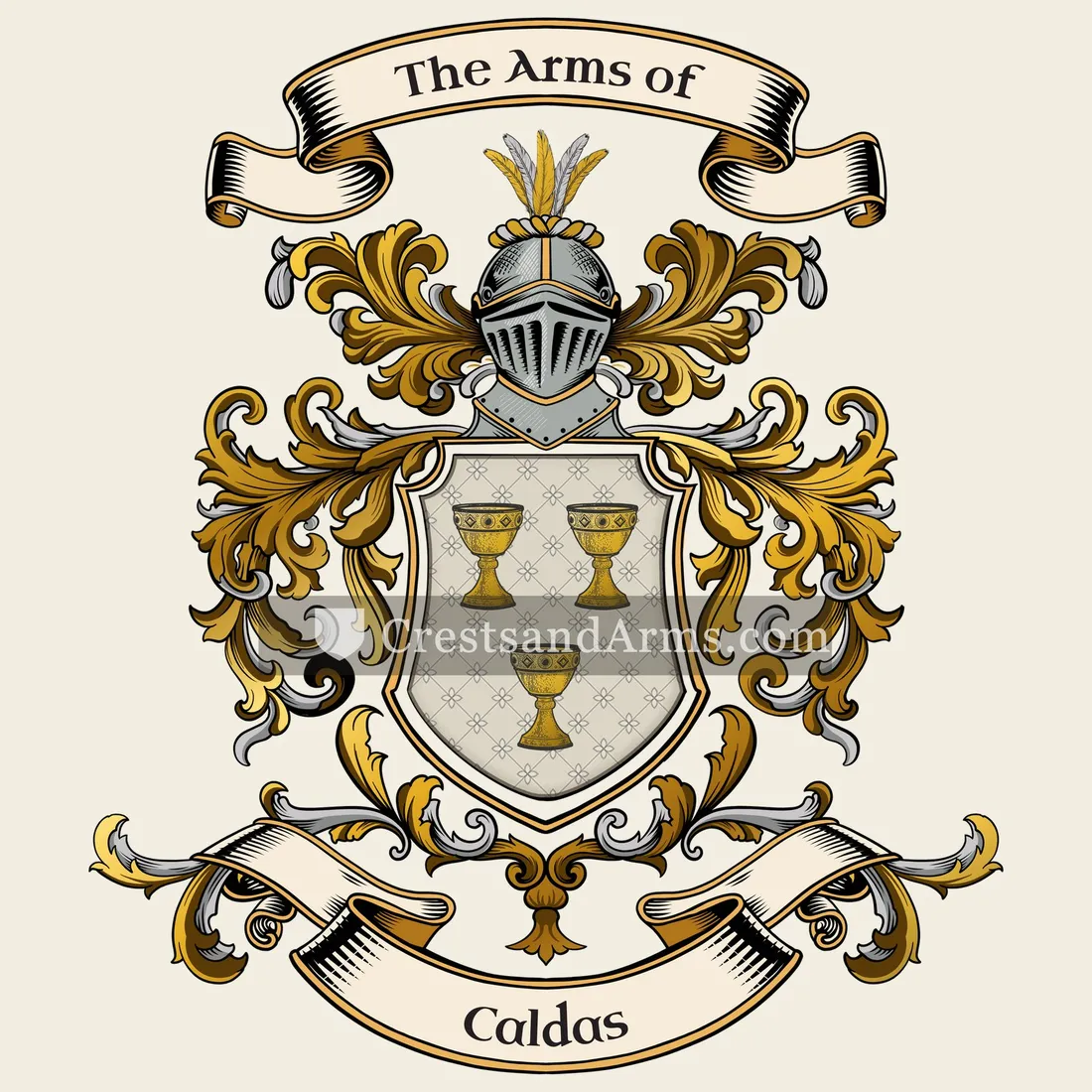


 fessThe military belt, and readiness to serve