Map of Spain showing where the Caldesi arms are recorded
The Caldesi arms were recorded in Catalonia, c. 1722.
Catalonia lived by sea trade, and its merchant houses were as powerful as its landowners. Both sorts of family took arms, and Barcelona kept records of the houses entitled to bear them.
This is where the arms were entered in the register. Families often moved to other parts of the country, so the same name can turn up in more than one region.
The body that granted and recorded arms in Spain in this period.
Philip V of Spain
Sovereign of the period
Philip V of Spain
1714–1724
Reigning in Spain when the Caldesi arms are first recorded.
How Arms Worked in Spain
In Spain, a coat of arms was considered a form of property that belonged to the entire family line. These arms were passed down from a father to all his children equally. Younger branches of the family usually kept the original design without needing to add any special marks to distinguish their specific line.
Granting authority
The Cronista Rey de Armas was the official body that regulated and granted coats of arms throughout Spain.
How they got arms
Families often obtained their arms through royal grants or by proving their noble status to the official heraldic authority.
Where arms were recorded
Coats of arms were officially recorded in the registers of the Cronista Rey de Armas starting in 1496.
The family's standing
Recorded among the armigerous families of Catalonia.
Origin & History of the Caldesi Family in Spain
The family name Caldesi has roots that trace back to the vibrant cultural landscape of Catalonia, where members of the family were documented as early as 1722. During this period, the region was a bustling hub of trade and agricultural development, and families bearing this name were often integrated into the local social fabric of towns and rural parishes. The name itself reflects the linguistic traditions of the Mediterranean, likely evolving from local dialects that defined the identity of families living near the coast or within the inland valleys of northeastern Spain. As these early ancestors navigated the challenges of the eighteenth century, they contributed to the growth of their communities through their work as landowners and tradespeople. Their presence in official records from that time suggests a family that was well-established and active in the daily life of the Catalan provinces, helping to shape the historical narrative of the region long before the modern era.
Meaning of the Caldesi family crest colors & symbols
Symbols on this shield
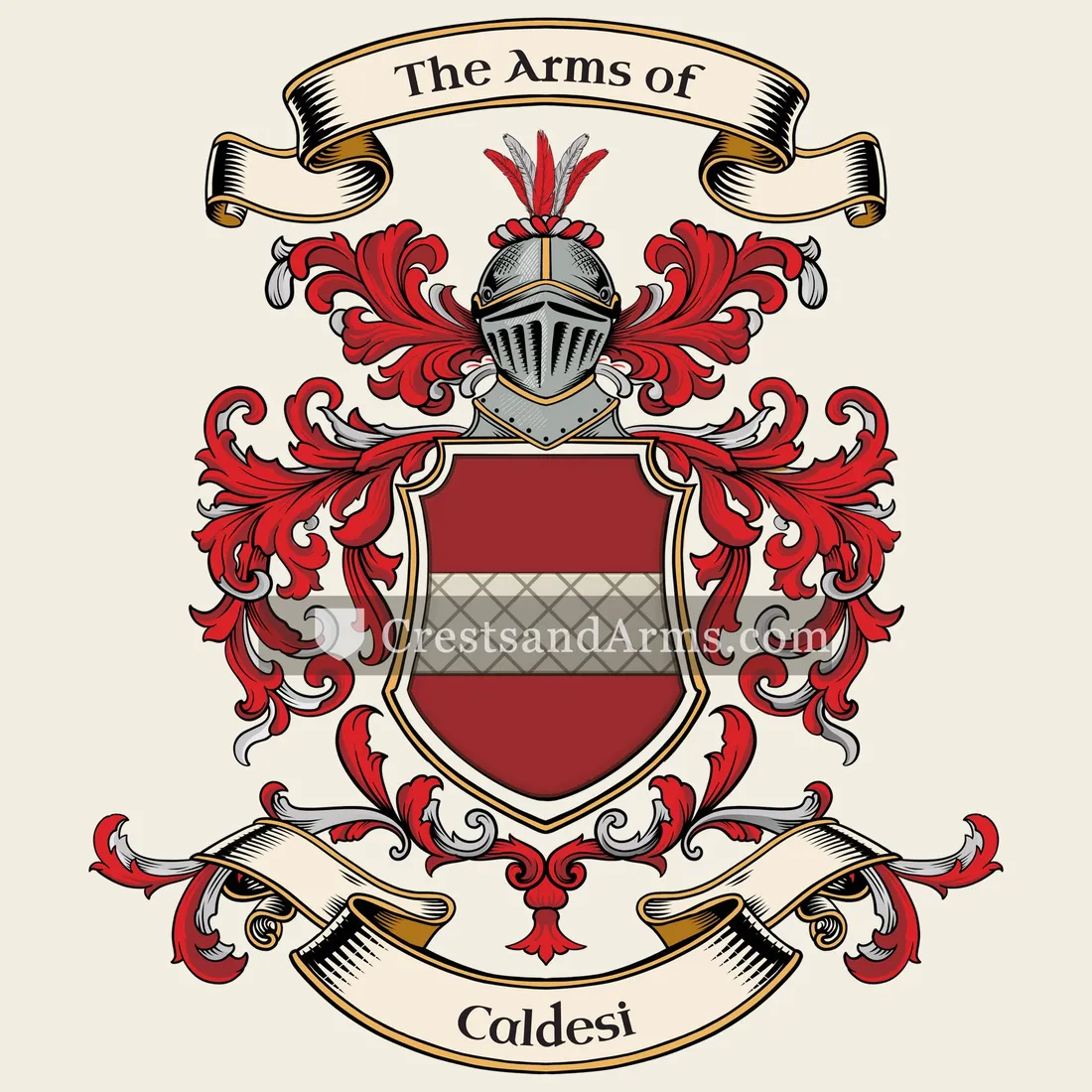
fessThe military belt, and readiness to serve
Colours
Red (Gules)Means: Military strength
Silver (Argent)Means: Peace and sincerity
Historical info
Source
J. B. Rietstap, Armorial Général, Gouda: G. B. van Goor Zonen, 1884–87
Blazon (the actual original written record)
“De gu. à la fasce d'arg. C.: une tête et col de licorne de gu., ch. d'une fasce d'arg.”
TyrolTyrol, c. 1772
Digital archive packCoat of arms PNG, gold border print PDF, vector SVG and the certificate of authenticity. Sent to your email in minutes.
Map of Austria showing where the Caldesi arms are recorded
The Caldesi arms were recorded in Tyrol, c. 1772.
Tyrol was mountain country in western Austria, where the valleys were held by families who had been there a very long time. Old tenure counted for more than money, and old families carried arms.
This is where the arms were entered in the register. Families often moved to other parts of the country, so the same name can turn up in more than one region.
Region
Tyrol
First recorded
1772
Granting Authority for the Caldesi Arms
Imperial and Royal chancery
Sodacan · CC BY-SA 3.0
The body that granted and recorded arms in Austria in this period.
Joseph II, Holy Roman Emperor
Sovereign of the period
Joseph II, Holy Roman Emperor
1765–1790
Reigning in Spain when the Caldesi arms are first recorded.
How Arms Worked in Austria
Austrian coats of arms were often linked directly to noble titles granted by the Emperor. These symbols belonged to the entire family line rather than just one individual. When a family grew, new branches kept the original design without needing to change it. This system allowed all members of a noble house to share the same identity across many generations.
Granting authority
The Imperial and Royal chancery managed all heraldic matters and controlled the official granting of arms throughout the Austrian lands.
How they got arms
Families typically received their arms through a formal imperial decree that often accompanied the elevation of a person to noble status.
Where arms were recorded
Official records of these grants were kept in the Imperial Register of Nobility which began its formal documentation process in 1453.
The family's standing
Recorded among the armigerous families of Tyrol.
Origin & History of the Caldesi Family in Austria
The history of the Caldesi family in the Austrian region of Tyrol begins with their documented presence in the area by 1772. While the name carries strong roots in northern Italy, the family members who settled in the mountainous landscape of Tyrol became integrated into the local social and economic fabric of the Habsburg Empire. During this period, families moving across the border between the Italian states and the Austrian territories often served as vital links for trade and administration. By establishing themselves in Tyrol, the Caldesi family navigated the unique cultural blend of the region, where German and Italian influences met. Their presence in local records from the late 18th century suggests they were part of the steady movement of people who helped shape the diverse identity of the Alpine provinces. Over time, these early ancestors transitioned from being newcomers to becoming established residents within the administrative and social structures of the Austrian Tyrol.
Caldesi Meaning & Related Branches
Root word
caldus
Latin term meaning warm or hot.
This name
CaldesiRefers to someone who lived near a thermal spring or a warm location.
also spelled
Kaldes
Calde
Documented Sources
J. B. Rietstap, Armorial Général, Gouda: G. B. van Goor Zonen, 1884–87
Arxiu de la Corona d'Aragó, Registre de la Reial Audiència de Catalunya
Arxiu Històric de Protocols de Barcelona, Llibres de protocols notarials
García Espuche, Albert, Barcelona 1700: Societat, cultura i vida quotidiana, 2010
Digital archive packCoat of arms PNG, gold border print PDF, vector SVG and the certificate of authenticity. Sent to your email in minutes.


 cupFaith, office, and a trust discharged
 cupFaith, office, and a trust discharged
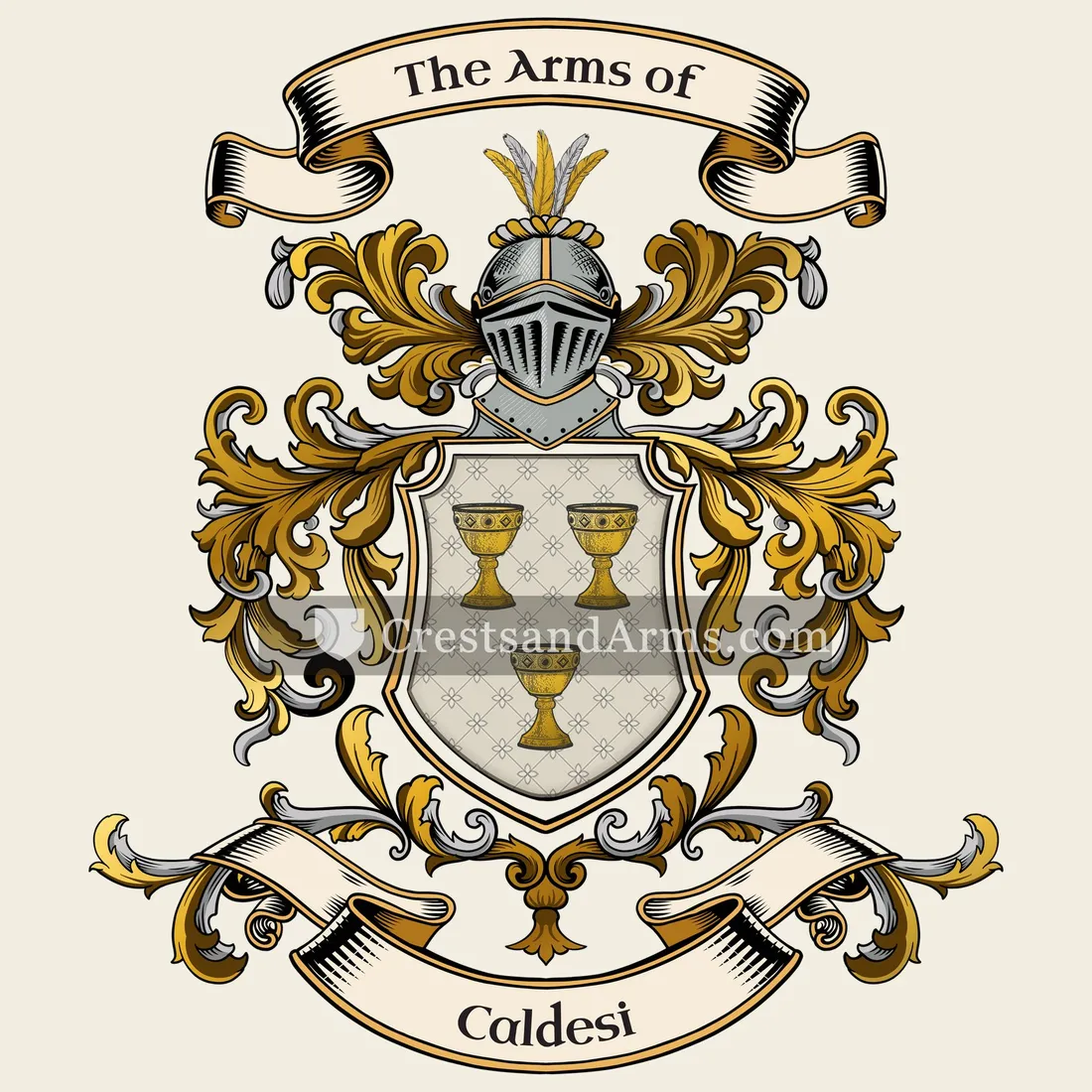


 fessThe military belt, and readiness to serve