Map of Spain showing where the Camara arms are recorded
The Camara arms were recorded in Castile, c. 1722.
Castile was the heart of Spain and the source of most of its noble families. Land won in the long wars against the Moors was granted out to fighting men, and a man granted land was granted arms along with it.
This is where the arms were entered in the register. Families often moved to other parts of the country, so the same name can turn up in more than one region.
The body that granted and recorded arms in Spain in this period.
Philip V of Spain
Sovereign of the period
Philip V of Spain
1714–1724
Reigning in Spain when the Camara arms are first recorded.
How Arms Worked in Spain
In Spain, a coat of arms was considered a form of property that belonged to the entire family line. These arms were passed down from a father to all his children equally. Younger branches of the family usually kept the original design without needing to add any special marks to distinguish their specific line.
Granting authority
The Cronista Rey de Armas was the official body that regulated and granted coats of arms throughout Spain.
How they got arms
Families often obtained their arms through royal grants or by proving their noble status to the official heraldic authority.
Where arms were recorded
Coats of arms were officially recorded in the registers of the Cronista Rey de Armas starting in 1496.
The family's standing
Recorded among the armigerous families of Castile.
Origin & History of the Camara Family in Spain
The surname Camara is deeply rooted in the history of the Iberian Peninsula, originating from the Spanish word for a chamber or a vaulted room. In the medieval period, the name often served as a descriptive title for individuals who served in the royal household or managed the private quarters of a noble estate. By the time the family established a documented presence in the region of Castile in 1722, the name had already transitioned from a professional designation into a hereditary surname passed down through generations. These early Castilian ancestors were part of a society defined by agricultural land ownership and local governance, where families were often tied to specific parishes and regional administrative districts. As the family grew, they became integrated into the social fabric of central Spain, reflecting the broader patterns of migration and settlement that shaped the Castilian landscape during the eighteenth century.
Coat of Arms & Family Crest Details
Symbols on this shield
heartSincerity, charity and true affection
arrowReadiness for battle, and affliction endured
Colours
Gold (Or)Means: Generosity
Red (Gules)Means: Military strength
Historical info
Source
J. B. Rietstap, Armorial Général, Gouda: G. B. van Goor Zonen, 1884–87
Blazon (the actual original written record)
“D'or à un coeur de gu., traversé d'une flèche au nat. en barre, la pointe en bas, cant. de quatre contours de fenêtre carrés”
Austriac. 1772
Digital archive packCoat of arms PNG, gold border print PDF, vector SVG and the certificate of authenticity. Sent to your email in minutes.
Map of Austria showing where the Camara arms are recorded
The Camara arms were recorded in Austria, c. 1772.
Arms such as these were typically recorded in Tyrol.
Tyrol was mountain country in western Austria, where the valleys were held by families who had been there a very long time. Old tenure counted for more than money, and old families carried arms.
This is where the arms were entered in the register. Families often moved to other parts of the country, so the same name can turn up in more than one region.
Region
Tyrol
First recorded
1772
Granting Authority for the Camara Arms
Imperial and Royal chancery
Sodacan · CC BY-SA 3.0
The body that granted and recorded arms in Austria in this period.
Joseph II, Holy Roman Emperor
Sovereign of the period
Joseph II, Holy Roman Emperor
1765–1790
Reigning in Spain when the Camara arms are first recorded.
How Arms Worked in Austria
Austrian coats of arms were often linked directly to noble titles granted by the Emperor. These symbols belonged to the entire family line rather than just one individual. When a family grew, new branches kept the original design without needing to change it. This system allowed all members of a noble house to share the same identity across many generations.
Granting authority
The Imperial and Royal chancery managed all heraldic matters and controlled the official granting of arms throughout the Austrian lands.
How they got arms
Families typically received their arms through a formal imperial decree that often accompanied the elevation of a person to noble status.
Where arms were recorded
Official records of these grants were kept in the Imperial Register of Nobility which began its formal documentation process in 1453.
The family's standing
Recorded among the armigerous families of Austria.
Origin & History of the Camara Family in Austria
The family name Camara possesses a distinct history within the Alpine region of Tyrol, where records confirm the presence of family members as early as 1772. While the name is often associated with Mediterranean origins, its establishment in the mountainous landscape of western Austria suggests a history of migration and integration into local communities. During the late 18th century, Tyrol served as a vital crossroads for trade and travel between the Italian states and the German-speaking lands. Families like the Camaras likely settled in these high-altitude valleys to participate in the regional economy, which relied heavily on agriculture, mining, and the movement of goods across mountain passes. By maintaining a presence in Tyrol, these early ancestors became part of a unique cultural tapestry that blended diverse European influences with the rugged traditions of the Austrian Alps.
Coat of Arms & Family Crest Details
Symbols on this shield
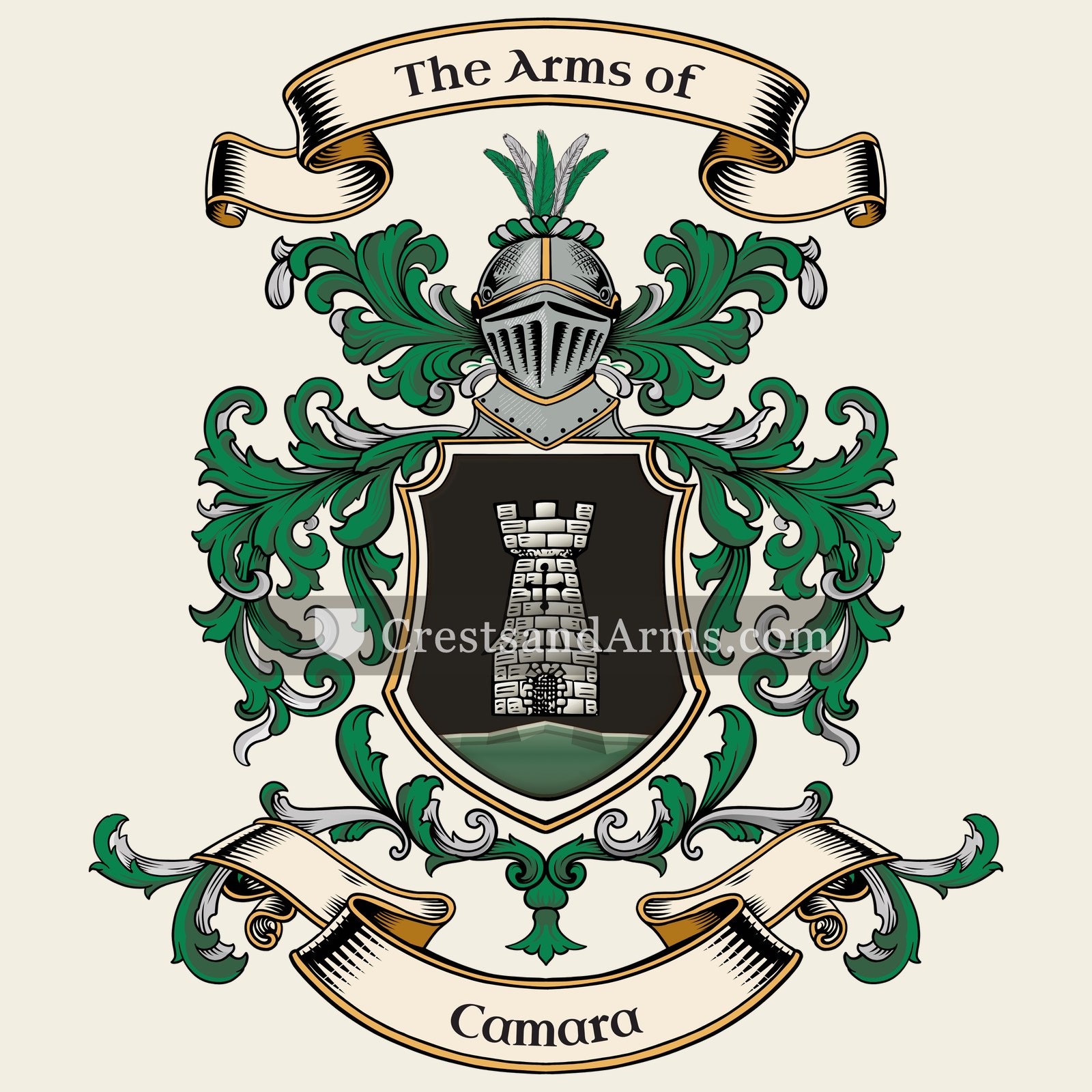
mountThe ground held, and steadfastness upon it
towerGrandeur and solidity, and a stronghold defended
Colours
Black (Sable)Means: Constancy
Silver (Argent)Means: Peace and sincerity
Historical info
Source
J. B. Rietstap, Armorial Général, Gouda: G. B. van Goor Zonen, 1884–87
Blazon (the actual original written record)
“De sa. à une tour sommée d'une tourelle d'arg., accostée de deux lévriers affr. du même, ramp. contre la tour, le tout soutenu d'une terrasse de sin.”
Portugalc. 1706
Digital archive packCoat of arms PNG, gold border print PDF, vector SVG and the certificate of authenticity. Sent to your email in minutes.
Map of Portugal showing where the Camara arms are recorded
The Camara arms were recorded in Portugal, c. 1706.
Arms such as these were typically recorded in Lisboa.
Lisbon was the seat of the Portuguese crown and the port its wealth came through. Families made rich by trade and by service to the king took arms, and the crown's heralds recorded them there.
This is where the arms were entered in the register. Families often moved to other parts of the country, so the same name can turn up in more than one region.
The body that granted and recorded arms in Portugal in this period.
Peter II of Portugal
Sovereign of the period
Peter II of Portugal
1683–1706
Reigning in Spain when the Camara arms are first recorded.
How Arms Worked in Portugal
In Portugal, a coat of arms was a family possession that passed from a father to his children. Every legitimate descendant had the right to use the family shield without needing to change it. Younger branches of the family kept the original design, though they sometimes added small symbols to distinguish their specific line from the main branch.
Granting authority
The Cartório da Nobreza acted as the official body that managed and regulated noble titles and coats of arms in Portugal.
How they got arms
Families typically inherited their arms through bloodline, though they could also receive new grants from the crown for distinguished service.
Where arms were recorded
Coats of arms were officially recorded in the books of the Cartório da Nobreza starting in the year 1512.
The family's standing
Recorded among the armigerous families of Portugal.
Origin & History of the Camara Family in Portugal
The surname Camara traces its roots to the architectural landscape of medieval Portugal, where the term originally referred to a stone chamber or a private room within a royal palace. Families who adopted this name often served in positions of administrative or domestic importance within the royal household, establishing their status in the urban centers of the kingdom. By the early eighteenth century, records confirm that members of the Camara family were well-established residents of Lisboa. During this period, the city was the heart of the Portuguese Empire, and these families were frequently involved in the civic and social life of the capital. Their presence in Lisboa suggests they were part of a growing class of citizens who helped manage the city’s affairs during a time of significant economic expansion and architectural growth.
Camara Meaning & Related Branches
Root word
Camera
Latin term for a vaulted chamber, arched roof, or room.
This name
CamaraA topographic name for someone who lived near or worked in a vaulted room or chamber.
also spelled
Kamara
Documented Sources
J. B. Rietstap, Armorial Général, Gouda: G. B. van Goor Zonen, 1884–87
Moll, Francesc de Borja, Els llinatges catalans, 1959
Pescador del Hoyo, María del Carmen, Apellidos en España, 1996
Archivo General de Simancas, Registro del Sello de Corte
Archivo Histórico Nacional, Sección Nobleza
Digital archive packCoat of arms PNG, gold border print PDF, vector SVG and the certificate of authenticity. Sent to your email in minutes.


 saltire coupedResolution, and the cross of St Andrew
 saltire coupedResolution, and the cross of St Andrew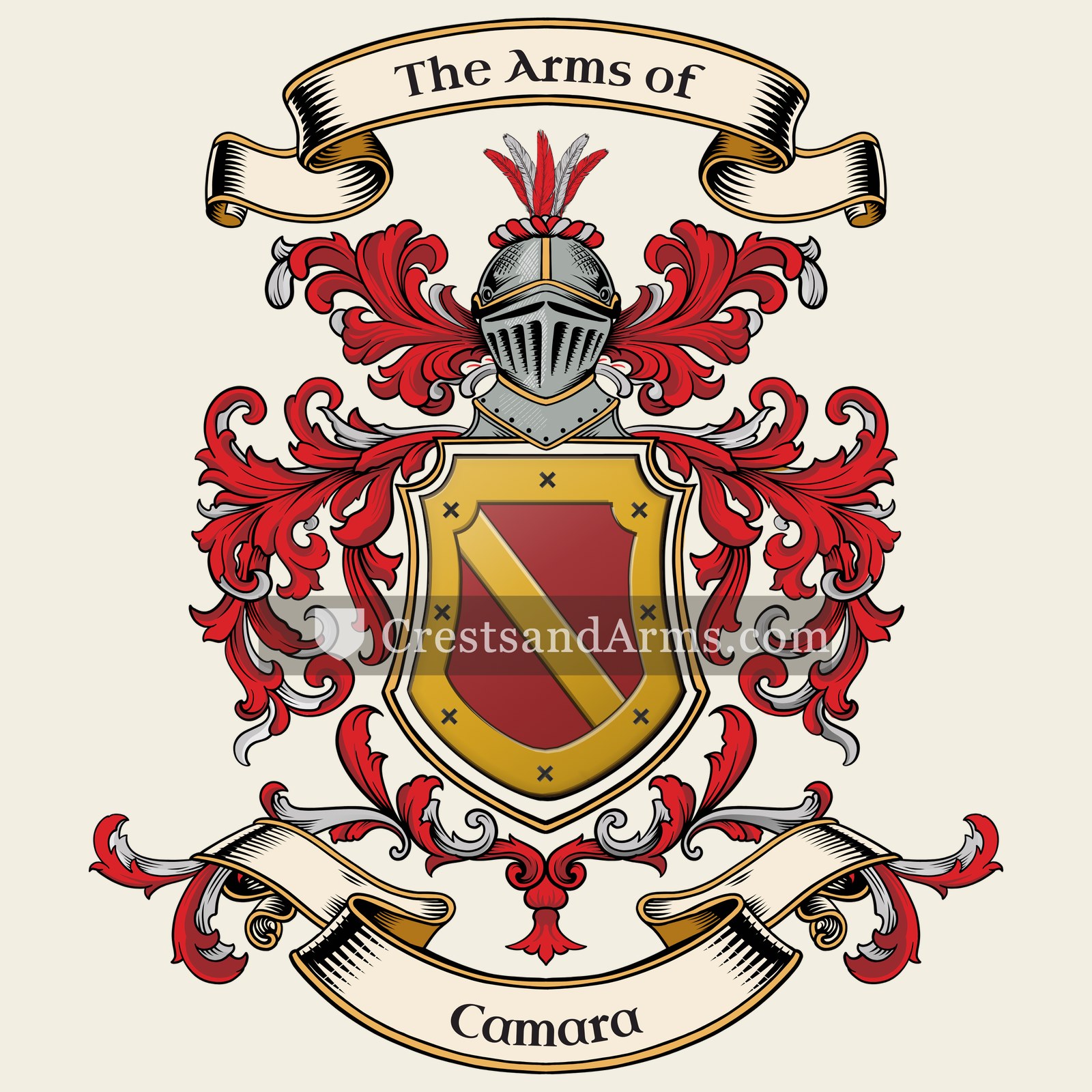


 heartSincerity, charity and true affection
 arrowReadiness for battle, and affliction endured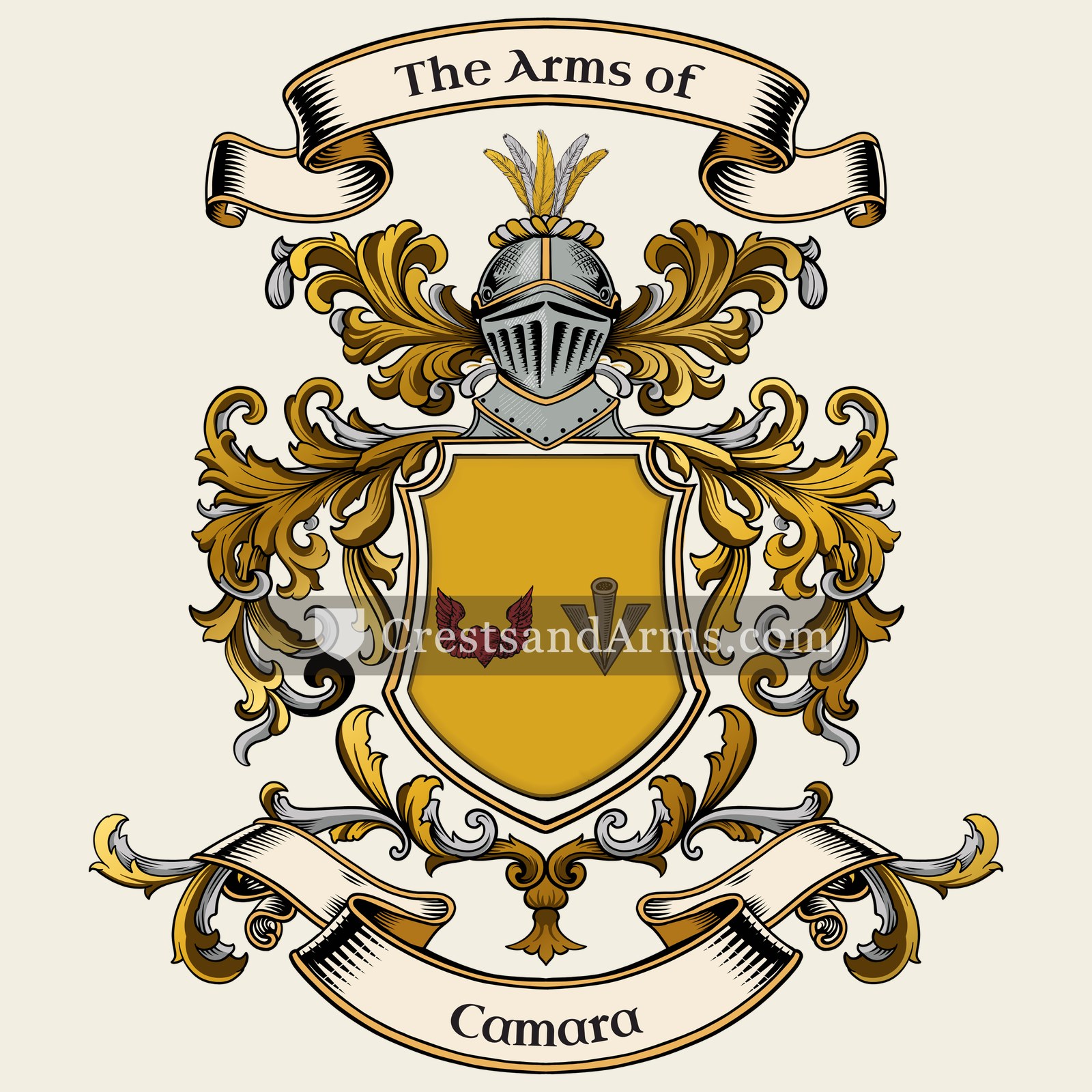


 mountThe ground held, and steadfastness upon it
 towerGrandeur and solidity, and a stronghold defended