Map of Netherlands showing where the Camp arms are recorded
The Camp arms were recorded in Guelders, c. 1815.
Guelders was river country in the east of the Netherlands, held by families whose estates sat along the water. Land there stayed in the same hands for generations, and long tenure is what fills a register of arms.
This is where the arms were entered in the register. Families often moved to other parts of the country, so the same name can turn up in more than one region.
Region
Guelders
First recorded
1815
Granting Authority for the Camp Arms
Hoge Raad van Adel
Photograph made by me · CC BY-SA 3.0
The body that granted and recorded arms in Netherlands in this period.
William I of the Netherlands
Sovereign of the period
William I of the Netherlands
1815–1840
Reigning in Netherlands when the Camp arms are first recorded.
How Arms Worked in Netherlands
In the Netherlands, coats of arms were often used by noble families and those who held specific public offices. These arms were passed down through the generations to legitimate descendants. Younger branches of a family usually kept the original design without needing to add special marks. This system ensured that the family identity remained clear and consistent over many years.
Granting authority
The Hoge Raad van Adel is the official body that regulates and manages noble titles and coats of arms in the Netherlands.
How they got arms
Families typically obtained their coats of arms through official royal grants or by proving their long-standing historical use of the symbols.
Where arms were recorded
Coats of arms are officially recorded in the registers held by the Hoge Raad van Adel, which began its work in 1814.
The family's standing
Recorded among the armigerous families of Guelders.
Origin & History of the Camp Family in Netherlands
The surname Camp is a topographic name, which means it was originally given to people based on the land where they lived. In the Dutch language, the word *kamp* refers to an enclosed piece of land, a field, or a fenced-off area used for agriculture. During the early history of the Netherlands, families often adopted names that described their surroundings or their specific trade. By the time official records confirm the presence of the Camp family in the province of Guelders in 1815, the name had likely been used for generations to identify those who worked or owned these specific types of fields. Because Guelders was a region defined by its rural landscape and farming traditions, the name served as a practical way to distinguish one family from another within the local community. Over time, as families moved and records became more standardized, this simple description of a field evolved into a permanent hereditary surname passed down through the generations.
Meaning of the Camp family crest colors & symbols
Symbols on this shield
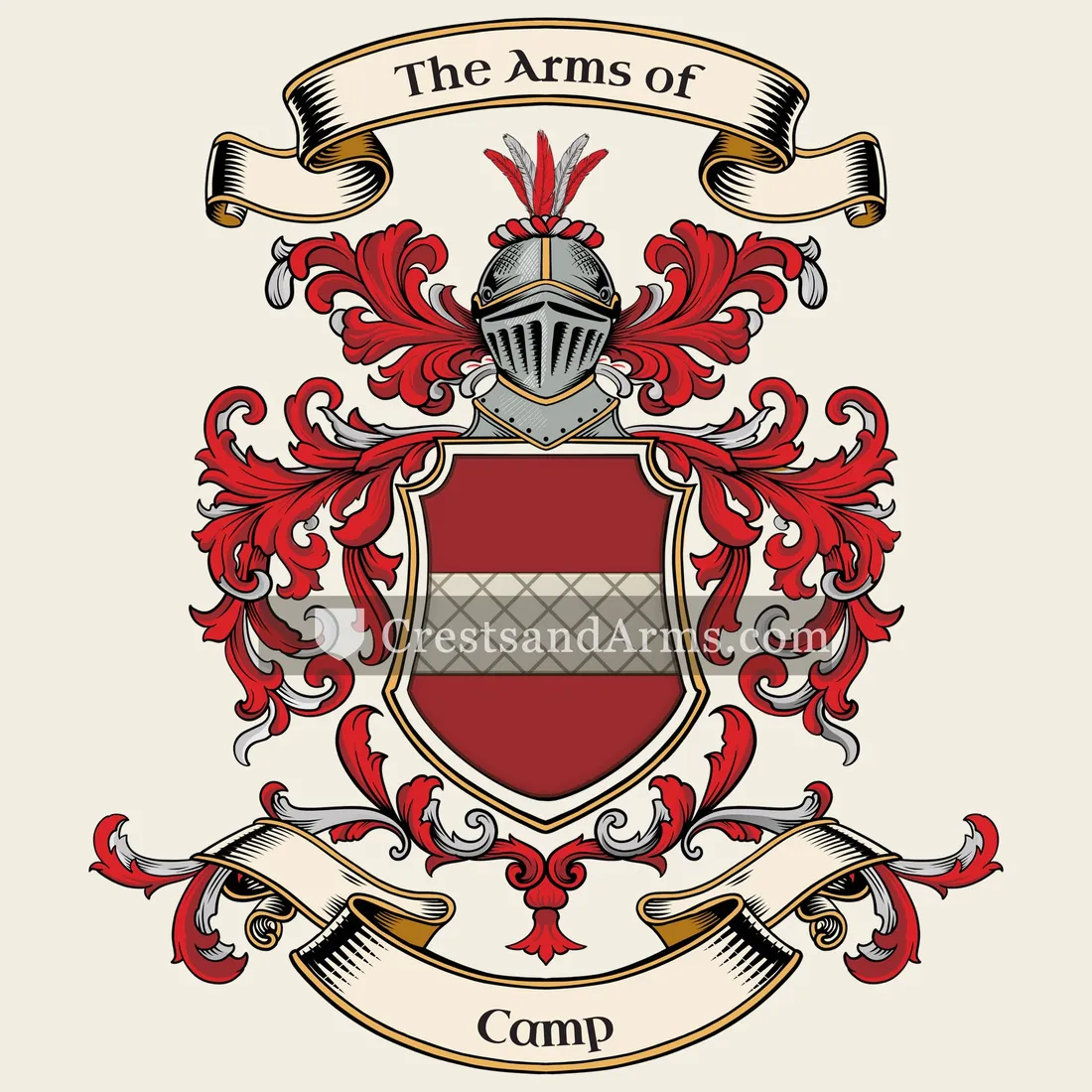
fessThe military belt, and readiness to serve
Colours
Red (Gules)Means: Military strength
Silver (Argent)Means: Peace and sincerity
Historical info
Source
J. B. Rietstap, Armorial Général, Gouda: G. B. van Goor Zonen, 1884–87
Blazon (the actual original written record)
“De gu. à la fasce d'arg. C.: deux cornes de buffle, aux armes de l'écu.”
TyrolTyrol, c. 1772
Digital archive packCoat of arms PNG, gold border print PDF, vector SVG and the certificate of authenticity. Sent to your email in minutes.
Map of Austria showing where the Camp arms are recorded
The Camp arms were recorded in Tyrol, c. 1772.
Tyrol was mountain country in western Austria, where the valleys were held by families who had been there a very long time. Old tenure counted for more than money, and old families carried arms.
This is where the arms were entered in the register. Families often moved to other parts of the country, so the same name can turn up in more than one region.
Region
Tyrol
First recorded
1772
Granting Authority for the Camp Arms
Imperial and Royal chancery
Sodacan · CC BY-SA 3.0
The body that granted and recorded arms in Austria in this period.
Joseph II, Holy Roman Emperor
Sovereign of the period
Joseph II, Holy Roman Emperor
1765–1790
Reigning in Netherlands when the Camp arms are first recorded.
How Arms Worked in Austria
Austrian coats of arms were often linked directly to noble titles granted by the Emperor. These symbols belonged to the entire family line rather than just one individual. When a family grew, new branches kept the original design without needing to change it. This system allowed all members of a noble house to share the same identity across many generations.
Granting authority
The Imperial and Royal chancery managed all heraldic matters and controlled the official granting of arms throughout the Austrian lands.
How they got arms
Families typically received their arms through a formal imperial decree that often accompanied the elevation of a person to noble status.
Where arms were recorded
Official records of these grants were kept in the Imperial Register of Nobility which began its formal documentation process in 1453.
The family's standing
Recorded among the armigerous families of Tyrol.
Origin & History of the Camp Family in Austria
The family name Camp has deep roots in the mountainous landscape of the Austrian Tyrol, where records confirm members of the family were established by 1772. During this period, the region was characterized by small, isolated alpine communities that relied heavily on agriculture and trade routes connecting the Italian peninsula to the north. Families with this name likely lived as independent farmers or skilled tradespeople who adapted to the rugged terrain of the Eastern Alps. Because the name is short and phonetically simple, it often appeared in local parish registers and tax documents as families moved between mountain valleys to find better grazing land or work in the growing timber industry. These early ancestors were part of a resilient population that navigated the complex social and political shifts of the Habsburg Empire while maintaining a strong connection to their local village life in the heart of the Tyrol.
Camp Meaning & Related Branches
Root word
campus
A Latin term referring to an open field or level ground.
This name
CampA topographic name for someone who lived near or worked on a field or enclosed land.
also spelled
Kampe
Kamp
Related arms
Bichelseesame arms
Kampvariant spelling
Kampevariant spelling
Documented Sources
J. B. Rietstap, Armorial Général, Gouda: G. B. van Goor Zonen, 1884–87
Leendert Brouwer, Nederlandse Familienamen Databank, 2000
P.J. Meertens, De betekenis van Nederlandse familienamen, 1970
Gelders Archief, Burgerlijke Stand in Gelderland (1811-1950)
Digital archive packCoat of arms PNG, gold border print PDF, vector SVG and the certificate of authenticity. Sent to your email in minutes.


 mountThe ground held, and steadfastness upon it
 treeLife, endurance and deep roots
 mountThe ground held, and steadfastness upon it
 treeLife, endurance and deep roots
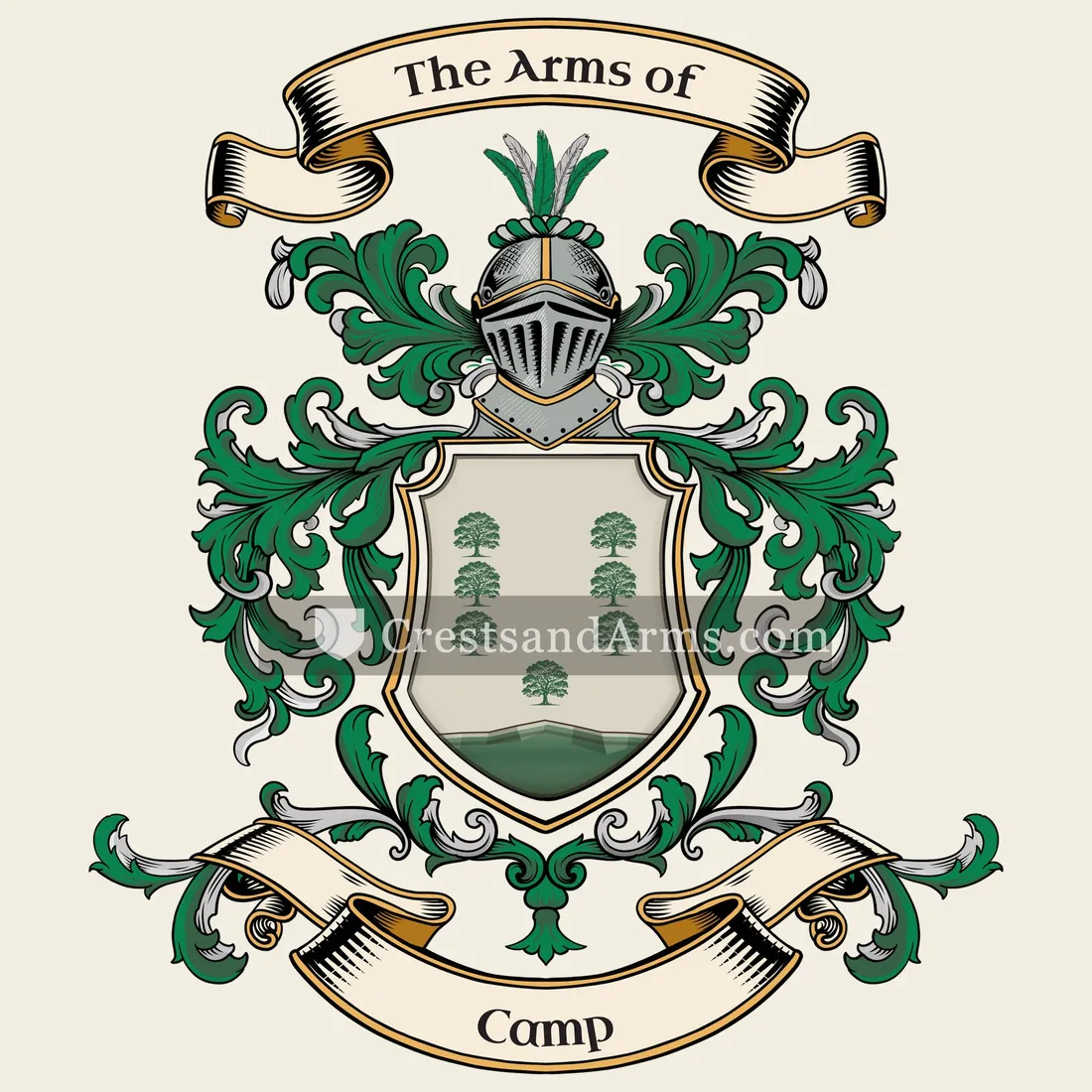


 fessThe military belt, and readiness to serve