Map of Spain showing where the Campo arms are recorded
The Campo arms were recorded in Castile, c. 1722.
Castile was the heart of Spain and the source of most of its noble families. Land won in the long wars against the Moors was granted out to fighting men, and a man granted land was granted arms along with it.
This is where the arms were entered in the register. Families often moved to other parts of the country, so the same name can turn up in more than one region.
The body that granted and recorded arms in Spain in this period.
Philip V of Spain
Sovereign of the period
Philip V of Spain
1714–1724
Reigning in Spain when the Campo arms are first recorded.
How Arms Worked in Spain
In Spain, a coat of arms was considered a form of property that belonged to the entire family line. These arms were passed down from a father to all his children equally. Younger branches of the family usually kept the original design without needing to add any special marks to distinguish their specific line.
Granting authority
The Cronista Rey de Armas was the official body that regulated and granted coats of arms throughout Spain.
How they got arms
Families often obtained their arms through royal grants or by proving their noble status to the official heraldic authority.
Where arms were recorded
Coats of arms were officially recorded in the registers of the Cronista Rey de Armas starting in 1496.
The family's standing
Recorded among the armigerous families of Castile.
Origin & History of the Campo Family in Spain
The surname Campo is a topographic name that originated from the Latin word campus, which refers to an open field or a stretch of flat land. In the context of medieval Spain, this name was often given to families who lived near or worked on the rural plains surrounding growing villages. By the time members of the family were documented in the region of Castile in 1722, the name had already become well-established among the local population. These early ancestors likely played a role in the agricultural life of the Castilian plateau, which was the heart of the Spanish kingdom at that time. As the family grew, they became part of the social fabric of the rural provinces, where their name served as a direct link to the landscape they cultivated for generations.
Coat of Arms & Family Crest Details
Symbols on this shield
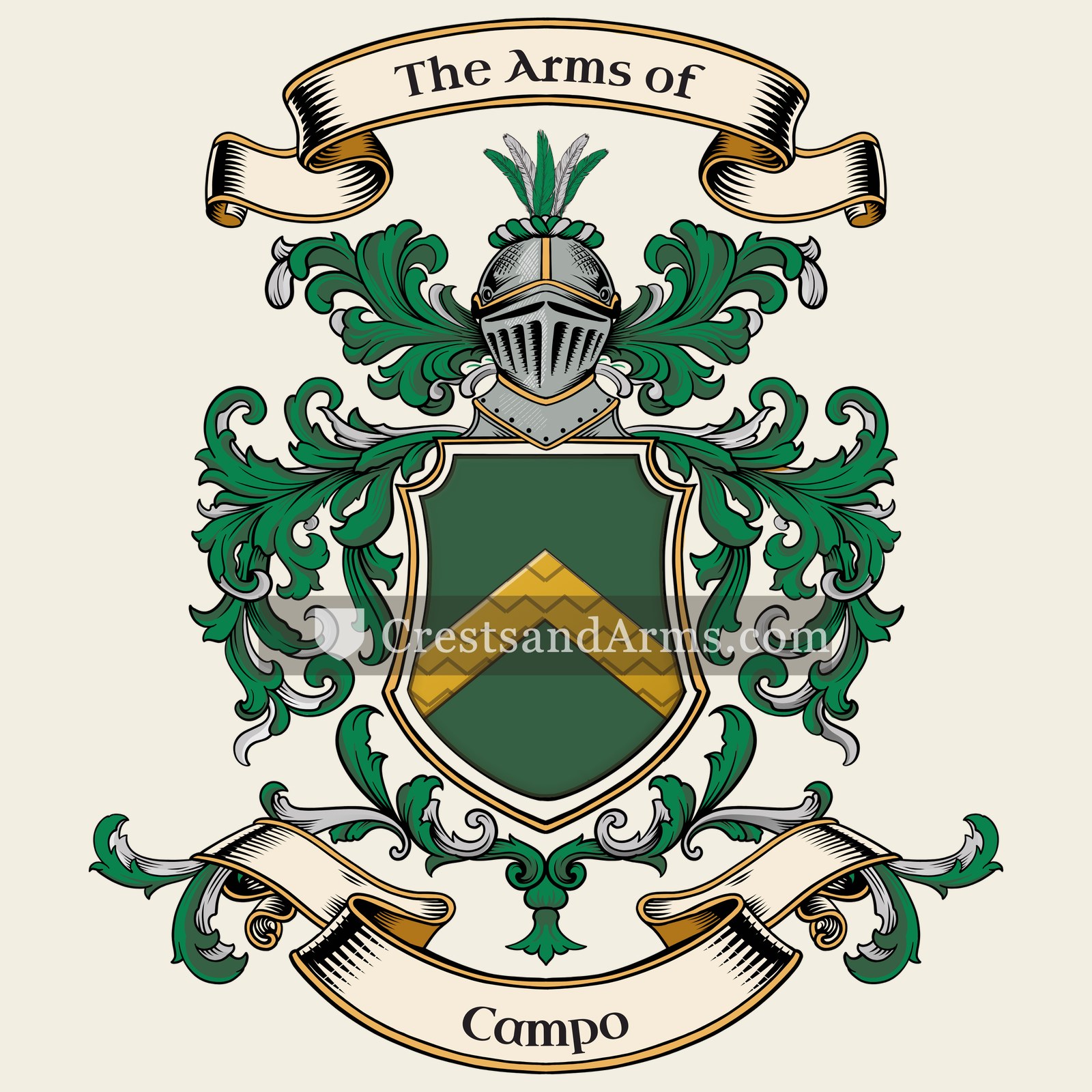
chevronProtection, and faithful service completed
Colours
Gold (Or)Means: Generosity
Historical info
Source
J. B. Rietstap, Armorial Général, Gouda: G. B. van Goor Zonen, 1884–87
Blazon (the actual original written record)
“De sin. au chev. d'or.”
Belgiumc. 1737
Digital archive packCoat of arms PNG, gold border print PDF, vector SVG and the certificate of authenticity. Sent to your email in minutes.
Map of Belgium showing where the Campo arms are recorded
The Campo arms were recorded in Belgium, c. 1737.
Arms such as these were typically recorded in Brabant.
Brabant lay at the heart of the Low Countries, where the trade routes met. Its towns were wealthy and its landowners many, and both kinds of family kept arms, which is why the region is so heavily represented.
This is where the arms were entered in the register. Families often moved to other parts of the country, so the same name can turn up in more than one region.
The body that granted and recorded arms in Belgium in this period.
Charles VI, Holy Roman Emperor
Sovereign of the period
Charles VI, Holy Roman Emperor
1711–1740
Reigning in Spain when the Campo arms are first recorded.
How Arms Worked in Belgium
In Belgium, a coat of arms is considered personal property that is passed down through the male line to legitimate descendants. Families often use the same shield design across generations to show their shared heritage. If a branch of the family wants to change the design, they must apply for an official update to their specific version of the arms.
Granting authority
The Conseil héraldique is the official body that regulates and approves all coats of arms in Belgium.
How they got arms
Families obtain their coats of arms through formal royal grants or by confirming their historical right to use existing designs.
Where arms were recorded
All approved coats of arms are officially recorded in the public registers of the Conseil héraldique since 1844.
The family's standing
Recorded among the armigerous families of Belgium.
Origin & History of the Campo Family in Belgium
The family name Campo has deep roots in the historical region of Brabant, where records confirm members of the family were living as early as 1737. During the eighteenth century, Brabant was a central hub for trade and agriculture within the Southern Netherlands, and families like the Campos often played active roles in the local economy. The name itself is linked to the Latin word for field, which suggests that the earliest ancestors likely worked as farmers or landowners who managed the fertile plains of the region. As the family grew, they became part of the social fabric of the local towns, contributing to the development of their communities through their labor and daily interactions. By settling in this area, the family helped shape the rural and urban landscapes that defined the Belgian provinces during a time of significant transition.
Coat of Arms & Family Crest Details
Symbols on this shield
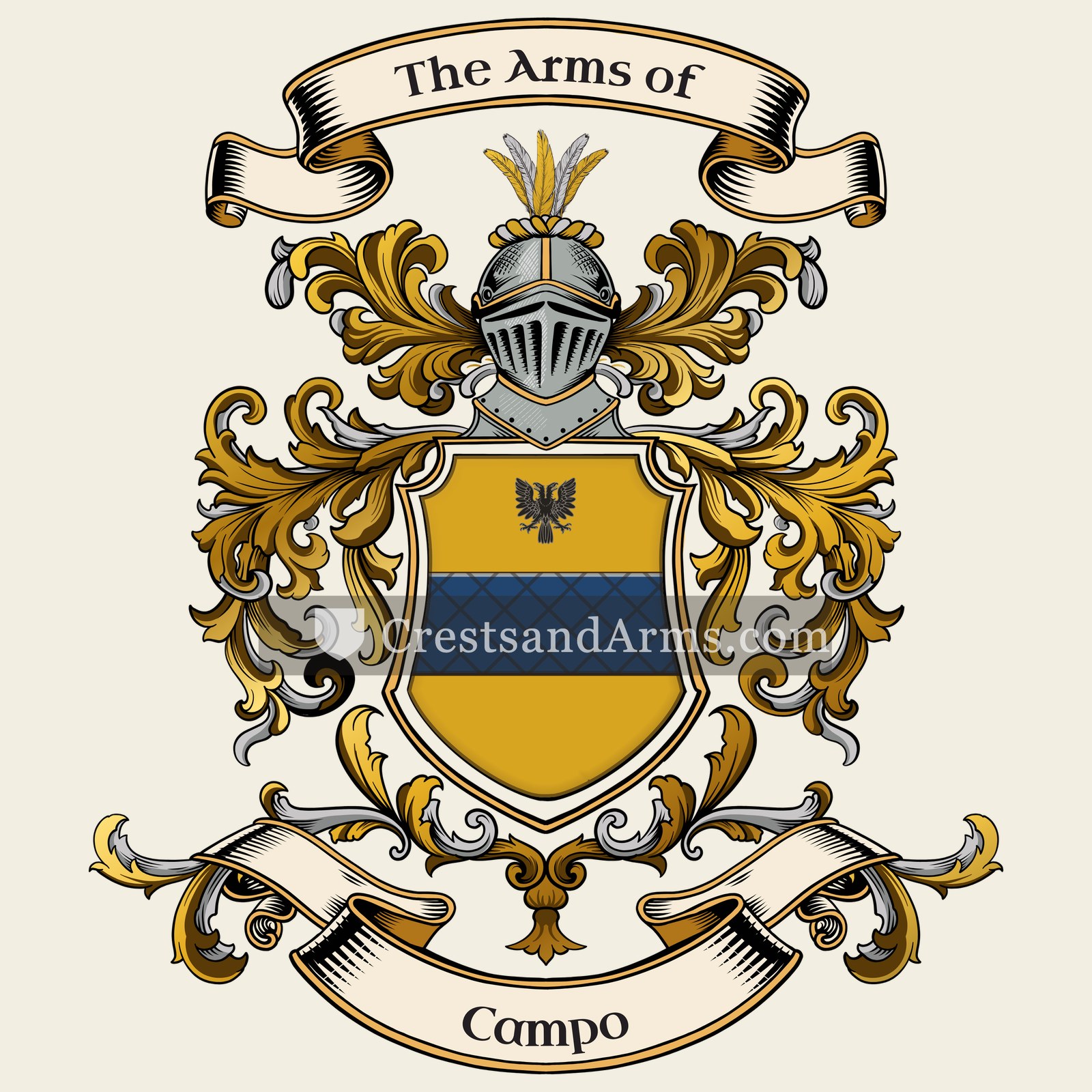
fessThe military belt, and readiness to serve
eagleNobility, strength and a keen mind
Colours
Gold (Or)Means: Generosity
Blue (Azure)Means: Loyalty and truth
Black (Sable)Means: Constancy
Historical info
Source
J. B. Rietstap, Armorial Général, Gouda: G. B. van Goor Zonen, 1884–87
Blazon (the actual original written record)
“D'or à la fasce d'azur, acc. en chef d'une aigle de sa., bq. et m. de gu.”
Italyc. 1775
Digital archive packCoat of arms PNG, gold border print PDF, vector SVG and the certificate of authenticity. Sent to your email in minutes.
Map of Italy showing where the Campo arms are recorded
The Campo arms were recorded in Italy, c. 1775.
Arms such as these were typically recorded in Venice.
Venice ran on trade, and its great families were merchants before they were anything else. The city kept a formal list of its noble houses, and a name on that list carried arms as a matter of record.
This is where the arms were entered in the register. Families often moved to other parts of the country, so the same name can turn up in more than one region.
The body that granted and recorded arms in Italy in this period.
Alvise Giovanni Mocenigo
Sovereign of the period
Alvise Giovanni Mocenigo
1763–1778
Reigning in Spain when the Campo arms are first recorded.
How Arms Worked in Italy
In the Italian states, coats of arms were often used by noble families to show their status and history. These symbols were passed down through the generations to all legitimate male descendants. Younger branches of a family usually kept the original design but sometimes added small changes to distinguish their specific line from the main branch.
Granting authority
Various local rulers and city governments controlled the use of coats of arms across the different Italian states.
How they got arms
Families often assumed their own arms or received them as official grants from local lords, popes, or city councils.
Where arms were recorded
Arms were recorded in local city archives or private family books rather than in one single national register.
The family's standing
Recorded among the armigerous families of Italy.
Origin & History of the Campo Family in Italy
The name Campo finds its roots in the Latin word campus, which translates to field or open land. In the context of Italian history, this surname often identified families who lived near a prominent public square or worked on agricultural plains. By the time the family was documented in Venice in 1775, the name had already been established for centuries across various Italian regions as a way to describe a person's connection to their local geography. In the bustling environment of eighteenth-century Venice, families bearing this name were often integrated into the city’s complex social fabric, participating in the trade and civic life that defined the Republic. Because the name is tied to the landscape itself, it reflects a long history of families who were deeply connected to the development of Italian towns and the cultivation of the countryside.
Campo Meaning & Related Branches
Root word
Campus
A Latin term referring to an open field or level ground.
This name
CampoA topographic surname for someone who lived near or worked on a field.
also spelled
Kampo
Related arms
Burmasovitssimilar arms
Campeauvariant spelling
Documented Sources
J. B. Rietstap, Armorial Général, Gouda: G. B. van Goor Zonen, 1884–87
Moll, Francesc de B., Els llinatges catalans: Catalunya, País Valencià, Illes Balears, 1959
Pescador del Hoyo, María del Carmen, Apellidos en España, 1996
Archivo Histórico Nacional, Sección Nobleza, Registro de Ejecutorias de Hidalguía
Digital archive packCoat of arms PNG, gold border print PDF, vector SVG and the certificate of authenticity. Sent to your email in minutes.


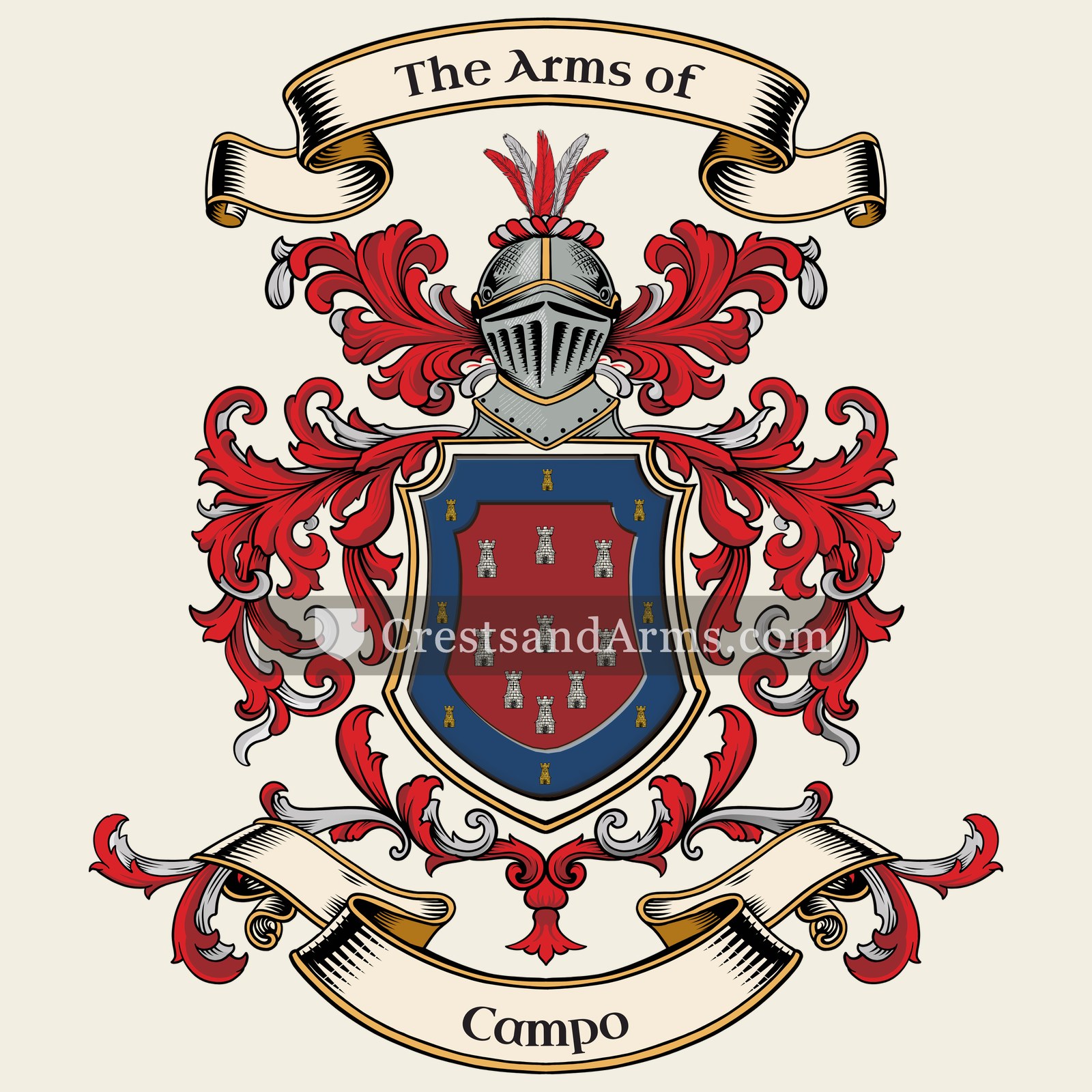
 towerGrandeur and solidity, and a stronghold defended
 towerGrandeur and solidity, and a stronghold defended


 chevronProtection, and faithful service completed


 fessThe military belt, and readiness to serve
 eagleNobility, strength and a keen mind