Map of Spain showing where the Camps arms are recorded
The Camps arms were recorded in Catalonia, c. 1722.
Catalonia lived by sea trade, and its merchant houses were as powerful as its landowners. Both sorts of family took arms, and Barcelona kept records of the houses entitled to bear them.
This is where the arms were entered in the register. Families often moved to other parts of the country, so the same name can turn up in more than one region.
The body that granted and recorded arms in Spain in this period.
Philip V of Spain
Sovereign of the period
Philip V of Spain
1714–1724
Reigning in Spain when the Camps arms are first recorded.
How Arms Worked in Spain
In Spain, a coat of arms was considered a form of property that belonged to the entire family line. These arms were passed down from a father to all his children equally. Younger branches of the family usually kept the original design without needing to add any special marks to distinguish their specific line.
Granting authority
The Cronista Rey de Armas was the official body that regulated and granted coats of arms throughout Spain.
How they got arms
Families often obtained their arms through royal grants or by proving their noble status to the official heraldic authority.
Where arms were recorded
Coats of arms were officially recorded in the registers of the Cronista Rey de Armas starting in 1496.
The family's standing
Recorded among the armigerous families of Catalonia.
Origin & History of the Camps Family in Spain
The surname Camps finds its deep historical roots in the rugged landscape of Catalonia, a region in northeastern Spain known for its distinct language and cultural identity. The name itself is derived from the Latin word campus, which translates to field or open land. In the early eighteenth century, families bearing this name were well-established members of the Catalan community, often living as farmers or landowners who worked the fertile plains near the Mediterranean coast. By 1722, records indicate that the Camps family was deeply integrated into the social and economic life of the region, participating in the local parish systems and agricultural trade that defined Catalan society at the time. Because the name describes a connection to the physical environment, it suggests that the earliest ancestors were likely defined by their relationship to the specific plots of land they cultivated for generations. This connection to the soil helped the family maintain a steady presence in Catalonia, allowing them to survive the political shifts and regional challenges that defined life in Spain during the early modern period.
Coat of Arms & Family Crest Details
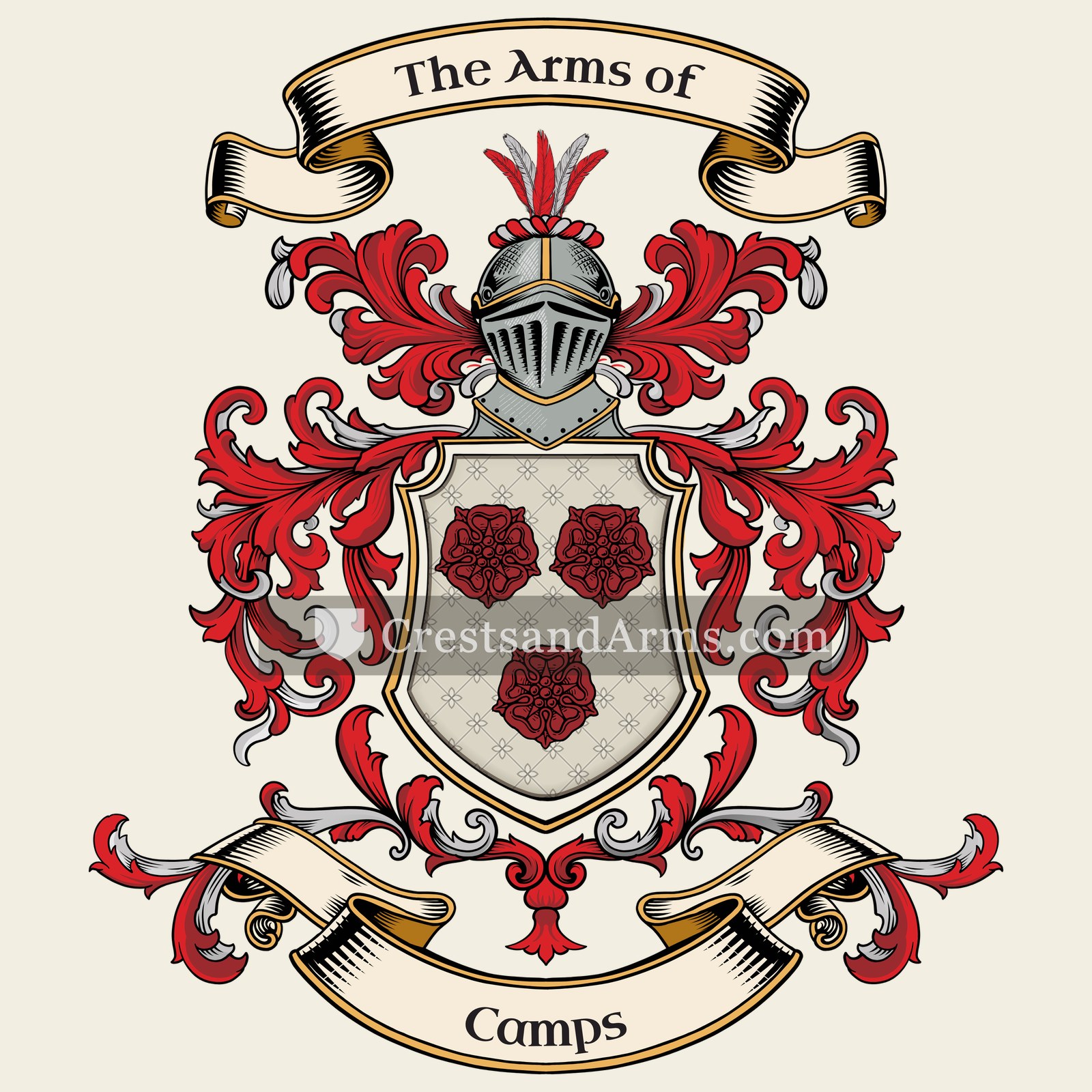
Symbols on this shield
roseThe seventh son, and beauty with grace
Colours
Silver (Argent)Means: Peace and sincerity
Red (Gules)Means: Military strength
Historical info
Source
J. B. Rietstap, Armorial Général, Gouda: G. B. van Goor Zonen, 1884–87
Blazon (the actual original written record)
“D'arg. à trois roses de gu., bout. d'or, barbées de sin. C.: une rose de l'écu, tigée et feuillée de sin.”
Belgiumc. 1737
Digital archive packCoat of arms PNG, gold border print PDF, vector SVG and the certificate of authenticity. Sent to your email in minutes.
Map of Belgium showing where the Camps arms are recorded
The Camps arms were recorded in Belgium, c. 1737.
Arms such as these were typically recorded in Brabant.
Brabant lay at the heart of the Low Countries, where the trade routes met. Its towns were wealthy and its landowners many, and both kinds of family kept arms, which is why the region is so heavily represented.
This is where the arms were entered in the register. Families often moved to other parts of the country, so the same name can turn up in more than one region.
The body that granted and recorded arms in Belgium in this period.
Charles VI, Holy Roman Emperor
Sovereign of the period
Charles VI, Holy Roman Emperor
1711–1740
Reigning in Spain when the Camps arms are first recorded.
How Arms Worked in Belgium
In Belgium, a coat of arms is considered personal property that is passed down through the male line to legitimate descendants. Families often use the same shield design across generations to show their shared heritage. If a branch of the family wants to change the design, they must apply for an official update to their specific version of the arms.
Granting authority
The Conseil héraldique is the official body that regulates and approves all coats of arms in Belgium.
How they got arms
Families obtain their coats of arms through formal royal grants or by confirming their historical right to use existing designs.
Where arms were recorded
All approved coats of arms are officially recorded in the public registers of the Conseil héraldique since 1844.
The family's standing
Recorded among the armigerous families of Belgium.
Origin & History of the Camps Family in Belgium
The family name Camps has deep roots in the historical region of Brabant, where records confirm members of the family were established by 1737. During this period, the name was closely tied to the rural landscape and the agricultural traditions of the Low Countries. The name itself likely originated as a topographical descriptor, referring to individuals who lived near or worked on enclosed fields known as "kamps." In the eighteenth century, families in this region often lived in small, tight-knit communities where they were defined by their connection to the land and their local parish. As the family grew within Brabant, they became part of the social fabric of a region that was then transitioning through various political changes under Austrian rule. By tracing their presence back to this era, we see a family that was deeply integrated into the local economy and the daily life of the Belgian countryside.
Camps Meaning & Related Branches
Root word
Campus
Latin term referring to an open field or level ground.
This name
CampsA topographic surname for someone who lived near or worked on open fields.
also spelled
Campz
Kamps
Related arms
Aloyrecorded with Camps, same area
Documented Sources
J. B. Rietstap, Armorial Général, Gouda: G. B. van Goor Zonen, 1884–87
Alcover, Antoni M. and Moll, Francesc de B., Diccionari català-valencià-balear, 1962
Moll, Francesc de B., Els llinatges catalans, 1959
Arxiu de la Corona d'Aragó, Generalitat de Catalunya, Registres de la Batllia General
Digital archive packCoat of arms PNG, gold border print PDF, vector SVG and the certificate of authenticity. Sent to your email in minutes.


 fessThe military belt, and readiness to serve
 chiefAuthority, wisdom and dominion
 escutcheonA shield within a shield, and a claim inherited
 eagleNobility, strength and a keen mind
 fessThe military belt, and readiness to serve
 chiefAuthority, wisdom and dominion
 escutcheonA shield within a shield, and a claim inherited
 eagleNobility, strength and a keen mind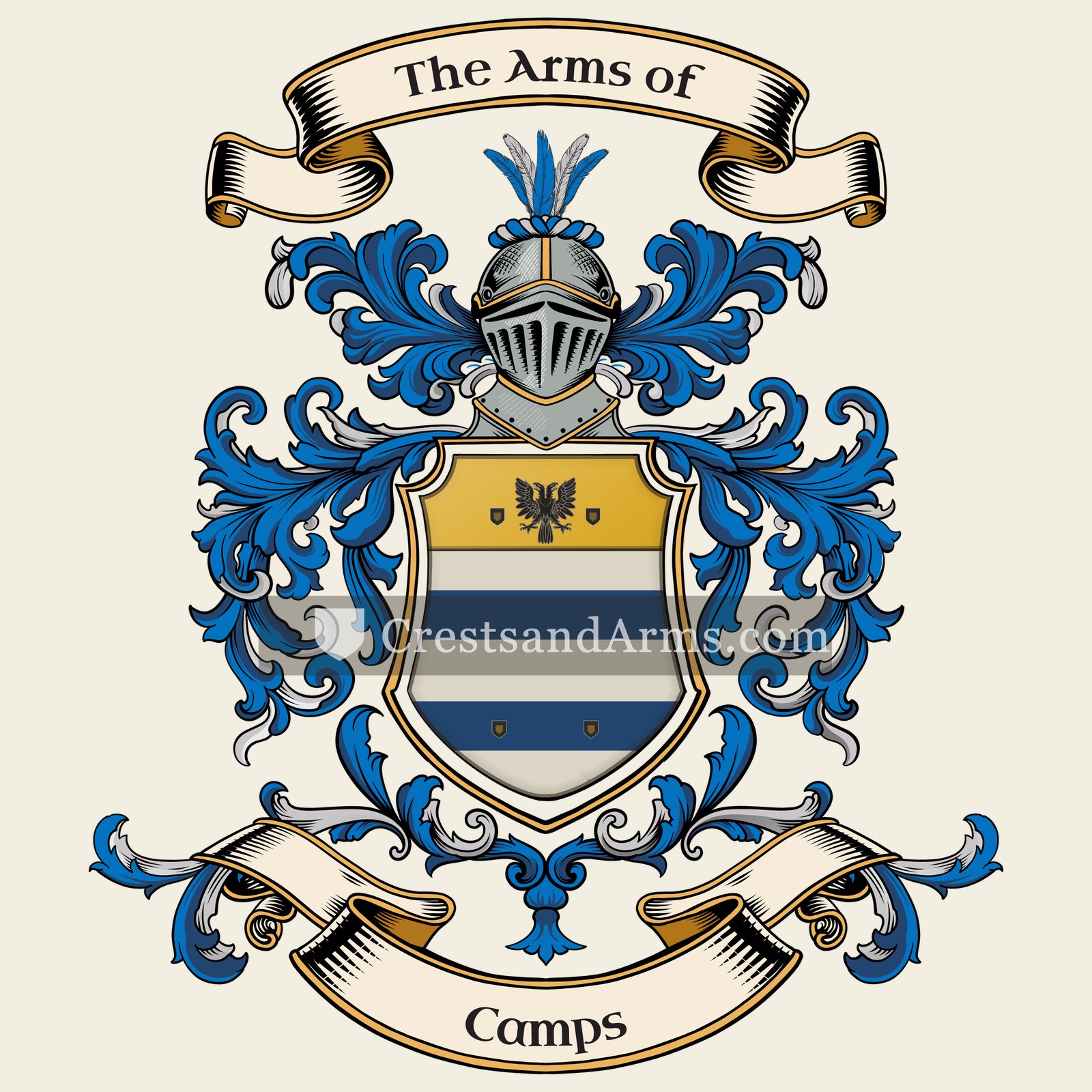


 roseThe seventh son, and beauty with grace