Map of Spain showing where the Canaj arms are recorded
The Canaj arms were recorded in Asturies, c. 1722.
This is where the arms were entered in the register. Families often moved to other parts of the country, so the same name can turn up in more than one region.
The body that granted and recorded arms in Spain in this period.
Philip V of Spain
Sovereign of the period
Philip V of Spain
1714–1724
Reigning in Spain when the Canaj arms are first recorded.
How Arms Worked in Spain
In Spain, a coat of arms was considered a form of property that belonged to the entire family line. These arms were passed down from a father to all his children equally. Younger branches of the family usually kept the original design without needing to add any special marks to distinguish their specific line.
Granting authority
The Cronista Rey de Armas was the official body that regulated and granted coats of arms throughout Spain.
How they got arms
Families often obtained their arms through royal grants or by proving their noble status to the official heraldic authority.
Where arms were recorded
Coats of arms were officially recorded in the registers of the Cronista Rey de Armas starting in 1496.
The family's standing
Recorded among the armigerous families of Spain.
Origin & History of the Canaj Family in Spain
The history of the Canaj family name is deeply rooted in the rugged landscape of Asturias, Spain, where records confirm the family’s presence as early as 1722. During this period, the region was characterized by small, isolated mountain communities where families often identified themselves through their connection to specific parcels of land or local geographical landmarks. The name likely emerged as a way to distinguish members of the family within these tight-knit rural parishes. As the family grew, they became part of the traditional social fabric of northern Spain, participating in the agricultural and pastoral life that defined the Asturian economy for centuries. By maintaining their presence in these mountainous areas, the early Canaj family helped preserve the unique cultural identity of the region during a time of significant social change in the Spanish kingdom.
Canaj Meaning & Related Branches
Root word
Cana
Derived from the Latin word canus meaning white or gray haired.
This name
CanajA topographic or descriptive surname likely referring to a person with gray hair or a white complexion.
also spelled
Kanga
Cangah
Cangaa
Documented Sources
J. B. Rietstap, Armorial Général, Gouda: G. B. van Goor Zonen, 1884–87
Archivo Histórico Diocesano de Oviedo, Libros Sacramentales de la Parroquia de San Juan de Amandi, 1722
Fernández Conde, Francisco Javier, La Iglesia en Asturias durante la Edad Moderna, 1995
García de Cortázar, José Ángel, La sociedad rural en la España medieval y moderna, 1988
Digital archive packCoat of arms PNG, gold border print PDF, vector SVG and the certificate of authenticity. Sent to your email in minutes.


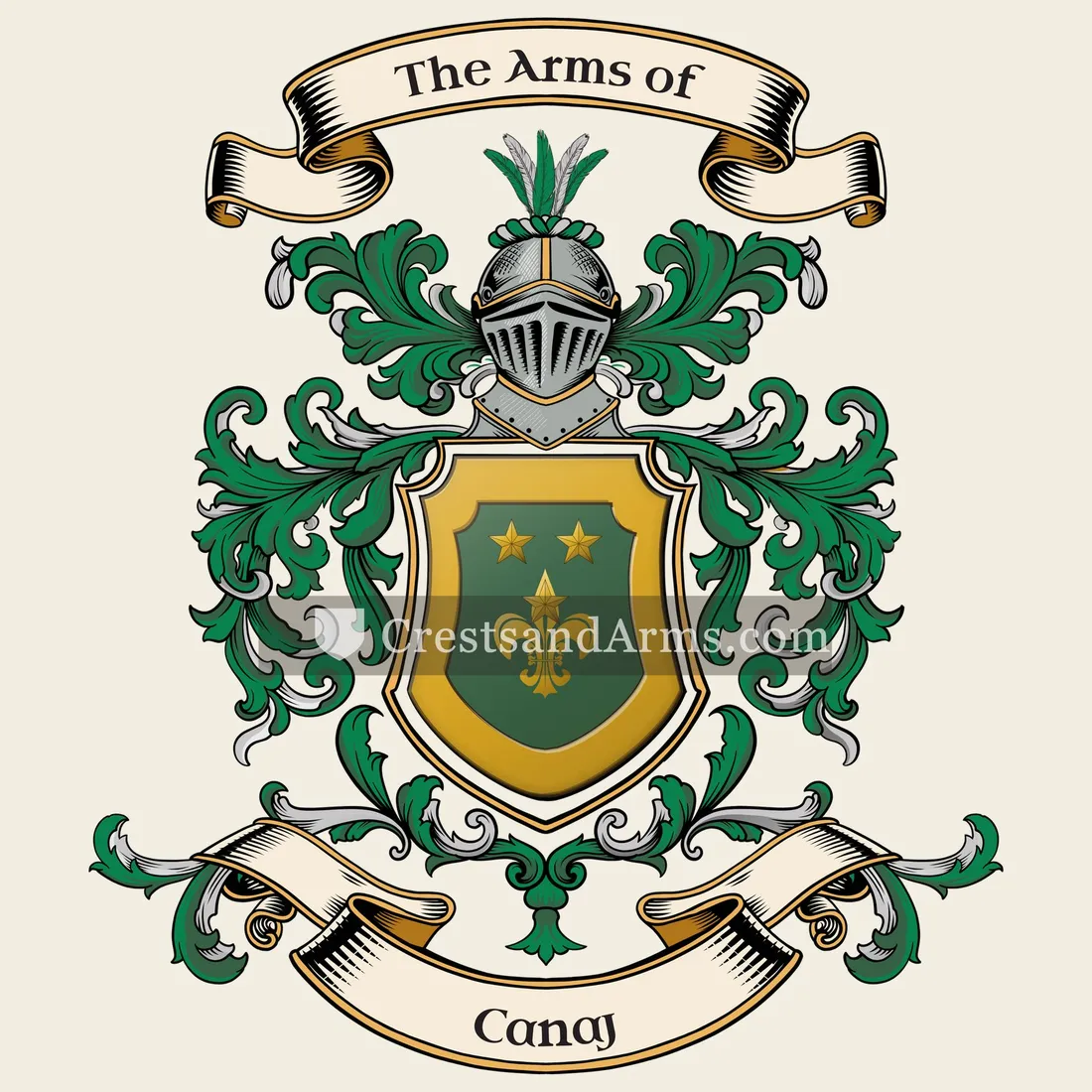
 fleur de lisPurity, light, and the sixth son
 mulletThe third son, and a divine quality from above
 fleur de lisPurity, light, and the sixth son
 mulletThe third son, and a divine quality from above