Map of Netherlands showing where the Cantillon arms are recorded
The Cantillon arms were recorded in Netherlands, c. 1815.
Arms such as these were typically recorded in Friesland.
Friesland was low, wet country on the northern coast of the Netherlands, farmed by families who had held the same land for centuries. Free landholders were unusually common there, and a free landholder could carry arms.
This is where the arms were entered in the register. Families often moved to other parts of the country, so the same name can turn up in more than one region.
Region
Friesland
First recorded
1815
Granting Authority for the Cantillon Arms
Hoge Raad van Adel
Photograph made by me · CC BY-SA 3.0
The body that granted and recorded arms in Netherlands in this period.
William I of the Netherlands
Sovereign of the period
William I of the Netherlands
1815–1840
Reigning in Netherlands when the Cantillon arms are first recorded.
How Arms Worked in Netherlands
In the Netherlands, coats of arms were often used by noble families and those who held specific public offices. These arms were passed down through the generations to legitimate descendants. Younger branches of a family usually kept the original design without needing to add special marks. This system ensured that the family identity remained clear and consistent over many years.
Granting authority
The Hoge Raad van Adel is the official body that regulates and manages noble titles and coats of arms in the Netherlands.
How they got arms
Families typically obtained their coats of arms through official royal grants or by proving their long-standing historical use of the symbols.
Where arms were recorded
Coats of arms are officially recorded in the registers held by the Hoge Raad van Adel, which began its work in 1814.
The family's standing
Recorded among the armigerous families of Netherlands.
Origin & History of the Cantillon Family in Netherlands
The history of the Cantillon name in the Netherlands is deeply connected to the movement of people across Europe during the early nineteenth century. While the name has roots in Ireland and France, records confirm that family members were established in the province of Friesland by 1815. This period was a time of great change for the Dutch state following the end of the Napoleonic Wars. Families like the Cantillons often moved during this era to pursue new opportunities in trade or administration within the newly formed Kingdom of the Netherlands. By settling in northern regions like Friesland, these individuals integrated into local society while maintaining the unique heritage of their surname. Their presence in official registers from this time serves as a vital link between their ancestral origins and their life in the Dutch provinces.
Coat of Arms & Family Crest Details
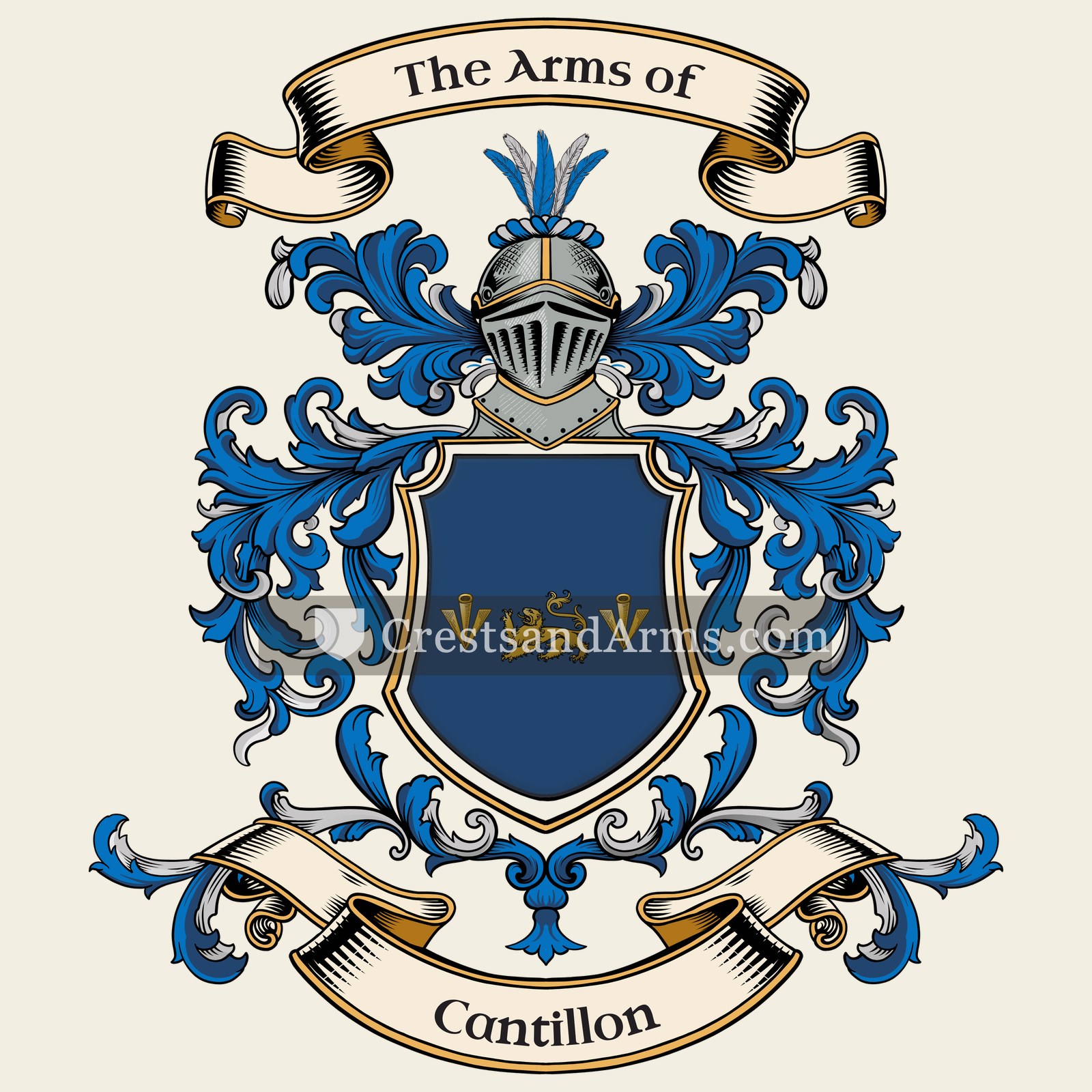
Symbols on this shield
lionCourage, strength and royalty
arrowReadiness for battle, and affliction endured
Colours
Blue (Azure)Means: Loyalty and truth
Gold (Or)Means: Generosity
Historical info
Source
Sir Bernard Burke, The General Armory of England, Scotland, Ireland and Wales, London: Harrison & Sons, 1884
Blazon (the actual original written record)
“Az. a lion ramp. or, betw. two arrows in pale of the second, points in base ar”
KerryBallyheige · Kerry, c. 1645
Digital archive packCoat of arms PNG, gold border print PDF, vector SVG and the certificate of authenticity. Sent to your email in minutes.
Map of Ireland showing where the Cantillon arms are recorded
The Cantillon arms were recorded in Kerry, c. 1645.
Kerry was mountain and coast country in the far south-west of Ireland. Its land was poor and held by a few families for a very long time, and long unbroken holding fills a register.
This is where the arms were entered in the register. Families often moved to other parts of the country, so the same name can turn up in more than one region.
The body that granted and recorded arms in Ireland in this period.
Charles I of England
Sovereign of the period
Charles I of England
1625–1649
Reigning in Netherlands when the Cantillon arms are first recorded.
How Arms Worked in Ireland
The Ulster King of Arms granted coats of arms to individuals who proved their social standing and good character. These symbols were typically inherited by all legitimate descendants of the original holder. If a family branch wanted a unique look, they could apply for a specific change to their design through the office to ensure their identity remained distinct.
Granting authority
The Ulster King of Arms acted as the official body that regulated and issued all coats of arms throughout Ireland.
How they got arms
Families obtained their arms through formal grants issued by the office after proving their eligibility and paying the required fees.
Where arms were recorded
All official grants were recorded in the registers held by the Ulster King of Arms starting from the year 1552.
The family's standing
Recorded among the armigerous families of Kerry.
Origin & History of the Cantillon Family in Ireland
The Cantillon family name is of Norman origin, arriving in Ireland during the late twelfth century as part of the initial wave of Anglo-Norman settlers. By the mid-seventeenth century, the family had firmly established itself in County Kerry, particularly in the areas surrounding Ballyheigue. Historical records confirm their presence in this region by 1645, where they functioned as prominent landowners and members of the local gentry. Over time, the family became deeply integrated into the Gaelic social structure of the southwest, often intermarrying with established Irish noble families. Their influence in Kerry remained significant for several generations, though the political upheavals of the seventeenth century eventually forced many members of the family to seek new opportunities abroad. Despite these migrations, the name remains closely tied to the landscape and history of North Kerry.
Cantillon Meaning & Related Branches
Root word
Cantus
Latin term meaning song or singing.
This name
CantillonA topographical name for someone living near a corner or a singer.
also spelled
Cantilon
Kantillon
Cantillone
Kantilon
Cantelyn
Documented Sources
J. B. Rietstap, Armorial Général, Gouda: G. B. van Goor Zonen, 1884–87
AlleFriezen, Burgerlijke Stand Friesland, Geboorteakten, 1815
Tresoar, Bevolkingsregisters van Friesland
Digital archive packCoat of arms PNG, gold border print PDF, vector SVG and the certificate of authenticity. Sent to your email in minutes.


 chevronProtection, and faithful service completed
 chiefAuthority, wisdom and dominion
 lionCourage, strength and royalty
 chevronProtection, and faithful service completed
 chiefAuthority, wisdom and dominion
 lionCourage, strength and royalty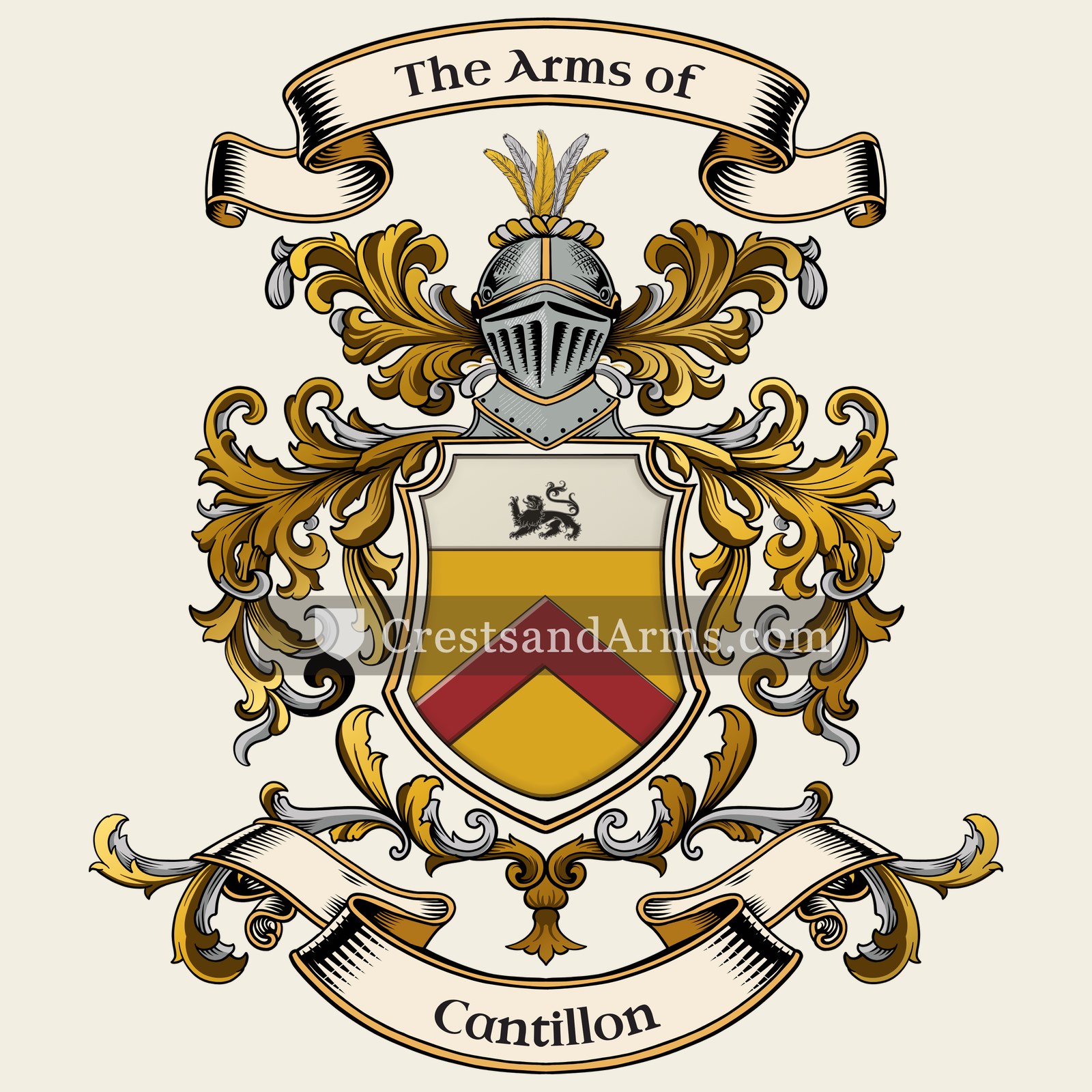


 arrowReadiness for battle, and affliction endured