Map of Netherlands showing where the Canty arms are recorded
The Canty arms were recorded in Amsterdam, c. 1815.
This is where the arms were entered in the register. Families often moved to other parts of the country, so the same name can turn up in more than one region.
Region
Amsterdam
Town
Amsterdam
First recorded
1815
Granting Authority for the Canty Arms
Hoge Raad van Adel
Photograph made by me · CC BY-SA 3.0
The body that granted and recorded arms in Netherlands in this period.
William I of the Netherlands
Sovereign of the period
William I of the Netherlands
1815–1840
Reigning in Netherlands when the Canty arms are first recorded.
How Arms Worked in Netherlands
In the Netherlands, coats of arms were often used by noble families and those who held specific public offices. These arms were passed down through the generations to legitimate descendants. Younger branches of a family usually kept the original design without needing to add special marks. This system ensured that the family identity remained clear and consistent over many years.
Granting authority
The Hoge Raad van Adel is the official body that regulates and manages noble titles and coats of arms in the Netherlands.
How they got arms
Families typically obtained their coats of arms through official royal grants or by proving their long-standing historical use of the symbols.
Where arms were recorded
Coats of arms are officially recorded in the registers held by the Hoge Raad van Adel, which began its work in 1814.
The family's standing
Recorded among the armigerous families of Netherlands.
Origin & History of the Canty Family in Netherlands
The family name Canty carries a unique history within the Netherlands, particularly as it emerged in the bustling urban environment of Amsterdam during the early nineteenth century. By 1815, records show that members of the family were already established in the city, a time when Amsterdam was transitioning from the chaos of the Napoleonic era into a new period of economic growth. The name itself likely arrived in the region through the extensive maritime trade networks that connected the Netherlands to the British Isles and beyond. As the city became a hub for international commerce and migration, families like the Cantys integrated into the local population by participating in the city's vibrant labor and merchant markets. Their presence in the official municipal registers of 1815 highlights how the family became part of the diverse social fabric of a city that was rapidly modernizing. By settling in Amsterdam during this pivotal era, the family contributed to the long-standing tradition of mobility and cultural exchange that defined the Dutch capital.
Coat of Arms & Family Crest Details
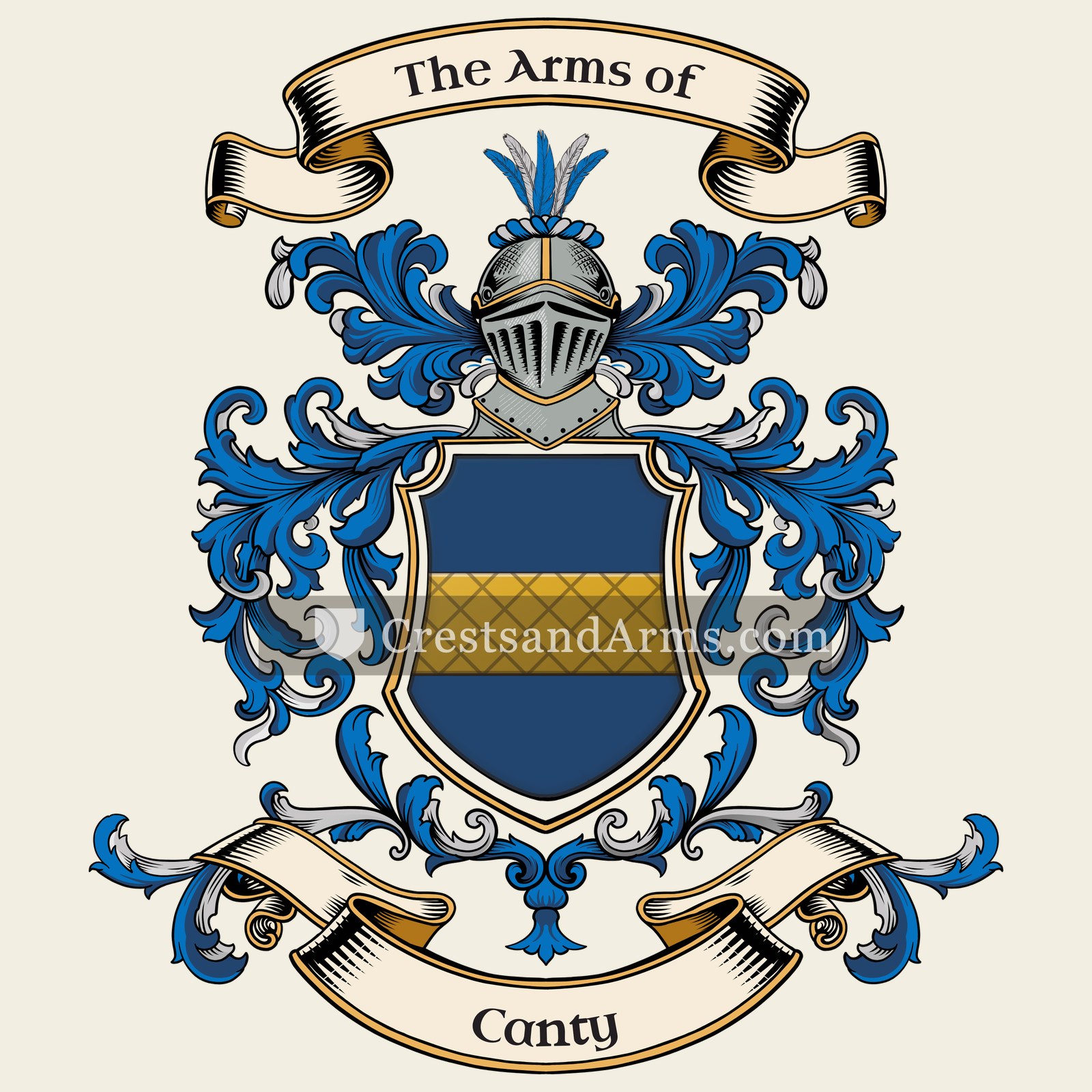
Symbols on this shield
crescentHonour by the sovereign, and the second son
Colours
Red (Gules)Means: Military strength
Gold (Or)Means: Generosity
Historical info
Source
J. B. Rietstap, Armorial Général, Gouda: G. B. van Goor Zonen, 1884–87
Blazon (the actual original written record)
“De gu. à trois croiss. d'or.”
FlandreFlandre, c. 1663
Digital archive packCoat of arms PNG, gold border print PDF, vector SVG and the certificate of authenticity. Sent to your email in minutes.
Map of France showing where the Canty arms are recorded
The Canty arms were recorded in Flandre, c. 1663.
Flandre grew rich on cloth, and its towns were among the busiest in Europe. Merchant families bought land with their profits and took arms to go with it, so trade put as many names in the registers here as land did.
This is where the arms were entered in the register. Families often moved to other parts of the country, so the same name can turn up in more than one region.
The body that granted and recorded arms in France in this period.
Louis XIV of France
Sovereign of the period
Louis XIV of France
1643–1715
Reigning in Netherlands when the Canty arms are first recorded.
How Arms Worked in France
In France, a coat of arms was a mark of honor that passed down through the male line to all legitimate descendants. Families often used the same shield without changes to show their shared heritage. If a branch wanted to stand out, they could add a small mark to their shield to show their specific place in the family tree.
Granting authority
The Juge d'armes de France acted as the official authority that regulated and verified coats of arms across the country.
How they got arms
Families typically inherited their arms from ancestors, though they could also receive them through royal grants or by proving their noble status.
Where arms were recorded
Coats of arms were officially recorded in the Armorial Général de France, which began its main collection in the year 1696.
The family's standing
Recorded among the armigerous families of Flandre.
Origin & History of the Canty Family in France
The history of the Canty name in France is deeply tied to the northern region of Flandre, where family members were documented as early as 1663. During the seventeenth century, this area was a busy crossroads of trade and cultural exchange between France and the Low Countries. Families living in Flandre at this time often navigated a complex landscape of shifting borders and local customs. Because the name appears in regional records during this period, it suggests that the family was likely integrated into the agricultural or merchant life of the local community. These early ancestors were part of a society defined by strong parish ties and local governance, which helped preserve their family identity through generations. By settling in this specific part of France, the family became part of the long and storied history of a region known for its resilience and its central role in European commerce.
Coat of Arms & Family Crest Details
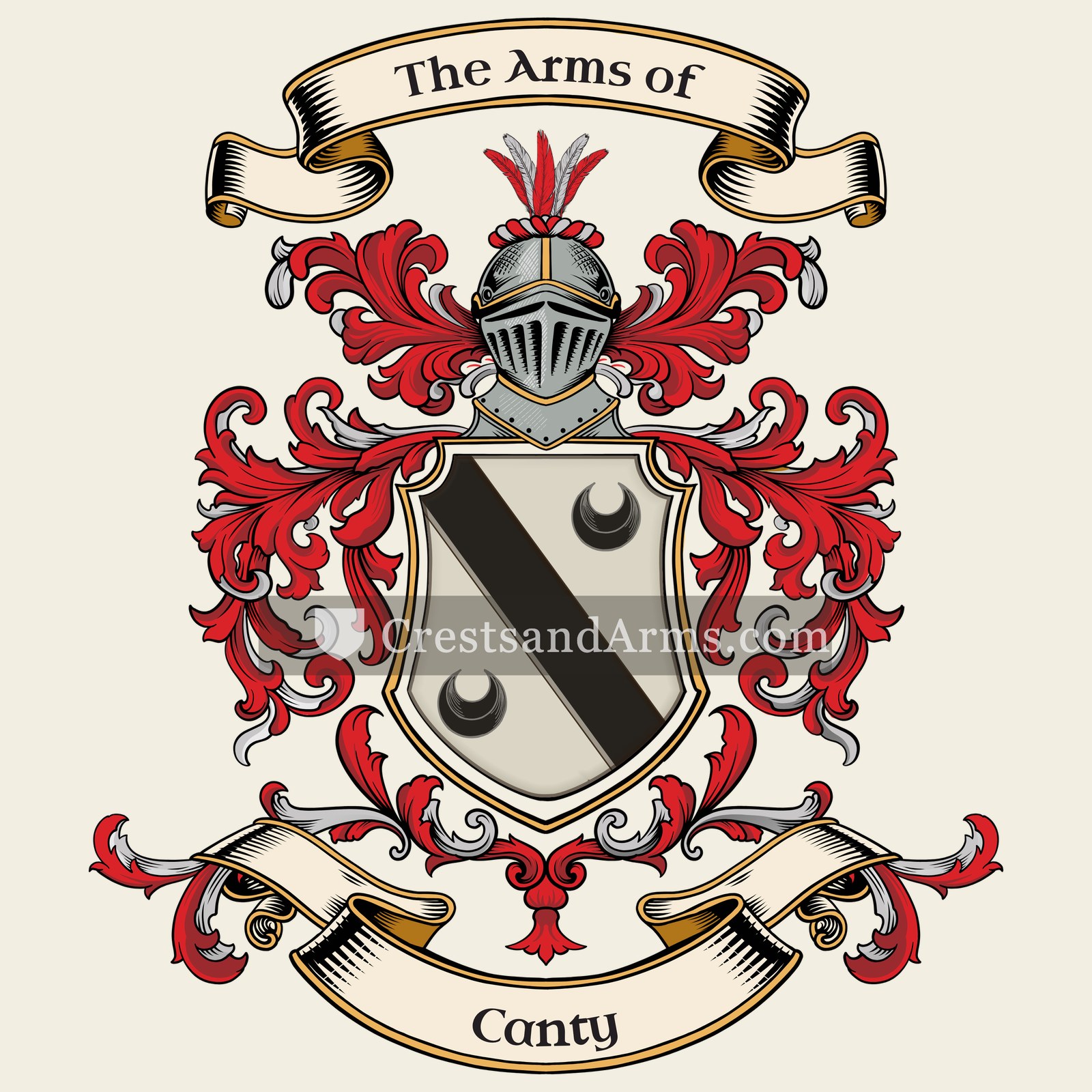
Symbols on this shield
bendDefence, and the scarf of a commander
crescentHonour by the sovereign, and the second son
Colours
Silver (Argent)Means: Peace and sincerity
Black (Sable)Means: Constancy
Historical info
Source
Sir Bernard Burke, The General Armory of England, Scotland, Ireland and Wales, London: Harrison & Sons, 1884
Blazon (the actual original written record)
“Ar. a bend engr. betw. two crescents sa”
Scotlandc. 1748
Digital archive packCoat of arms PNG, gold border print PDF, vector SVG and the certificate of authenticity. Sent to your email in minutes.
Map of Scotland showing where the Canty arms are recorded
The Canty arms were recorded in Scotland, c. 1748.
Arms such as these were typically recorded in Edinburgh.
Edinburgh was the seat of Scotland's government, its courts and its heralds. Families with business there settled nearby, and being close to where arms were recorded is exactly why so many of them appear.
This is where the arms were entered in the register. Families often moved to other parts of the country, so the same name can turn up in more than one region.
The body that granted and recorded arms in Scotland in this period.
George II of Great Britain
Sovereign of the period
George II of Great Britain
1727–1760
Reigning in Netherlands when the Canty arms are first recorded.
How Arms Worked in Scotland
Scottish heraldry is unique because it treats a coat of arms as a piece of personal property protected by law. Only one person can own a specific design at any given time. When a family grows, the head keeps the original shield while other relatives must apply for their own distinct version with slight changes to prove their specific identity.
Granting authority
The Court of the Lord Lyon acts as the official body that regulates and controls all heraldic matters throughout Scotland.
How they got arms
Individuals obtain a legal right to their arms through a formal petition process that confirms their identity and family connection.
Where arms were recorded
All valid coats of arms are officially entered into the Public Register of All Arms and Bearings starting from 1672.
The family's standing
Recorded among the armigerous families of Scotland.
Origin & History of the Canty Family in Scotland
The surname Canty is rooted in the Gaelic language, likely originating from the word "cainteach," which translates to a talkative or sharp-tongued person. While the name has strong ties to Ireland, it established a notable presence in Scotland by the mid-18th century. Historical records confirm that members of the Canty family were living in Edinburgh by 1748, a time when the city was undergoing significant social and architectural expansion. During this period, families with this name were often part of the growing urban population that supported the city’s transition into a center of commerce and enlightenment. These early residents likely worked in the skilled trades or merchant sectors that defined Edinburgh’s economy during the mid-1700s. By settling in the capital, the Canty family became part of the complex social fabric of Scotland during a time of great national change.
Related Branches & Arms
Root word
Cantus
Latin term meaning a song, melody, or singing.
This name
CantyA nickname for a singer, a choir member, or someone with a pleasant voice.
also spelled
Kante
Cante
Cants
Kant
Documented Sources
J. B. Rietstap, Armorial Général, Gouda: G. B. van Goor Zonen, 1884–87




 crescentHonour by the sovereign, and the second son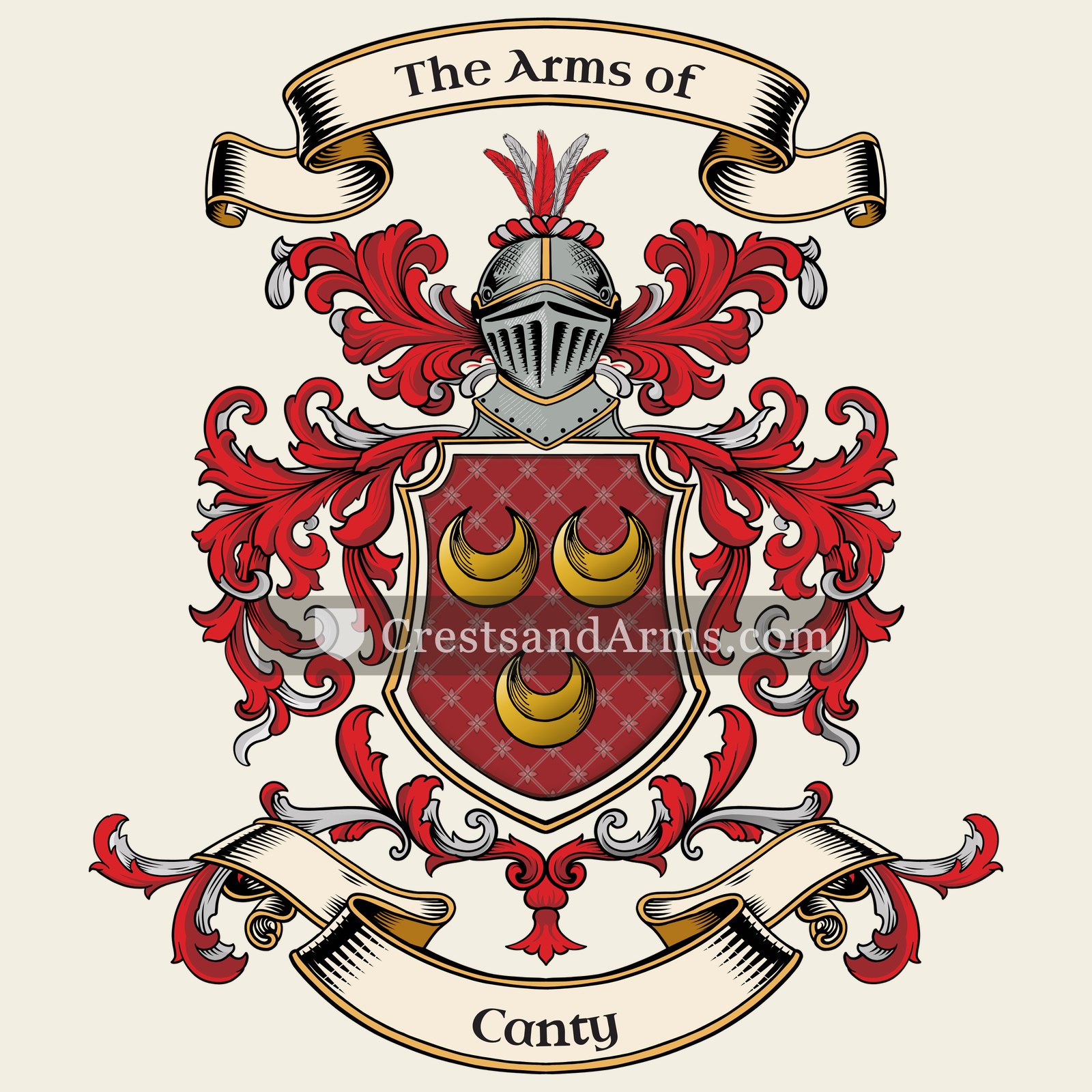


 bendDefence, and the scarf of a commander