A record of documented arms, meaning and origin, researched for the Capel family lines. Documented in 3 countries.
Reg. 9130 · Dutch, A–C
Coat of Arms & Family Crest Details
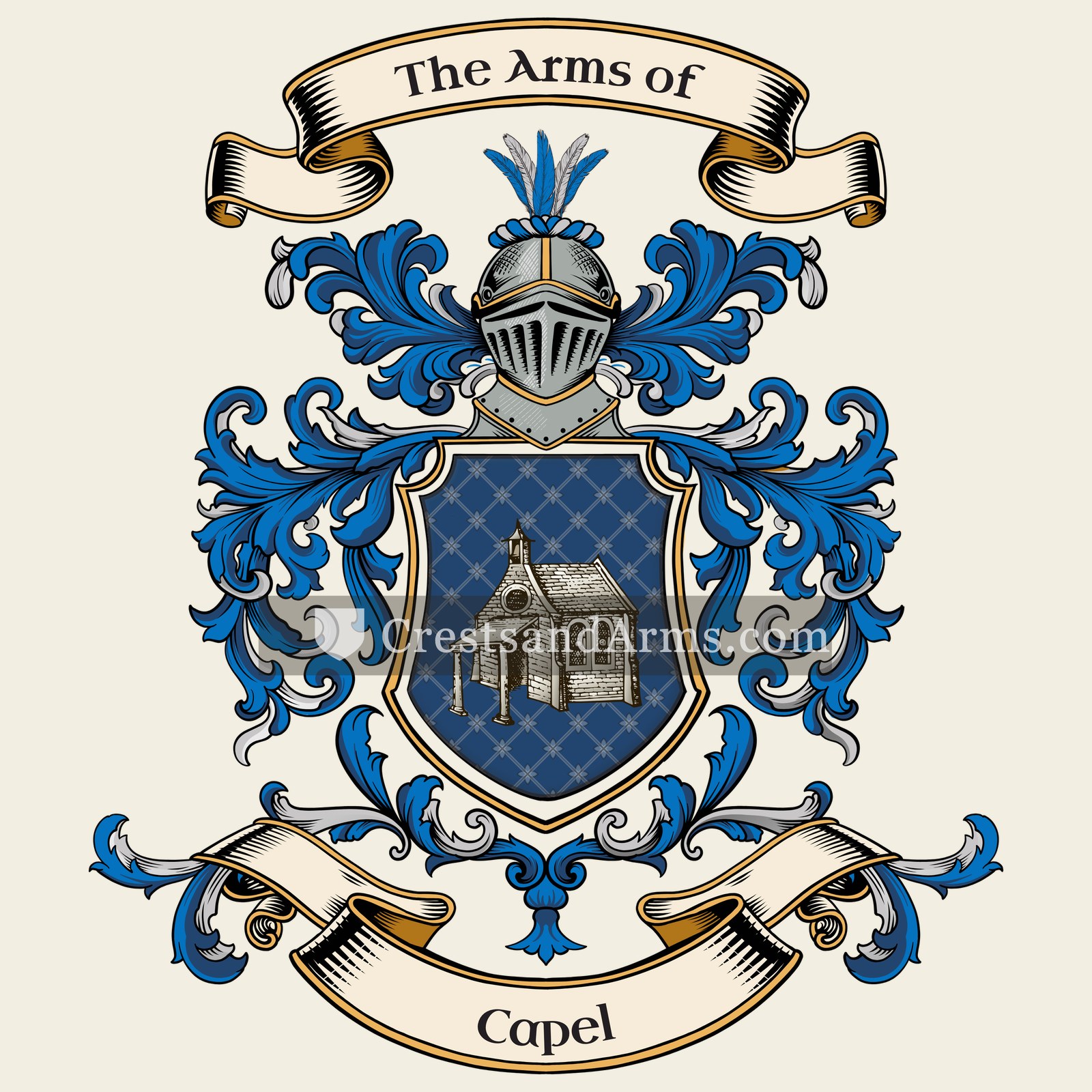
Symbols on this shield
churchFaith, and the endowment of a house of God
Colours
Blue (Azure)Means: Loyalty and truth
Silver (Argent)Means: Peace and sincerity
Historical info
Source
J. B. Rietstap, Armorial Général, Gouda: G. B. van Goor Zonen, 1884–87
Blazon (the actual original written record)
“D'azur à une chapelle d'arg.”
NetherlandsDordrecht, c. 1815
Where the Capel Arms Were Recorded
Dordrecht
Map of Netherlands showing where the Capel arms are recorded
The Capel arms were recorded in Dordrecht, c. 1815.
This is where the arms were entered in the register. Families often moved to other parts of the country, so the same name can turn up in more than one region.
Region
Dordrecht
Town
Dordrecht
First recorded
1815
Granting Authority for the Capel Arms
Hoge Raad van Adel
Photograph made by me · CC BY-SA 3.0
The body that granted and recorded arms in Netherlands in this period.
William I of the Netherlands
Sovereign of the period
William I of the Netherlands
1815–1840
Reigning in Netherlands when the Capel arms are first recorded.
How Arms Worked in Netherlands
In the Netherlands, coats of arms were often used by noble families and those who held specific public offices. These arms were passed down through the generations to legitimate descendants. Younger branches of a family usually kept the original design without needing to add special marks. This system ensured that the family identity remained clear and consistent over many years.
Granting authority
The Hoge Raad van Adel is the official body that regulates and manages noble titles and coats of arms in the Netherlands.
How they got arms
Families typically obtained their coats of arms through official royal grants or by proving their long-standing historical use of the symbols.
Where arms were recorded
Coats of arms are officially recorded in the registers held by the Hoge Raad van Adel, which began its work in 1814.
The family's standing
Recorded among the armigerous families of Netherlands.
Origin & History of the Capel Family in Netherlands
The history of the Capel family in the Netherlands is deeply connected to the city of Dordrecht, which served as a major center for trade and navigation during the early nineteenth century. By 1815, records confirm that members of the family were already established residents in this historic river port. The name itself likely originated from the Middle Dutch word "kapel," which referred to a small chapel or a place of worship. Families often adopted such names to identify where they lived or worked, suggesting that the early ancestors may have resided near a local religious building or served as caretakers for one. As Dordrecht grew into a bustling hub for commerce, the Capel family integrated into the local urban life, contributing to the city’s development during a time of significant political change in the Dutch state. Their presence in the city archives during this period highlights their role as part of the stable, working population that helped define the character of Dordrecht in the years following the Napoleonic era.
Coat of Arms & Family Crest Details
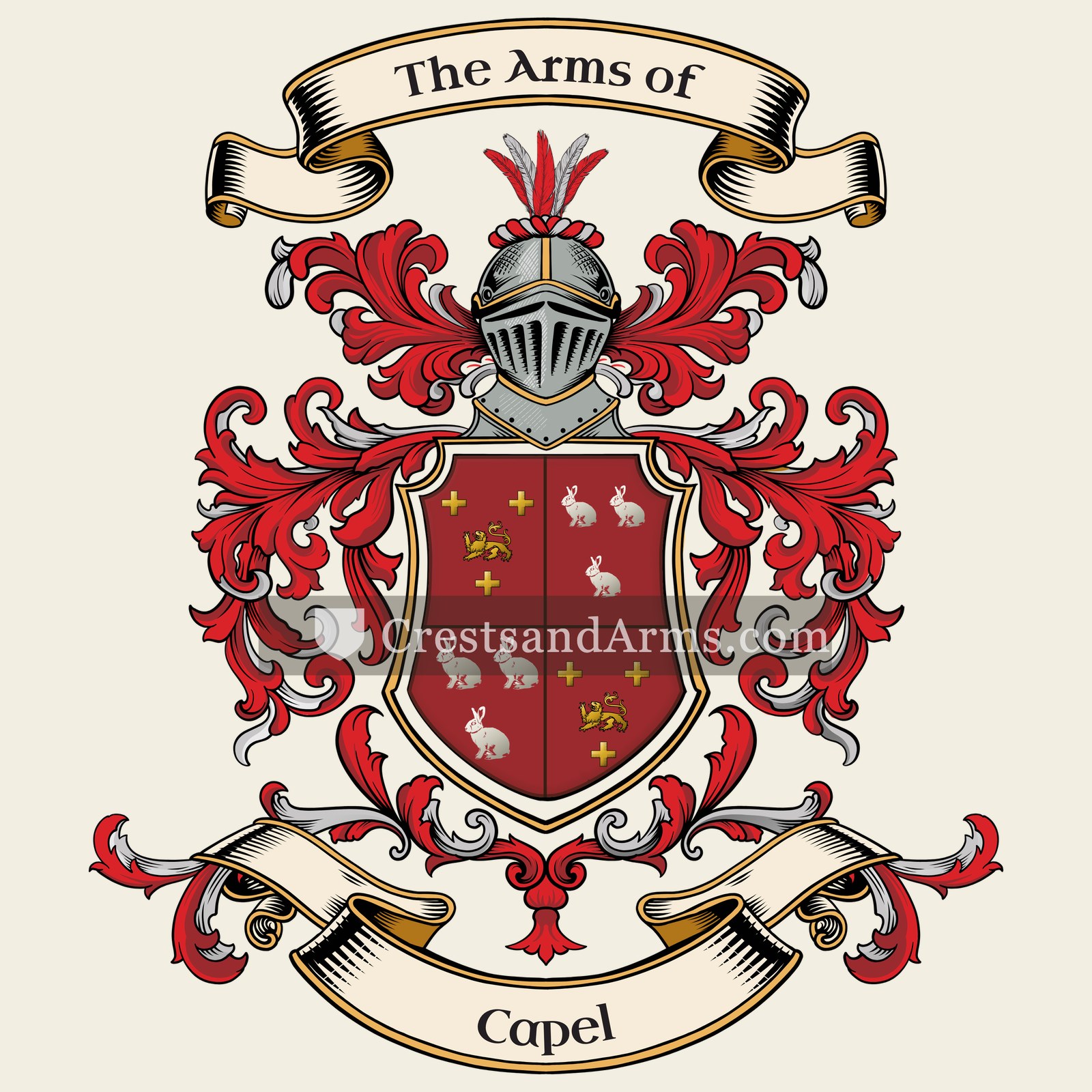
Symbols on this shield
cross symbolChristian faith and service
lionCourage, strength and royalty
rabbitOne who lives peaceably and well
Colours
Red (Gules)Means: Military strength
Gold (Or)Means: Generosity
Silver (Argent)Means: Peace and sincerity
Historical info
Source
J. B. Rietstap, Armorial Général, Gouda: G. B. van Goor Zonen, 1884–87
Blazon (the actual original written record)
“Ec.: aux 1 et 4 de gu. au lion d'or, acc. de trois croix recr. au pied fiché du même (Capel); aux 2 et 3 de gu. à trois lapins couchés d'arg. (Coningsby). C.: 1o le lion, iss., tenant une croix de l'écu; 2o un lapin de l'écu. S.: deux lions d'or, cour. de gu. D.: FIDE ET FORTITUDINE”
Francec. 1641
Where the Capel Arms Were Recorded
Bretagne
Map of France showing where the Capel arms are recorded
The Capel arms were recorded in France, c. 1641.
Arms such as these were typically recorded in Bretagne.
More families held coats of arms in Bretagne than anywhere else in France. The land was divided into many small estates rather than a few large ones, so far more households counted as gentry, and each needed a shield of its own to be told apart.
This is where the arms were entered in the register. Families often moved to other parts of the country, so the same name can turn up in more than one region.
The body that granted and recorded arms in France in this period.
Louis XIII of France
Sovereign of the period
Louis XIII of France
1617–1643
Reigning in Netherlands when the Capel arms are first recorded.
How Arms Worked in France
In France, a coat of arms was a mark of honor that passed down through the male line to all legitimate descendants. Families often used the same shield without changes to show their shared heritage. If a branch wanted to stand out, they could add a small mark to their shield to show their specific place in the family tree.
Granting authority
The Juge d'armes de France acted as the official authority that regulated and verified coats of arms across the country.
How they got arms
Families typically inherited their arms from ancestors, though they could also receive them through royal grants or by proving their noble status.
Where arms were recorded
Coats of arms were officially recorded in the Armorial Général de France, which began its main collection in the year 1696.
The family's standing
Recorded among the armigerous families of France.
Origin & History of the Capel Family in France
The surname Capel finds its roots in the linguistic traditions of medieval France, where it likely originated as a descriptive term related to the word *chapel*. In the context of the seventeenth century, the name was firmly established within the region of Bretagne. By 1641, records confirm that families bearing this name were active participants in the social and economic life of the Breton countryside. During this era, Bretagne functioned with a distinct cultural identity that was separate from the rest of the French kingdom, allowing families like the Capels to maintain strong local ties and traditions. The name was often associated with individuals who lived near small religious structures or who were involved in the local parish administration. As the family navigated the complexities of life in western France, they became part of the enduring historical fabric of the province, leaving behind a legacy that predates the major political shifts of the later French monarchy.
Coat of Arms & Family Crest Details
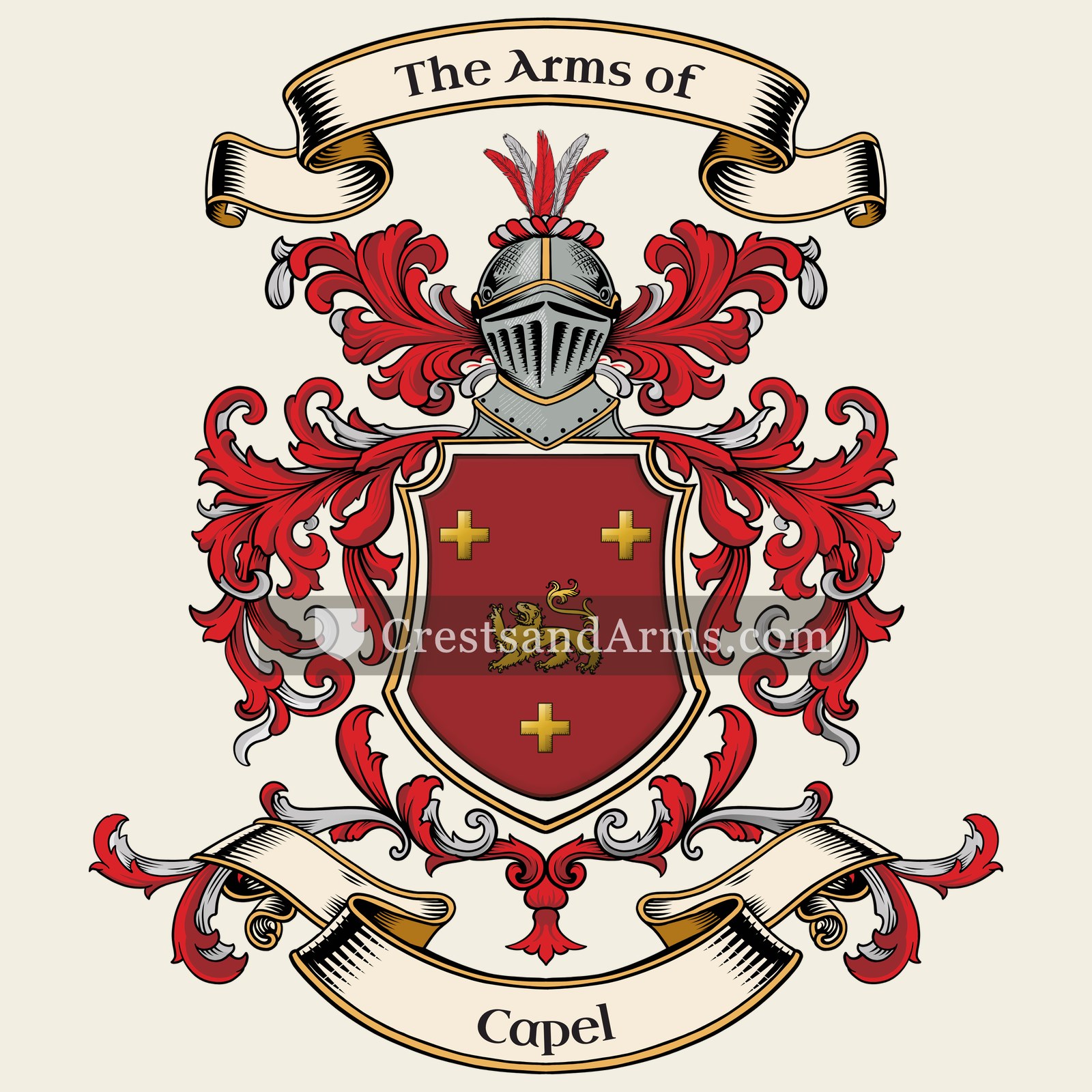
Symbols on this shield
cross symbolChristian faith and service
lionCourage, strength and royalty
Colours
Red (Gules)Means: Military strength
Gold (Or)Means: Generosity
Historical info
Source
Sir Bernard Burke, The General Armory of England, Scotland, Ireland and Wales, London: Harrison & Sons, 1884
Blazon (the actual original written record)
“Gu. a lion ramp. betw. three crosses crosslet fitchée or”
EnglandLondon, c. 1503
Where the Capel Arms Were Recorded
London
Map of England showing where the Capel arms are recorded
The Capel arms were recorded in London, c. 1503.
This is where the arms were entered in the register. Families often moved to other parts of the country, so the same name can turn up in more than one region.
The body that granted and recorded arms in England in this period.
Henry VII of England
Sovereign of the period
Henry VII of England
1485–1509
Reigning in Netherlands when the Capel arms are first recorded.
How Arms Worked in England
English heraldry allowed arms to be shared by all legitimate descendants of the original owner. These symbols were treated as personal property that moved through the generations to all children. While the eldest son kept the original design, other family members could use the same shield without needing to change it or register their own unique versions.
Granting authority
The College of Arms in London has regulated the use of coats of arms throughout England and Wales since 1484.
How they got arms
Families typically obtained their coats of arms through a formal grant from the Crown or by proving their ancient right to them.
Where arms were recorded
All official coats of arms are recorded in the registers kept at the College of Arms, which date back to the fifteenth century.
The family's standing
Recorded among the armigerous families of England.
Origin & History of the Capel Family in England
The surname Capel has roots that stretch back to the medieval period in England, where it likely originated as a topographical name for someone who lived near a chapel or a small church. By the early 16th century, the family had established a notable presence in London, a city that served as the primary hub for their social and economic advancement. Records from 1503 highlight members of the family living within the capital, suggesting they were well-integrated into the urban merchant class during the Tudor era. As the family grew in influence, they expanded their reach across the English countryside, eventually holding significant estates and participating in local governance. Their history reflects the broader movement of families who rose from modest origins to become figures of importance in English society through trade, land ownership, and public service.
Related Branches & Arms
Root word
capella
Latin term for a small cloak or a diminutive chapel.
This name
CapelRefers to a person who lived near a small chapel or served as a chapel official.
also spelled
Kapel
Chapel
Caple
Capill
Related arms
Kapelvariant spelling
Caplesvariant spelling
Chamberlaynerecorded with Capel, same area
Knowlerrecorded with Capel, same area
Documented Sources
J. B. Rietstap, Armorial Général, Gouda: G. B. van Goor Zonen, 1884–87


 churchFaith, and the endowment of a house of God
 churchFaith, and the endowment of a house of God

 cross symbolChristian faith and service
 lionCourage, strength and royalty
 rabbitOne who lives peaceably and well