Map of Spain showing where the Cappetta arms are recorded
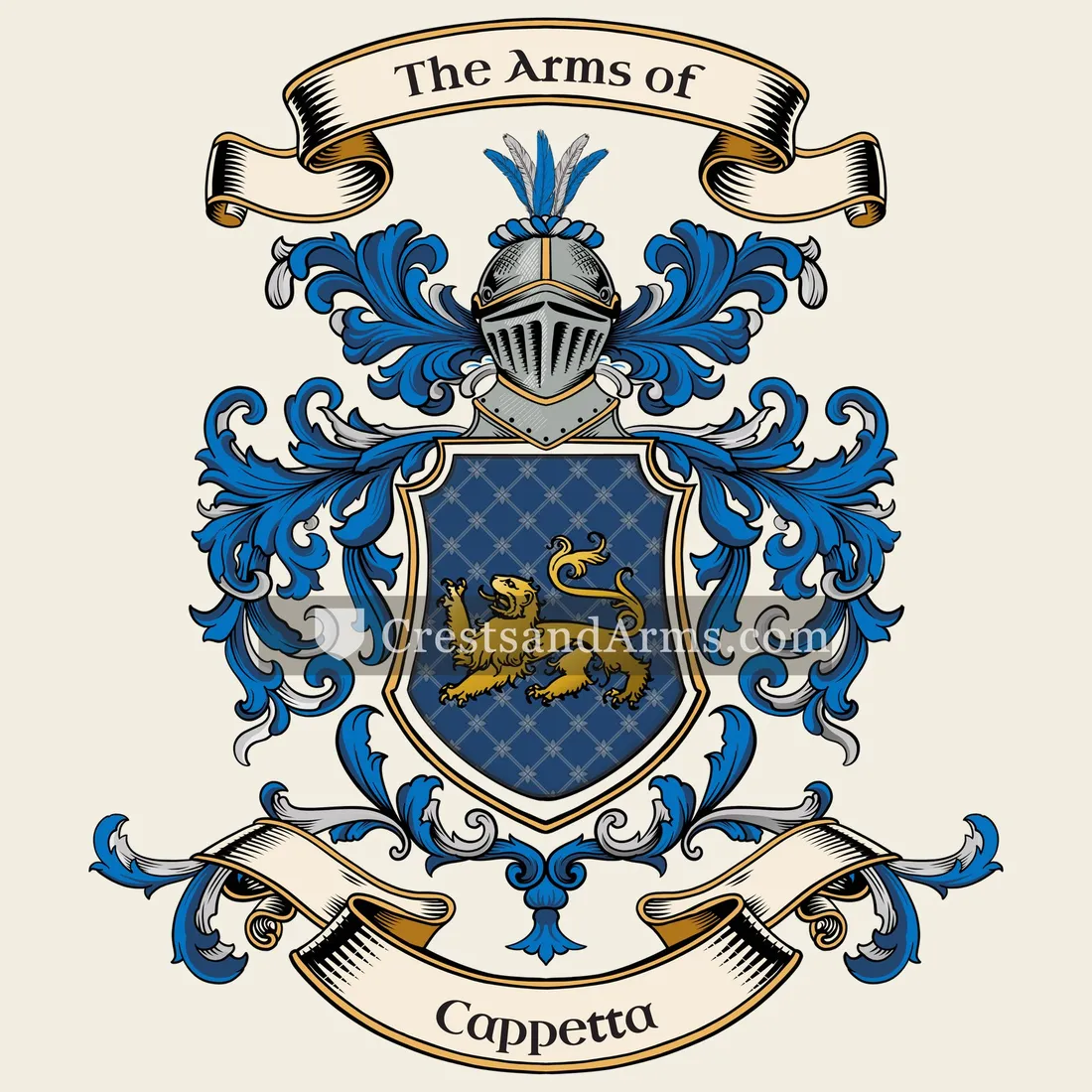
The Cappetta arms were recorded in Catalonia, c. 1722.
Catalonia lived by sea trade, and its merchant houses were as powerful as its landowners. Both sorts of family took arms, and Barcelona kept records of the houses entitled to bear them.
This is where the arms were entered in the register. Families often moved to other parts of the country, so the same name can turn up in more than one region.
The body that granted and recorded arms in Spain in this period.
Philip V of Spain
Sovereign of the period
Philip V of Spain
1714–1724
Reigning in Spain when the Cappetta arms are first recorded.
How Arms Worked in Spain
In Spain, a coat of arms was considered a form of property that belonged to the entire family line. These arms were passed down from a father to all his children equally. Younger branches of the family usually kept the original design without needing to add any special marks to distinguish their specific line.
Granting authority
The Cronista Rey de Armas was the official body that regulated and granted coats of arms throughout Spain.
How they got arms
Families often obtained their arms through royal grants or by proving their noble status to the official heraldic authority.
Where arms were recorded
Coats of arms were officially recorded in the registers of the Cronista Rey de Armas starting in 1496.
The family's standing
Recorded among the armigerous families of Catalonia.
Origin & History of the Cappetta Family in Spain
The surname Cappetta carries deep roots within the Mediterranean region, with significant historical records placing the family in Catalonia by the year 1722. The name itself is thought to be derived from the Italian word "cappa," which refers to a type of hooded cloak or cape worn during the medieval period. It is likely that the name began as a descriptive nickname for a person who frequently wore such a garment or perhaps for a craftsman who made them. As families moved across trade routes between Italy and the Iberian Peninsula, the name became established in Spanish territories. By the early 18th century, members of the Cappetta family were integrated into the local Catalan society, where they participated in the agricultural and urban life of the region. This transition from a simple descriptive label to a formal family name reflects the broader patterns of migration and social development that shaped many European lineages during that era.
Cappetta Meaning & Related Branches
Root word
Cappa
Latin term for a hooded cloak or cape.
This name
CappettaA diminutive form referring to someone who wore a small cape or cloak.
also spelled
Kapet
Capett
Capeth
Capay
Documented Sources
J. B. Rietstap, Armorial Général, Gouda: G. B. van Goor Zonen, 1884–87
Alcover, Antoni Maria and Moll, Francesc de Borja, Diccionari català-valencià-balear, 1962
Moll, Francesc de Borja, Els llinatges catalans, 1959
Arxiu de la Corona d'Aragó, Registres de la Reial Audiència
Digital archive packCoat of arms PNG, gold border print PDF, vector SVG and the certificate of authenticity. Sent to your email in minutes.


 lionCourage, strength and royalty
 lionCourage, strength and royalty