Map of France showing where the Capulaet arms are recorded
The Capulaet arms were recorded in Normandie, c. 1663.
Normandie held a dense crowd of knightly families on some of the best farmland in France. Its men had fought and settled abroad for generations, and a family that sent sons to war needed a shield they could be recognised by.
This is where the arms were entered in the register. Families often moved to other parts of the country, so the same name can turn up in more than one region.
The body that granted and recorded arms in France in this period.
Louis XIV of France
Sovereign of the period
Louis XIV of France
1643–1715
Reigning in France when the Capulaet arms are first recorded.
How Arms Worked in France
In France, a coat of arms was a mark of honor that passed down through the male line to all legitimate descendants. Families often used the same shield without changes to show their shared heritage. If a branch wanted to stand out, they could add a small mark to their shield to show their specific place in the family tree.
Granting authority
The Juge d'armes de France acted as the official authority that regulated and verified coats of arms across the country.
How they got arms
Families typically inherited their arms from ancestors, though they could also receive them through royal grants or by proving their noble status.
Where arms were recorded
Coats of arms were officially recorded in the Armorial Général de France, which began its main collection in the year 1696.
The family's standing
Recorded among the armigerous families of Normandie.
Origin & History of the Capulaet Family in France
The family name Capulaet traces its roots back to the northern regions of France, with documented evidence confirming the presence of family members in the province of Normandie by 1663. During the seventeenth century, Normandie was a hub of agricultural activity and maritime trade, which likely shaped the daily lives and social standing of the family. Many families in this region during that era were deeply connected to the local parish systems, which served as the primary method for recording births, marriages, and deaths. The name itself suggests a connection to the linguistic traditions of the French language, potentially evolving from local dialects or occupational descriptions common to the area. As the family established itself in the Norman countryside, they became part of the broader demographic shifts that defined rural life in France before the turn of the eighteenth century. By remaining in this region, the early members of the family helped contribute to the long-standing cultural and historical identity of the Norman people.
Meaning of the Capulaet family crest colors & symbols
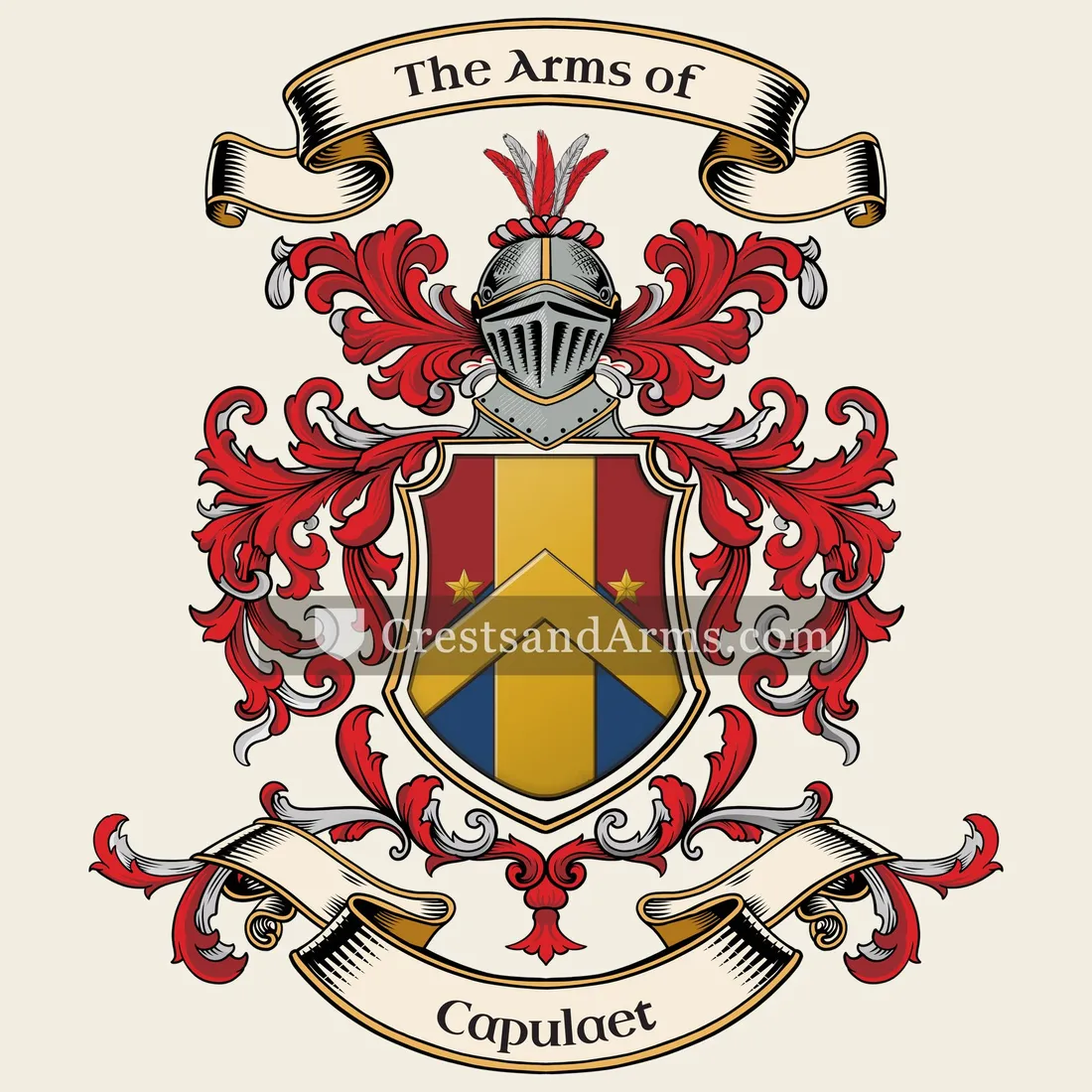
Symbols on this shield
paleMilitary strength, and a fortified defence
chevronProtection, and faithful service completed
mulletThe third son, and a divine quality from above
Colours
Red (Gules)Means: Military strength
Blue (Azure)Means: Loyalty and truth
Gold (Or)Means: Generosity
Historical info
Source
J. B. Rietstap, Armorial Général, Gouda: G. B. van Goor Zonen, 1884–87
Blazon (the actual original written record)
“De gu. au pal d'or, et trois chev. d'or, br. sur le pal; le champ chapé d'azur, à deux étoiles (5) d'or.”
SwitzerlandValais, c. 1745
Digital archive packCoat of arms PNG, gold border print PDF, vector SVG and the certificate of authenticity. Sent to your email in minutes.
Map of Switzerland showing where the Capulaet arms are recorded
The Capulaet arms were recorded in Valais, c. 1745.
This is where the arms were entered in the register. Families often moved to other parts of the country, so the same name can turn up in more than one region.
The body that granted and recorded arms in Switzerland in this period.
How Arms Worked in Switzerland
In Switzerland, coats of arms were not restricted to the nobility and were often adopted by common citizens and families. These symbols were passed down through generations to show family identity. When branches of a family grew, they often changed small details of the design to distinguish their own line from the original group.
Granting authority
Cantonal and civic authorities managed the use of coats of arms within their specific regions and local jurisdictions.
How they got arms
Families typically assumed their own coats of arms based on local custom rather than receiving them from a central monarch.
Where arms were recorded
Arms were recorded in various cantonal and civic registers starting from the fourteenth century throughout the Swiss region.
The family's standing
Recorded among the armigerous families of Switzerland.
Origin & History of the Capulaet Family in Switzerland
The Capulaet family name traces its roots to the rugged terrain of the Valais region in Switzerland, where records confirm their presence as early as 1745. During this period, families in the alpine valleys were deeply connected to the land and the local parish communities. The name likely emerged from the unique linguistic blend of the area, where French and German influences shaped how people identified themselves and their ancestors. Life in the eighteenth-century Valais was defined by harsh winters and a reliance on communal agriculture, which forced families to build strong local networks to survive. As members of the Capulaet family established themselves in these mountain villages, they became part of the social fabric that defined the region for generations. Their early history reflects the broader story of Swiss mountain families who maintained deep ties to their home valleys while navigating the changing political landscape of the Swiss Confederation.
Capulaet Meaning & Related Branches
Root word
Capulus
Latin term referring to a handle, hilt, or a small chest.
This name
CapulaetDerived from a topographic or occupational descriptor for someone associated with a handle or small container.
also spelled
Chappelet
Shaplay
Documented Sources
J. B. Rietstap, Armorial Général, Gouda: G. B. van Goor Zonen, 1884–87
Archives départementales de la Seine-Maritime, Registres paroissiaux et d'état civil
Delisle, Léopold, Études sur la condition de la classe agricole et l'état de l'agriculture en Normandie au moyen âge, 1851
Musset, Lucien, Histoire de la Normandie, 1970
Digital archive packCoat of arms PNG, gold border print PDF, vector SVG and the certificate of authenticity. Sent to your email in minutes.


 chevronProtection, and faithful service completed
 churchFaith, and the endowment of a house of God
 chevronProtection, and faithful service completed
 churchFaith, and the endowment of a house of God
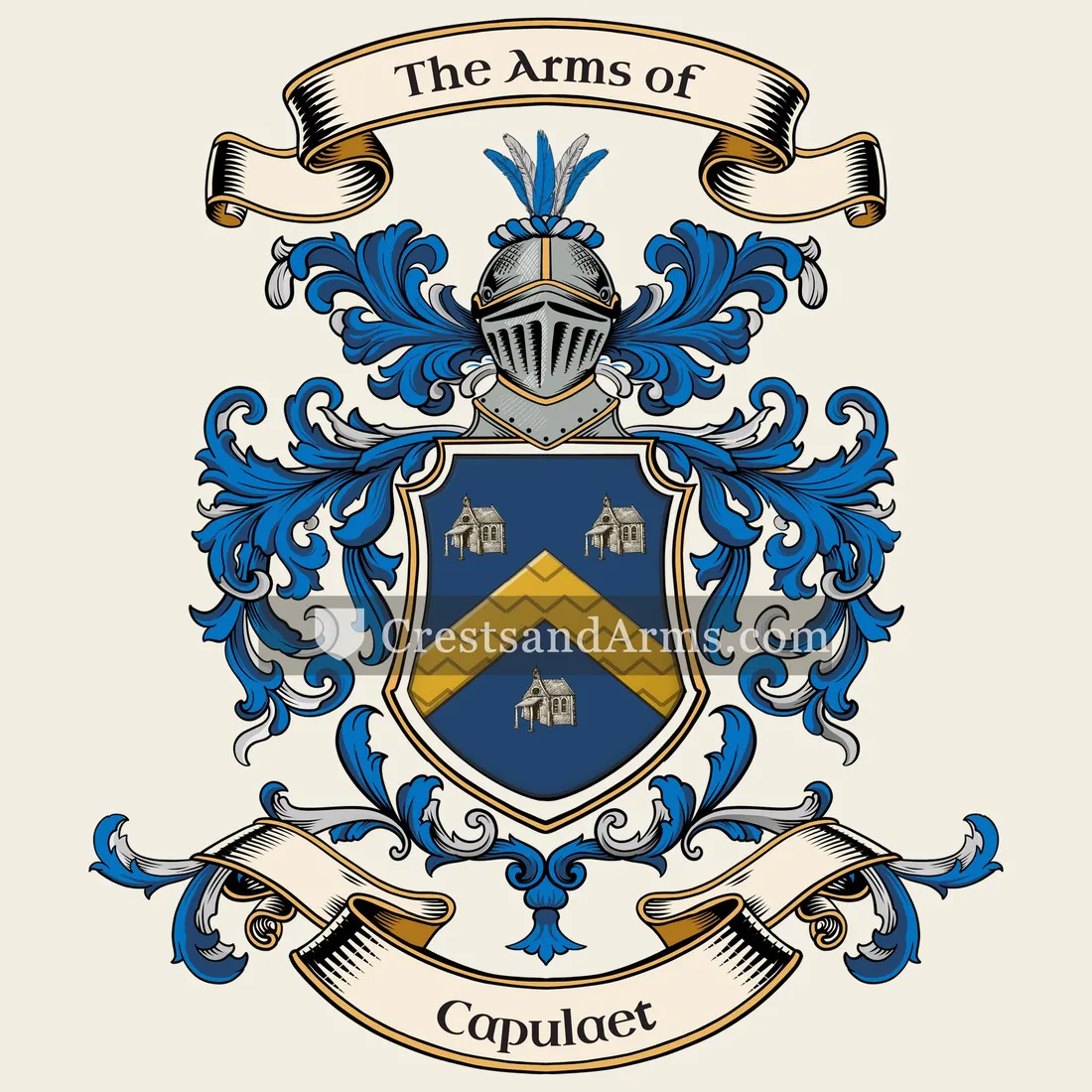


 paleMilitary strength, and a fortified defence
 mulletThe third son, and a divine quality from above