Map of France showing where the Capulets arms are recorded
The Capulets arms were recorded in Normandie, c. 1663.
Normandie held a dense crowd of knightly families on some of the best farmland in France. Its men had fought and settled abroad for generations, and a family that sent sons to war needed a shield they could be recognised by.
This is where the arms were entered in the register. Families often moved to other parts of the country, so the same name can turn up in more than one region.
The body that granted and recorded arms in France in this period.
Louis XIV of France
Sovereign of the period
Louis XIV of France
1643–1715
Reigning in France when the Capulets arms are first recorded.
How Arms Worked in France
In France, a coat of arms was a mark of honor that passed down through the male line to all legitimate descendants. Families often used the same shield without changes to show their shared heritage. If a branch wanted to stand out, they could add a small mark to their shield to show their specific place in the family tree.
Granting authority
The Juge d'armes de France acted as the official authority that regulated and verified coats of arms across the country.
How they got arms
Families typically inherited their arms from ancestors, though they could also receive them through royal grants or by proving their noble status.
Where arms were recorded
Coats of arms were officially recorded in the Armorial Général de France, which began its main collection in the year 1696.
The family's standing
Recorded among the armigerous families of Normandie.
Origin & History of the Capulets Family in France
The history of the Capulet family name in France is deeply connected to the rural landscape of Normandy during the seventeenth century. By 1663, records confirm that members of the family were established in this northern region, where they likely worked as landholders or tradespeople within the local parish system. During this era, families often took names that reflected their specific village or a unique physical trait, and the Capulet name likely evolved from these local roots as the family moved through the French countryside. Life for these early ancestors was defined by the strict social structures of the time, where they would have been subject to the tax rolls and church registrations that tracked the movement of common citizens. While the name later gained fame through literature, its true origins lie in the quiet, agricultural life of the Norman provinces where the family built their first documented foundations.
Meaning of the Capulets family crest colors & symbols
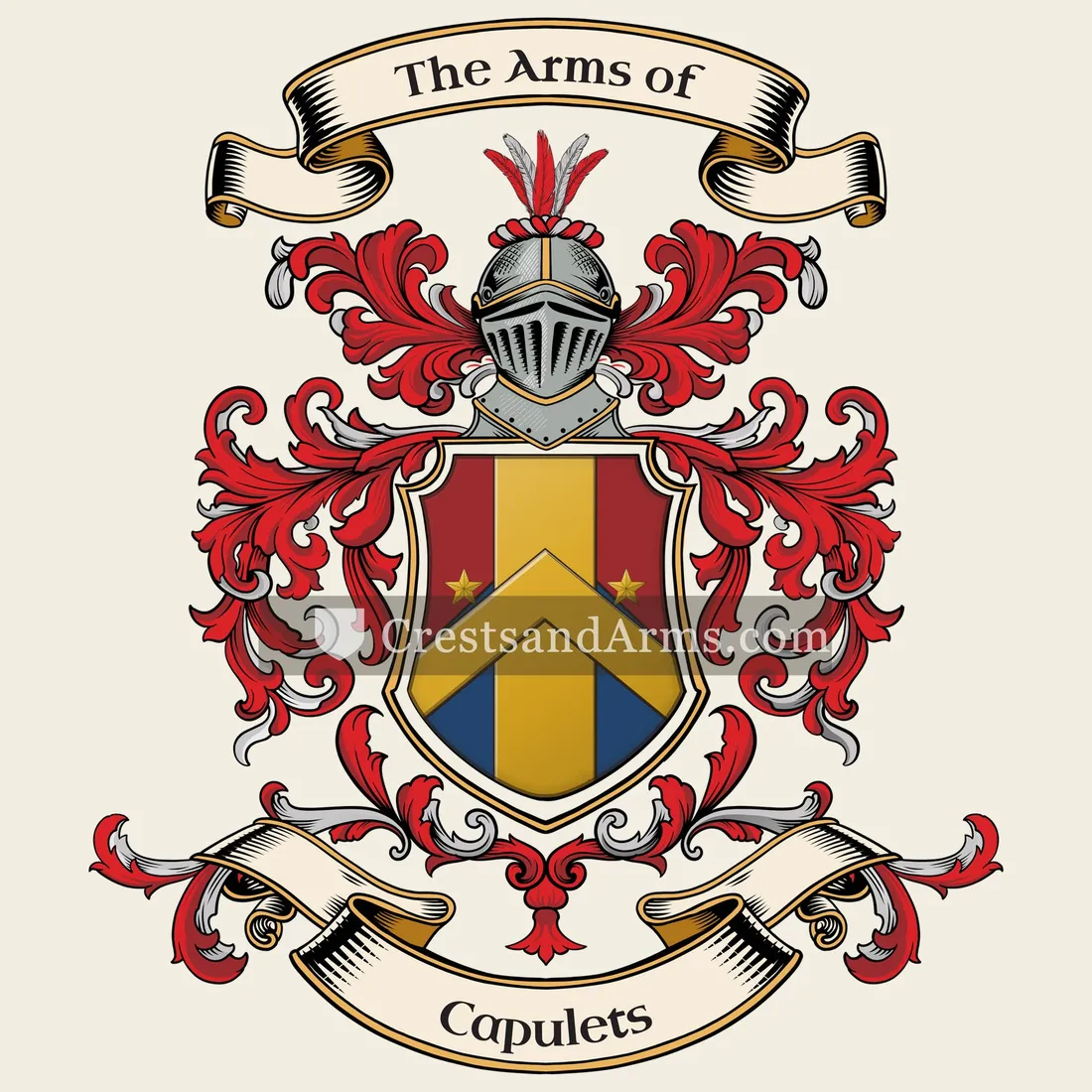
Symbols on this shield
paleMilitary strength, and a fortified defence
chevronProtection, and faithful service completed
mulletThe third son, and a divine quality from above
Colours
Red (Gules)Means: Military strength
Blue (Azure)Means: Loyalty and truth
Gold (Or)Means: Generosity
Historical info
Source
J. B. Rietstap, Armorial Général, Gouda: G. B. van Goor Zonen, 1884–87
Blazon (the actual original written record)
“De gu. au pal d'or, et trois chev. d'or, br. sur le pal; le champ chapé d'azur, à deux étoiles (5) d'or.”
SwitzerlandValais, c. 1745
Digital archive packCoat of arms PNG, gold border print PDF, vector SVG and the certificate of authenticity. Sent to your email in minutes.
Map of Switzerland showing where the Capulets arms are recorded
The Capulets arms were recorded in Valais, c. 1745.
This is where the arms were entered in the register. Families often moved to other parts of the country, so the same name can turn up in more than one region.
The body that granted and recorded arms in Switzerland in this period.
How Arms Worked in Switzerland
In Switzerland, coats of arms were not restricted to the nobility and were often adopted by common citizens and families. These symbols were passed down through generations to show family identity. When branches of a family grew, they often changed small details of the design to distinguish their own line from the original group.
Granting authority
Cantonal and civic authorities managed the use of coats of arms within their specific regions and local jurisdictions.
How they got arms
Families typically assumed their own coats of arms based on local custom rather than receiving them from a central monarch.
Where arms were recorded
Arms were recorded in various cantonal and civic registers starting from the fourteenth century throughout the Swiss region.
The family's standing
Recorded among the armigerous families of Switzerland.
Origin & History of the Capulets Family in Switzerland
The history of the Capulet name in Switzerland is deeply connected to the rugged landscape of the Valais region. By the year 1745, records confirm that members of the family were already established residents in this mountainous area. During this period, the Valais was a collection of independent communities that relied heavily on agriculture and trade across high mountain passes. Families like the Capulets often lived in small, tight-knit villages where they managed alpine pastures and local vineyards. Because the region was isolated by geography, the family name became firmly rooted in the local culture through generations of farming and community leadership. Their presence in the mid-18th century suggests that they were part of the hardworking groups who shaped the social and economic life of the Swiss Alps long before modern industrialization changed the valley forever.
Capulets Meaning & Related Branches
Root word
Caput
Latin word meaning head or chief
This name
CapuletsDerived from a nickname for a person with a large head or a leader
also spelled
Chappelet
Shaplay
Documented Sources
J. B. Rietstap, Armorial Général, Gouda: G. B. van Goor Zonen, 1884–87
Archives départementales de la Seine-Maritime, Registres paroissiaux et d'état civil, 1663
Boudet, Jacques, Les noms de famille en France, 1995
Dauzat, Albert, Dictionnaire étymologique des noms de famille et prénoms de France, 1951
Digital archive packCoat of arms PNG, gold border print PDF, vector SVG and the certificate of authenticity. Sent to your email in minutes.


 chevronProtection, and faithful service completed
 churchFaith, and the endowment of a house of God
 chevronProtection, and faithful service completed
 churchFaith, and the endowment of a house of God
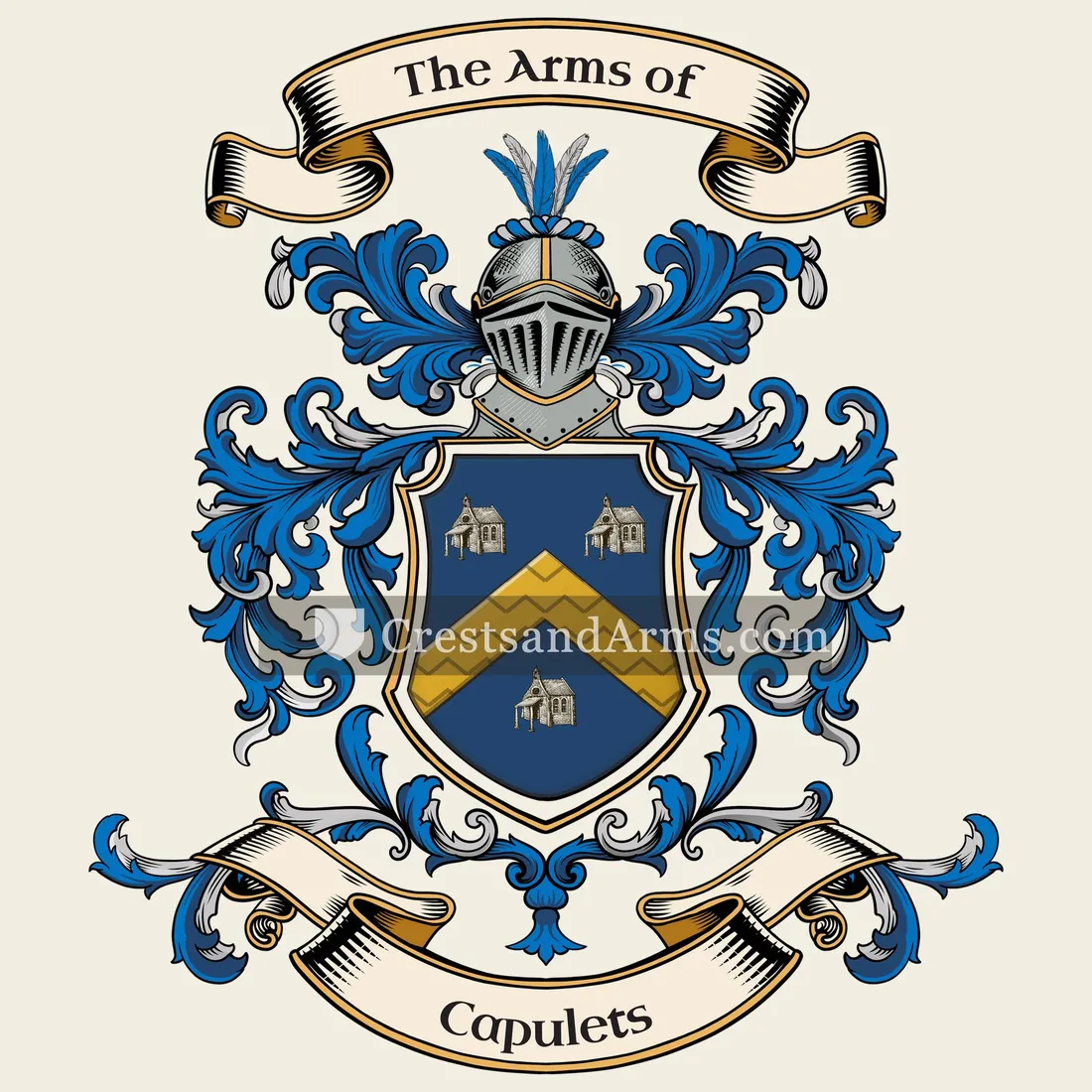


 paleMilitary strength, and a fortified defence
 mulletThe third son, and a divine quality from above