Map of Spain showing where the Carder arms are recorded
The Carder arms were recorded in Spain, c. 1722.
Arms such as these were typically recorded in Castile.
Castile was the heart of Spain and the source of most of its noble families. Land won in the long wars against the Moors was granted out to fighting men, and a man granted land was granted arms along with it.
This is where the arms were entered in the register. Families often moved to other parts of the country, so the same name can turn up in more than one region.
The body that granted and recorded arms in Spain in this period.
Philip V of Spain
Sovereign of the period
Philip V of Spain
1714–1724
Reigning in Spain when the Carder arms are first recorded.
How Arms Worked in Spain
In Spain, a coat of arms was considered a form of property that belonged to the entire family line. These arms were passed down from a father to all his children equally. Younger branches of the family usually kept the original design without needing to add any special marks to distinguish their specific line.
Granting authority
The Cronista Rey de Armas was the official body that regulated and granted coats of arms throughout Spain.
How they got arms
Families often obtained their arms through royal grants or by proving their noble status to the official heraldic authority.
Where arms were recorded
Coats of arms were officially recorded in the registers of the Cronista Rey de Armas starting in 1496.
The family's standing
Recorded among the armigerous families of Spain.
Origin & History of the Carder Family in Spain
The family name Carder carries a rich history that traces back to the vibrant cultural landscape of Spain. By the year 1722, records confirm that members of the family were well-established in the region of Castile. The name itself is often linked to the professional activities of ancestors who worked in the textile industry. A "carder" was a skilled worker who prepared raw wool or flax fibers for spinning by using a special tool called a card. This occupation was essential to the local economy, as it turned raw materials into the high-quality fabrics that were traded throughout the Iberian Peninsula. Over time, as families moved and settled in new areas, the name became a permanent marker of this hardworking heritage. It serves as a reminder of a time when a person’s surname was often a direct reflection of their contribution to their community.
Carder Meaning & Related Branches
Root word
Carduus
Latin term referring to a thistle or prickly plant.
This name
CarderAn occupational surname for a person who carded wool or worked with thistles.
also spelled
Corderr
Korder
Cordere
Documented Sources
J. B. Rietstap, Armorial Général, Gouda: G. B. van Goor Zonen, 1884–87
Archivo de la Real Chancillería de Valladolid, Registro de Ejecutorias, 1722
Moll, Francesc de Borja, Els llinatges catalans: Catalunya, País Valencià i les Illes, 1959
Pescador del Hoyo, María del Carmen, La población de Castilla en el siglo XVIII, 1964
Digital archive packCoat of arms PNG, gold border print PDF, vector SVG and the certificate of authenticity. Sent to your email in minutes.


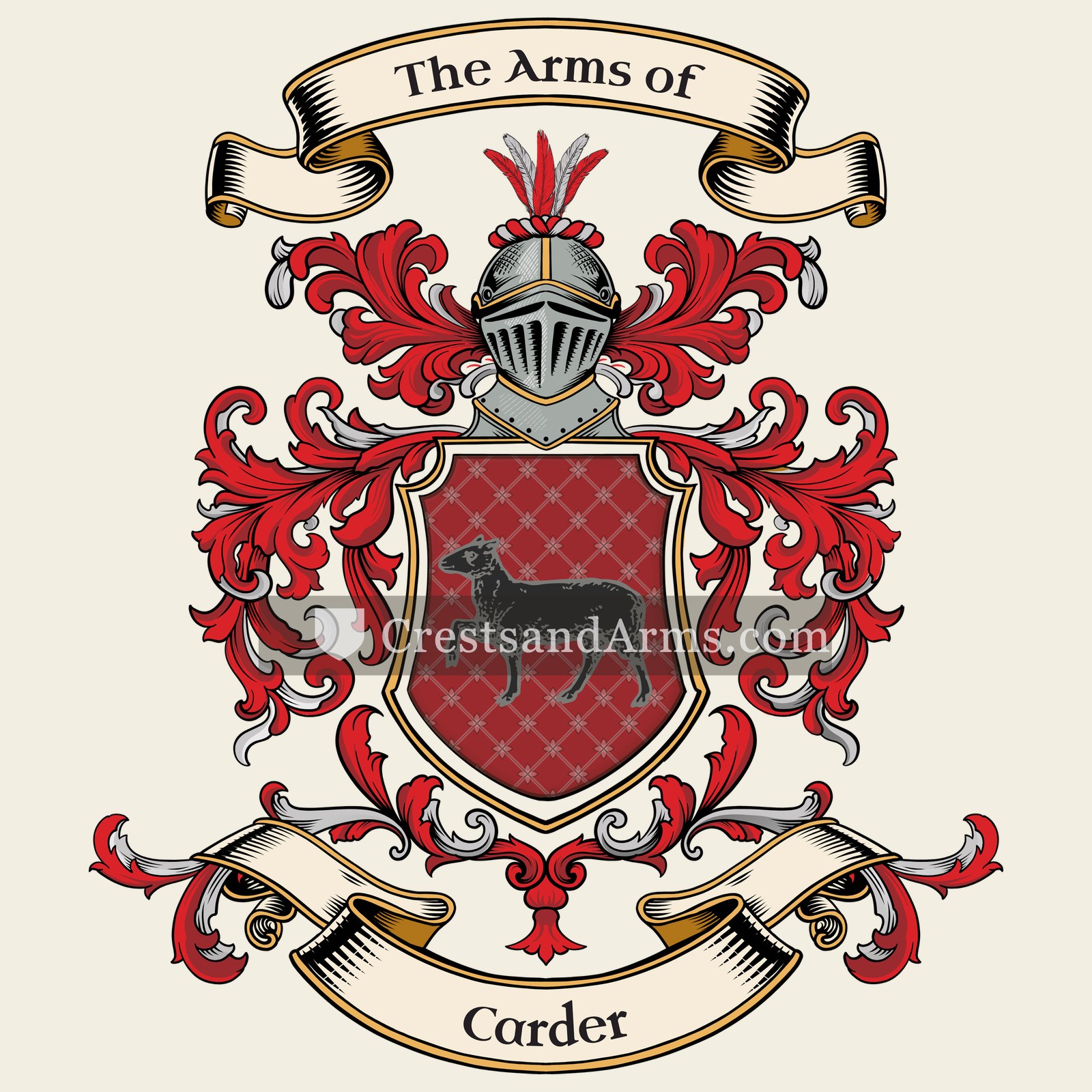
 lambGentleness, patience and faith
 lambGentleness, patience and faith