Map of Belgium showing where the Carlin arms are recorded
The Carlin arms were recorded in Brabant, c. 1737.
Brabant lay at the heart of the Low Countries, where the trade routes met. Its towns were wealthy and its landowners many, and both kinds of family kept arms, which is why the region is so heavily represented.
This is where the arms were entered in the register. Families often moved to other parts of the country, so the same name can turn up in more than one region.
The body that granted and recorded arms in Belgium in this period.
Charles VI, Holy Roman Emperor
Sovereign of the period
Charles VI, Holy Roman Emperor
1711–1740
Reigning in Belgium when the Carlin arms are first recorded.
How Arms Worked in Belgium
In Belgium, a coat of arms is considered personal property that is passed down through the male line to legitimate descendants. Families often use the same shield design across generations to show their shared heritage. If a branch of the family wants to change the design, they must apply for an official update to their specific version of the arms.
Granting authority
The Conseil héraldique is the official body that regulates and approves all coats of arms in Belgium.
How they got arms
Families obtain their coats of arms through formal royal grants or by confirming their historical right to use existing designs.
Where arms were recorded
All approved coats of arms are officially recorded in the public registers of the Conseil héraldique since 1844.
The family's standing
Recorded among the armigerous families of Brabant.
Origin & History of the Carlin Family in Belgium
The family name Carlin has deep roots in the historical region of Brabant, where records confirm members of the family were established by 1737. During this period, the name was closely tied to the social and economic fabric of the Low Countries, a region defined by its bustling trade centers and complex local administrations. Families like the Carlins often lived in areas characterized by a mix of agricultural activity and growing urban craftsmanship. As residents of Brabant, they were part of a society that valued community ties and local record-keeping, which allowed their presence to be documented in parish registers and tax rolls. By studying these early records, historians can see how the family integrated into the local population during a time of significant cultural change in Western Europe. The name itself reflects the linguistic traditions of the region, where names often evolved through local dialects and regional naming customs.
Coat of Arms & Family Crest Details
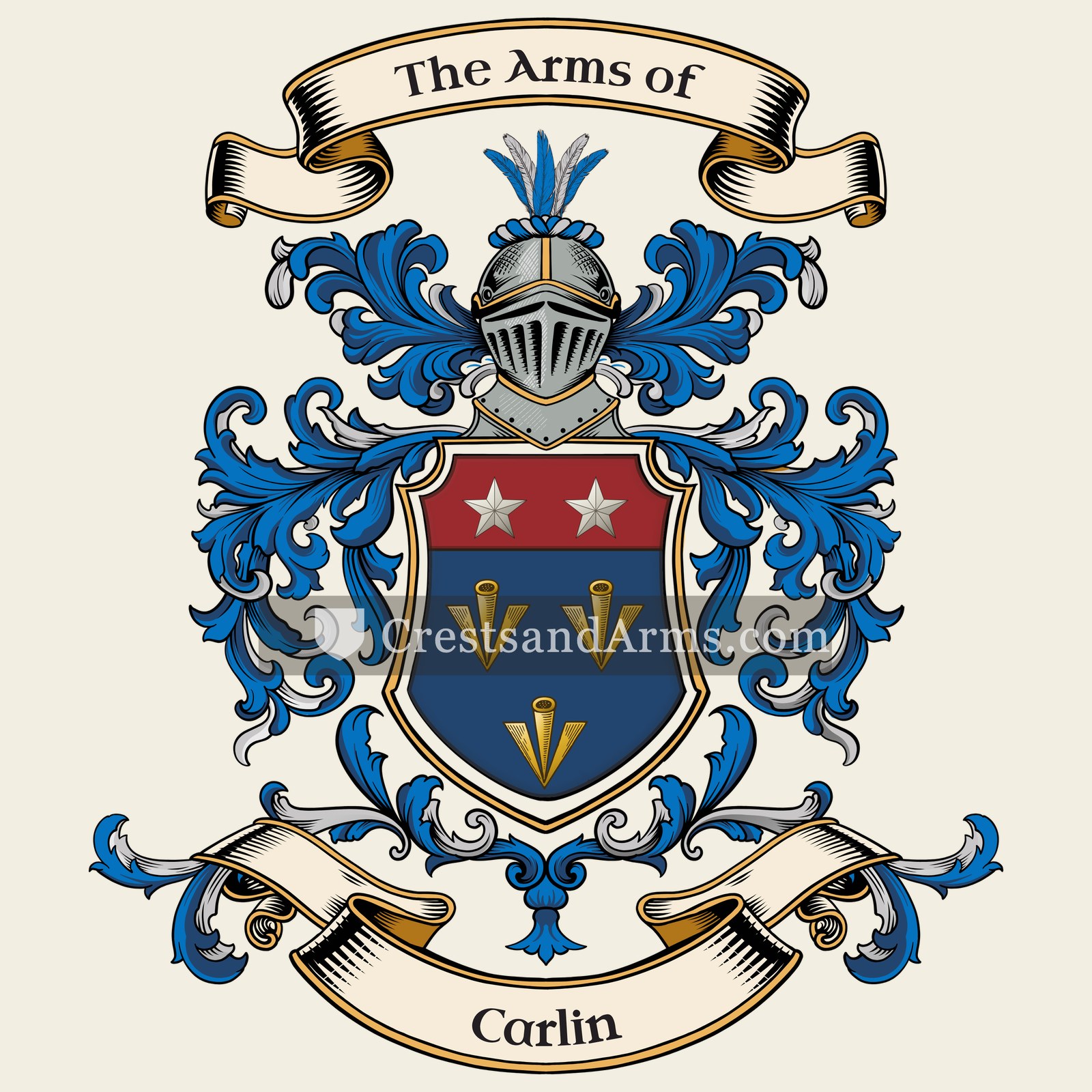
Symbols on this shield
chiefAuthority, wisdom and dominion
arrowReadiness for battle, and affliction endured
mulletThe third son, and a divine quality from above
Colours
Blue (Azure)Means: Loyalty and truth
Red (Gules)Means: Military strength
Gold (Or)Means: Generosity
Silver (Argent)Means: Peace and sincerity
Historical info
Source
J. B. Rietstap, Armorial Général, Gouda: G. B. van Goor Zonen, 1884–87
Blazon (the actual original written record)
“D'azur à trois flèches d'or, rangées en fasce; au chef de gu., ch. de deux étoiles d'arg.; la flèche du milieu br. sur le chef.”
AustriaVienne Dauphiné, c. 1772
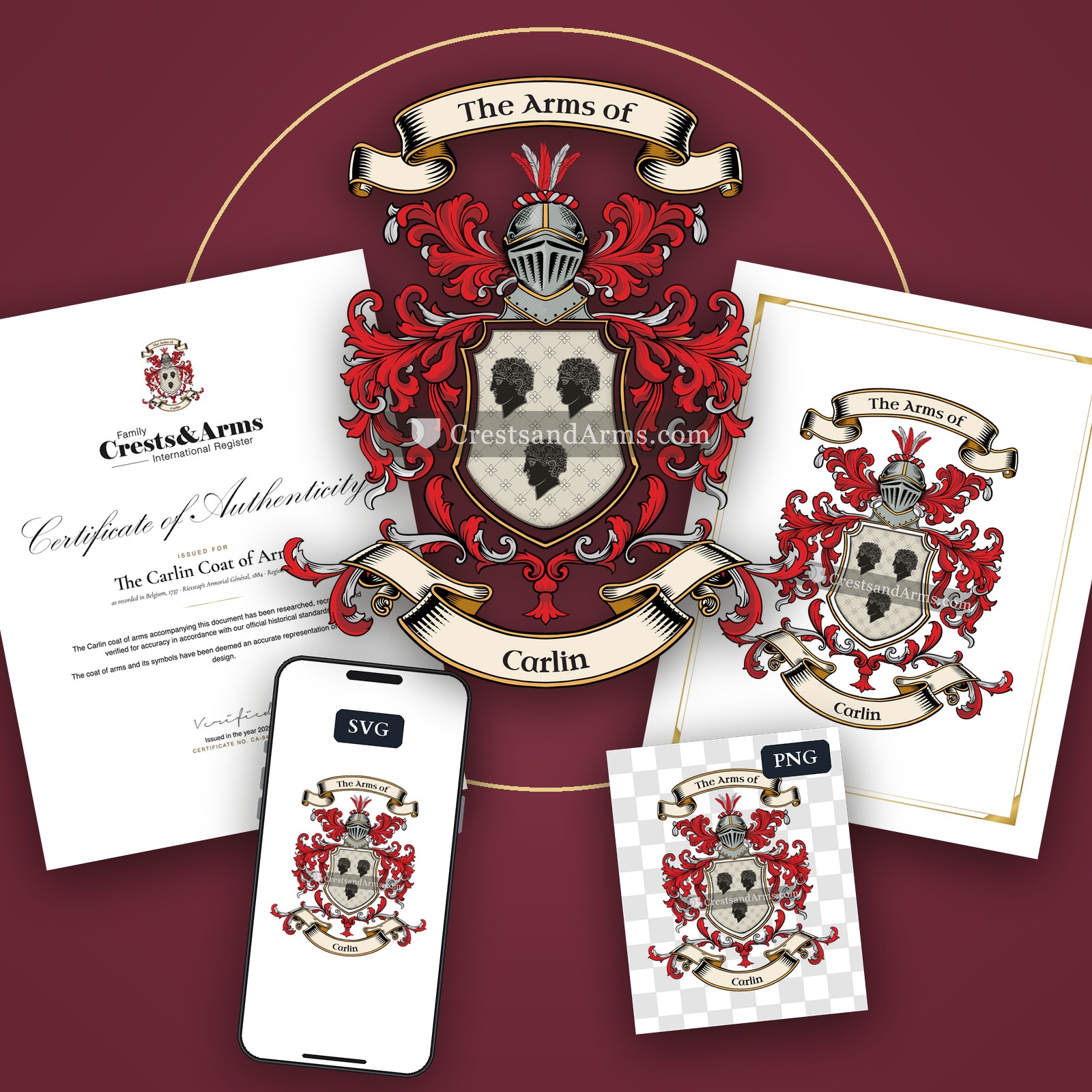
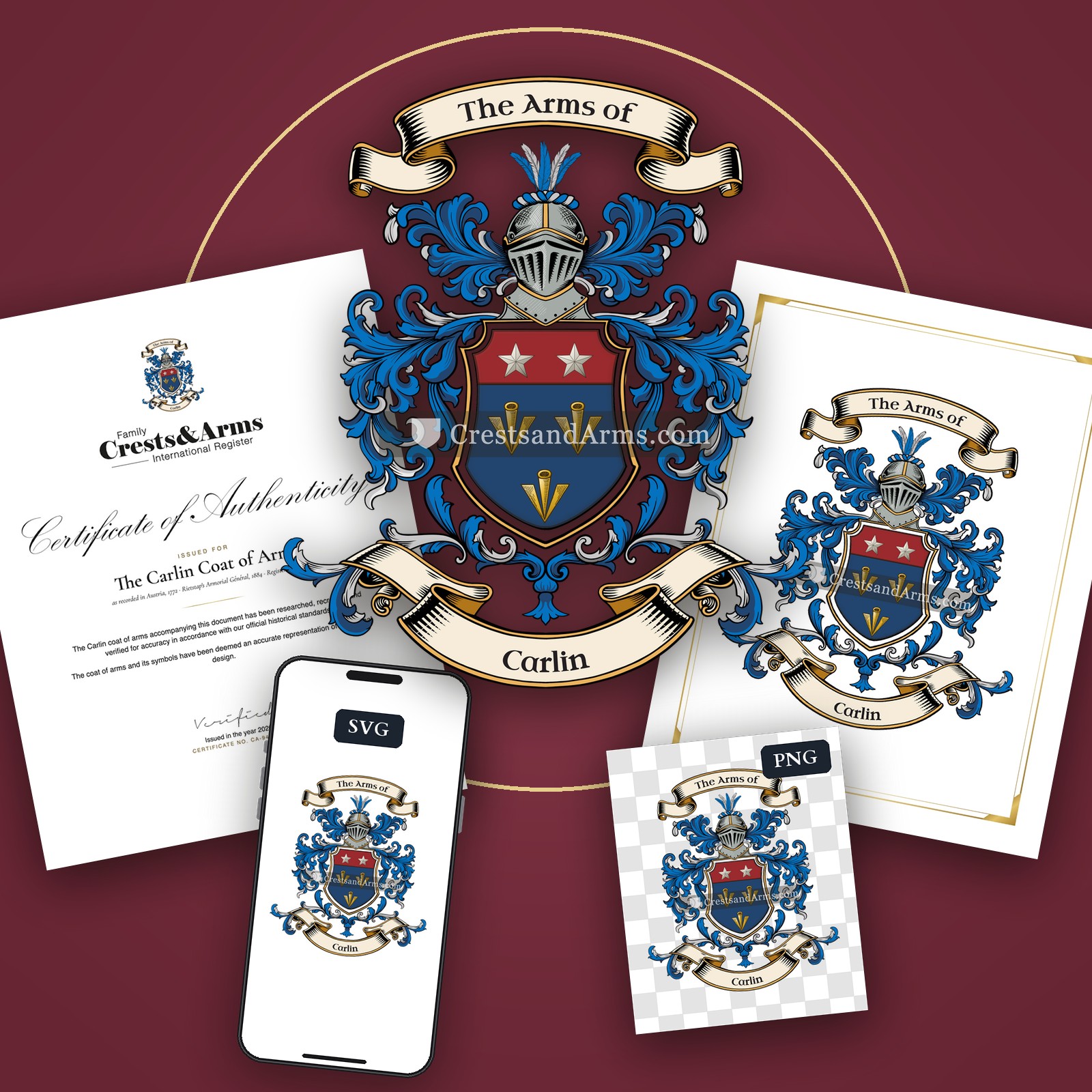
Digital archive packCoat of arms PNG, gold border print PDF, vector SVG and the certificate of authenticity. Sent to your email in minutes.
Map of Austria showing where the Carlin arms are recorded
The Carlin arms were recorded in Vienne Dauphiné, c. 1772.
This is where the arms were entered in the register. Families often moved to other parts of the country, so the same name can turn up in more than one region.
Region
Vienne Dauphiné
Town
Vienne Dauphiné
First recorded
1772
Granting Authority for the Carlin Arms
Imperial and Royal chancery
Sodacan · CC BY-SA 3.0
The body that granted and recorded arms in Austria in this period.
Joseph II, Holy Roman Emperor
Sovereign of the period
Joseph II, Holy Roman Emperor
1765–1790
Reigning in Belgium when the Carlin arms are first recorded.
How Arms Worked in Austria
Austrian coats of arms were often linked directly to noble titles granted by the Emperor. These symbols belonged to the entire family line rather than just one individual. When a family grew, new branches kept the original design without needing to change it. This system allowed all members of a noble house to share the same identity across many generations.
Granting authority
The Imperial and Royal chancery managed all heraldic matters and controlled the official granting of arms throughout the Austrian lands.
How they got arms
Families typically received their arms through a formal imperial decree that often accompanied the elevation of a person to noble status.
Where arms were recorded
Official records of these grants were kept in the Imperial Register of Nobility which began its formal documentation process in 1453.
The family's standing
Recorded among the armigerous families of Austria.
Origin & History of the Carlin Family in Austria
The family name Carlin holds deep roots in the historical landscape of the Dauphiné region, particularly within the city of Vienne. By the late eighteenth century, the family was well established in this area, which served as a vital crossroads for trade and culture near the Rhône River. While the name is often associated with broader European migrations, the presence of the Carlin family in Vienne by 1772 suggests they were integrated into the local social fabric during a time of significant transition in French history. Members of the family likely participated in the agricultural or merchant activities that defined the region, contributing to the local community long before the political upheavals of the late 1700s. Their documented presence in official records from this period provides a clear link to the professional and civic life of Vienne, marking them as a family that helped shape the identity of this historic town.
Carlin Meaning & Related Branches
Root word
Karl
A Germanic word meaning free man or husband.
This name
CarlinA diminutive form indicating a descendant of a free man.
also spelled
Karlin
Carlyn
Related arms
Carlenvariant spelling
Balletrecorded with Carlin, same area
Carronrecorded with Carlin, same area
Clavelrecorded with Carlin, same area
Documented Sources
J. B. Rietstap, Armorial Général, Gouda: G. B. van Goor Zonen, 1884–87
Archives: State Archives in Belgium (Rijksarchief), Parochieregisters van Brabant
Archives: City Archives of Leuven (Stadsarchief Leuven), Bevolkingsregisters en burgerlijke stand
Author: De Smet, A., Geschiedenis van Brabant, 1974
Digital archive packCoat of arms PNG, gold border print PDF, vector SVG and the certificate of authenticity. Sent to your email in minutes.


 savages head affrontyAn enemy overcome
 savages head affrontyAn enemy overcome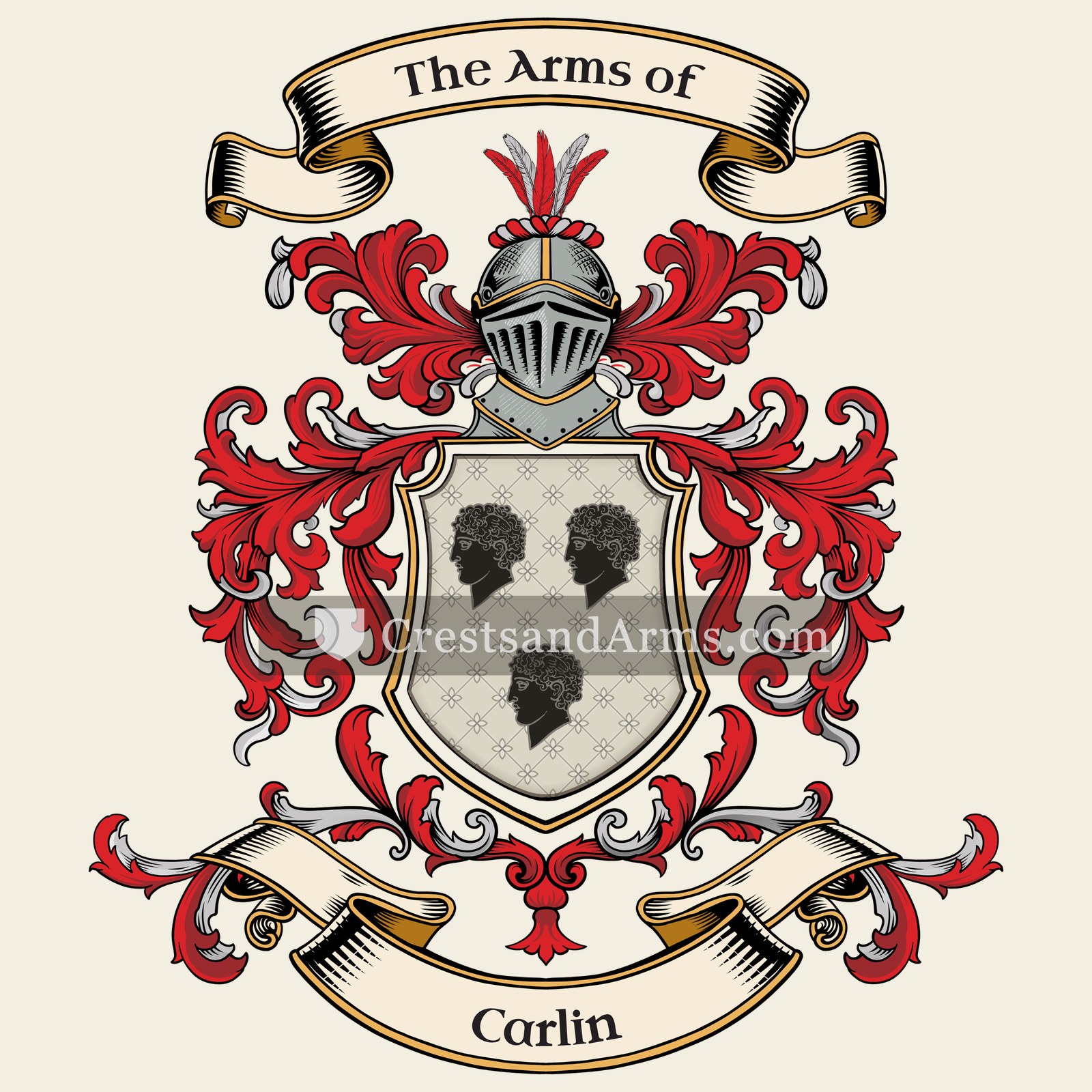


 chiefAuthority, wisdom and dominion
 arrowReadiness for battle, and affliction endured
 mulletThe third son, and a divine quality from above