Map of France showing where the Carriero arms are recorded
The Carriero arms were recorded in Lorraine, c. 1486.
Lorraine sat on the border between France and the German lands, and border country bred soldiers. Families here held small estates and served in arms, and a fighting man was exactly the sort who carried a shield of his own.
This is where the arms were entered in the register. Families often moved to other parts of the country, so the same name can turn up in more than one region.
The body that granted and recorded arms in France in this period.
Charles VIII of France
Sovereign of the period
Charles VIII of France
1483–1498
Reigning in France when the Carriero arms are first recorded.
How Arms Worked in France
In France, a coat of arms was a mark of honor that passed down through the male line to all legitimate descendants. Families often used the same shield without changes to show their shared heritage. If a branch wanted to stand out, they could add a small mark to their shield to show their specific place in the family tree.
Granting authority
The Juge d'armes de France acted as the official authority that regulated and verified coats of arms across the country.
How they got arms
Families typically inherited their arms from ancestors, though they could also receive them through royal grants or by proving their noble status.
Where arms were recorded
Coats of arms were officially recorded in the Armorial Général de France, which began its main collection in the year 1696.
The family's standing
Recorded among the armigerous families of Lorraine.
Origin & History of the Carriero Family in France
The family name Carriero traces its roots to the historical region of Lorraine, where records confirm the presence of family members as early as 1486. During this period, Lorraine functioned as a crossroads of European culture, situated between the French Kingdom and the Holy Roman Empire. The name itself likely originated from occupational roots related to the transport of goods or the management of carts, which were essential for trade in the bustling markets of the late Middle Ages. Living in this borderland meant that the family was often caught in the shifting political landscape of the era, as the Duchy of Lorraine maintained a unique identity separate from its powerful neighbors. By establishing themselves in this region during the late fifteenth century, the early Carriero family became part of a resilient community that navigated the complex social and economic changes defining the transition from the medieval period to the Renaissance.
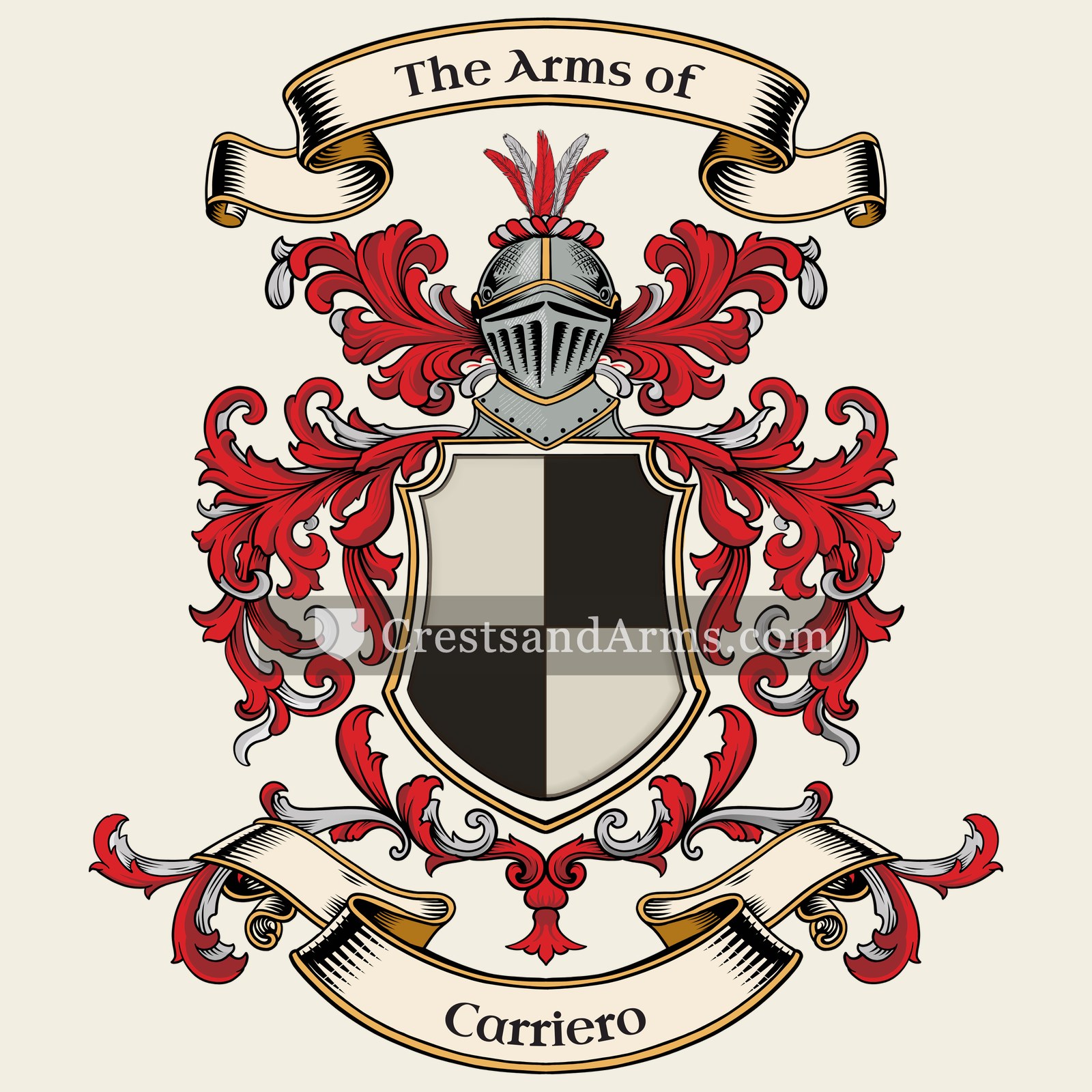
Coat of Arms & Family Crest Details
Colours
Silver (Argent)Means: Peace and sincerity
Black (Sable)Means: Constancy
Historical info
Source
J. B. Rietstap, Armorial Général, Gouda: G. B. van Goor Zonen, 1884–87
Blazon (the actual original written record)
“Ec. d'arg. et de sa.”
SwitzerlandGenève, c. 1745
Digital archive packCoat of arms PNG, gold border print PDF, vector SVG and the certificate of authenticity. Sent to your email in minutes.
Map of Switzerland showing where the Carriero arms are recorded
The Carriero arms were recorded in Genève, c. 1745.
This is where the arms were entered in the register. Families often moved to other parts of the country, so the same name can turn up in more than one region.
The body that granted and recorded arms in Switzerland in this period.
How Arms Worked in Switzerland
In Switzerland, coats of arms were not restricted to the nobility and were often adopted by common citizens and families. These symbols were passed down through generations to show family identity. When branches of a family grew, they often changed small details of the design to distinguish their own line from the original group.
Granting authority
Cantonal and civic authorities managed the use of coats of arms within their specific regions and local jurisdictions.
How they got arms
Families typically assumed their own coats of arms based on local custom rather than receiving them from a central monarch.
Where arms were recorded
Arms were recorded in various cantonal and civic registers starting from the fourteenth century throughout the Swiss region.
The family's standing
Recorded among the armigerous families of Switzerland.
Origin & History of the Carriero Family in Switzerland
The history of the Carriero family in Switzerland is deeply rooted in the vibrant urban life of Geneva during the mid-eighteenth century. By 1745, records confirm that members of the family were already established residents within the city walls. The name itself is linked to the Italian word for a carrier or a transporter of goods, which suggests that the earliest ancestors likely worked in logistics, trade, or the movement of essential supplies across the busy mountain passes connecting Italy to the Swiss cantons. As Geneva served as a major hub for international commerce and banking during this era, the family likely integrated into the city’s growing middle class by providing vital services to merchants. Their presence in the city during this time reflects the broader movement of skilled workers who traveled north from the Italian peninsula to seek new opportunities in the prosperous Swiss Republic. Through their work and daily interactions, the Carriero family became a small but significant part of the diverse social fabric that defined eighteenth-century Geneva.
Coat of Arms & Family Crest Details
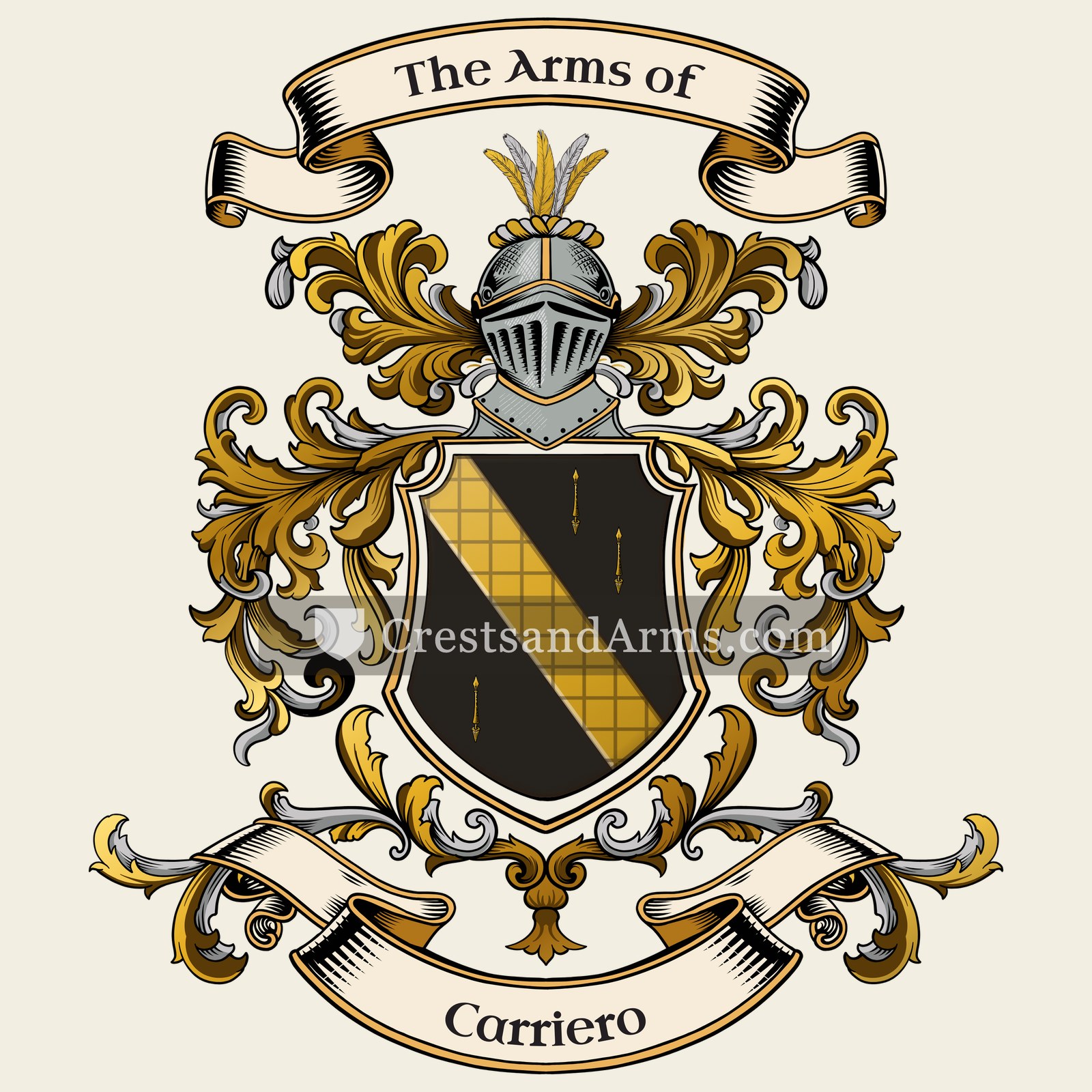
Symbols on this shield
bendDefence, and the scarf of a commander
lanceKnightly service and the tilt
Colours
Black (Sable)Means: Constancy
Gold (Or)Means: Generosity
Historical info
Source
Sir Bernard Burke, The General Armory of England, Scotland, Ireland and Wales, London: Harrison & Sons, 1884
Blazon (the actual original written record)
“Sa. a bend betw. three spears' heads or”
DerbyWirksworth · Derby, c. 1620
Digital archive packCoat of arms PNG, gold border print PDF, vector SVG and the certificate of authenticity. Sent to your email in minutes.
Map of England showing where the Carriero arms are recorded
The Carriero arms were recorded in Derby, c. 1620.
Derbyshire had lead mines in its hills and good grazing in its valleys. Both made steady money, and families who made it bought manors, which is what put their names into the heraldic records.
This is where the arms were entered in the register. Families often moved to other parts of the country, so the same name can turn up in more than one region.
The body that granted and recorded arms in England in this period.
James VI and I
Sovereign of the period
James VI and I
1603–1625
Reigning in France when the Carriero arms are first recorded.
How Arms Worked in England
English heraldry allowed arms to be shared by all legitimate descendants of the original owner. These symbols were treated as personal property that moved through the generations to all children. While the eldest son kept the original design, other family members could use the same shield without needing to change it or register their own unique versions.
Granting authority
The College of Arms in London has regulated the use of coats of arms throughout England and Wales since 1484.
How they got arms
Families typically obtained their coats of arms through a formal grant from the Crown or by proving their ancient right to them.
Where arms were recorded
All official coats of arms are recorded in the registers kept at the College of Arms, which date back to the fifteenth century.
The family's standing
Recorded among the armigerous families of Derby.
Origin & History of the Carriero Family in England
The surname Carriero carries a distinct history that traces back to the early seventeenth century in the English town of Derby. By 1620, records confirm that members of the family were already established within this bustling market town, which served as a vital hub for trade and craftsmanship in the East Midlands. The name itself is rooted in the Latin term *carrarius*, which historically referred to someone who worked as a carrier or a transporter of goods. In the context of seventeenth-century Derby, this suggests that early ancestors were likely integral to the local economy, moving essential materials like wool, lead, or coal along the region’s growing network of roads. As they settled into the community, these early family members became part of the fabric of English provincial life, navigating the social and economic shifts of the era while maintaining their trade-based identity.
Related Branches & Arms
Root word
carrus
Latin term for a wheeled vehicle or wagon.
This name
CarrieroAn occupational surname for a carter, wagoner, or someone who transported goods.
also spelled
Karrier
Carryer
Caryer
Carriar
Documented Sources
J. B. Rietstap, Armorial Général, Gouda: G. B. van Goor Zonen, 1884–87
Archives départementales de Meurthe-et-Moselle, Série B: Cours et juridictions
Lepage, Henri, Les communes de la Meurthe: journal historique des villes, bourgs, villages, hameaux et censes de ce département, 1853
Schneider, Jean, La ville de Metz aux XIIIe et XIVe siècles, 1950
Digital archive packCoat of arms PNG, gold border print PDF, vector SVG and the certificate of authenticity. Sent to your email in minutes.


 cross symbolChristian faith and service
 fishA true and generous mind, and Christian faith
 cross symbolChristian faith and service
 fishA true and generous mind, and Christian faith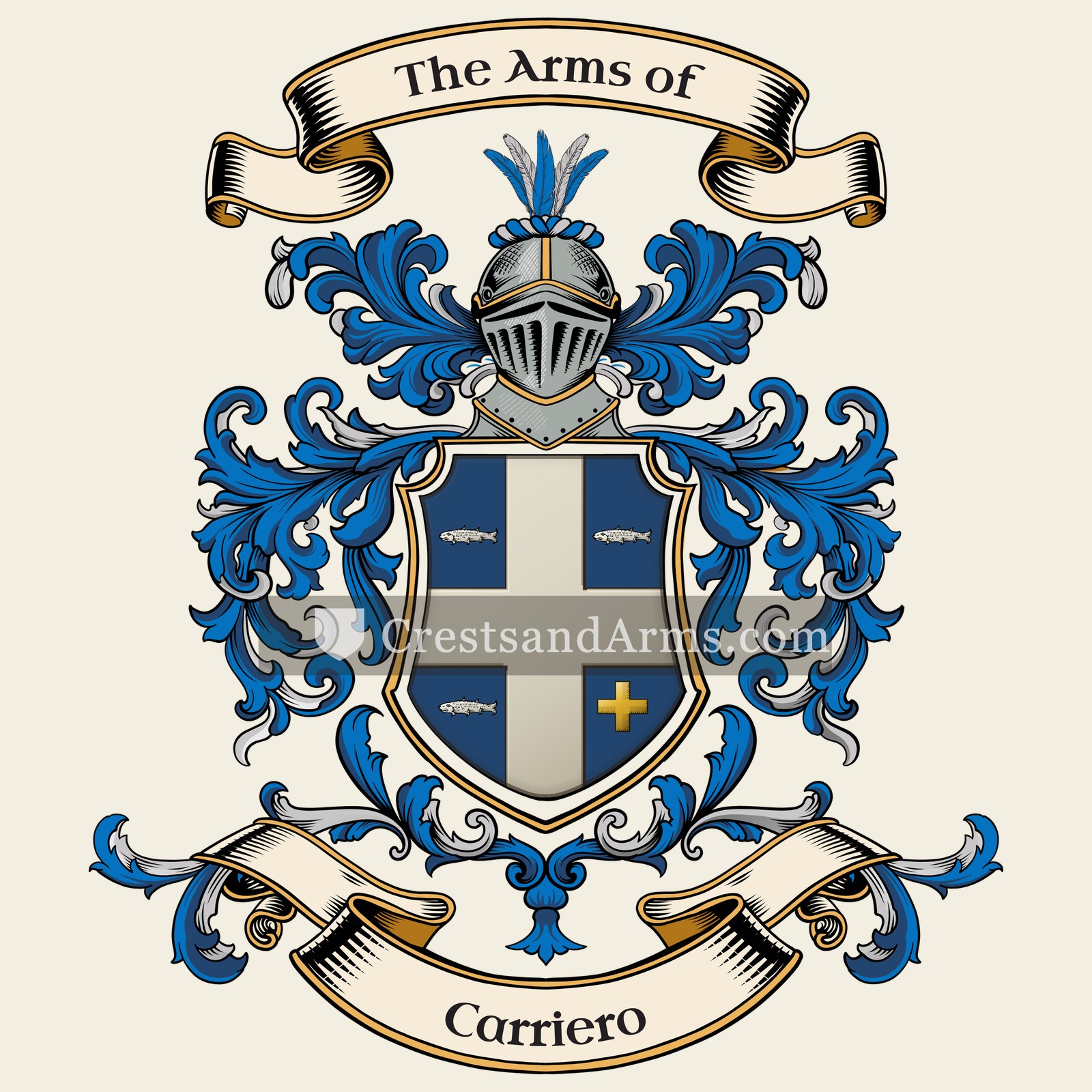



 bendDefence, and the scarf of a commander
 lanceKnightly service and the tilt