Map of Belgium showing where the Cartier arms are recorded
The Cartier arms were recorded in Hainaut, c. 1823.
Hainaut sat on the border between France and the Low Countries and was fought over for centuries. Families there held their land under arms and expected to defend it, so a shield was a working thing.
This is where the arms were entered in the register. Families often moved to other parts of the country, so the same name can turn up in more than one region.
The body that granted and recorded arms in Belgium in this period.
William I of the Netherlands
Sovereign of the period
William I of the Netherlands
1815–1840
Reigning in Belgium when the Cartier arms are first recorded.
How Arms Worked in Belgium
In Belgium, a coat of arms is considered personal property that is passed down through the male line to legitimate descendants. Families often use the same shield design across generations to show their shared heritage. If a branch of the family wants to change the design, they must apply for an official update to their specific version of the arms.
Granting authority
The Conseil héraldique is the official body that regulates and approves all coats of arms in Belgium.
How they got arms
Families obtain their coats of arms through formal royal grants or by confirming their historical right to use existing designs.
Where arms were recorded
All approved coats of arms are officially recorded in the public registers of the Conseil héraldique since 1844.
The family's standing
Recorded among the armigerous families of Hainaut.
Origin & History of the Cartier Family in Belgium
The history of the Cartier family in Belgium is deeply rooted in the historical province of Hainaut, where members of the family were firmly established by the early nineteenth century. The name itself is derived from the Old French word *cartier*, which historically referred to a person who worked as a carter or a maker of carts. In the agricultural and industrial landscape of Hainaut during the 1820s, families with this surname often played vital roles in the local economy, moving goods across the region’s busy trade routes. As the Industrial Revolution began to transform the Belgian countryside, the Cartier family integrated into the social fabric of their local parishes and towns. By 1823, records show them as active participants in the community, reflecting the broader movement of families who built their livelihoods through craftsmanship and regional commerce. This period marked a time of stability for the family as they contributed to the development of the Hainaut region during a time of significant national change.
Coat of Arms & Family Crest Details
Symbols on this shield
starThe celestial goddess, and nobility
fretPersuasion, and the net that holds
Colours
Silver (Argent)Means: Peace and sincerity
Blue (Azure)Means: Loyalty and truth
Red (Gules)Means: Military strength
Historical info
Source
J. B. Rietstap, Armorial Général, Gouda: G. B. van Goor Zonen, 1884–87
Blazon (the actual original written record)
“D'arg. fretté de gu.; et une étoile (5) d'azur, dans chacune des quatre clairevoies du milieu.”
SwitzerlandGenève, c. 1745
Digital archive packCoat of arms PNG, gold border print PDF, vector SVG and the certificate of authenticity. Sent to your email in minutes.
Map of Switzerland showing where the Cartier arms are recorded
The Cartier arms were recorded in Genève, c. 1745.
This is where the arms were entered in the register. Families often moved to other parts of the country, so the same name can turn up in more than one region.
The body that granted and recorded arms in Switzerland in this period.
How Arms Worked in Switzerland
In Switzerland, coats of arms were not restricted to the nobility and were often adopted by common citizens and families. These symbols were passed down through generations to show family identity. When branches of a family grew, they often changed small details of the design to distinguish their own line from the original group.
Granting authority
Cantonal and civic authorities managed the use of coats of arms within their specific regions and local jurisdictions.
How they got arms
Families typically assumed their own coats of arms based on local custom rather than receiving them from a central monarch.
Where arms were recorded
Arms were recorded in various cantonal and civic registers starting from the fourteenth century throughout the Swiss region.
The family's standing
Recorded among the armigerous families of Switzerland.
Origin & History of the Cartier Family in Switzerland
The name Cartier has deep roots in the region of Geneva, where the family established a presence by the middle of the eighteenth century. During this era, Geneva was a bustling center of trade and intellectual growth, attracting families who often worked as skilled artisans or merchants. Records confirm that members of the Cartier family were active in the city by 1745, participating in the local economy and social life of the Republic of Geneva. The name itself is derived from the Old French word for a carter or a person who transported goods, suggesting that the family’s early ancestors likely held occupations related to logistics or transport. As they settled into the Swiss landscape, the Cartiers became part of the fabric of Genevan society, contributing to the city’s reputation for craftsmanship and industry. Their history reflects the broader movement of families across Europe who sought stability and opportunity in the thriving urban centers of the Alps.
Coat of Arms & Family Crest Details
Symbols on this shield
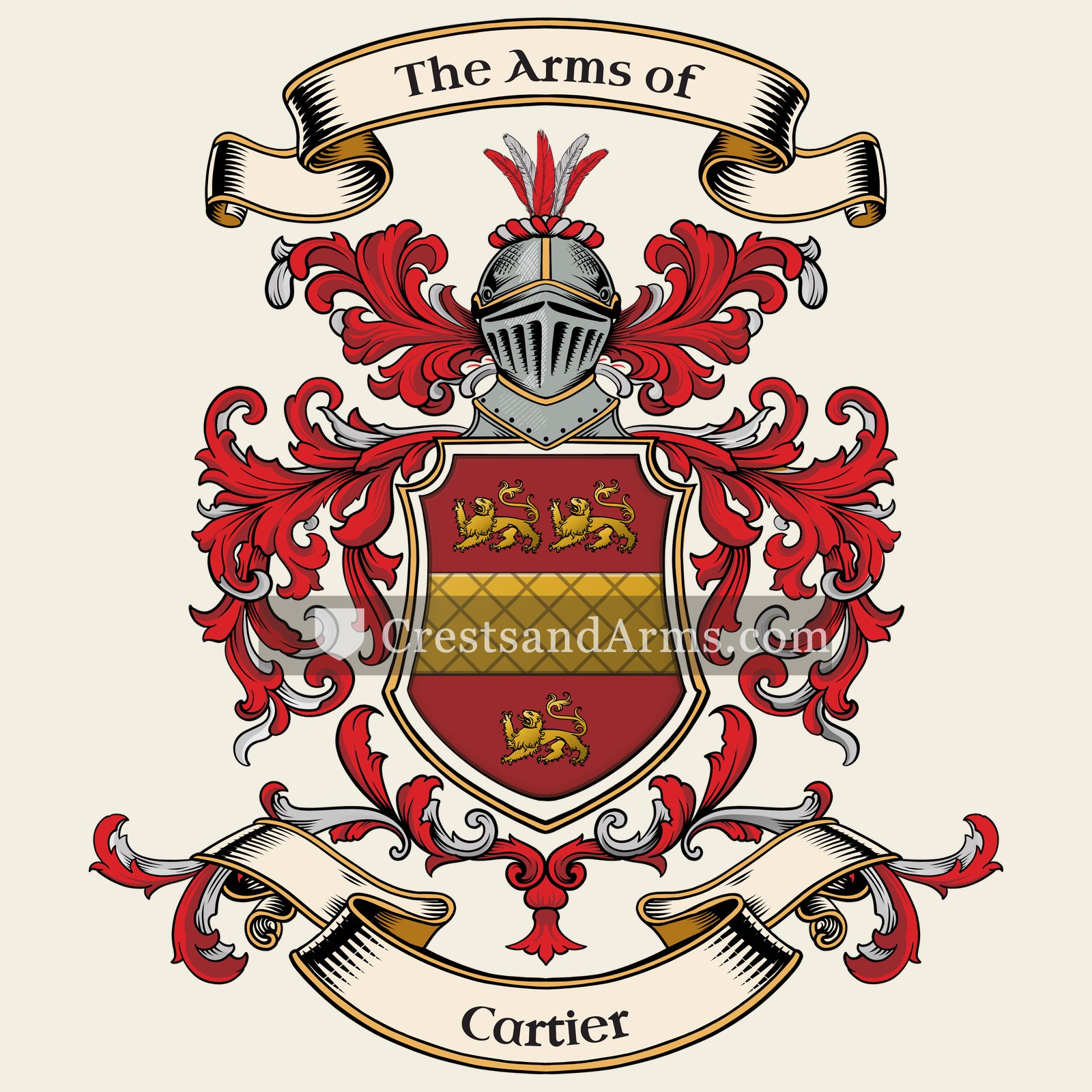
fessThe military belt, and readiness to serve
lionCourage, strength and royalty
Colours
Red (Gules)Means: Military strength
Gold (Or)Means: Generosity
Historical info
Source
J. B. Rietstap, Armorial Général, Gouda: G. B. van Goor Zonen, 1884–87
Blazon (the actual original written record)
“De gu. à la fasce d'or, acc. de trois têtes de léopard du même.”
NormandieNormandie, c. 1663
Digital archive packCoat of arms PNG, gold border print PDF, vector SVG and the certificate of authenticity. Sent to your email in minutes.
Map of France showing where the Cartier arms are recorded
The Cartier arms were recorded in Normandie, c. 1663.
Normandie held a dense crowd of knightly families on some of the best farmland in France. Its men had fought and settled abroad for generations, and a family that sent sons to war needed a shield they could be recognised by.
This is where the arms were entered in the register. Families often moved to other parts of the country, so the same name can turn up in more than one region.
The body that granted and recorded arms in France in this period.
Louis XIV of France
Sovereign of the period
Louis XIV of France
1643–1715
Reigning in Belgium when the Cartier arms are first recorded.
How Arms Worked in France
In France, a coat of arms was a mark of honor that passed down through the male line to all legitimate descendants. Families often used the same shield without changes to show their shared heritage. If a branch wanted to stand out, they could add a small mark to their shield to show their specific place in the family tree.
Granting authority
The Juge d'armes de France acted as the official authority that regulated and verified coats of arms across the country.
How they got arms
Families typically inherited their arms from ancestors, though they could also receive them through royal grants or by proving their noble status.
Where arms were recorded
Coats of arms were officially recorded in the Armorial Général de France, which began its main collection in the year 1696.
The family's standing
Recorded among the armigerous families of Normandie.
Origin & History of the Cartier Family in France
The surname Cartier finds its origins in the medieval French language, where it functioned as an occupational name for a carter or a driver of a cart. During the seventeenth century, the family established a notable presence in the province of Normandy, a region known for its strong ties to maritime exploration and trade. By 1663, records confirm that members of the Cartier family were living in this area, likely working in roles connected to the local agricultural or transport industries that supported the regional economy. As the family grew, they became part of the social fabric of northern France, eventually participating in the broader movements of people that defined the era. Their history reflects the common experience of families who built their lives through skilled labor and community integration during the early modern period in France.
Cartier Meaning & Related Branches
Root word
Cartier
Derived from the Latin word carrarius meaning a carter or wagoner.
This name
CartierAn occupational surname for someone who transported goods by cart or wagon.
also spelled
Kartier
Cartie
Cartyay
Carter
Cartyer
Related arms
Scolarisimilar arms
Cartervariant spelling
Documented Sources
J. B. Rietstap, Armorial Général, Gouda: G. B. van Goor Zonen, 1884–87
State Archives in Belgium (Archives de l'État à Mons), État civil de la province de Hainaut
State Archives in Belgium (Archives de l'État à Mons), Recensement de la population du Hainaut 1823
Carnoy, Albert, Origines des noms de famille en Belgique, 1953
Debrabandere, Frans, Woordenboek van de familienamen in België en Noord-Frankrijk, 1993
Digital archive packCoat of arms PNG, gold border print PDF, vector SVG and the certificate of authenticity. Sent to your email in minutes.


 lozengeHonour and nobility, and the arms of a woman
 lozengeHonour and nobility, and the arms of a woman


 starThe celestial goddess, and nobility
 fretPersuasion, and the net that holds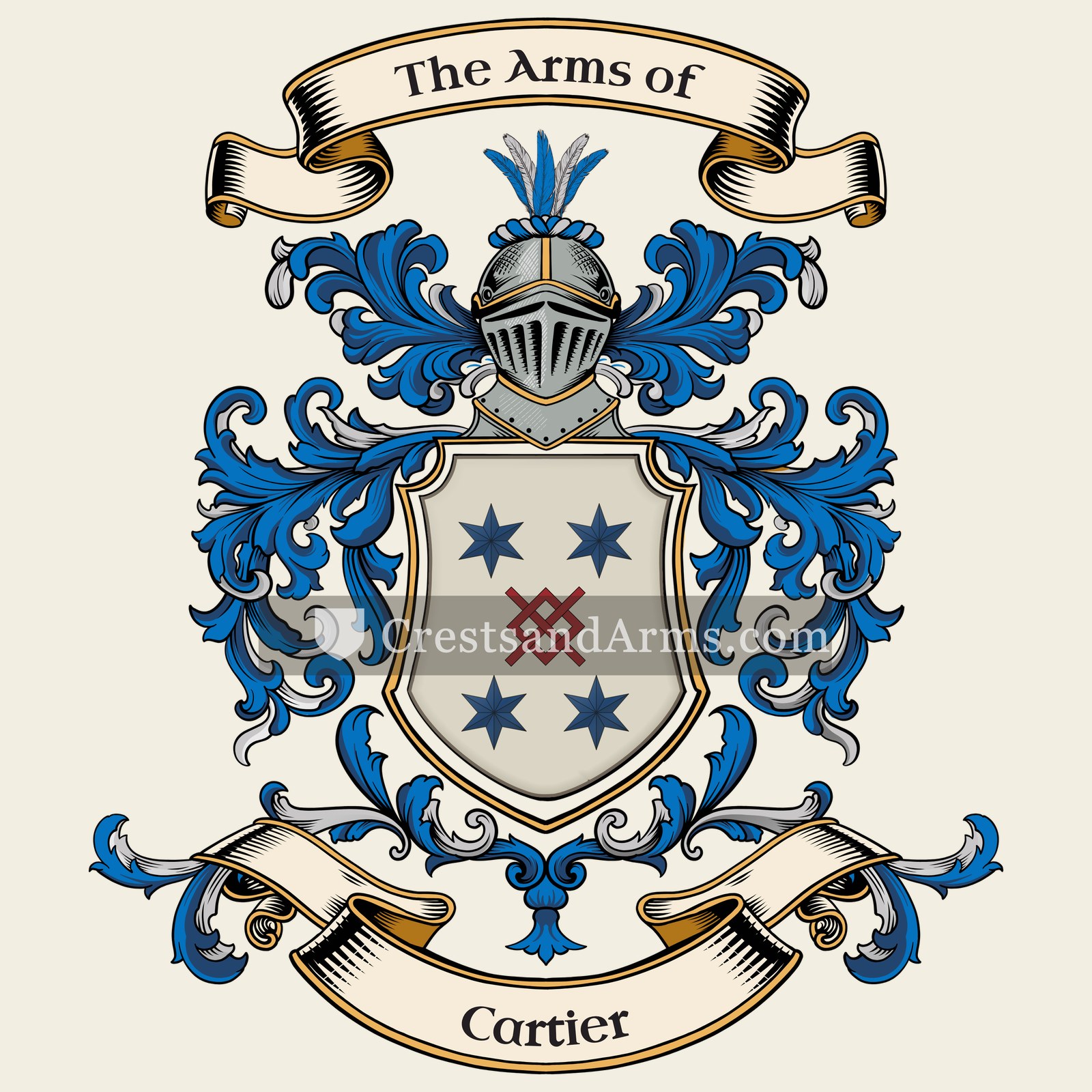

 fessThe military belt, and readiness to serve
 lionCourage, strength and royalty