A record of documented arms, meaning and origin, researched for the Cassan family lines. Documented in 2 countries.
Reg. 7733 · French, A–C
Coat of Arms & Family Crest Details
Symbols on this shield
chiefAuthority, wisdom and dominion
fessThe military belt, and readiness to serve
ermineDignity and rank
greyhoundCourage, vigilance and loyalty
Colours
Blue (Azure)Means: Loyalty and truth
Silver (Argent)Means: Peace and sincerity
ErmineMeans: Dignity
Black (Sable)Means: Constancy
Historical info
Source
J. B. Rietstap, Armorial Général, Gouda: G. B. van Goor Zonen, 1884–87
Blazon (the actual original written record)
“Ec.: aux 1 et 4 d'azur à un lévrier pass. d'arg.; au chef d'herm.; aux 2 et 3 d'azur à trois fasces d'arg.; au chef d'or, ch. de trois mouch. d'herm. de sa.”
FranceToulouse, c. 1663
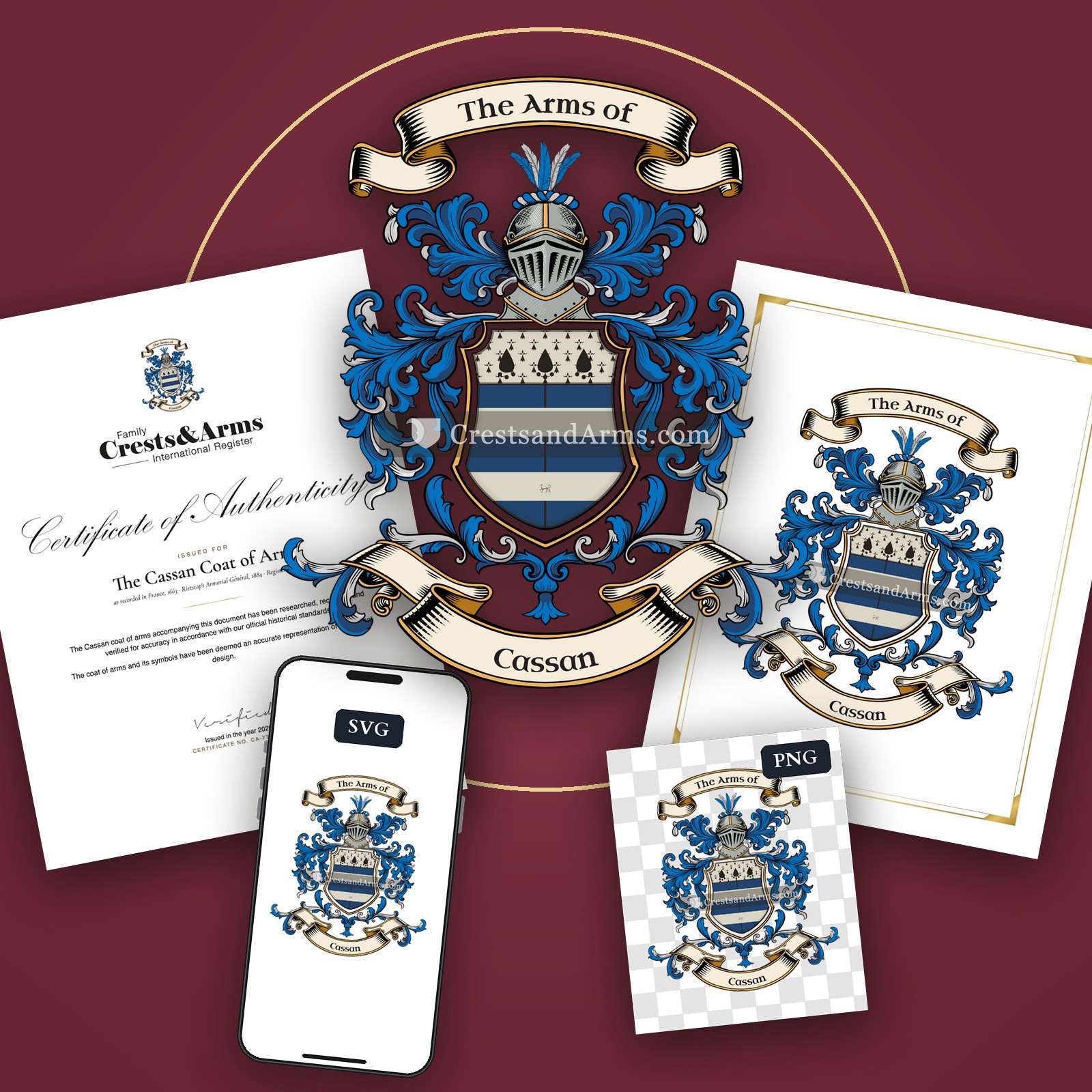
Digital archive packCoat of arms PNG, gold border print PDF, vector SVG and the certificate of authenticity. Sent to your email in minutes.
Map of France showing where the Cassan arms are recorded
The Cassan arms were recorded in Toulouse, c. 1663.
This is where the arms were entered in the register. Families often moved to other parts of the country, so the same name can turn up in more than one region.
The body that granted and recorded arms in France in this period.
Louis XIV of France
Sovereign of the period
Louis XIV of France
1643–1715
Reigning in France when the Cassan arms are first recorded.
How Arms Worked in France
In France, a coat of arms was a mark of honor that passed down through the male line to all legitimate descendants. Families often used the same shield without changes to show their shared heritage. If a branch wanted to stand out, they could add a small mark to their shield to show their specific place in the family tree.
Granting authority
The Juge d'armes de France acted as the official authority that regulated and verified coats of arms across the country.
How they got arms
Families typically inherited their arms from ancestors, though they could also receive them through royal grants or by proving their noble status.
Where arms were recorded
Coats of arms were officially recorded in the Armorial Général de France, which began its main collection in the year 1696.
The family's standing
Recorded among the armigerous families of France.
Origin & History of the Cassan Family in France
The history of the Cassan family is deeply rooted in the Languedoc region of southern France, particularly within the city of Toulouse. By the year 1663, records confirm that members of the family were well established in this area, which was then a major hub for trade, law, and administration. The name itself likely originated from local geographic features or descriptive nicknames common to the Occitan-speaking population of the time. During the seventeenth century, families like the Cassans often played active roles in the urban life of Toulouse, participating in the merchant guilds or the local legal systems that defined the city’s social structure. As the family grew, they became part of the fabric of provincial French society, navigating the complex religious and political changes that shaped the region during the reign of King Louis XIV. Their presence in Toulouse serves as a window into how families of that era built their lives through local commerce and community ties.
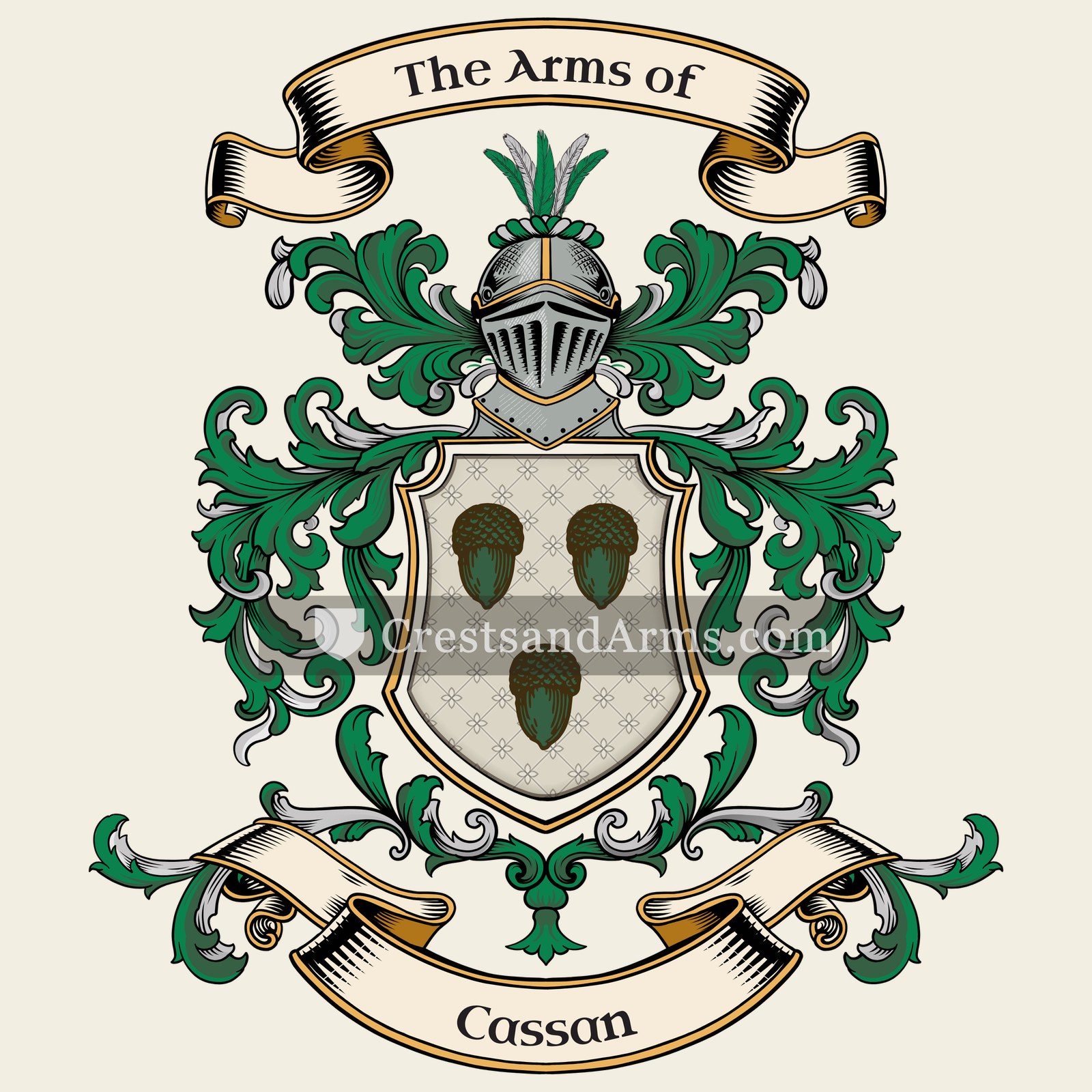
Coat of Arms & Family Crest Details
Symbols on this shield
oakGreat age, strength and steadfastness
Colours
Silver (Argent)Means: Peace and sincerity
Green (Vert)Means: Hope
Historical info
Source
Sir Bernard Burke, The General Armory of England, Scotland, Ireland and Wales, London: Harrison & Sons, 1884
Blazon (the actual original written record)
“Ar. three oaks eradicated, two and one, vert”
WiltsMere Vicarage · Wilts, c. 1830
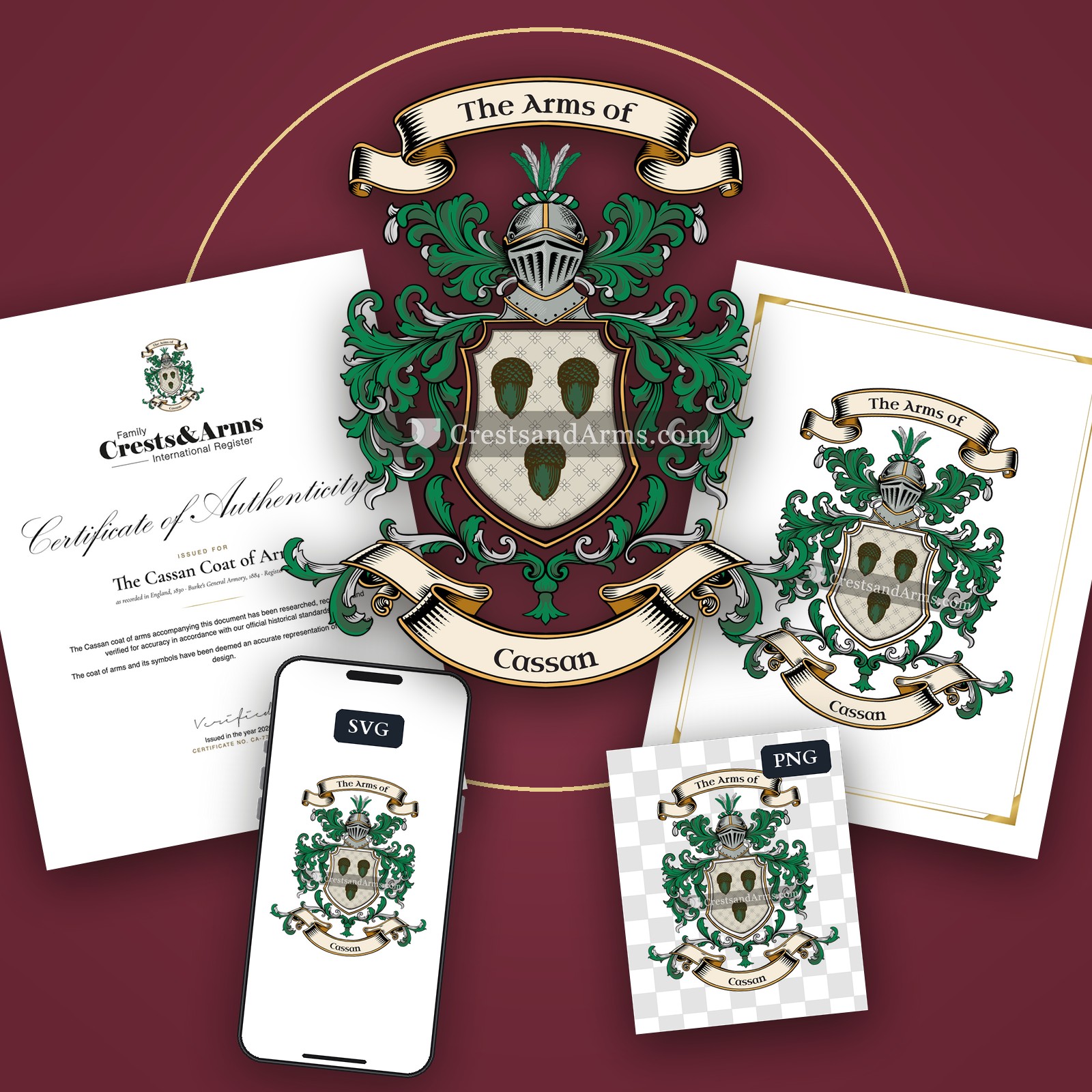
Digital archive packCoat of arms PNG, gold border print PDF, vector SVG and the certificate of authenticity. Sent to your email in minutes.
Map of England showing where the Cassan arms are recorded
The Cassan arms were recorded in Wilts, c. 1830.
Wiltshire was sheep country, and wool made money steadily for hundreds of years. Families who made it bought manors on the downs, and holding a manor was the usual reason to take arms.
This is where the arms were entered in the register. Families often moved to other parts of the country, so the same name can turn up in more than one region.
The body that granted and recorded arms in England in this period.
George IV of the United Kingdom
Sovereign of the period
George IV of the United Kingdom
1820–1830
Reigning in France when the Cassan arms are first recorded.
How Arms Worked in England
English heraldry allowed arms to be shared by all legitimate descendants of the original owner. These symbols were treated as personal property that moved through the generations to all children. While the eldest son kept the original design, other family members could use the same shield without needing to change it or register their own unique versions.
Granting authority
The College of Arms in London has regulated the use of coats of arms throughout England and Wales since 1484.
How they got arms
Families typically obtained their coats of arms through a formal grant from the Crown or by proving their ancient right to them.
Where arms were recorded
All official coats of arms are recorded in the registers kept at the College of Arms, which date back to the fifteenth century.
The family's standing
Recorded among the armigerous families of Wilts.
Origin & History of the Cassan Family in England
The history of the Cassan family in England is deeply rooted in the social and agricultural landscape of Wiltshire during the early nineteenth century. By 1830, records indicate that members of the family were established within this county, a region known for its expansive chalk downs and traditional farming communities. The name itself likely originated from older linguistic roots, potentially reflecting regional variations in naming customs that were common across southern England. During this period, families like the Cassans often played vital roles in local parish life, contributing to the development of rural villages through trade or land management. While the family name suggests a distinct lineage, their presence in Wiltshire highlights how individuals integrated into the local economy and community structure during a time of significant industrial and social change in Britain.
Cassan Meaning & Related Branches
Root word
Cassius
A Roman family name derived from the Latin word for hollow.
This name
CassanA topographic surname referring to someone who lived near a hollow or valley.
also spelled
Cassand
Cassanet
Cassain
Kasan
Cassen
Documented Sources
J. B. Rietstap, Armorial Général, Gouda: G. B. van Goor Zonen, 1884–87
Wolff, Philippe, Histoire de Toulouse, 1974
Le Roy Ladurie, Emmanuel, Les Paysans de Languedoc, 1966
Archives départementales de la Haute-Garonne, Série B: Cours et juridictions
Archives municipales de Toulouse, Série GG: État civil et registres paroissiaux
Digital archive packCoat of arms PNG, gold border print PDF, vector SVG and the certificate of authenticity. Sent to your email in minutes.


 chiefAuthority, wisdom and dominion
 fessThe military belt, and readiness to serve
 ermineDignity and rank
 greyhoundCourage, vigilance and loyalty
 chiefAuthority, wisdom and dominion
 fessThe military belt, and readiness to serve
 ermineDignity and rank
 greyhoundCourage, vigilance and loyalty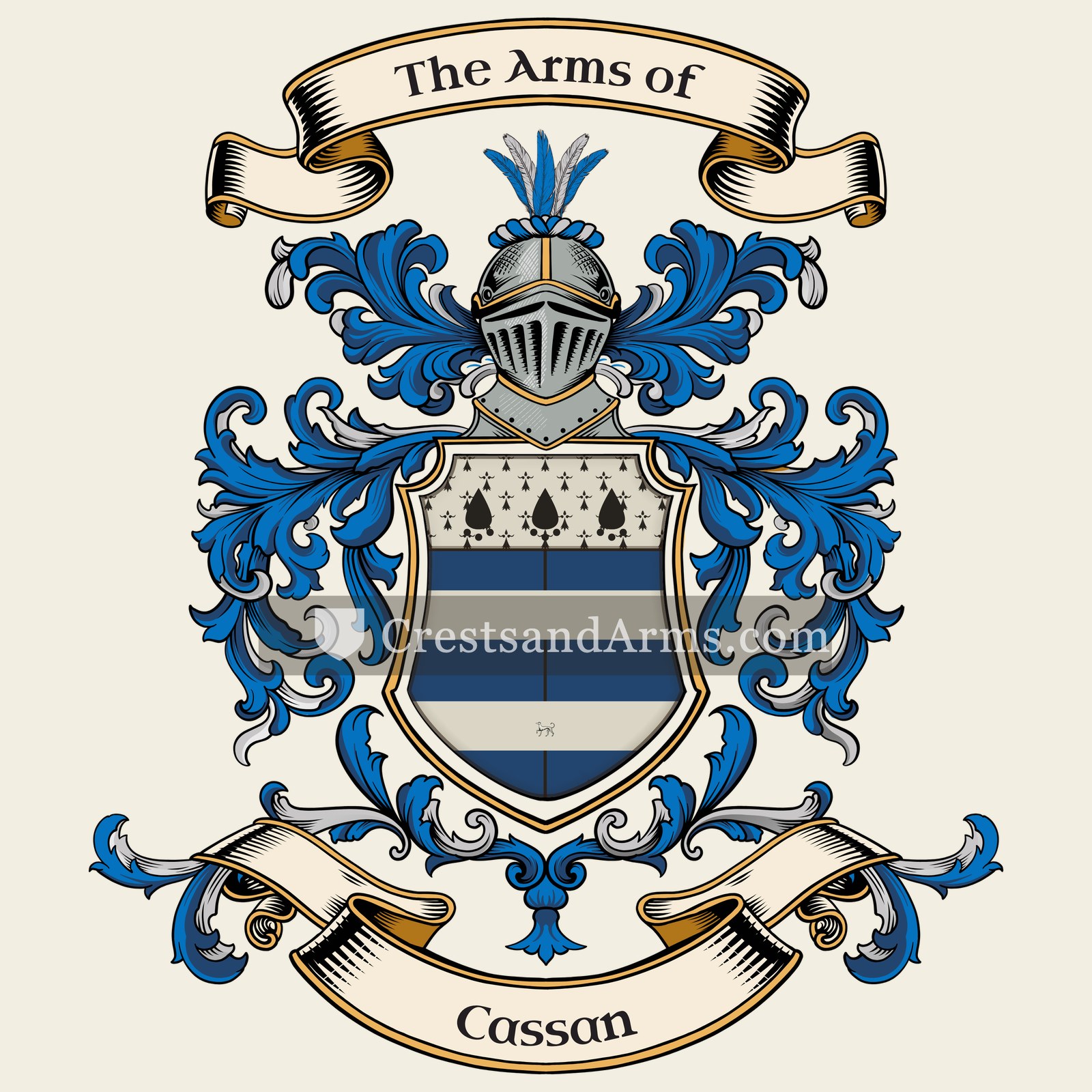


 oakGreat age, strength and steadfastness