Map of Spain showing where the Castellvi arms are recorded
The Castellvi arms were recorded in Aragon, c. 1722.
Aragon was mountain and river country in north-eastern Spain, with a strong tradition of small independent landholders. A great many families counted as gentry there, and each one needed a shield to be told apart.
This is where the arms were entered in the register. Families often moved to other parts of the country, so the same name can turn up in more than one region.
The body that granted and recorded arms in Spain in this period.
Philip V of Spain
Sovereign of the period
Philip V of Spain
1714–1724
Reigning in Spain when the Castellvi arms are first recorded.
How Arms Worked in Spain
In Spain, a coat of arms was considered a form of property that belonged to the entire family line. These arms were passed down from a father to all his children equally. Younger branches of the family usually kept the original design without needing to add any special marks to distinguish their specific line.
Granting authority
The Cronista Rey de Armas was the official body that regulated and granted coats of arms throughout Spain.
How they got arms
Families often obtained their arms through royal grants or by proving their noble status to the official heraldic authority.
Where arms were recorded
Coats of arms were officially recorded in the registers of the Cronista Rey de Armas starting in 1496.
The family's standing
Recorded among the armigerous families of Aragon.
Origin & History of the Castellvi Family in Spain
The Castellví family name has deep roots in the northeastern regions of Spain, particularly within the Kingdom of Aragon. By the early 18th century, the family was well-established in this area, where they played active roles in local society and regional administration. The name itself is derived from the Catalan and Aragonese words for a castle or fortified town, suggesting that the earliest ancestors were likely associated with the defense or management of strategic strongholds. As the family grew, they became integrated into the social fabric of Aragon, often serving in positions that required literacy and legal knowledge. Their presence in the historical record by 1722 reflects a period of stability for the family, as they transitioned from their military or administrative origins into the broader professional life of the Spanish provinces.
Castellvi Meaning & Related Branches
Root word
Castellum
A Latin term referring to a small fort, castle, or fortified place.
This name
CastellviDerived from a topographic reference to someone living near or within a castle.
also spelled
Castelvi
Castelvy
Kastelvi
Related arms
Castelvivariant spelling
Documented Sources
J. B. Rietstap, Armorial Général, Gouda: G. B. van Goor Zonen, 1884–87
Arxiu de la Corona d'Aragó, Cancillería Real, Registros
Pérez de Nueros, Francisco, Historia de la nobleza aragonesa, 1985
Sanz y Sanz, Vicente, Linajes de Aragón: Historia y genealogía, 1992
Digital archive packCoat of arms PNG, gold border print PDF, vector SVG and the certificate of authenticity. Sent to your email in minutes.


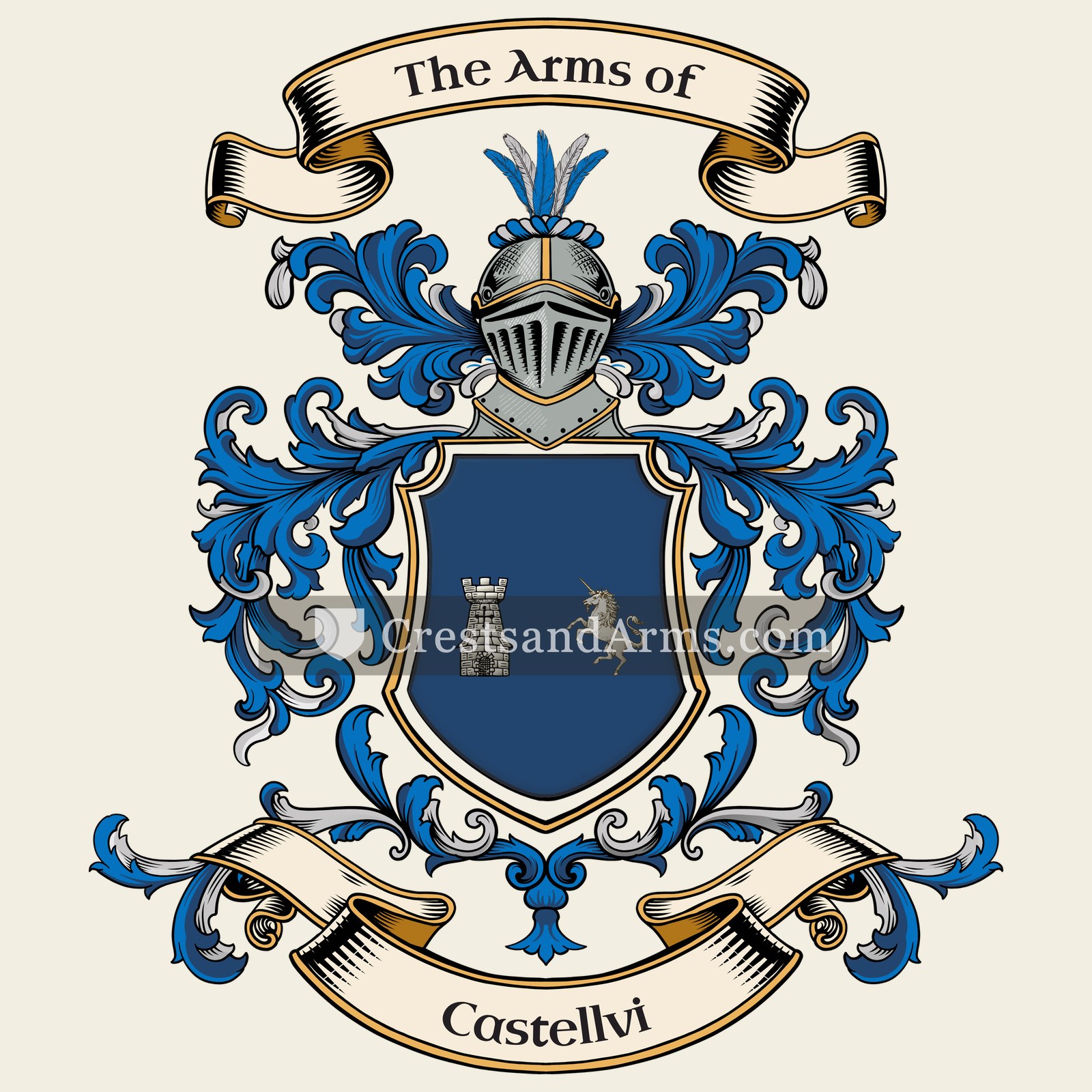
 towerGrandeur and solidity, and a stronghold defended
 unicornPurity, and extreme courage in defence of honour
 towerGrandeur and solidity, and a stronghold defended
 unicornPurity, and extreme courage in defence of honour