Map of Spain showing where the Caudill arms are recorded
The Caudill arms were recorded in Catalonia, c. 1722.
Catalonia lived by sea trade, and its merchant houses were as powerful as its landowners. Both sorts of family took arms, and Barcelona kept records of the houses entitled to bear them.
This is where the arms were entered in the register. Families often moved to other parts of the country, so the same name can turn up in more than one region.
The body that granted and recorded arms in Spain in this period.
Philip V of Spain
Sovereign of the period
Philip V of Spain
1714–1724
Reigning in Spain when the Caudill arms are first recorded.
How Arms Worked in Spain
In Spain, a coat of arms was considered a form of property that belonged to the entire family line. These arms were passed down from a father to all his children equally. Younger branches of the family usually kept the original design without needing to add any special marks to distinguish their specific line.
Granting authority
The Cronista Rey de Armas was the official body that regulated and granted coats of arms throughout Spain.
How they got arms
Families often obtained their arms through royal grants or by proving their noble status to the official heraldic authority.
Where arms were recorded
Coats of arms were officially recorded in the registers of the Cronista Rey de Armas starting in 1496.
The family's standing
Recorded among the armigerous families of Catalonia.
Origin & History of the Caudill Family in Spain
The family name Caudill finds its historical roots in the northeastern region of Catalonia, Spain. By the early 18th century, records confirm that members of this family were established within the local social fabric of the area. The name itself is closely linked to the Catalan word *caudill*, which historically relates to the concept of a leader or a head of a group. During this era, Catalonia was a center of trade and agricultural development, and families like the Caudills often played active roles in their local parishes and municipal governance. Life in 1722 Catalonia was defined by a strong sense of regional identity and community connection, which provided a stable foundation for families to grow and eventually expand their influence beyond the Iberian Peninsula.
Meaning of the Caudill family crest colors & symbols
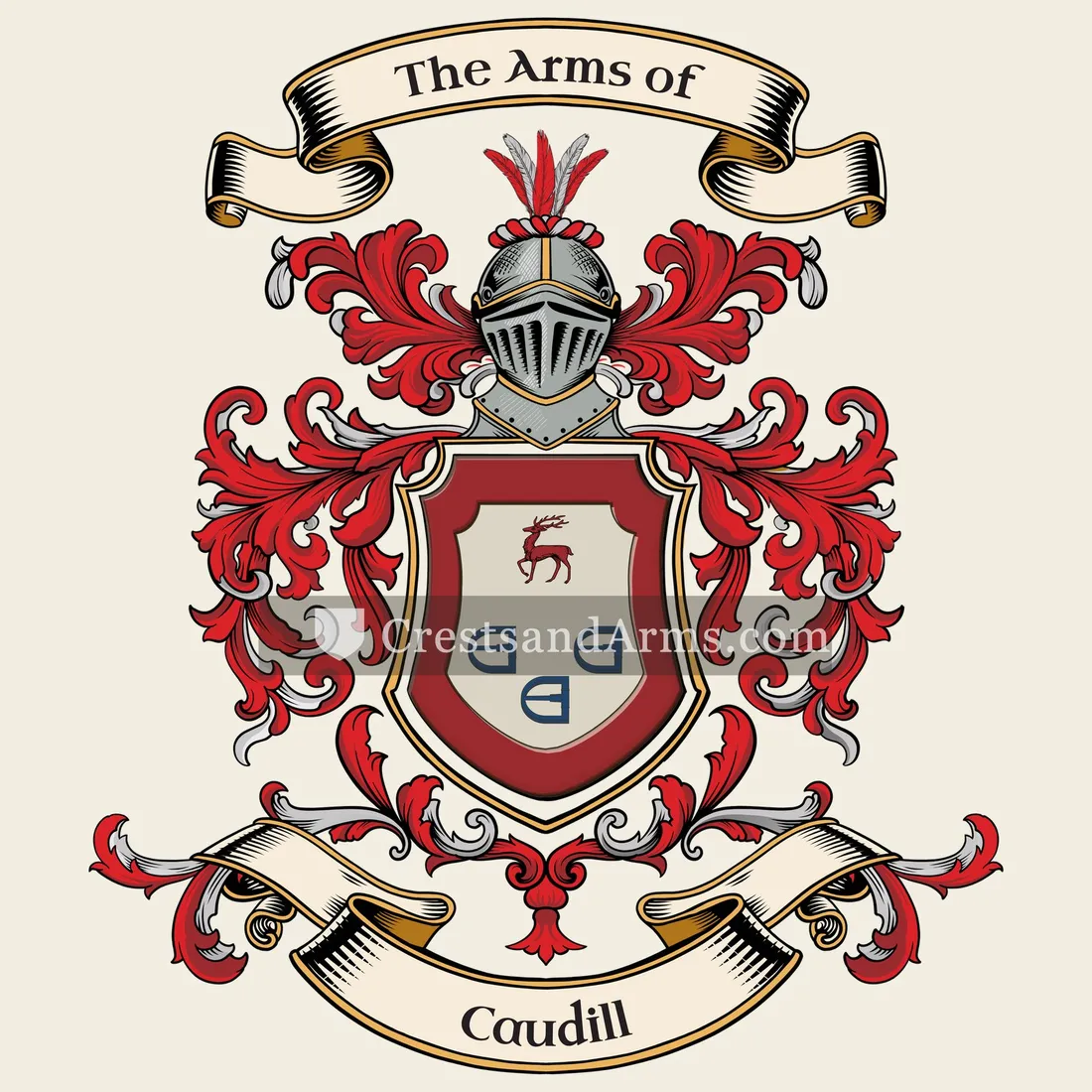
Symbols on this shield
bordureA difference between branches of one family
stagPeace and harmony, and one who will not fight unprovoked
buckleFidelity, and a bond firmly held
Colours
Silver (Argent)Means: Peace and sincerity
Red (Gules)Means: Military strength
Blue (Azure)Means: Loyalty and truth
Historical info
Source
Sir Bernard Burke, The General Armory of England, Scotland, Ireland and Wales, London: Harrison & Sons, 1884
Blazon (the actual original written record)
“Ar. a stag's head couped in chief gu. in base three oval buckles tongues in fesse az. within a bordure of the second”
Scotlandc. 1748
Digital archive packCoat of arms PNG, gold border print PDF, vector SVG and the certificate of authenticity. Sent to your email in minutes.
Map of Scotland showing where the Caudill arms are recorded
The Caudill arms were recorded in Scotland, c. 1748.
Arms such as these were typically recorded in Edinburgh.
Edinburgh was the seat of Scotland's government, its courts and its heralds. Families with business there settled nearby, and being close to where arms were recorded is exactly why so many of them appear.
This is where the arms were entered in the register. Families often moved to other parts of the country, so the same name can turn up in more than one region.
The body that granted and recorded arms in Scotland in this period.
George II of Great Britain
Sovereign of the period
George II of Great Britain
1727–1760
Reigning in Spain when the Caudill arms are first recorded.
How Arms Worked in Scotland
Scottish heraldry is unique because it treats a coat of arms as a piece of personal property protected by law. Only one person can own a specific design at any given time. When a family grows, the head keeps the original shield while other relatives must apply for their own distinct version with slight changes to prove their specific identity.
Granting authority
The Court of the Lord Lyon acts as the official body that regulates and controls all heraldic matters throughout Scotland.
How they got arms
Individuals obtain a legal right to their arms through a formal petition process that confirms their identity and family connection.
Where arms were recorded
All valid coats of arms are officially entered into the Public Register of All Arms and Bearings starting from 1672.
The family's standing
Recorded among the armigerous families of Scotland.
Origin & History of the Caudill Family in Scotland
The history of the Caudill name in Scotland is deeply tied to the urban environment of Edinburgh during the mid-eighteenth century. By 1748, records confirm that members of the family were established residents within this bustling capital city. During this period, Edinburgh was undergoing a major transition as it expanded beyond its medieval walls into the New Town, creating new opportunities for families to participate in trade and professional life. The name likely evolved from local linguistic roots, reflecting the way surnames were often adapted or recorded by clerks in parish registers during that era. While the family was present in the heart of Scotland’s intellectual and social center, their daily lives were shaped by the rapid modernization of the city and the shifting social structures of the Scottish Enlightenment. This early presence in Edinburgh suggests that the family was part of the growing urban middle class that helped define the city’s character during a time of significant national change.
Meaning of the Caudill family crest colors & symbols
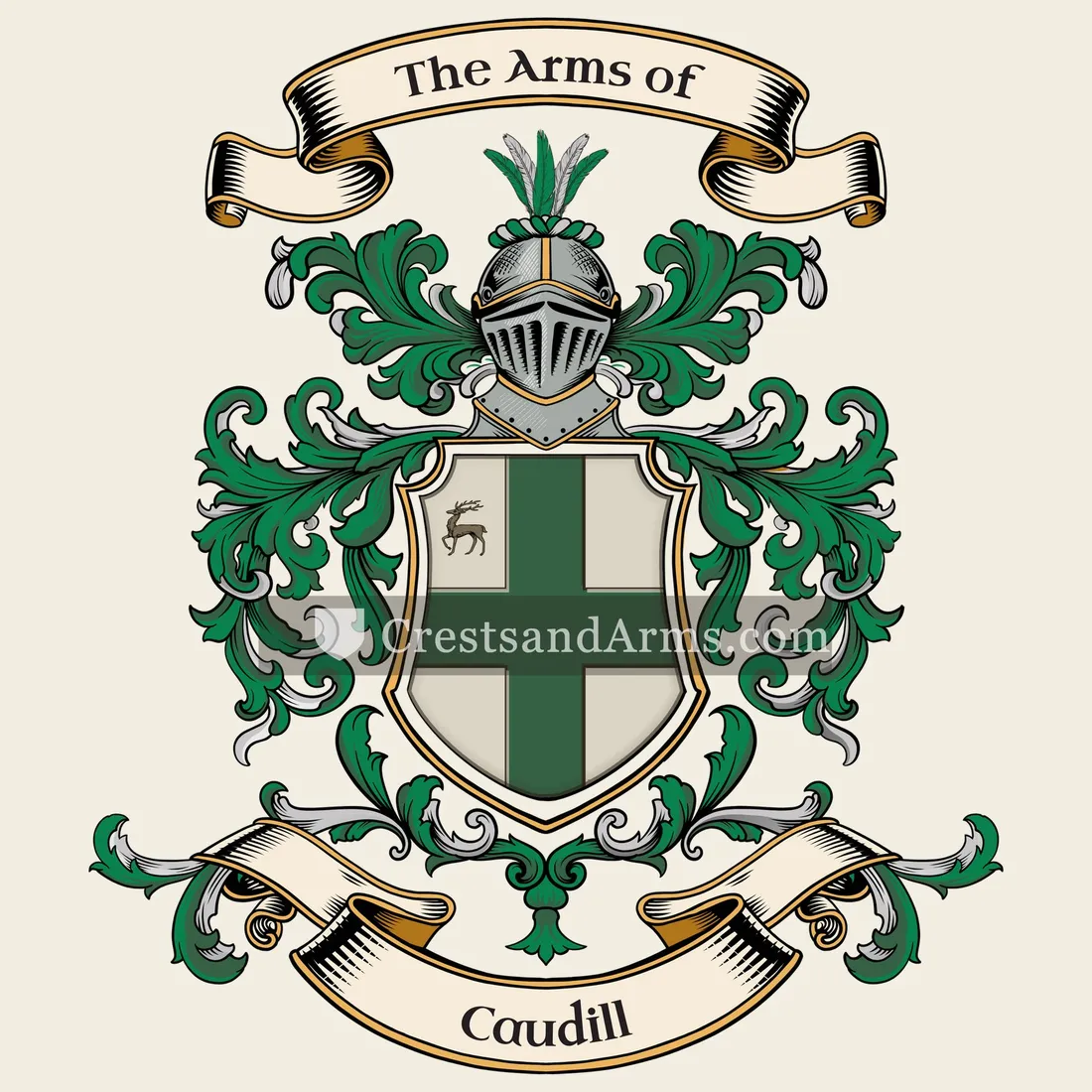
Symbols on this shield
cross symbolChristian faith and service
stagPeace and harmony, and one who will not fight unprovoked
Colours
Silver (Argent)Means: Peace and sincerity
Green (Vert)Means: Hope
Historical info
Source
Sir Bernard Burke, The General Armory of England, Scotland, Ireland and Wales, London: Harrison & Sons, 1884
Blazon (the actual original written record)
“Ar. a cross engr. vert, in the first quarter a stag's head cabossed”
EnglandThomas Caddell, c. 1801
Digital archive packCoat of arms PNG, gold border print PDF, vector SVG and the certificate of authenticity. Sent to your email in minutes.
Map of England showing where the Caudill arms are recorded
The Caudill arms were recorded in Thomas Caddell, c. 1801.
Arms such as these were typically recorded in York.
Yorkshire is the largest of the English counties, and it held more gentry families than any other. Land there was split among a great many households rather than a few, so a great many of them carried arms.
This is where the arms were entered in the register. Families often moved to other parts of the country, so the same name can turn up in more than one region.
The body that granted and recorded arms in England in this period.
George III of Great Britain
Sovereign of the period
George III of Great Britain
1760–1801
Reigning in Spain when the Caudill arms are first recorded.
How Arms Worked in England
English heraldry allowed arms to be shared by all legitimate descendants of the original owner. These symbols were treated as personal property that moved through the generations to all children. While the eldest son kept the original design, other family members could use the same shield without needing to change it or register their own unique versions.
Granting authority
The College of Arms in London has regulated the use of coats of arms throughout England and Wales since 1484.
How they got arms
Families typically obtained their coats of arms through a formal grant from the Crown or by proving their ancient right to them.
Where arms were recorded
All official coats of arms are recorded in the registers kept at the College of Arms, which date back to the fifteenth century.
The family's standing
Recorded among the armigerous families of England.
Origin & History of the Caudill Family in England
The surname Caudill is rooted in the northern regions of England, particularly within the historic city of York. While the name is often associated with later migrations to America, its origins are tied to the local dialects and naming customs of Yorkshire. By the early nineteenth century, records confirm that families bearing this name were well-established in the area, living and working within the city's growing industrial and social landscape. The name likely evolved from descriptive terms used to identify individuals based on their occupation or their specific location within a village. As the population of York expanded during the turn of the century, these families became part of the local fabric, contributing to the community through trade and daily labor. This early presence in York serves as a key starting point for understanding how the family name moved from a local identifier to a lasting legacy.
Caudill Meaning & Related Branches
Root word
Caudillo
A leader, head, or commander of a group or military force.
This name
CaudillA topographic or occupational surname referring to a person who served as a leader.
also spelled
Cadel
Kadell
Kadel
Documented Sources
J. B. Rietstap, Armorial Général, Gouda: G. B. van Goor Zonen, 1884–87
Arxiu de la Corona d'Aragó, Registre de la Reial Audiència del Principat de Catalunya, 1722
Pujades, Jeroni, Crònica universal del Principat de Catalunya, 1609 (reprinted 1829)
Vilar, Pierre, La Catalogne dans l'Espagne moderne, 1962
Digital archive packCoat of arms PNG, gold border print PDF, vector SVG and the certificate of authenticity. Sent to your email in minutes.


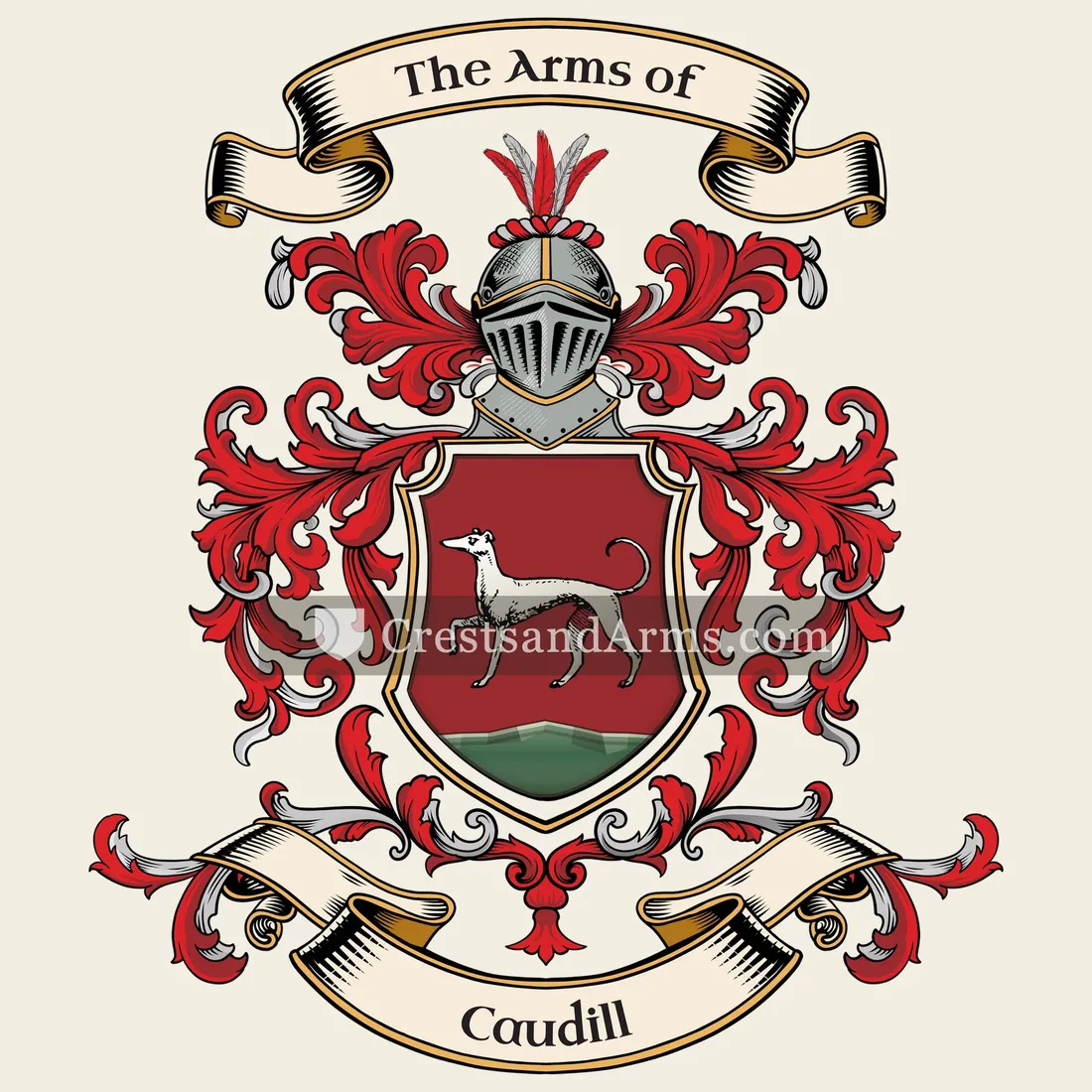
 mountThe ground held, and steadfastness upon it
 greyhoundCourage, vigilance and loyalty
 mountThe ground held, and steadfastness upon it
 greyhoundCourage, vigilance and loyalty


 bordureA difference between branches of one family
 stagPeace and harmony, and one who will not fight unprovoked
 buckleFidelity, and a bond firmly held


 cross symbolChristian faith and service